

Most people know the word “wake” as something you hold after a death. But in 19th-century Ireland, communities held a wake of a different kind — the American wake — for people who were still alive: standing in the doorway, bags packed, about to board a ship and never return.
What Was the American Wake?
When a young person emigrated to America, the entire community gathered the night before departure. There would be music, dancing, whiskey, and tears — all in the same room, often at the same time.
It was called an American wake because the logic was unavoidable. In the 19th and early 20th centuries, emigrating to America meant you were gone. Not just gone for a few years. Gone permanently.
The journey could cost a labourer six months’ wages or more — money most families didn’t have without a remittance from relatives already in America. A return fare was unthinkable. Without telephones, without any reliable way to close the distance, leaving Ireland for America was, in every practical sense, a kind of death.
The Logic Behind the Grief
A farming family in Mayo or Kerry watching a son or daughter walk out the door had nothing to hold onto except the memory of that morning. The Irish have a word for grief that sits in the body — cumha — a longing so deep it aches.
So communities did what they had always done in the face of grief. They gathered. They fed people. They played music until dawn.
The American wake was not morbid. It was generous. It was a community saying: if this is the last night, we are going to fill it completely.
How the Night Unfolded
The American wake typically lasted from dusk until dawn. The house would be packed — family, neighbours, the whole townland crowding in through a low door.
There was dancing on stone floors. Fiddles and uilleann pipes. Poitín passed quietly from hand to hand. Prayers said in corners by older women who understood that prayer was the only thing that could cross the Atlantic reliably.
As the night wore on and the dark hours came, the music would slow. Women might begin to keen. The emigrant would be hugged and touched again and again, as if people were trying to memorise the shape of them before the door closed for the last time.
☘️ Enjoying this? 64,000+ Ireland lovers get stories like this every week. Subscribe free →
The Songs That Named the Loss
Many traditional Irish songs were shaped by the American wake. They did not soften what was happening. They named it directly.
Songs about leaving — “The Emigrant’s Farewell”, “Slievenamon”, “The Green Fields of America” — were not played to cheer people up. They were played because music has always been the Irish way of making room for what cannot be said in ordinary words.
The song was proof that others had gone before. That the grief was real and known. That you were not the first to stand at a door in the dark with everything you owned in a bag, looking back at a firelit room.
The Houses That Stayed Empty
The tragedy of the American wake continued in the landscape for generations. Communities did not just lose individuals. They lost entire families, one by one, until the house went dark.
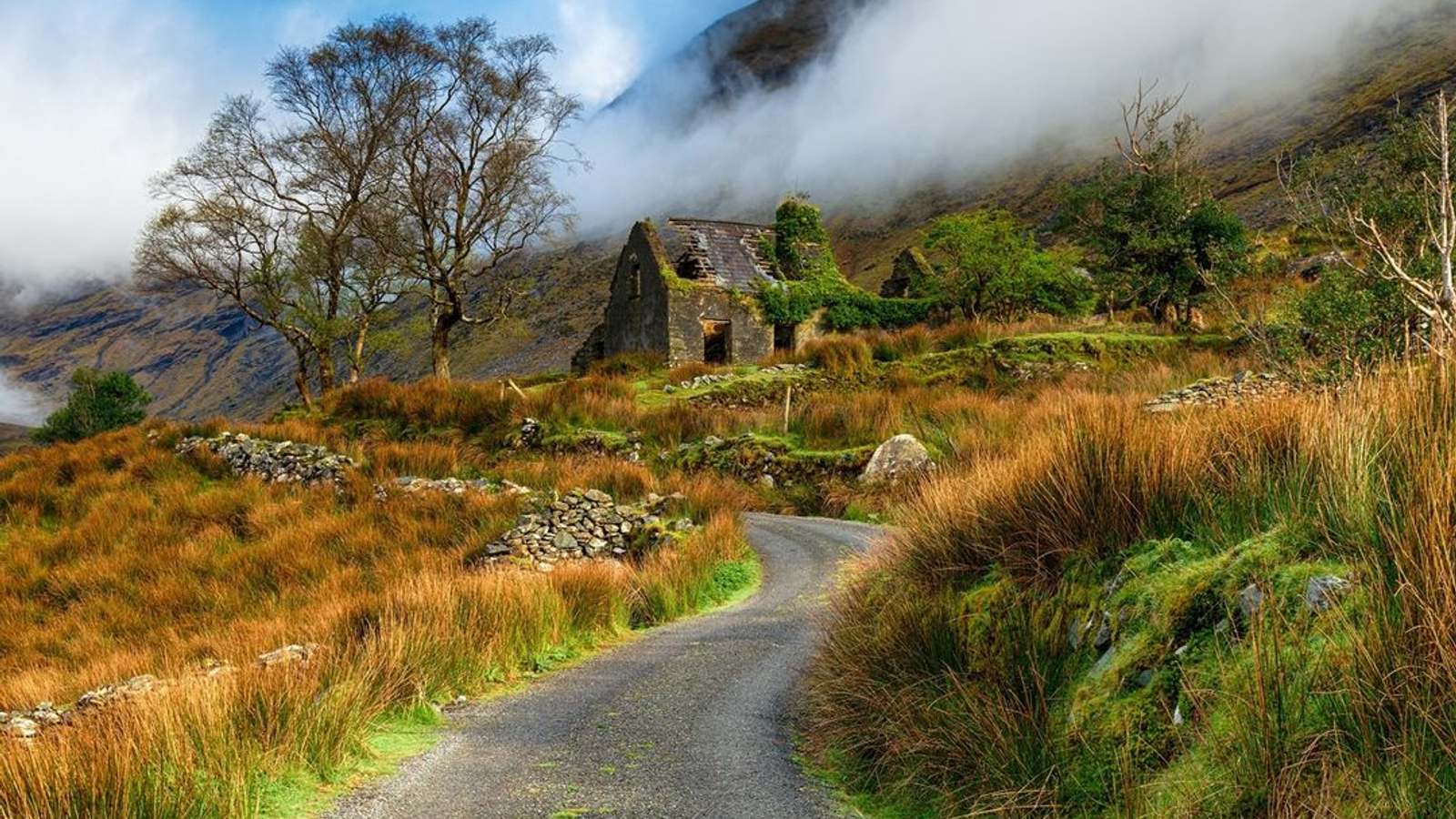
Those ruined cottages scattered across Irish hillsides today — the ones with fallen gables and briars growing through the windows — were often the homes from which American wake after American wake was held. Every one of those abandoned homes holds a story nobody will ever fully know.
The port of Cobh in County Cork became the last Irish ground millions of emigrants stood on before crossing. Cobh alone saw an estimated 2.5 million people pass through its docks — a share of the roughly six million who left Ireland altogether between the Great Famine and the mid-20th century, most of them carried away by the same current of grief and necessity that had filled the kitchen the night before.
What Survived on the Other Side
The emigrants who arrived in Boston, New York, or Philadelphia carried the memory of their send-off with them. Many formed tightly-knit Irish neighbourhoods — not just for comfort, but because the American wake had already shown them how to hold a community together in the face of loss.
The Irish-American loyalty to roots, the insistence on remembering where you came from, the instinct to gather when someone is lost — much of this traces back to those long nights around a kitchen fire in Connacht or Munster.
The American wake is gone as a formal tradition. Cheap flights and video calls changed everything. But the impulse behind it — the acknowledgement that leaving is loss, that departure deserves a ritual, that community means showing up even when it hurts — never quite left Ireland.
If you want to understand the Irish diaspora and where it truly comes from, plan a journey to the west of Ireland. Walk past a ruined cottage. Stand at the harbour in Cobh. The American wake is written into the land itself.
The next time you hear that Irish people feel deeply about home — that they cry at airports and name their pubs after counties they’ve never visited — remember the American wake. That instinct was earned, one dark night at a time, for two hundred years.
☘️ You Might Also Love
Tours & experiences you might love


Powered by Viator. Some links are affiliate links — we may earn a small commission at no extra cost to you.
Secure Your Dream Irish Experience Before It’s Gone!
Planning a trip to Ireland? Don’t let sold-out tours or packed attractions spoil your journey. Iconic experiences like visiting the Cliffs of Moher, exploring the Rock of Cashel, or enjoying a guided walk through Ireland’s ancient past often sell out quickly—especially during peak travel seasons.

Booking in advance guarantees your place and ensures you can fully immerse yourself in the rich culture and breathtaking scenery without stress or disappointment. You’ll also free up time to explore Ireland’s hidden gems and savour those authentic moments that make your trip truly special.
Make the most of your journey—start planning today and secure those must-do experiences before they’re gone!