

Before a young woman in the west of Ireland could hope to marry, she had to pass a test. It had nothing to do with beauty or charm. It had everything to do with a potato.
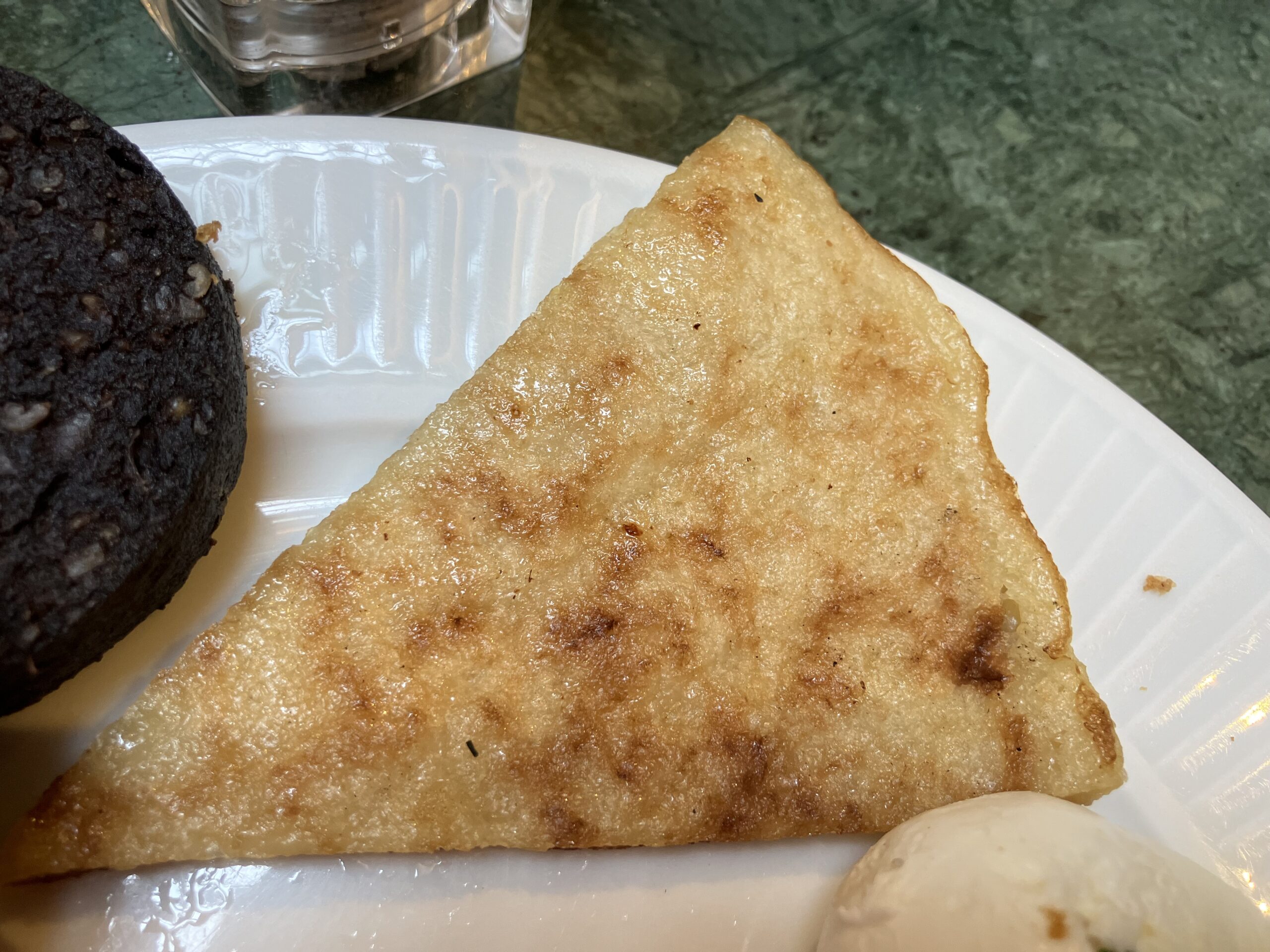
What Exactly Is Boxty?
Boxty is a traditional Irish potato pancake, made from a blend of raw grated potato, mashed potato, plain flour, and buttermilk. It originated in the northern half of Ireland — Connacht and Ulster — where potatoes were not merely a crop but the entire foundation of daily life.
It comes in three forms. Pan boxty is fried on a hot griddle like a thick flat cake and sliced into wedges at the table. Baked boxty is cooked in a loaf tin and served cold, sliced like bread. Boiled boxty is shaped into small round dumplings and simmered in salted water. Each region had its favourite, and debates about which was superior could get surprisingly heated.
The texture is unlike anything in other cuisines — crispy and golden on the outside, dense and slightly waxy within. It fills a room with the smell of butter and scorched potato. Once you’ve had it fresh off the pan, you understand why it survived centuries of change.
The Rhyme That Followed Every Girl
No other Irish dish carries as much social weight as boxty. This is because of a simple rhyme that spread across the west of Ireland for generations, passed from kitchen to kitchen like a folk law:
“Boxty on the griddle, boxty in the pan,
If you can’t make boxty, you’ll never get your man.”
In rural communities, a young woman’s ability to cook — and specifically to master boxty — was taken as a direct sign of her readiness for marriage and adult life. By modern standards, that sounds deeply unfair. At the time, it was simply the way things worked.
Young women were expected to know the dish before they left their mother’s home. Mothers taught daughters. Grandmothers stood over the griddle correcting technique. Getting the boxty right was not optional — it was a rite of passage.
Why Potatoes Carried So Much Meaning
☘️ Love Irish Food & Culture?
Every Wednesday, we send our best Irish recipes, food stories, and kitchen traditions straight to your inbox. Join 64,000+ readers who love Ireland.
Ireland’s relationship with the potato is long, complicated, and at times devastating. After the Great Famine of the 1840s, the potato became more than food. It was a symbol of survival, of grief, of resilience. An entire nation had been shaped by its absence.
But in the generations before the Famine, potatoes in the west represented abundance. A family with good potato land had status. A woman who could transform a humble potato into something nourishing, filling, and golden was demonstrating exactly the kind of skill her community depended on through long winters.
Boxty required genuine patience and knowledge. Raw grated potato holds a great deal of liquid — squeeze too little and the batter turns soggy and flat. You had to read the heat of the griddle, judge the right thickness, time the moment to flip without burning the bottom. These were skills built over years of watching and doing, not something picked up in an afternoon.
☘️ Enjoying this? 65,000 Ireland lovers get stories like this every weekday morning. Subscribe free →
Boxty and the Matchmaking Tradition
Ireland’s matchmaking culture — especially across Connacht — meant that a woman’s domestic reputation travelled further than she did. In the era before Lisdoonvarna’s famous matchmaking festival became a tourist attraction, local matchmakers assessed candidates based on what neighbours said. Village gossip carried weight.
A girl who could make boxty was a girl who knew what she was doing. A girl who couldn’t? That story spread too, quietly but reliably.
It sounds unkind from a distance. But it also meant that boxty was taught with real care and pride — one generation passing hard-won knowledge to the next across kitchen tables on wet winter mornings. The rhyme wasn’t just a jibe. It was a reminder that the skill mattered.
For more on the food traditions woven into Irish life, see our guide to famous Irish foods worth trying on your visit.
Where to Find Boxty Today
Boxty never disappeared. It held on in Connacht kitchens through every decade of change. County Leitrim and Cavan are still considered the heartland of the dish, and local pride in the tradition runs deep. There are families in those counties who have been making it the same way for five or six generations.
Today you’ll find boxty on restaurant menus across Ireland — served as a breakfast side, a starter filled with smoked salmon and crème fraîche, or stuffed with black pudding and champ. A handful of kitchens in Dublin and Galway have refined it into something more ambitious, but the soul of the dish remains the same.
If you spot boxty on a menu in the west of Ireland, it’s usually a good sign. Order it. Eat it warm. Understand why a grandmother once staked a girl’s future on it.
Planning a trip to discover traditions like this for yourself? Our Ireland travel planning guide is the best place to begin.
A Dish That Outlasted the Judgement
The rhyme has lost its sting. Nobody is measuring a woman’s marriage prospects by her potato skills in 2026. But the dish itself — earthy, filling, and golden on the pan — has outlasted the culture that created it.
It belongs now not to a judgement but to a memory. The memory of a grandmother at a griddle on a dark winter morning, pressing boxty flat with her palm, listening for the right sizzle, flipping it at exactly the moment it was ready.
That, perhaps, is the better legacy. Boxty was never really a test. It was a lesson passed down in a language that everyone could taste. And it’s still being shared today — in kitchens across Connacht, in restaurants from Dublin to Dingle, and in the kind of Irish comfort food that still tastes like coming home.
☘️ You Might Also Love
☘️ Join 65,000+ Ireland Lovers
Every Friday, get Ireland’s hidden gems, local secrets, and travel inspiration — the kind you won’t find in any guidebook.
Already subscribed? Download your free Ireland guide (PDF)
Love more? Join 43,000 Scotland lovers → · Join 30,000 Italy lovers → · Join 7,000 France lovers →
Free forever · Unsubscribe anytime
☘️ Get More Irish Recipes & Stories
Join 64,000+ readers for weekly Irish recipes, food traditions, travel guides, and hidden gems. Free every morning.
Tours & experiences you might love


Powered by Viator. Some links are affiliate links — we may earn a small commission at no extra cost to you.
Secure Your Dream Irish Experience Before It’s Gone!
Planning a trip to Ireland? Don’t let sold-out tours or packed attractions spoil your journey. Iconic experiences like visiting the Cliffs of Moher, exploring the Rock of Cashel, or enjoying a guided walk through Ireland’s ancient past often sell out quickly—especially during peak travel seasons.

Booking in advance guarantees your place and ensures you can fully immerse yourself in the rich culture and breathtaking scenery without stress or disappointment. You’ll also free up time to explore Ireland’s hidden gems and savour those authentic moments that make your trip truly special.
Make the most of your journey—start planning today and secure those must-do experiences before they’re gone!