

In the 1840s, when Ireland’s potato fields turned black and families faced starvation, women in County Monaghan picked up fine needles and thread. What they created was so delicate it could take weeks to make a single collar. And it was worth its weight in gold.
| Lace Type | County | Technique | Distinguishing Feature |
|---|---|---|---|
| Carrickmacross | Monaghan | Muslin/net applique | Floral cut-work patterns |
| Limerick | Limerick | Tambour/run embroidery on net | Delicate mesh patterns |
| Kenmare | Kerry | Needlepoint over pricked paper | Finest Irish needlework |
| Clones | Monaghan | Crochet thread work | Raised petal motifs |
A Craft Brought Home From Italy
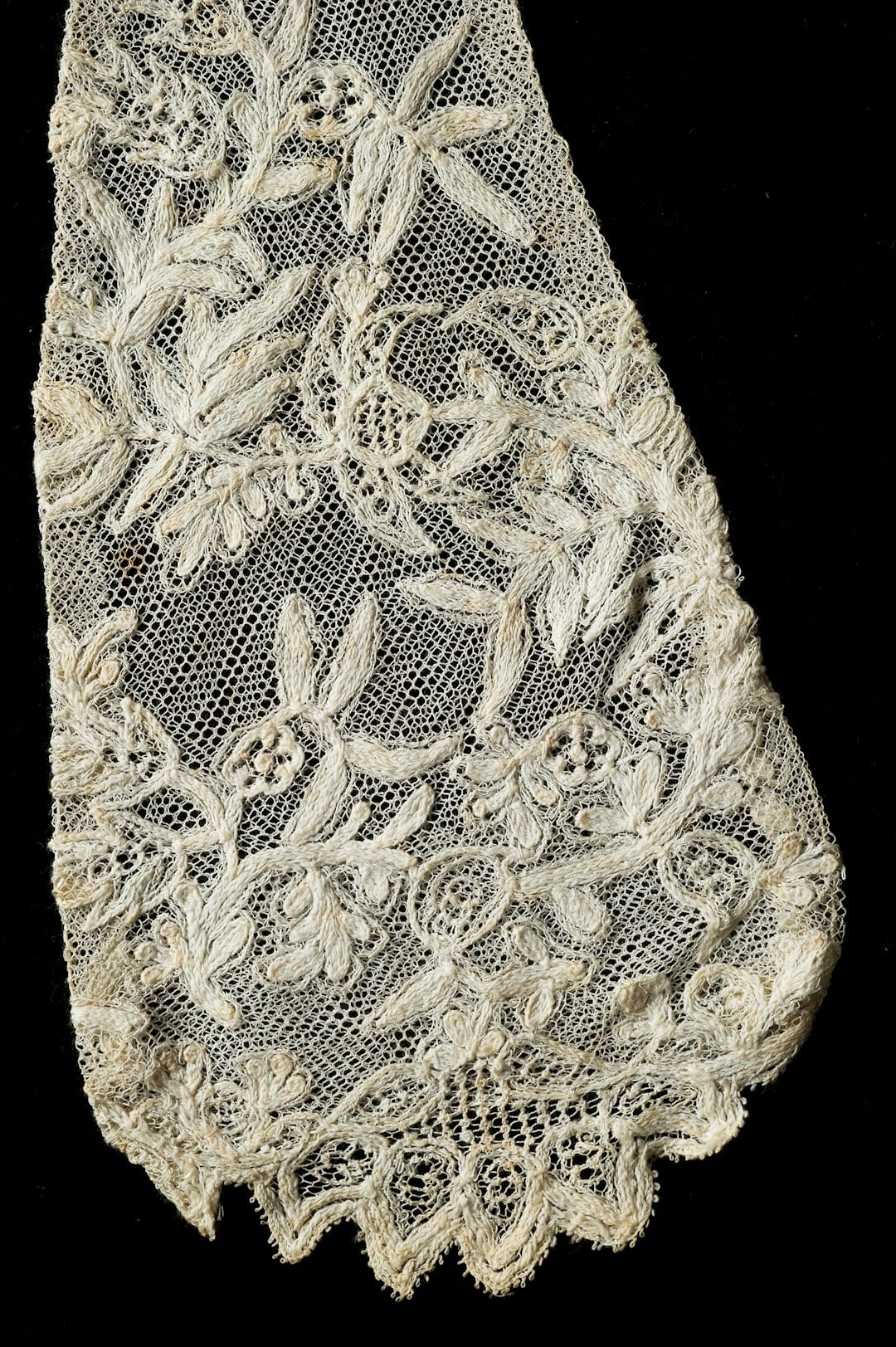
Irish lace didn’t begin in Ireland. In the 1820s, a woman named Mrs Grey Porter returned from the Continent with a new skill — the art of attaching fine muslin to net fabric and cutting patterns into it by hand. She began teaching local women in Donaghmoyne, a small village in County Monaghan.
At first, it was simply a skill. Then the Famine hit.
When the potato crop failed in 1845, relief organisations saw lace-making as a lifeline. Classes were set up across the county. Women who had never held a needle beyond darning a sock began learning a craft that demanded extraordinary patience and precision.
Three Traditions, Three Counties
Ireland’s lace heritage divides into three distinct traditions — each rooted in a different place and technique.
Carrickmacross lace is probably the most recognised. Made by applying fine cambric or muslin to net, then cutting and stitching to reveal patterns — usually flowers, shamrocks, and trailing vines — it has a distinctive, airy quality. You can see original pieces and watch demonstrations today at the Carrickmacross Lace Gallery, one of the quieter gems in County Monaghan.
Limerick lace came slightly earlier, developed commercially in the 1820s. It’s worked directly onto net, with patterns created through tambour embroidery or run-stitch. At its peak, hundreds of women in the city and surrounding parishes depended on it for income.
Kenmare lace is perhaps the most intricate of all — a needlepoint style made by the Poor Clare nuns of Kenmare, deep in County Kerry. No bobbins. No backing fabric. Just needle and thread, worked over hand-pricked paper patterns in stitches so small they required a magnifying glass.
What the Work Actually Involved
To understand Irish lace, you have to understand the time it required.
A single Carrickmacross collar could take three weeks to complete. Kenmare needlepoint demanded a steady hand and sharp eyesight, both of which often gave out after years at the work. Limerick run-work required hours of unbroken concentration under whatever light the window allowed.
Women worked in church halls and in their kitchens. They worked while their children slept and again before they woke. The pieces they produced were collected by agents and shipped to London, Paris, and New York.
For a wage that could mean the difference between eating and going hungry, this is what Irish women made with their hands.
☘️ Enjoying this? 64,000+ Ireland lovers get stories like this every weekday morning. Subscribe free →
Where Irish Lace Ended Up
Carrickmacross lace appeared on royal christening gowns and wedding veils throughout the Victorian era. It was displayed at international exhibitions in London and Paris, praised alongside the finest Belgian and French laces. Limerick lace appeared in fashion illustrations and became fashionable across England in the mid-1800s.
Irish lace became so associated with quality that the name alone commanded a higher price. Shops in London sold it as a mark of authenticity — much the way Irish beef or Irish whiskey carries a premium today.
The craft that began as famine relief had become a source of national pride.
What Survives Today
By the 20th century, machine-made lace had undercut the market. The industrial revolution didn’t care about three-week collars. The trade shrank dramatically.
But it didn’t disappear.
In 2012, UNESCO recognised Irish lace as an Intangible Cultural Heritage. The Carrickmacross Lace Gallery still runs workshops where visitors can try the craft for themselves. A small number of dedicated craftswomen continue the tradition in Limerick and Kerry.
If you’re planning a trip to Ireland and want to go beyond the usual sights, these workshops offer something quietly extraordinary — an afternoon doing something Irish hands have done for two centuries.
A Thread Through History
There’s a line that connects a woman in Donaghmoyne in 1845, picking up her needle because the fields had failed, and the craftswomen still working today in Monaghan and Kerry.
The potato crop has long recovered. The famine is history. But the lace is still being made — stitch by careful stitch — by people who understand what it meant to keep a skill alive when everything else was at risk.
☘️ You Might Also Love
Tours & experiences you might love


Powered by Viator. Some links are affiliate links — we may earn a small commission at no extra cost to you.
Secure Your Dream Irish Experience Before It’s Gone!
Planning a trip to Ireland? Don’t let sold-out tours or packed attractions spoil your journey. Iconic experiences like visiting the Cliffs of Moher, exploring the Rock of Cashel, or enjoying a guided walk through Ireland’s ancient past often sell out quickly—especially during peak travel seasons.

Booking in advance guarantees your place and ensures you can fully immerse yourself in the rich culture and breathtaking scenery without stress or disappointment. You’ll also free up time to explore Ireland’s hidden gems and savour those authentic moments that make your trip truly special.
Make the most of your journey—start planning today and secure those must-do experiences before they’re gone!