

Every year on the winter solstice, just after 9am, something extraordinary happens in a field in County Meath.
A thin beam of sunlight slides through a gap above the entrance of a 5,000-year-old stone tomb. It travels 19 metres down a dark corridor. And then it floods the inner chamber with golden light — for exactly 17 minutes.
Then the sun shifts. The light vanishes. And the tomb returns to darkness for another year.
Built Before the Pyramids
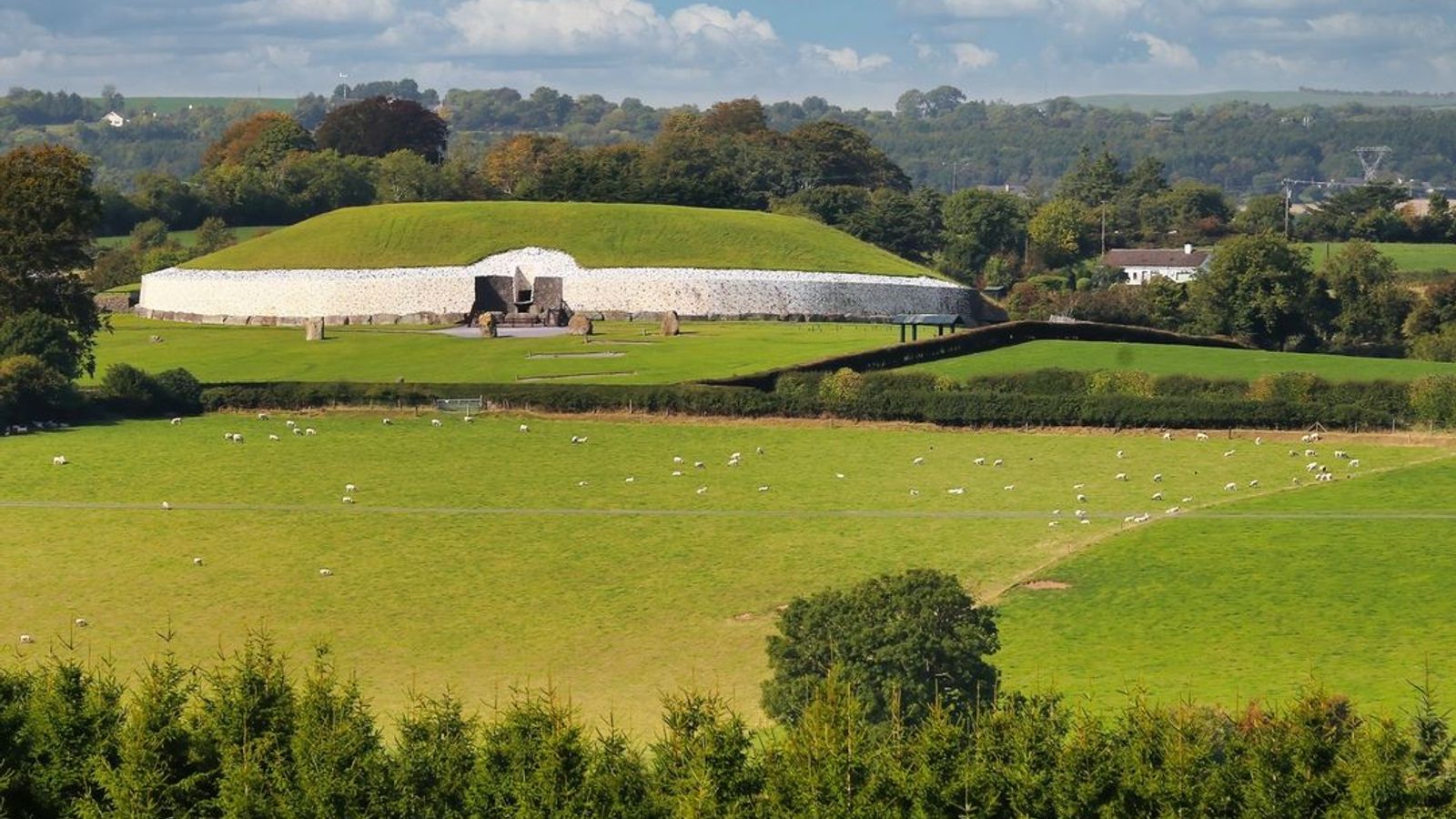
Newgrange was ancient when the pyramids were new. This passage tomb at Brú na Bóinne was built around 3,200 BC — making it older than Stonehenge by 500 years and older than the Great Pyramid of Giza by roughly 600 years.
The people who built it left no writing. We do not know their names, their beliefs, or the exact rituals they performed inside. What we do know is that they understood the movements of the sky with a precision that still amazes modern engineers.
They oriented the entire monument to catch the exact angle of sunrise on the shortest day of the year. And they did it so accurately that the alignment still works perfectly today.
The Roof Box That Took Decades to Rediscover
When archaeologist Michael J. O’Kelly began excavating Newgrange in the 1960s, he noticed something unusual above the entrance — a stone slot that appeared to serve no structural purpose. It is now called the roof box.
Local folklore had long held that the sun once entered the tomb. In 1967, O’Kelly decided to wait alone inside the chamber on the morning of the winter solstice to see for himself.
At sunrise, a beam of light entered through the roof box. It crept slowly along the floor of the passage. It reached the chamber. It lit up the carved stones in a blaze of gold.
O’Kelly later wrote that the experience was unlike anything he had ever witnessed.
What Rests Inside the Chamber
The inner chamber at Newgrange is a large, corbelled room with three small alcoves arranged in a cross shape. The stone walls are covered in carved spirals, lozenges, and abstract designs.
The triple spiral carved into the back stone is one of the most recognised symbols in Irish prehistory. Nobody has definitively decoded its meaning — though theories range from solar calendars to depictions of the cycle of life.
Cremated human remains were found in the alcoves. Newgrange is believed to have been a place where the dead were brought to rest — and where, once a year, they were touched by the returning light of the winter sun.
☘️ Enjoying this? 65,000 Ireland lovers get stories like this every week. Subscribe free →
A Monument Built by a Whole Community
Building Newgrange was an enormous undertaking. The mound contains roughly 200,000 tonnes of material. The large kerbstones were sourced from riverbeds up to 70km away and moved without wheels or metal tools.
Archaeologists believe it would have taken a community of several hundred people many years to complete. This was not simply practical construction — it was an act of collective devotion on a scale that is hard to comprehend.
County Meath is filled with monuments from this era. The County Meath travel guide is a good place to start if you want to explore the full Brú na Bóinne valley and its surrounding sites.
Planning a Visit
You cannot enter Newgrange independently. Access to the chamber is managed through the Brú na Bóinne Visitor Centre in Donore, which also covers the nearby tombs of Knowth and Dowth.
Entry to the inner chamber during the winter solstice is by lottery only. Tens of thousands of people apply each year for fewer than 60 places across the five-day solstice window. Those who win describe it as one of the most moving experiences of their lives.
But even on an ordinary day, the visit is remarkable. Guides recreate the solstice effect using artificial light inside the chamber. You stand in the dark, and then — slowly — the beam appears. It crosses the floor. It reaches the back stone. And for a moment, you understand something the builders of 3,200 BC understood: the light will always come back.
If you are planning your trip to Ireland, building in a half-day at Brú na Bóinne is one of the best decisions you can make.
There is something deeply comforting about Newgrange. These anonymous builders — people we know almost nothing about — left behind proof that they watched the world, that they marked the passage of time, and that they believed the light would return even from the depths of winter.
Five thousand years later, it still does.
☘️ You Might Also Love
☘️ Join 65,000+ Ireland Lovers
Every Friday, get Ireland’s hidden gems, local secrets, and travel inspiration — the kind you won’t find in any guidebook.
Already subscribed? Download your free Ireland guide (PDF)
Love more? Join 43,000 Scotland lovers → · Join 30,000 Italy lovers → · Join 7,000 France lovers →
Free forever · · Unsubscribe anytime
Tours & experiences you might love


Powered by Viator. Some links are affiliate links — we may earn a small commission at no extra cost to you.
Secure Your Dream Irish Experience Before It’s Gone!
Planning a trip to Ireland? Don’t let sold-out tours or packed attractions spoil your journey. Iconic experiences like visiting the Cliffs of Moher, exploring the Rock of Cashel, or enjoying a guided walk through Ireland’s ancient past often sell out quickly—especially during peak travel seasons.

Booking in advance guarantees your place and ensures you can fully immerse yourself in the rich culture and breathtaking scenery without stress or disappointment. You’ll also free up time to explore Ireland’s hidden gems and savour those authentic moments that make your trip truly special.
Make the most of your journey—start planning today and secure those must-do experiences before they’re gone!