

Most people who own an Aran sweater don’t know what it is.
They know it’s thick. They know it’s Irish. They know it feels right on a cold Atlantic morning.
What they don’t know is that every single stitch is a symbol. And that those symbols were born from one of the most isolated, weather-battered stretches of land in Europe.
The Islands That Made It
The Aran Islands sit twelve miles off the Galway coast. Three small limestone outcrops — Inis Mór, Inis Meáin, and Inis Oírr — battered by the Atlantic for as long as people have lived there.
There is almost no natural soil. The islanders built it themselves, layering sand and seaweed over bare rock to create the small, irregular fields that still patch the islands today.
There are no trees. The wind shapes everything. Houses were low-set and turned away from the sea.
Fishing was how families survived. The Atlantic gave life. The Atlantic also took it.
The Sweater That Kept Men Alive
The traditional Aran sweater — known locally as a geansaí (pronounced “gansee”) — was knitted from báinín wool. Raw, undyed, and naturally water-resistant because the lanolin from the sheep had not been washed out.
Every woman on the island could knit. It was not a hobby — it was part of running a household within reach of the sea.
Knitting was done by firelight on winter evenings, with the whole family nearby. A skilled knitter could complete a sweater in a week or two. The best knitters were known across the island.
Men wore these sweaters aboard their currachs — fragile skin-covered boats they used to fish some of the roughest waters in Ireland.
A Language Knitted in Wool
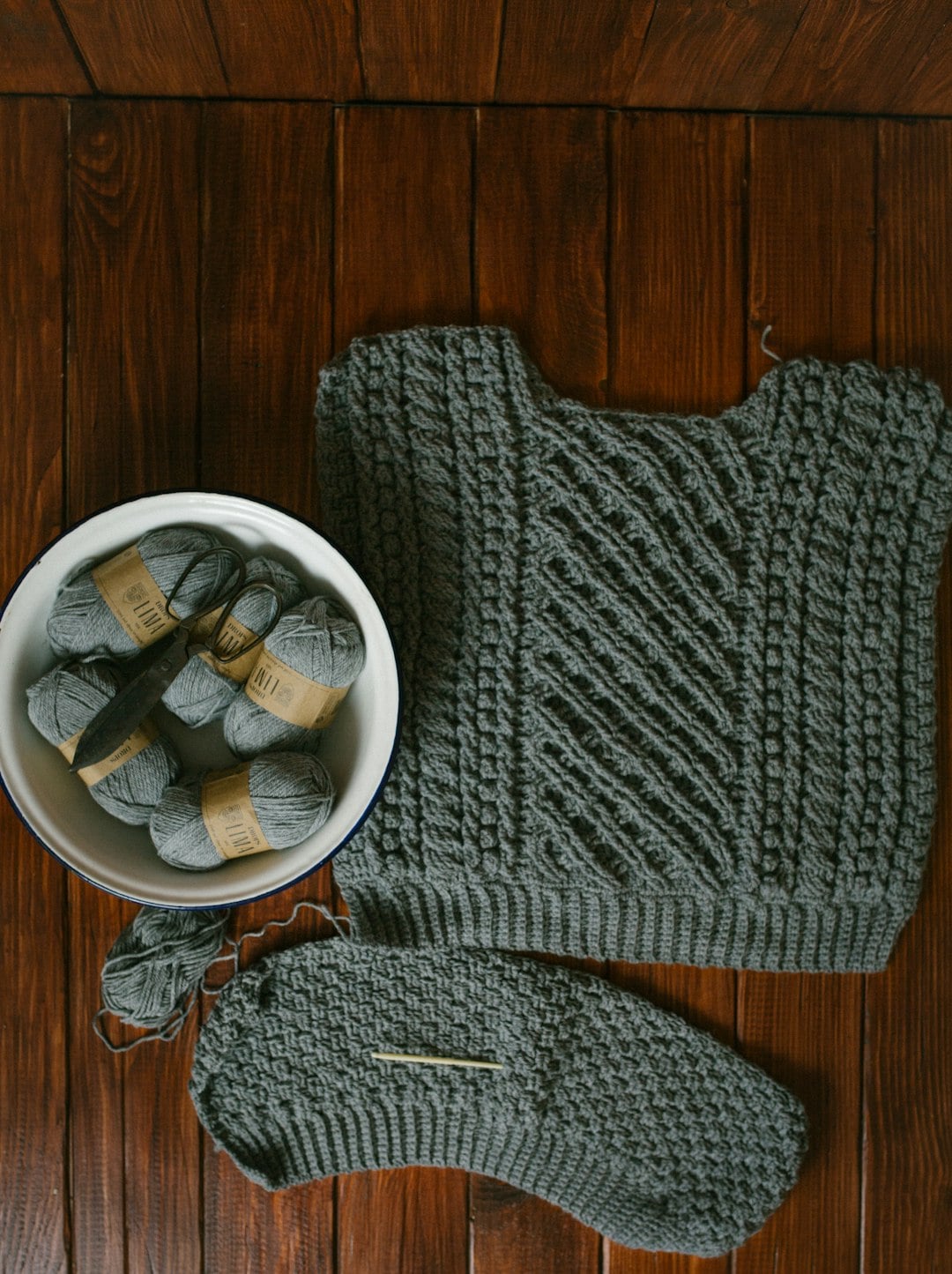
The stitches were not decorative. Each had a name, and each name carried meaning.
The cable stitch — twisted ropes of yarn — represented the fisherman’s rope, and the hope of a safe return from sea.
The diamond stitch echoed the tiny stone-walled fields of the islands. Small, hard-won parcels of land. A wish for wealth and good fortune.
The honeycomb stitch spoke of hard work and reward — the structure of the hive, the sweetness that comes after effort.
The trellis stitch represented the fields and the garden. Home. Rootedness. The things worth returning to.
Taken together, a sweater said something about the person wearing it — where they came from, what mattered to them.
☘️ Enjoying this? 64,000+ Ireland lovers get stories like this every week. Subscribe free →
The Legend — and the More Interesting Truth
You may have heard the story: each Aran Islands family had its own unique pattern, so that drowned fishermen could be identified by their sweater when the sea returned them.
It is a powerful image. It is also largely a legend.
No solid historical evidence supports the idea of strict family-specific patterns. The story became widespread in the mid-20th century — partly through marketing, partly because it resonated so deeply with the real risks of island life.
But the story holds something true at its heart. The islands were isolated. Families did have preferences. And the sweater was as close to an identity as many fishermen ever wore.
The myth deserved to be true. That alone says something about the power of the garment.
How the World Fell in Love
The Aran sweater left the islands in the 1950s and 60s. Vogue photographed them. Fashion designers in Dublin and New York began placing orders.
By the 1970s, the cream-coloured, cable-knit sweater had become shorthand for Ireland itself — instantly recognisable from Tokyo to Toronto.
Today, Inis Meáin Knitting Company — still based on the smallest of the three islands — produces garments worn by fashion houses across Europe. The island that once made sweaters to survive now supplies some of the world’s most discerning designers.
Wearing One
If you visit the Aran Islands, you will find sweaters for sale in craft shops, heritage centres, and small island stores. The most authentic are still made locally, using undyed or vegetable-dyed wool with traditional stitches raised high enough to feel under your hands.
A genuine Aran sweater is heavier than you expect. The stitches are firm. You can trace the pattern with your fingers like a map.
That weight has always been the point. It was never made to be light.
If the sweater has sparked your curiosity about the islands themselves, the Aran Islands offer something unlike anywhere else in Ireland — a place where the old language, old crafts, and old ways still hold on. And if you are planning the wider trip, our Ireland trip planning guide covers everything you need to get started.
The sweater made the islands famous. The islands will make the sweater mean something.
☘️ You Might Also Love
Tours & experiences you might love


Powered by Viator. Some links are affiliate links — we may earn a small commission at no extra cost to you.
Secure Your Dream Irish Experience Before It’s Gone!
Planning a trip to Ireland? Don’t let sold-out tours or packed attractions spoil your journey. Iconic experiences like visiting the Cliffs of Moher, exploring the Rock of Cashel, or enjoying a guided walk through Ireland’s ancient past often sell out quickly—especially during peak travel seasons.

Booking in advance guarantees your place and ensures you can fully immerse yourself in the rich culture and breathtaking scenery without stress or disappointment. You’ll also free up time to explore Ireland’s hidden gems and savour those authentic moments that make your trip truly special.
Make the most of your journey—start planning today and secure those must-do experiences before they’re gone!