

There is a stone in County Meath that is older than the pyramids. Carved into its face is a symbol that nobody has ever fully explained. Archaeologists have studied it for decades. They still can’t agree on what it means.
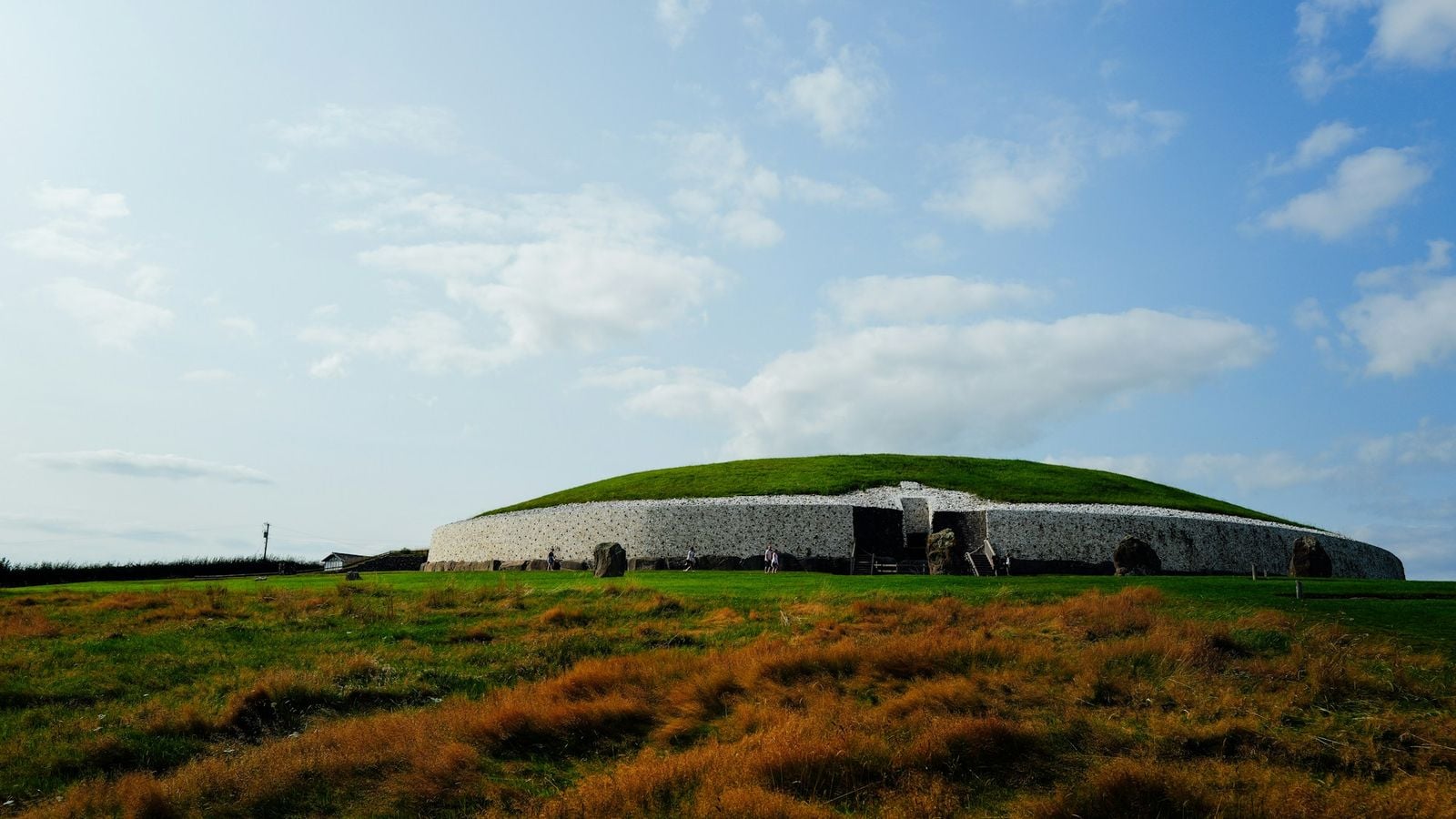
Carved Before History Was Written
The stone sits at the entrance to Newgrange, a passage tomb built around 3,200 BCE in the Boyne Valley of County Meath. The people who made it had no metal tools, no writing, and no wheel.
Yet the spiral they cut into the kerbstone is precise, deep, and deliberate. It is one of the finest examples of megalithic art in Europe. And it has sat in the same spot for roughly 5,000 years.
The triple spiral — three interlocking spirals that meet at a central point — is the most striking carving on the entrance stone. Smaller spirals appear throughout the interior of the monument too. These were not accidental marks left by idle hands.
What It Might Mean
No one who carved the symbol left instructions. That is the honest answer.
But archaeologists have proposed several theories. The most popular links the triple spiral to the movement of the sun. Newgrange was built around the winter solstice sunrise, when light floods the inner chamber for around 17 minutes each year. Some researchers believe the three spirals represent the three key solar moments: winter solstice, summer solstice, and the equinox.
Others connect it to the cycle of life, death, and rebirth — ideas central to many ancient cultures. The number three carried deep meaning in early Irish belief: three provinces, the threefold nature of the world, the triple goddess. A third theory links the spirals simply to the three seasons recognised in early Ireland: spring, summer, and winter.
All of these remain theories. The builders are long gone, and they took the answer with them.
The Same Symbol Across the Landscape
What makes the triple spiral especially compelling is that it doesn’t only appear at Newgrange.
The same motif shows up at Knowth and Dowth, two other passage tombs in the Boyne Valley just a few kilometres away. It appears on carved stones across County Meath and beyond. The spiral pattern kept resurfacing in Irish art across the centuries, long after the people who first cut it had vanished from history.
By the early Christian period, spiral knotwork was woven into illuminated manuscripts like the Book of Kells. Whether the monks knew the symbol’s origins, or simply inherited a visual language that had been passed down for generations, is another question without a clear answer. If you want to explore the Boyne Valley properly, the County Meath guide covers the key sites and how to reach them.
☘️ Enjoying this? 64,000+ Ireland lovers get stories like this every week. Subscribe free →
A Symbol That Never Really Disappeared
Walk through any Irish city today and you will find the triple spiral on jewellery, tattoos, pub signs, and shop windows. It has become one of the most recognised symbols of Irish identity worldwide — worn by the diaspora, set into wedding rings, printed onto keyrings bought in every tourist town from Dingle to Donegal.
Most people who wear it couldn’t explain what it means. And in a strange way, that feels right. A symbol this old was never meant to be fully owned or fully resolved. It belongs to the stone, the landscape, and the long unbroken story of a people who have always known how to hold mystery without needing to answer it.
How to See It for Yourself
The entrance stone at Newgrange is visible from outside the monument and is part of every guided tour. The Brú na Bóinne Visitor Centre in County Meath covers Newgrange, Knowth, and Dowth, with shuttle buses running to the tombs themselves.
The site sits about 50 kilometres north of Dublin and is easy to reach by car or on a day trip. If you want to stand inside the chamber at the winter solstice, you’ll need to enter the annual lottery — demand vastly exceeds the small number of places available. But the entrance stone and its spiral are there year-round, and they don’t require any particular sunrise to make an impression.
The Ireland trip planning guide has practical advice on getting there, when to go, and what else to see in the Boyne Valley while you’re in the area.
Standing in front of that stone, looking at the spiral, it is easy to feel the weight of time. Five thousand years of people have stood in roughly the same spot and asked the same question. None of them got a definitive answer either. That puts you in very good company.
☘️ You Might Also Love
Tours & experiences you might love


Powered by Viator. Some links are affiliate links — we may earn a small commission at no extra cost to you.
Secure Your Dream Irish Experience Before It’s Gone!
Planning a trip to Ireland? Don’t let sold-out tours or packed attractions spoil your journey. Iconic experiences like visiting the Cliffs of Moher, exploring the Rock of Cashel, or enjoying a guided walk through Ireland’s ancient past often sell out quickly—especially during peak travel seasons.

Booking in advance guarantees your place and ensures you can fully immerse yourself in the rich culture and breathtaking scenery without stress or disappointment. You’ll also free up time to explore Ireland’s hidden gems and savour those authentic moments that make your trip truly special.
Make the most of your journey—start planning today and secure those must-do experiences before they’re gone!