

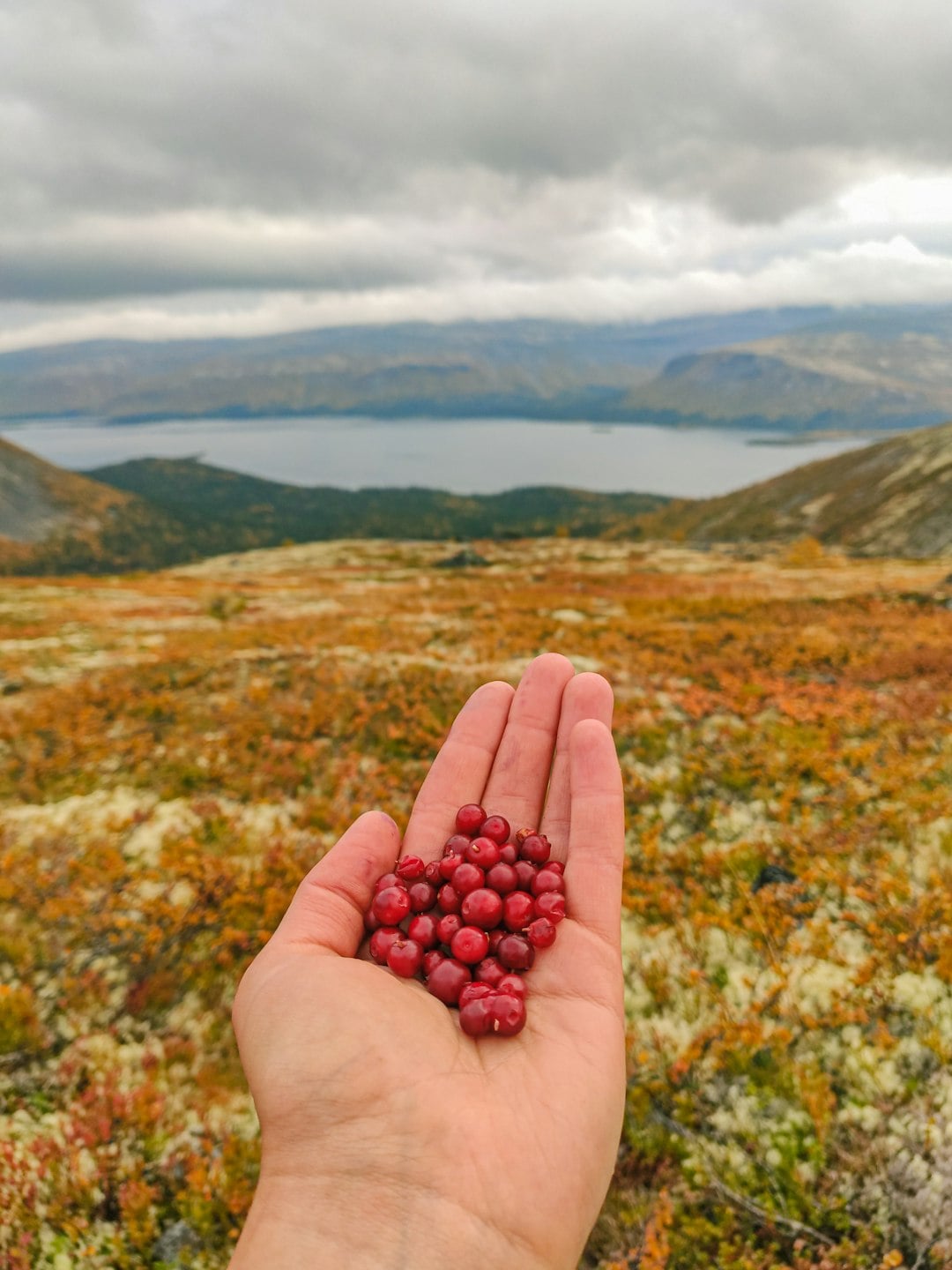
Every summer, on the last Sunday in July, something remarkable happened across Ireland. Families packed baskets and climbed hills. Not just one hill — every hill, from the Wicklow peaks to the slopes of Croagh Patrick to the purple ridges above Donegal Bay. They were searching for something small, dark, and sweet. They called it the fraughan.
What Exactly Is a Fraughan?
The fraughan (from the Irish fraochán, meaning “little heather berry”) is Ireland’s native bilberry — a wild cousin of the blueberry that grows low on heathered hillsides across the country. It ripens only once a year, in a brief window in late July and early August. It grows too scattered and too wild to cultivate commercially. You have to go looking for it.
The berry has a deeper, more intense flavour than any blueberry you’d find in a shop. It stains fingers and teeth a dark blue-purple for hours. Children who spent a morning picking fraughans came home looking as though they’d been in a paint fight.
Unlike most wild foods, fraughans were never a food of desperation. They were a food of celebration — gathered on a specific day, for a specific reason, in a ritual that had been going on for thousands of years.
The Ancient Calendar Behind Fraughan Sunday
Fraughan Sunday falls on the last Sunday of July, aligning almost exactly with Lúnasa — the ancient Celtic harvest festival that honoured the god Lugh and marked the turn from summer to harvest. Long before Christianity arrived in Ireland, people gathered on high ground on this day to leave offerings, give thanks, and mark the season.
The Church absorbed the tradition rather than abolishing it. Fraughan Sunday became known by different names depending on the county: Bilberry Sunday in Wicklow, Garland Sunday in Galway, Mountain Sunday in parts of Ulster. The climbing, the gathering, and the communal feast remained the same everywhere.
The same seasonal instinct that drew Irish people to holy wells drew them to hilltops on this day. High places and water sources both served as points of contact between the ordinary world and something older.
The Social Side of the Climb
For young people, Fraughan Sunday was something else entirely: one of the few occasions in rural Ireland where boys and girls could legitimately spend time together on a hillside, away from the village.
☘️ Enjoying this? 64,000+ Ireland lovers get stories like this every week. Subscribe free →
Young men helped fill baskets. Young women steered their routes in familiar directions. Matches were made on fraughan hills that ended in church before the year was out. Older locals in the west of Ireland still remember Fraughan Sunday as the most important social event of summer — more significant, in some ways, than any fair or festival.
The hillside was the great leveller. Everyone made the same climb. Everyone came home the same colour.
How Fraughans Were Used
The berries didn’t just get eaten on the hill. Those who brought enough home made fraughan jam, fraughan tarts, and fraughan fool — crushed berries folded into fresh cream. It was one of the few wild sources of sweetness at a time when sugar was expensive and rare in rural Ireland.
Some families made fraughan wine. Others used the berries as medicine. Country healers (bean feasa) included bilberries in summer tonics, particularly for the eyes and stomach — uses now backed by modern nutritional research. The fraughan was food, medicine, and a mark that the harvest season had properly begun.
Where the Tradition Survived Longest
The custom held strongest in the western counties — Leitrim, Sligo, Mayo, and Donegal — where the hills run high and the heather is thick enough to hide fraughans in abundance. Mountaintops like Slieve League in Donegal and the Ox Mountains in Sligo still carry fraughan on their slopes in late July.
The Reek Sunday pilgrimage to Croagh Patrick — tens of thousands climbing Ireland’s holy mountain on the last Sunday of July — is one of the great survivals of this ancient pattern. Most who climb know the Christian meaning. Fewer know the older one beneath it: the Lúnasa instinct to put your feet on high ground in late July.
The Berry That Almost Disappeared
By the mid-twentieth century, Fraughan Sunday had quietly faded in most parts of Ireland. Changing land use, the collapse of rural communities, and the arrival of cheap imported fruit made the ritual seem unnecessary. Why climb a hill for berries when the shop had blueberries from Spain?
The fraughan itself didn’t disappear. It’s still up there, on the same hillsides it has always covered, ripening in the same brief window every summer. Some communities in Clare, Galway, and Donegal still mark Garland Sunday with a hill walk, even if most walkers couldn’t name a fraughan if it stained their hand.
If you’re planning a trip to Ireland in late July, and you find yourself on a heathered hillside, look closely at what’s growing around your feet. Small, dark, dusty blue. Taste one if you find it.
You’ll be doing something Irish people have done on that same hillside for three thousand years.
☘️ You Might Also Love
Frequently Asked Questions
What is the historical significance of Wild Berry That Once Brought Every Irish Family to the Mountaintops?
This is one of Ireland’s fascinating historical and cultural stories — a reminder of the depth of Irish heritage that extends far beyond the better-known landmarks. These hidden histories are what make exploring Ireland so rewarding for curious visitors.
Where in Ireland can you learn more about this history?
Ireland’s network of local museums, heritage centres, and county archives hold remarkable collections of local history. The National Museum of Ireland (nationalmuseum.ie) and the National Library of Ireland also maintain extensive records of Irish cultural heritage.
Is this part of Irish culture still visible today?
Many aspects of Ireland’s ancient and folk culture are still visible if you know where to look. Local guides, heritage walks, and community festivals often reveal these hidden layers of Irish life that most tourists never see.
How does this story connect to modern Irish identity?
Irish people have a strong sense of connection to their heritage, and stories like this one are part of the cultural fabric that shapes modern Irish identity. The Irish language, traditional music, and folk customs all carry echoes of this long history.
☘️ Join 64,000+ Ireland Lovers
Every Friday, get Ireland’s hidden gems, local secrets, and travel inspiration — the kind you won’t find in any guidebook.
Subscribe free — enter your email:
Already subscribed? Download your free Ireland guide (PDF)
Love more? Join 43,000 Scotland lovers → · Join 30,000 Italy lovers → · Join 7,000 France lovers →
Free forever · · Unsubscribe anytime
Tours & experiences you might love


Powered by Viator. Some links are affiliate links — we may earn a small commission at no extra cost to you.
Secure Your Dream Irish Experience Before It’s Gone!
Planning a trip to Ireland? Don’t let sold-out tours or packed attractions spoil your journey. Iconic experiences like visiting the Cliffs of Moher, exploring the Rock of Cashel, or enjoying a guided walk through Ireland’s ancient past often sell out quickly—especially during peak travel seasons.

Booking in advance guarantees your place and ensures you can fully immerse yourself in the rich culture and breathtaking scenery without stress or disappointment. You’ll also free up time to explore Ireland’s hidden gems and savour those authentic moments that make your trip truly special.
Make the most of your journey—start planning today and secure those must-do experiences before they’re gone!
Subscribe Free