

At a mossy spring in County Clare, someone has tied a strip of faded cloth to a hawthorn branch. Beside it hang a string of rosary beads and a handwritten note tucked in a plastic bag. This is not an old ritual kept alive by tourists. This happened last week.
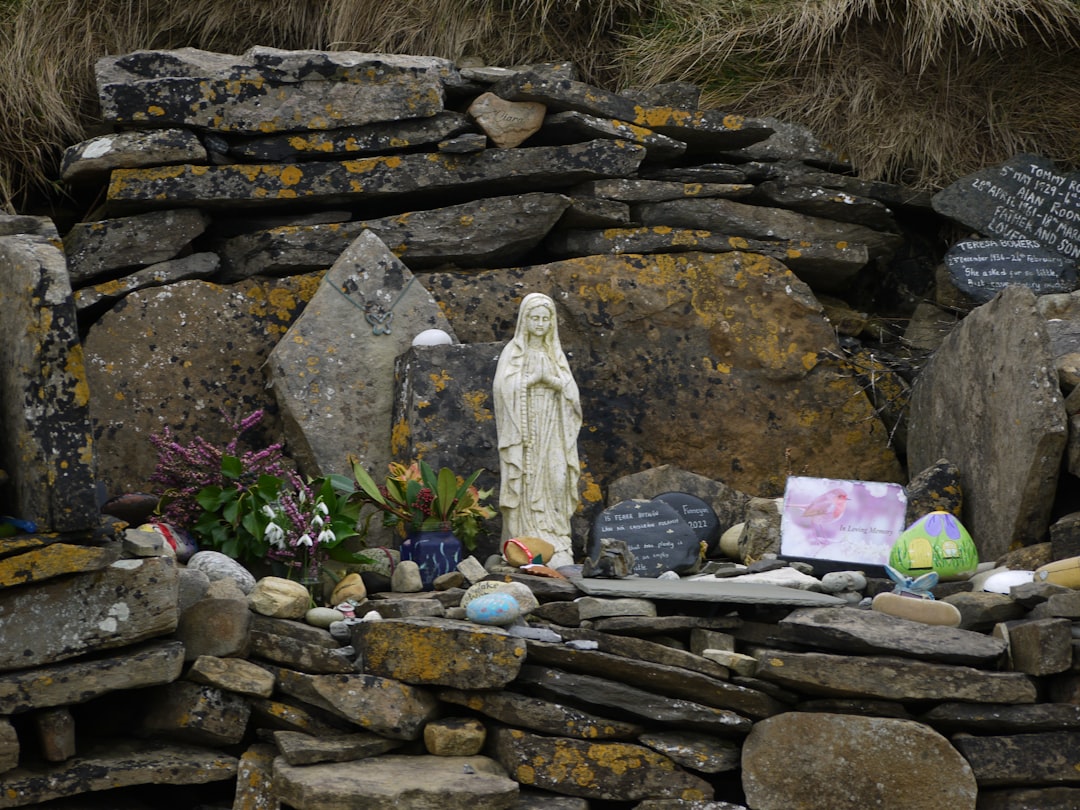
Ireland has over 3,000 holy wells. They are springs, streams, and pools — usually in rural fields or on hillsides — venerated for centuries, long before Christianity arrived. Most are marked only by a simple stone. A few have elaborate carved stone basins. Many are hidden entirely, known only to locals.
What Is a Holy Well?
These wells are sacred springs, each associated with a saint — St Brigid, St Patrick, countless local figures. But the reverence goes deeper than any saint’s name. The Celts held water sacred long before Christianity arrived. The early Church simply added new names to old places.
Water flowing from the earth was considered a threshold — a point where the natural world and the spirit world touched. In Ireland, that belief never entirely disappeared. It just changed clothes over the centuries.
Many of the densest concentrations of holy wells are in County Clare, Kerry, Mayo, and Sligo. The Burren in County Clare — that strange limestone landscape that looks like it belongs on another planet — is particularly rich with them.
The Rag Tree Tradition
Beside nearly every holy well, there is a tree. Most often a hawthorn — a species long considered protective and otherworldly in Irish folklore.
Pilgrims tie strips of cloth to its branches. You dip the cloth in the well water, tie it to the tree, and as the rag rots away over the coming months, it is believed that the ailment or grief tied there with it dissolves too.
Over time, these trees fill with faded ribbons, rosary beads, photographs, and handwritten prayers tucked into weatherproof bags. Some carry decades of offerings. They are strange and beautiful and intensely human.
The Pattern Day
Holy wells were never quiet, solitary sites. They were gathering points — the focus of the “Pattern Day” (from the Irish pátrún, meaning patron saint’s feast day).
On Pattern Days, communities walked in procession to the well, performed ritual circuits called “rounds” — always clockwise — and said prayers at set stations along the route. Food, music, and socialising followed. A Pattern Day was part religious observance, part local festival.
The Catholic Church suppressed many Pattern Days in the 18th and 19th centuries, troubled by the drinking and dancing that followed the prayers. Some survived regardless. Others are being quietly revived today by communities who want to reclaim what was taken.
☘️ Enjoying this? 64,000+ Ireland lovers get stories like this every week. Subscribe free →
Healing Water
Different wells were believed to cure different ailments — one for eye complaints, another for joint pain, another for skin conditions. The connection between a specific well and a specific cure is precise and local, passed down orally across generations and rarely written down.
Pilgrims would wash the affected part in the water, drink from it, or carry small bottles home. This practise sat comfortably alongside mainstream Catholic devotion. In rural Ireland, folk healing and the Church coexisted in the same parish without conflict.
That tradition of folk medicine runs wider than wells alone. Some Irish families are still believed to carry specific cures — never charging for their gift, and never refusing someone who asks.
Croagh Patrick and the Pilgrimage Routes
Ireland’s most famous pilgrimage site is Croagh Patrick in County Mayo — the mountain where St Patrick is said to have fasted for forty days. Each July, thousands still climb it, many barefoot, as an act of devotion.
At the base of the mountain sits St Patrick’s Well — a holy well still visited by pilgrims before and after the climb. It is one of hundreds of wells connected to old pilgrimage routes across Ireland: quiet stations of water and prayer that once marked sacred journeys from village to mountain to coast.
These routes still exist. They are simply less visible than they once were.
The Wells Are Still There
Most holy wells survive — though many are neglected. Overgrown springs in farm fields. Forgotten stone basins at the edge of hedgerows. A carved niche beside a road that no longer leads anywhere.
But awareness is growing. Heritage groups are mapping and restoring them. Communities have revived local Pattern Days. Others maintain their well quietly, without ceremony — keeping the water clear, replacing the cloth on the rag tree when the old one has gone.
If you are planning a trip to Ireland, a holy well rarely appears on any tourist itinerary. Finding one takes a local tip and a willingness to walk through a field. But what you find there — the rag tree, the still water, the quiet sense that people have been doing this for a very long time — is unlike any heritage site with an entrance fee.
Something That Has Never Left
Ireland changed enormously in the 20th century. Old institutions faded. The countryside emptied. Many ancient customs fell away.
The holy wells remained.
Perhaps because they ask nothing of you. No priest, no institution, no doctrine. Just water from the earth, a tree, and whatever you brought to leave behind.
☘️ You Might Also Love
Tours & experiences you might love


Powered by Viator. Some links are affiliate links — we may earn a small commission at no extra cost to you.
Secure Your Dream Irish Experience Before It’s Gone!
Planning a trip to Ireland? Don’t let sold-out tours or packed attractions spoil your journey. Iconic experiences like visiting the Cliffs of Moher, exploring the Rock of Cashel, or enjoying a guided walk through Ireland’s ancient past often sell out quickly—especially during peak travel seasons.

Booking in advance guarantees your place and ensures you can fully immerse yourself in the rich culture and breathtaking scenery without stress or disappointment. You’ll also free up time to explore Ireland’s hidden gems and savour those authentic moments that make your trip truly special.
Make the most of your journey—start planning today and secure those must-do experiences before they’re gone!