

She doesn’t come for everyone. That’s the part most people get wrong about the banshee. She has no interest in strangers or people with foreign surnames. In old Irish belief, she is bound to specific families — and if she comes for yours, she has been watching for generations.
What the Word Actually Means
The word banshee comes from the Irish bean sí — “woman of the fairy mound.” She is not a ghost, not a demon, and not a random creature of the dark. She is something older than all of those things.
In Irish mythology, the sí were the underground dwelling places of the Tuatha Dé Danann — the ancient divine race said to have retreated beneath the hills when the Gaels arrived. The fairy mounds that still dot the Irish countryside are where this ancient belief lives on. The banshee is counted among their number.
Her purpose is to mourn. She does not cause death. She announces it.
The Families She Follows
This is where the old belief becomes specific. The banshee was said to follow only families of ancient Gaelic descent — primarily those whose surnames begin with O’ or Mac. The O’Neills, O’Briens, O’Connors, and MacCarthys were among the great families said to have their own banshee, loyal to them across centuries.
Each family’s banshee was personal to them alone. She had followed the bloodline for generations, watching the births and the deaths, learning every face in turn.
19th-century folklore collectors, including Lady Wilde, recorded accounts of the banshee appearing at the deaths of notable Irish figures who had died far from home — as though she had crossed the water to make her announcement, just as the family had done before her.
What She Looks Like
She has no single face. Irish folklore describes her in three distinct forms.
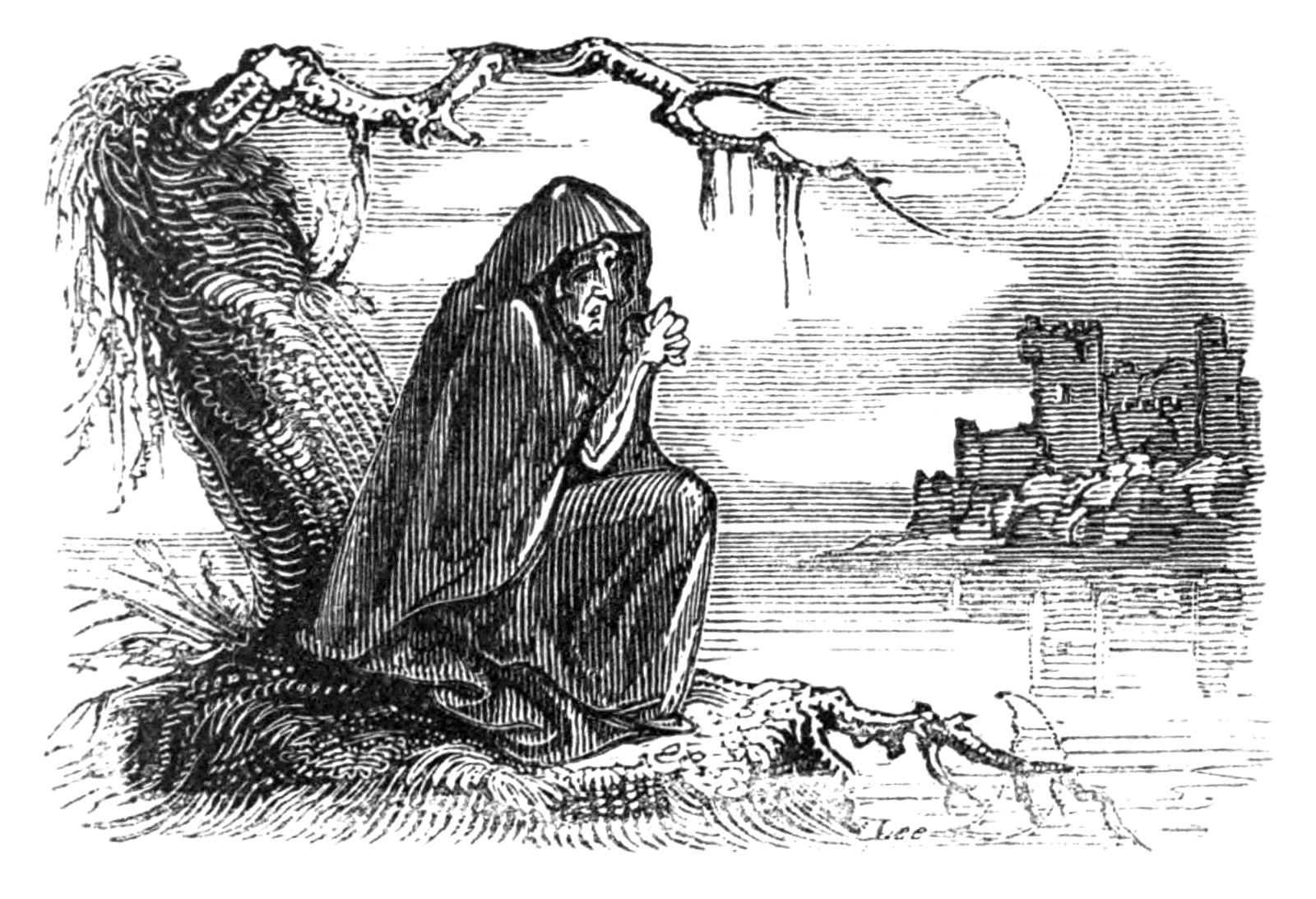
The first is a young woman — pale, with loose hair and eyes red from weeping. The second is a middle-aged woman with silver hair, dressed in grey or white. The third, and most feared, is a bent old woman whose voice carries across the fields before dawn.
Some accounts say the same banshee appears differently to different members of the same family. She is nearly always seen at a distance, as though she stands at the boundary between the living and the next world without crossing it. At rivers and streams, she is sometimes spotted washing a shroud — back turned, hands moving through the water, singing quietly before the wail begins.
Enjoying this? 64,000+ Ireland lovers get stories like this every week. Subscribe free
The Sound
The most recognised element of the banshee is her cry — the caoine, from the same root as keening, the ancient Irish art of ritual mourning sung at wakes.
It is not a simple scream. Those who claimed to have heard it described something between a long, high note and a human sob — melodic enough to stop you mid-step, sorrowful enough to hold you there. It carries across fields and through closed windows. It builds, settles, and builds again.
Accounts from rural Ireland well into the 20th century tell of households waking in the night to a sound they could not name. By morning, word would arrive of a family member’s death — someone ill in another county, or gone suddenly abroad.
What Survived Into the Modern Age
Belief in the banshee never fully left rural Ireland. It grew quieter and tucked itself into the edges of conversation — the way all old beliefs do when the modern world presses in. But it did not vanish.
In County Leitrim and parts of Clare and Kerry, older people spoke carefully about the banshee well into living memory. Not with fear exactly, but with the particular seriousness given to something that has been true in a family for as long as anyone can remember.
Today she appears in Irish poetry, song, and literature stretching from the 18th century to the present. The Irish Folklore Commission collected hundreds of first-hand accounts during the 1930s and 40s. In that sense, the banshee is one of the best-documented supernatural figures in European folklore.
Why She Endures
There is something in the banshee that speaks to how the Irish have always thought about death. She does not ignore it or dress it in comfort. She mourns it — loudly, honestly, on behalf of the whole bloodline.
In a culture where grief was never hidden, where keening was a public and performed art, the banshee fits perfectly. She is not the only Irish supernatural figure tied to a specific family’s fate — but she is the most intimate. She knows your name. She has always known it.
She is not a warning to be afraid of. She is a witness. And in Irish tradition, being witnessed matters more than most people realise.
If your surname carries an O’ or a Mac — whether you live in Galway, Boston, or Melbourne — there is a possibility that someone has been following your family’s story for a very long time. If you ever walk the old roads of Ireland at dusk, you may understand why the old stories never quite let go.
☘️ You Might Also Love
Join 64,000+ Ireland Lovers
Every Friday, get Ireland’s hidden gems, local secrets, and travel inspiration — the kind you won’t find in any guidebook.
Subscribe free — enter your email:
Free forever. . Unsubscribe anytime.
Tours & experiences you might love


Powered by Viator. Some links are affiliate links — we may earn a small commission at no extra cost to you.
Secure Your Dream Irish Experience Before It’s Gone!
Planning a trip to Ireland? Don’t let sold-out tours or packed attractions spoil your journey. Iconic experiences like visiting the Cliffs of Moher, exploring the Rock of Cashel, or enjoying a guided walk through Ireland’s ancient past often sell out quickly—especially during peak travel seasons.

Booking in advance guarantees your place and ensures you can fully immerse yourself in the rich culture and breathtaking scenery without stress or disappointment. You’ll also free up time to explore Ireland’s hidden gems and savour those authentic moments that make your trip truly special.
Make the most of your journey—start planning today and secure those must-do experiences before they’re gone!
Subscribe Free