

There is a story told about the Aran Islands that may or may not be entirely true — but it carries the weight of every winter spent fishing in Atlantic waters. The women who knitted the sweaters, the legend says, built their family’s identity into every stitch. When a fisherman’s body washed ashore, the pattern on his sweater told you who he was.
The Islands Behind the Sweater
The Aran Islands sit twelve miles off the Galway coast, battered by the North Atlantic on three sides. Inis Mór, Inis Meáin, and Inis Oírr — the largest, the middle, and the small — have always lived between the sea and survival.
The soil here is paper-thin, built over centuries by islanders carrying sand and seaweed inland to create something farmable. The sea provided everything else. Men fished in currachs — light, tarred boats made from canvas stretched over wood — heading out into waters that gave no guarantees of return.
The sweaters that became famous across the world began as practical garments. Made from natural, unwashed wool — still containing its own lanolin — they shed water, resisted wind, and kept fishermen warm in conditions that could kill. They were called báinín, pronounced “bawneen”, from the Irish word for undyed, cream-coloured wool.
Reading the Stitches
Every stitch pattern in an Aran sweater carries meaning, though how old these meanings are is a matter of some debate. What is clear is that the patterns connect the sweater to island life in ways that feel instinctive.
The cable stitch represents the fisherman’s rope — a symbol of safety, strength, and good fortune at sea. The diamond pattern suggests the small, irregular fields the islanders built on bare rock — a symbol of land, wealth, and resilience. The honeycomb stitch stands for the hard work of the hive, and the rewards that follow.
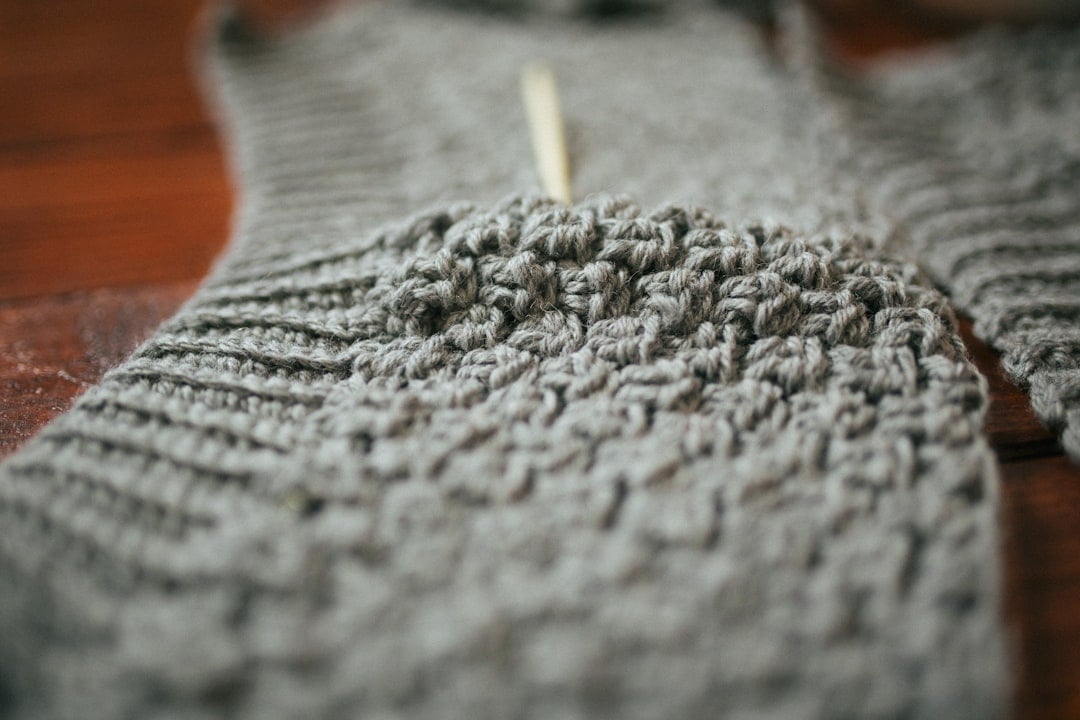
The moss stitch captures the texture of the island itself — the low, creeping growth that covers the limestone pavements between the stone walls. To wear these patterns was to carry the island with you, wherever you went.
The Myth That Became a Legend
The most famous claim about Aran sweaters is that each family knitted a unique pattern — so fishermen washed ashore could be identified by their sweater alone. It is a haunting idea, and it appears again and again in guidebooks and gift shop descriptions across Ireland.
Most historians now believe this story was largely invented — or at least heavily embellished — during the mid-20th century, when commercial interest in the sweaters was growing fast. The earliest written records of family-specific stitch patterns date from the 1960s, not from centuries before.
But the fact that the story spread so widely, and is still repeated today, tells you something real. It captured the truth of island life — the ever-present danger of the sea, the intimacy of small communities, and the way women’s quiet work carried a meaning the wider world rarely acknowledged.
☘️ Enjoying this? 64,000+ Ireland lovers get stories like this every week.
Thinking about it for retirement? If you’ve started thinking seriously about retiring there, our complete our full Retire in Ireland guide covers the visa, healthcare, cost-of-living, and the regions worth shortlisting.
How the Aran Sweater Conquered the World
The sweater that billions now recognise as quintessentially Irish was largely unknown outside Connacht until the 1950s. The playwright J.M. Synge had written about island life decades earlier, and his descriptions of the cloth sparked early curiosity. But it was commercial enterprise that did the rest.
In the early 1960s, Muriel Gahan and the Irish Country Women’s Association began promoting Aran knitwear internationally. Vogue magazine ran a feature. American tourists arriving in Ireland started asking for them by name. Steve McQueen wore one. Suddenly, every boutique from Boston to Berlin wanted Aran sweaters.
The same Aran Islands that once built boats without a single nail — isolating themselves from the mainland by necessity — became the source of something the world coveted. Women who had knitted to clothe their own families found themselves at the centre of an export industry.
What You Are Actually Holding
An authentic Aran sweater is still made by hand, though most are now produced in mainland workshops rather than on the islands. The genuine island-made article — knitted on Inis Mór or Inis Meáin by hand — can take weeks to complete.
If you visit the islands, the Aran Sweater Market in Kilronan on Inis Mór is the best place to find genuinely island-made pieces. The difference between a handmade and machine-made sweater is visible in the stitches — slight variations in tension and spacing are the marks of human hands, not machinery.
When you plan your trip west, Galway is the gateway to the Aran Islands — a ferry crossing that has barely changed since islanders first made the same journey in currachs a thousand years before.
Whatever you pay for your sweater, what you are buying is more than wool. You are holding the work of a tradition that survived the Atlantic, the Famine, and the 20th century in roughly the same form. That is worth more than any price tag.
The next time you see an Aran sweater — in a shop window, on a coat rack, in a photograph of a family gathering — look at it differently. Each twist of cable, each raised honeycomb cell, each zigzag of braid was put there with intention. Someone once sat by a fire on a wind-battered island and built meaning into every row. That meaning is still there, waiting to be noticed.
☘️ You Might Also Love
☘️ Your Irish family has a story waiting to be found.
Discover where your Irish ancestors came from — their county, their name, their story. Our free step-by-step guide walks you through every record, DNA tool, and ancestry archive. No experience needed.
Get the free guide
Enter your email and we will send you straight to the download.
Love more? Join 43,000 Scotland lovers → · Join 30,000 Italy lovers → · Join 7,000 France lovers →
Free forever · · Unsubscribe anytime
Tours & experiences you might love


Powered by Viator. Some links are affiliate links — we may earn a small commission at no extra cost to you.
Secure Your Dream Irish Experience Before It’s Gone!
Planning a trip to Ireland? Don’t let sold-out tours or packed attractions spoil your journey. Iconic experiences like visiting the Cliffs of Moher, exploring the Rock of Cashel, or enjoying a guided walk through Ireland’s ancient past often sell out quickly—especially during peak travel seasons.

Booking in advance guarantees your place and ensures you can fully immerse yourself in the rich culture and breathtaking scenery without stress or disappointment. You’ll also free up time to explore Ireland’s hidden gems and savour those authentic moments that make your trip truly special.
Make the most of your journey—start planning today and secure those must-do experiences before they’re gone!
Subscribe Free