

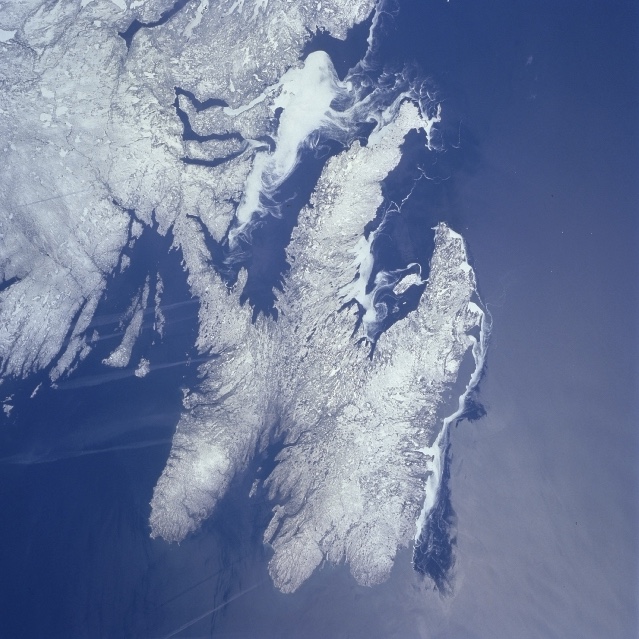
Most people who trace Irish roots to North America think first of Boston, New York, or Chicago. But on a rugged peninsula on Canada’s Atlantic coast, something different happened. The Avalon Peninsula of Newfoundland holds one of the most concentrated pockets of Irish heritage anywhere outside Ireland — and most of the world has never heard of it.
How Newfoundland Became Irish
The connection did not begin with the Great Famine. It began with fish.
From the early 1700s onwards, ships carrying salt cod made regular crossings between the harbours of southeast Ireland — Waterford, Wexford, New Ross, and Dungarvan — and the fishing grounds off Newfoundland’s coast. The cod trade was among the most profitable in the Atlantic world. The ships needed crews. The crews often stayed.
By the early 1800s, tens of thousands of Irish men and women had settled on the Avalon Peninsula. They came overwhelmingly from the same counties: Waterford, Wexford, Tipperary, and Kilkenny. They arrived speaking Irish as often as English, carrying the customs of small farms and fishing villages — and a fierce attachment to where they had come from.
The sea crossing between Waterford and St. John’s — roughly 4,500 kilometres of open North Atlantic — was made dozens of times in a working life by the men who fished the Grand Banks. Ship logs from this trade, still held in Irish and Newfoundland archives, record names, ports of origin, and dates. In many cases, the trail from a specific Irish townland to a specific Newfoundland fishing community is still traceable today.
The Surnames That Stayed
Follow the Irish Loop — the scenic coastal route around the southern tip of the Avalon Peninsula — and you will see Irish surnames on every sign and gravestone. Murphy. Walsh. Power. Whelan. O’Brien. Maher. Roche.
These are not the remnants of one emigrant generation. In many Avalon communities, these families have lived on the same peninsula for six, seven, or eight generations. Some can name the exact Irish townland their ancestors left — a connection not blurred by time but passed down as something specific and remembered.
It is the kind of living memory that Irish communities in the United States largely lost within two or three generations. In Newfoundland, it did not disappear. It simply endured.
The Language That Crossed the Ocean
Perhaps the most remarkable legacy of the Irish settlers is linguistic.
The Irish language was spoken in parts of the Avalon Peninsula well into the 19th century. In communities along Placentia Bay, it was the language of daily life for generations after the original settlers arrived. Children grew up speaking Irish at home and English in the wider world — exactly as they had in the Waterford and Wexford townlands their parents had left.
When the language eventually faded, it left traces in the dialect that followed. Certain words, phrases, and patterns in Newfoundland English carry unmistakable Irish-language roots — constructions linguists trace directly to the dialects of southeast Ireland. To hear someone from the Avalon speak quickly, in the right conditions, is to hear the echo of something very old.
☘️ Enjoying this? 64,000+ Ireland lovers get stories like this every week. Subscribe free →
The Customs That Made the Crossing
The Irish who came to Newfoundland brought more than language. They brought their ways of living together.
Mummering — the tradition of dressing in disguise and going door to door during the Christmas season for music, food, and entertainment — survived in Newfoundland long after it faded in most of Ireland. Known locally as janneying, it is still practised in some Avalon communities today. Its roots lead directly back to Irish folk customs carried on those same salt cod ships.
The long wake. The community arriving, unasked, when there was hard work to be done. Music played in someone’s kitchen on a winter evening. These were not invented in Newfoundland — they were carried there and kept alive across generations in a new land.
Tracing the Connection Today
For anyone whose family name is Walsh, Power, Whelan, or Roche — and who has always assumed the Irish story began at Ellis Island — it is worth asking what came before.
The records of the southeast Irish ports are more detailed than most people expect. The Cobh Heritage Centre and the archives of Waterford and Wexford hold ship manifests from the Newfoundland trade — lists of names from two centuries ago, leaving for a coast most of them had never seen. The story of who left, and where they went, is often more precise and more personal than anyone expected to find.
The harbours they sailed from still exist. The lighthouse that watched them go is still standing on the Cork coast. The stone quays of Waterford and New Ross look much as they did the morning those ships set sail.
Ireland scattered its people across the world. But in Newfoundland, those people did not simply assimilate and blend into a new place. They held on — to their names, their language, their customs, and their memory of where they had come from. That is something worth knowing.
☘️ You Might Also Love
Free forever · · Unsubscribe anytime
Tours & experiences you might love


Powered by Viator. Some links are affiliate links — we may earn a small commission at no extra cost to you.
Secure Your Dream Irish Experience Before It’s Gone!
Planning a trip to Ireland? Don’t let sold-out tours or packed attractions spoil your journey. Iconic experiences like visiting the Cliffs of Moher, exploring the Rock of Cashel, or enjoying a guided walk through Ireland’s ancient past often sell out quickly—especially during peak travel seasons.

Booking in advance guarantees your place and ensures you can fully immerse yourself in the rich culture and breathtaking scenery without stress or disappointment. You’ll also free up time to explore Ireland’s hidden gems and savour those authentic moments that make your trip truly special.
Make the most of your journey—start planning today and secure those must-do experiences before they’re gone!
Subscribe Free