

Order a bowl of seafood chowder in the wrong pub in Ireland and you’ll know immediately. The locals will notice. And the chowder will tell you exactly where you are — if you know how to read it.
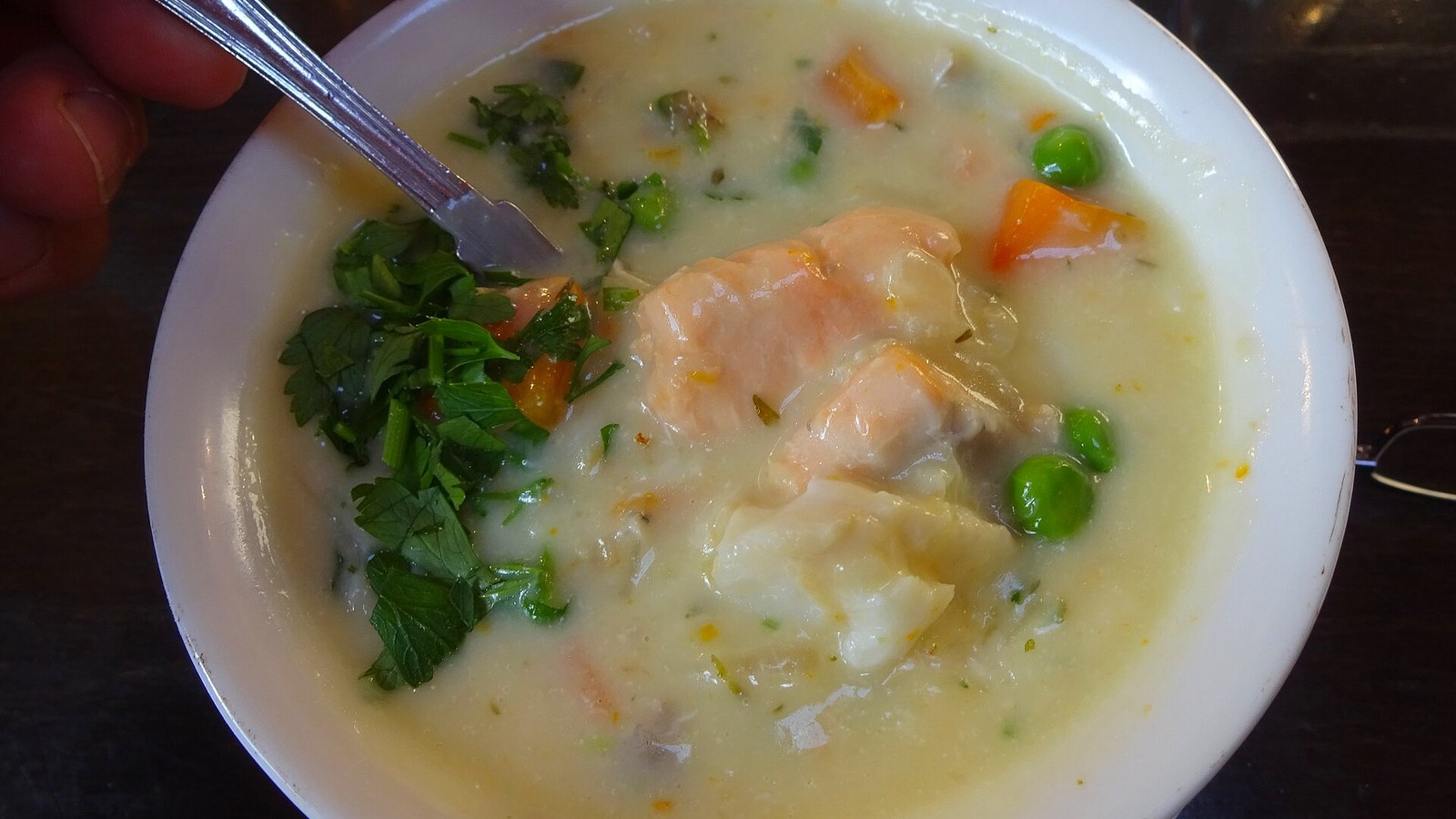
That bowl of pale, creamy soup isn’t just lunch. It’s a record of every fishing boat that ever left that harbour, every storm that changed the catch, every cook who stretched what was left into something that fed a hungry family.
Born from the Atlantic’s Generosity — and Its Limits
Ireland’s west and south coasts have produced seafood for thousands of years. The Atlantic is cold, unpredictable, and full of life — mackerel, cod, haddock, prawns, mussels, clams, and crab, depending on the season and the county.
Fishing families rarely had money to waste. Everything landed was used. Chowder emerged as the way to make that happen: fish broken into pieces, shellfish cracked open, the whole lot stretched into a pot that fed not just the fisherman’s household but often the neighbours beside them.
It was never a recipe from a book. It was an understanding passed between women while their husbands dried nets on the pier.
Why Every Village Fights Over Theirs
Ask any Irish cook which county makes the best seafood chowder and you’ll start an argument. Dingle says Kerry cream is non-negotiable. Kinsale says you need Cork harbour prawns or it’s not finished. Connemara insists on smoked fish. Wexford swears by crab.
Every village means it. The ingredients in a pot reflect what’s been available locally for generations. Cliffs, tides, and harbour depth shape what fishermen haul in — and what ends up in the chowder.
This is why chowder tastes different fifty miles up the road. It’s not a standardised dish. It’s a geography lesson in a bowl.
Cream, Potato, and the Question of Smoked Fish
There is one constant across every true Irish seafood chowder: it is cream-based. Not milk. Not stock alone. Cream.
This comes partly from practicality — dairy was widely available in rural Ireland — and partly from taste. The richness balances the brine of the sea. The potato adds body, as it has added body to almost every Irish dish for centuries.
The question that divides kitchens is smoked fish. On the west coast, where smoking salmon and haddock was traditional, a handful of smoked fish in the chowder is considered essential. On the south coast, around Kinsale and West Cork, the flavour is cleaner, brighter, and built around freshness.
Neither version is wrong. Both will stop you mid-spoonful.
☘️ Enjoying this? 64,000+ Ireland lovers get stories like this every week.
Thinking about it for retirement? If you’ve started thinking seriously about retiring there, our complete our full Retire in Ireland guide covers the visa, healthcare, cost-of-living, and the regions worth shortlisting.
The Places That Made It Famous
Three towns shaped how Ireland thinks about seafood chowder.
Fishy Fishy, Kinsale
Kinsale, in County Cork, calls itself Ireland’s gourmet capital — and it backs the claim. If you’re exploring what Cork has to offer, Kinsale’s harbour restaurants are a clear highlight. Fishy Fishy is legendary for good reason: the fish is as fresh as it gets, and the chowder here set the standard that others measure themselves against.
Murphy’s, Dingle
Dingle sits at the tip of one of the most dramatic peninsulas in Europe. Boats go out each morning and return with whatever the Atlantic decided to give. The chowder at Murphy’s in Dingle has been stopping visitors in their tracks for decades — west coast style, with smoked fish giving it weight and depth.
The Pantry and Corkscrew, Westport
Westport, in County Mayo, brings Clew Bay mussels and local prawns together in a style that’s heartier than the south — more bread, more potato, a deeper colour. It suits the wilder coastline perfectly. This is chowder that rewards a long walk in the rain.
If you’re planning your route around Ireland’s coastline, the planning hub here can help you map a trip that takes in several of these food towns in one go.
Why Visitors Keep Ordering It
Visitors who’ve had seafood chowder in Ireland once tend to come back for it. The reason isn’t complicated: it’s warm when it’s cold outside, filling when you’ve been walking, and made from something that was in the sea twelve hours ago.
What nobody expects is how much it varies. Ordering chowder in four different places gives you four different experiences — not failures of consistency, but proof that nobody is following a corporate recipe.
That’s what makes it worth seeking. The best version is always the one the cook decided to make that morning, based on what came off the boat.
Ireland’s seafood chowder isn’t a heritage dish kept alive for tourists. It’s what’s for lunch on the harbour today, the same as it was fifty years ago, made the same way because that’s the way it works. The traditions behind it are baked into every bowl. You just have to taste it slowly enough to notice.
☘️ You Might Also Love
☘️ Join 64,000+ Ireland Lovers
Every Friday, get Ireland’s hidden gems, local secrets, and travel inspiration — the kind you won’t find in any guidebook.
Subscribe free — enter your email:
Get the free guide
Enter your email and we will send you straight to the download.
Love more? Join 43,000 Scotland lovers → · Join 30,000 Italy lovers → · Join 7,000 France lovers →
Free forever · · Unsubscribe anytime
Tours & experiences you might love


Powered by Viator. Some links are affiliate links — we may earn a small commission at no extra cost to you.
Secure Your Dream Irish Experience Before It’s Gone!
Planning a trip to Ireland? Don’t let sold-out tours or packed attractions spoil your journey. Iconic experiences like visiting the Cliffs of Moher, exploring the Rock of Cashel, or enjoying a guided walk through Ireland’s ancient past often sell out quickly—especially during peak travel seasons.

Booking in advance guarantees your place and ensures you can fully immerse yourself in the rich culture and breathtaking scenery without stress or disappointment. You’ll also free up time to explore Ireland’s hidden gems and savour those authentic moments that make your trip truly special.
Make the most of your journey—start planning today and secure those must-do experiences before they’re gone!
Subscribe Free