

On a cold November morning in 1953, twenty-two people boarded a boat from the Great Blasket Island. They left their furniture. They left their doors unlocked. Three dogs were left behind on the shore. None of the islanders ever returned to live there.
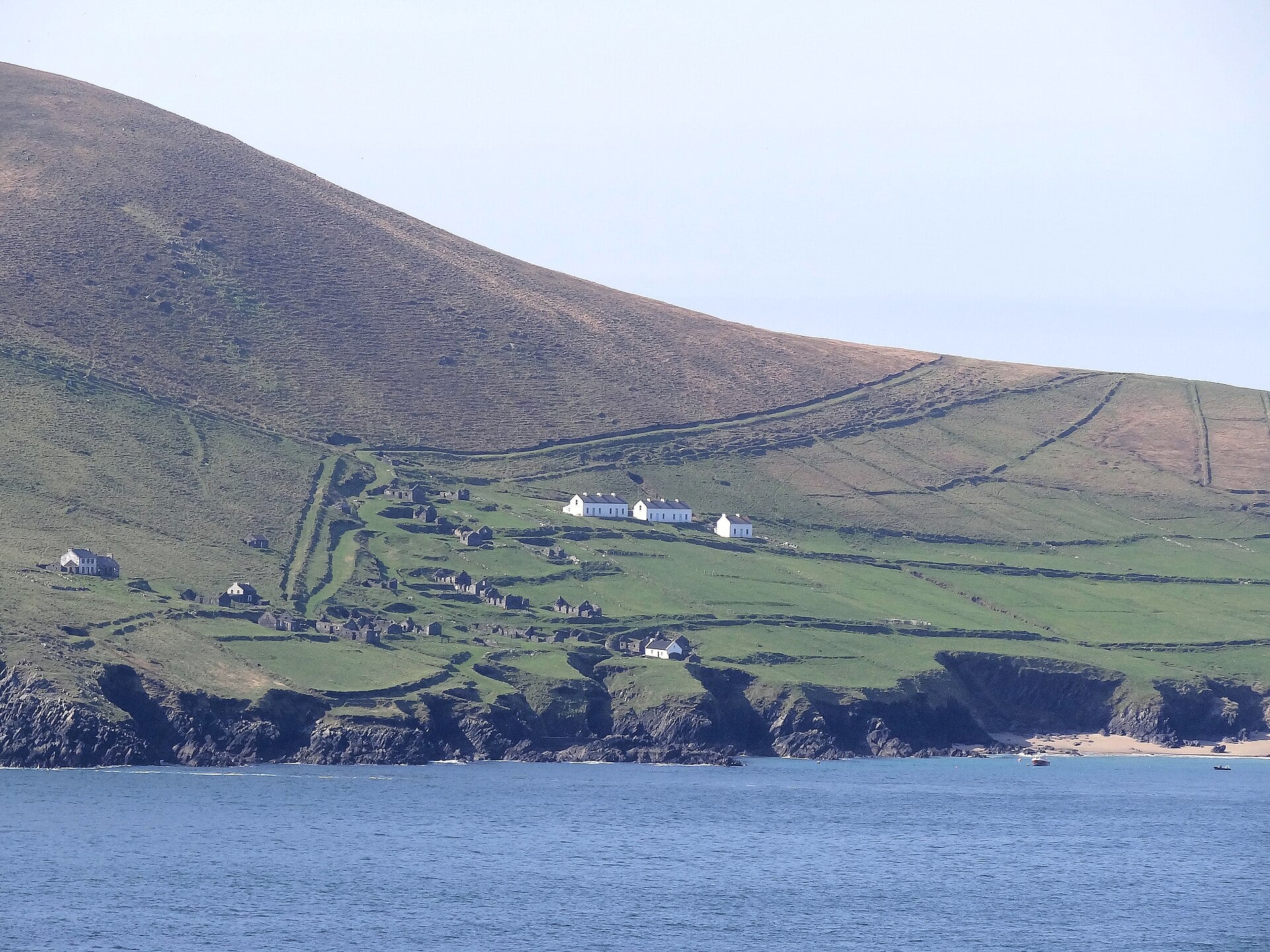
A Life Built on Rock and Saltwater
The Great Blasket Island sits six kilometres off the Dingle Peninsula in County Kerry, separated from the mainland by a fierce stretch of Atlantic water known as the Blasket Sound.
At its peak in the early 1900s, the island was home to more than 150 people. They spoke Irish — only Irish. They fished for mackerel and pollock. They built their long stone houses into the hillside and raised children who had never seen a bus or a cinema.
There was no electricity. No doctor. No shop. What they had, they made or caught themselves. It was a hard life, but it was a complete one.
The Writers That Nobody Expected
What makes the Great Blasket Island unlike almost any other remote community in the world is the literature it produced.
Three islanders, all writing in Irish, created books now considered classics. Tomás Ó Criomhthain wrote An tOileánach (The Islandman), a raw account of island life published in 1929. Muiris Ó Súilleabháin wrote Fiche Blian ag Fás (Twenty Years A-Growing) in 1933. And Peig Sayers told her story to her son, who wrote it down — and a whole generation of Irish schoolchildren had to read it.
European scholars arrived by small boat to learn Irish from the islanders. Visitors from Oxford and Harvard came, sat with fishermen, and helped document a language and a way of life that was otherwise fading from the world.
Why the Island Began to Fail
The island’s decline had been coming for decades. From the 1920s onwards, young people left for America — particularly for Springfield, Massachusetts, where a community of Blasket-born Irish settled. With each departure, there were fewer hands to work.
By the late 1940s, there were too few able-bodied men to safely launch the heavy fishing boats in a storm. When a young man died on the island in 1947 because no rescue boat could reach him through rough weather, the islanders wrote to the Irish government.
They asked, simply, to be moved. The island had given everything it had to give.
The currachs — the traditional Irish boats built without a single nail — had connected the islanders to the mainland for generations. But even they could not bridge the growing gap between the island’s needs and what it could provide.
☘️ Enjoying this? 64,000+ Ireland lovers get stories like this every week.
Thinking about it seriously?
If you’ve started actually planning a move, our complete the full Move to Ireland guide walks through every step, every cost, and the paperwork that catches most people out.
Subscribe free →
The Last Morning
On 17 November 1953, the Irish government arranged the final evacuation. Twenty-two people — most of them elderly — left for the mainland. They were given houses on the Dingle Peninsula, in the village of Dún Chaoin and nearby townlands.
Many stood on the pier and looked back. One elderly woman reportedly refused to stop watching until the island disappeared from view.
The three dogs left behind howled on the shore for days. The houses were abandoned with furniture still inside, work half-finished on the table, and the marks of daily life exactly as the islanders had left them.
Visiting the Great Blasket Island Today
The island has not been forgotten. During summer months, a passenger ferry connects the mainland to the Great Blasket, where visitors can walk the paths between ruined stone houses and stand at the edge of Europe looking west.
Ferry to the Great Blasket Island
Boats run from Dún Chaoin pier on calm days between June and September. The crossing takes about twenty minutes. On the island, there is one small café and miles of walking paths through the ruins. It is as close as you will get to stepping into a world that no longer exists.
Blasket Centre (Ionad an Bhlascaoid Mhóir)
On the mainland in Dún Chaoin, the Blasket Centre tells the full story through photographs, manuscripts, and artefacts from the island. It is one of the most moving heritage experiences in Ireland, and a fitting tribute to the people who lived, wrote, and fished on that extraordinary rock.
If you are planning to explore this corner of Ireland, our County Kerry guide covers everything you need to know before you visit.
The Great Blasket Island sits empty now — six kilometres of rock and grass with no permanent residents, no post box, no pub. But the ruins still stand. The paths worn by generations of islanders still cross the hillside. And on a clear day, standing on the cliffs above Dún Chaoin, you can see it out there across the water — still rugged, still beautiful. Still watching the Atlantic, exactly as it always has.
☘️ Your Irish family has a story waiting to be found.
Discover where your Irish ancestors came from — their county, their name, their story. Our free step-by-step guide walks you through every record, DNA tool, and ancestry archive. No experience needed.
Already subscribed? Download your free Ireland guide (PDF)
Love more? Join 43,000 Scotland lovers → · Join 30,000 Italy lovers → · Join 7,000 France lovers →
Free forever · · Unsubscribe anytime
Tours & experiences you might love


Powered by Viator. Some links are affiliate links — we may earn a small commission at no extra cost to you.
Secure Your Dream Irish Experience Before It’s Gone!
Planning a trip to Ireland? Don’t let sold-out tours or packed attractions spoil your journey. Iconic experiences like visiting the Cliffs of Moher, exploring the Rock of Cashel, or enjoying a guided walk through Ireland’s ancient past often sell out quickly—especially during peak travel seasons.

Booking in advance guarantees your place and ensures you can fully immerse yourself in the rich culture and breathtaking scenery without stress or disappointment. You’ll also free up time to explore Ireland’s hidden gems and savour those authentic moments that make your trip truly special.
Make the most of your journey—start planning today and secure those must-do experiences before they’re gone!
Subscribe Free