

County Kerry is where Ireland stops trying to be subtle. This is the county that turns the drama dial to eleven — not just in its scenery, but in its weather, its characters, and the sheer scale of what it throws at you around every corner. The mountains are the tallest in Ireland. The coastline is ragged and ancient. The islands off its western shore hold some of the most extraordinary early Christian ruins on the planet. And somewhere on the Dingle Peninsula, almost certainly, there is a donkey who will stand in the middle of the road and refuse to move until the mood takes him. County Kerry does things its own way. It always has.
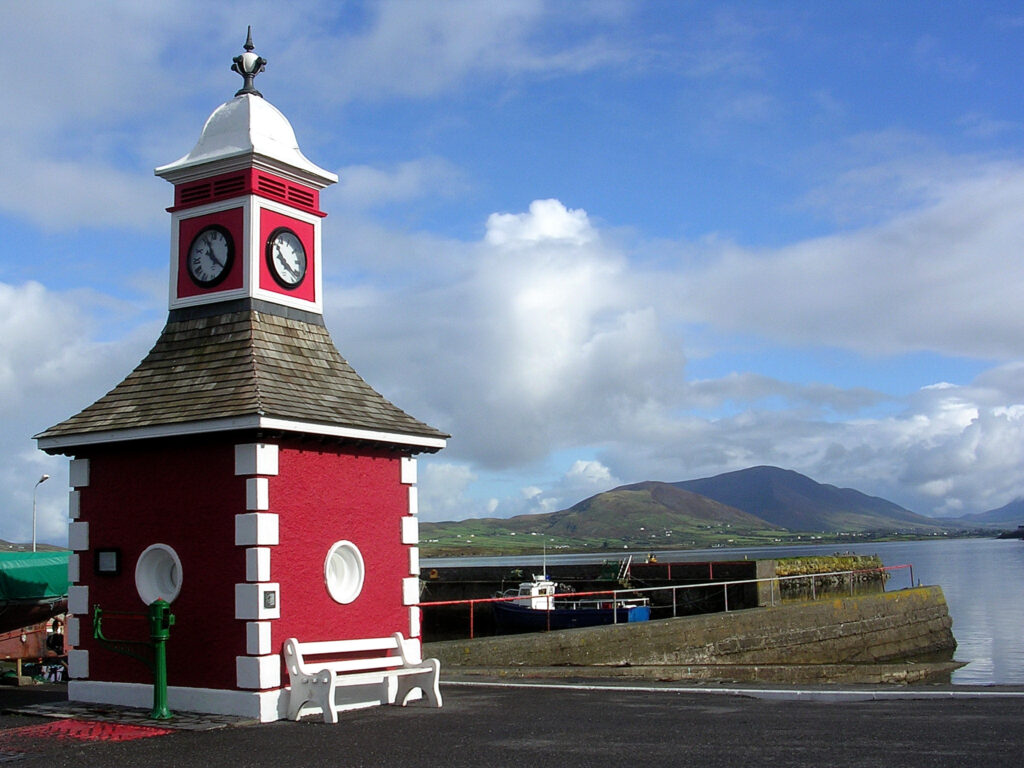
Known simply as “The Kingdom” — a title that dates to a time when Kerry operated with a fierce independence from the rest of Ireland — this is the county that made Ireland’s Wild Atlantic Way famous. Every year, more than two million visitors come here. The vast majority see the same things: the Ring of Kerry, Killarney, Skellig Michael. And those things are worth every bit of the journey. But Kerry keeps its real secrets for those who slow down.
Why County Kerry? Ireland’s Kingdom at the Edge of the World
Kerry covers 4,807 square kilometres in the south-west corner of Ireland, pushing out into the Atlantic like three great rocky fingers — the Iveragh, Dingle, and Beara peninsulas. It contains Ireland’s highest mountain (Carrauntoohil, 1,038 metres), its largest national park (Killarney), and what many consider the finest monastic ruin in all of northern Europe (Skellig Michael). It also contains some of the highest rainfall in Ireland, which is part of what makes everything so extravagantly, almost offensively green.
The county town is Tralee, home of the Rose of Tralee festival, but most visitors base themselves in Killarney — a Victorian market town that exists, almost entirely, to help people explore the national park on its doorstep. And what a doorstep it is.
Killarney National Park: Three Lakes and Mountains You’ll Never Forget
Ireland’s oldest national park covers 103 square kilometres and contains three large lakes — Lower, Middle (or Muckross), and Upper — surrounded by ancient oak woods, mountains, and some of the finest walking in the country. You can hire a traditional horse-drawn jaunting car from Killarney town to take you through the park’s winding paths. It feels unhurried in a way that modern Ireland rarely manages.
Muckross House, a Victorian mansion on the shores of Muckross Lake, is one of the park’s centrepieces. The gardens are extraordinary — rhododendrons blooming in purples and pinks against the grey stone, with the mountains of Macgillycuddy’s Reeks behind. Queen Victoria visited in 1861. The house has barely changed since.
Torc Waterfall, a fifteen-minute walk from Muckross, is the kind of thing that turns amateur photographers into artists. After heavy rain — and Kerry provides plenty of heavy rain — it thunders down through the forest and into the river below with the kind of force that makes you stand back and reconsider your life choices.
Skellig Michael: A Stairway to the Edge of Time
Twelve kilometres off the Kerry coast, rising sheer from the Atlantic, is Skellig Michael — a UNESCO World Heritage Site that takes your breath away before you even step ashore. Sixth-century monks built a monastery here, in conditions that make hardship look comfortable: 618 stone steps carved from the rock, leading up to six beehive-shaped stone huts clinging to a ledge at 218 metres above the sea. They lived here for six hundred years. Gannet colonies now share the island with visitors.
Access is strictly limited (advance booking essential) and weather-dependent — the landing can be cancelled on rough days. But if you get out there, it is one of the most extraordinary places you will stand in your life. It was used as a filming location for Star Wars: The Force Awakens, which introduced it to a new generation — though the monks who built it needed no fictional universe to make it feel otherworldly.
The Ring of Kerry: The Drive Everyone Talks About
The Ring of Kerry is a 179-kilometre circular route around the Iveragh Peninsula, and it is, frankly, absurdly beautiful. You get mountains, coastline, small harbours, ancient stone forts, and views across to the Skellig islands on a clear day. Kenmare is the most elegant starting point — a Georgian estate town with excellent restaurants and independent shops. Sneem, Waterville, and Cahersiveen each have their own character along the way.
The practical advice is to drive anti-clockwise (which means starting from Killarney and heading through Killorglin first) — this avoids meeting tour buses head-on on the narrow sections. Also: start early. Coaches arrive in force by mid-morning, and the viewpoints fill up. The Ring in early morning light, with mist on the mountains, is something quite different to the Ring at noon with a hundred campervans.
The Dingle Peninsula: Kerry’s Quieter Magic
Where the Iveragh Peninsula is dramatic, the Dingle Peninsula is intimate. The landscape here is older-feeling: prehistoric standing stones, ring forts, and the highest concentration of ancient monuments in Ireland. The Slea Head Drive loops around the tip of the peninsula with views of the Blasket Islands — an archipelago abandoned in 1953 when the last twenty remaining inhabitants asked to be evacuated to the mainland. Their story, documented in books like “The Islandman” by Tomás Ó Criomhthain, is one of the most moving in modern Irish history.
Dingle town itself punches well above its weight: a working fishing port with excellent seafood restaurants, traditional music in almost every pub on summer evenings, and a resident bottlenose dolphin called Fungie who has been greeting boats in the harbour since 1983 (or at least one of his successors, given the disputed longevity of the original). It is one of the strongest Irish-speaking areas remaining in Ireland — Gaeilge is heard as often as English on the streets.
The Gap of Dunloe: Mountains and Silence
The Gap of Dunloe is a narrow mountain pass carved by glaciers some 25,000 years ago, running between Macgillycuddy’s Reeks and the Purple Mountain. You can walk it (about twelve kilometres), cycle it, or take a jaunting car through the series of small lakes at its heart. At the southern end, boats take you across the three Killarney lakes back to the town — combining walking and water in a way that feels like it was designed to be a perfect day out. It often is.
Planning Your Visit to County Kerry
Kerry is a county for slowing down. Three days is a minimum to do it any justice; a week feels about right if you want to catch Skellig Michael, walk in the national park, and spend an evening or two properly settled in Dingle.
The best months are May, June, and September — the summer crowds peak in July and August, and the roads on the Ring of Kerry can slow to a crawl on bank holiday weekends. Kerry in October is underrated: the rhododendrons are long gone but the low light on the mountains has a quality that photographers chase all year.
☘️ Planning a Trip to Ireland?
Our Free Ireland Travel Planner 2026 covers every county — from Kerry’s Ring of Kerry to the Wild Atlantic Way — with week-by-week weather guides, festival calendars, and insider tips that most tourists never find.
Kerry’s Hidden Corners
The Skellig Ring — a smaller, lesser-driven alternative to the main Ring of Kerry — takes you along the Iveragh coast opposite Skellig Michael with far fewer other cars for company. Portmagee, where the Skellig boats depart from, is one of the most photographed villages in Ireland. Valentia Island, connected by bridge, has the remains of the first transatlantic telegraph cable station, laid in 1866. These are the places Kerry regulars keep coming back for.
☘️ Get Ireland Stories in Your Inbox
Join over 64,000 Ireland lovers who receive our free daily newsletter — hidden gems, heritage stories, and travel inspiration, every morning.
Tours & experiences you might love


Powered by Viator. Some links are affiliate links — we may earn a small commission at no extra cost to you.
Secure Your Dream Irish Experience Before It’s Gone!
Planning a trip to Ireland? Don’t let sold-out tours or packed attractions spoil your journey. Iconic experiences like visiting the Cliffs of Moher, exploring the Rock of Cashel, or enjoying a guided walk through Ireland’s ancient past often sell out quickly—especially during peak travel seasons.

Booking in advance guarantees your place and ensures you can fully immerse yourself in the rich culture and breathtaking scenery without stress or disappointment. You’ll also free up time to explore Ireland’s hidden gems and savour those authentic moments that make your trip truly special.
Make the most of your journey—start planning today and secure those must-do experiences before they’re gone!