

On the basalt cliffs of County Antrim, a ruined castle clings to a narrow promontory above the sea. Three sides drop straight into the Atlantic. On a calm day, it is breathtaking. On a stormy night, locals say to stay away.
The North Tower of Dunluce Castle is where people say she still walks.
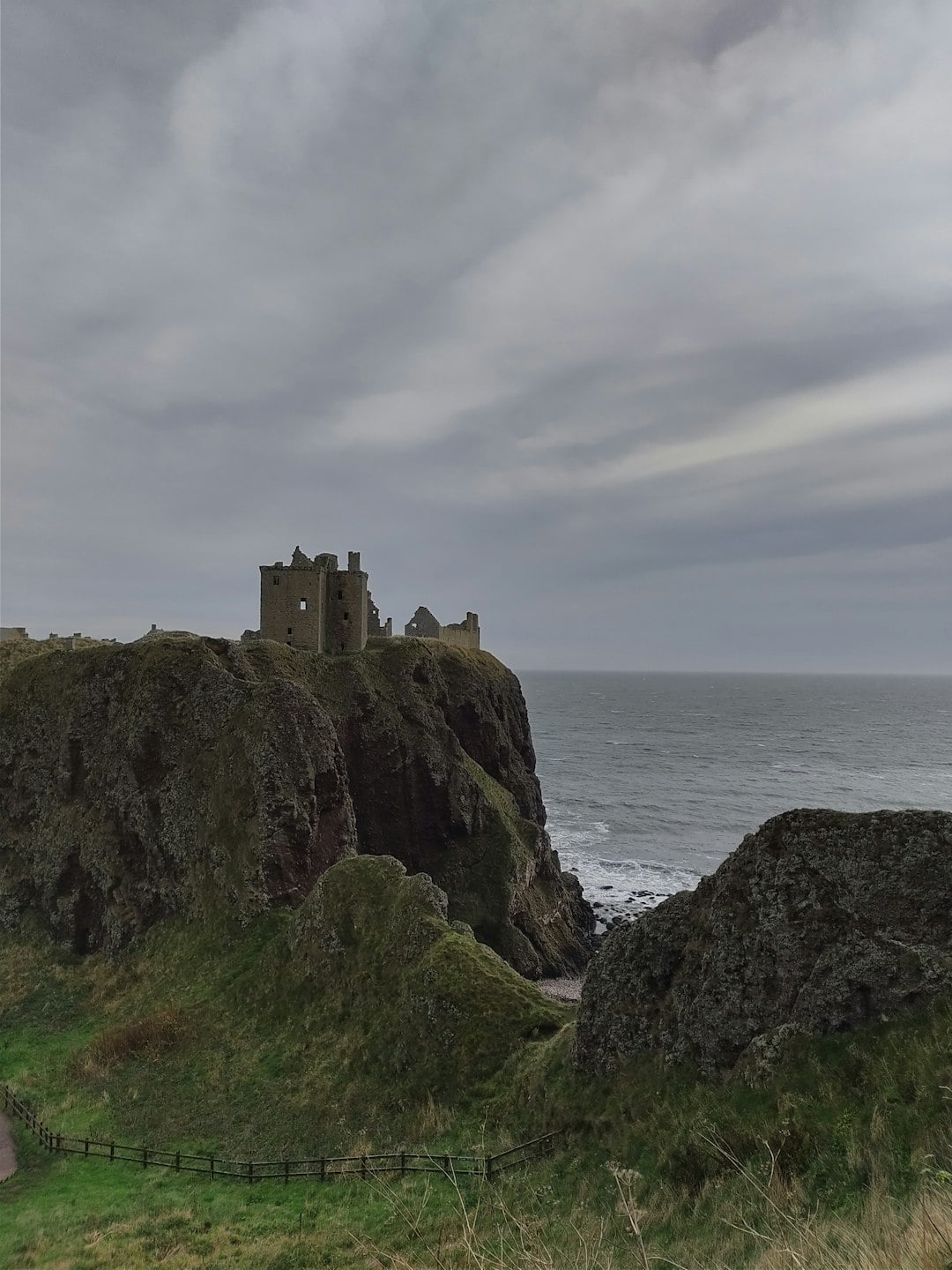
A Castle Built on the Edge of the World
Dunluce Castle stands on a basalt promontory near Bushmills in County Antrim. On three sides, the land simply stops. Below, the sea moves through a network of caves carved into the cliff face over thousands of years.
The MacQuillan clan built the first fortifications here in the early medieval period. By the 14th century, Dunluce had grown into one of the most commanding fortresses in Ulster. Then the MacDonnells came.
The MacDonnells were a Scottish clan from Kintyre who crossed the narrow channel to claim land in Antrim. They were formidable fighters and ambitious rulers. By the early 16th century they had displaced the MacQuillans entirely. The castle changed hands, and with it, everything else.
Maeve Roe and the North Tower
When the MacDonnells took Dunluce, the last MacQuillan chief — Rory Og — lost his power but not his pride. His daughter, Maeve Roe MacQuillan, became the focus of what remained of his influence.
Maeve Roe fell in love with Reginald Og MacDonnell, the son of the clan that had taken everything from her family. Her father refused the match. To stop her, he locked her in the North Tower of Dunluce Castle.
She never came out.
The accounts differ. Some say she died of a broken heart. Others say she fell from the tower window trying to reach her lover on the rocks below. What all versions agree on: she never saw Reginald Og again. The North Tower is still standing, its stone walls facing west across the open Atlantic. On wet mornings, locals still call it Maeve’s Tower.
For a closer look at the North Tower itself and how the legend is told today, see our guide to The Woman Locked in Dunluce Castle’s North Tower.
The Ghost Who Stayed
The legend of Maeve Roe has outlasted every clan war and every crumbled wall. Her spirit is said to walk the North Tower still, most often before a storm.
Fishermen from Bushmills once tracked the weather not by instruments but by what they heard drifting from the cliffs. A woman’s cry meant rough seas by morning.
Ireland is not short of ghost stories. But Dunluce’s ghost is different because it has always had a name. It is not a shapeless presence or a shadow in a corridor. It is Maeve Roe — a woman with a history, a father who failed her, and a love she never got to keep. When school groups visit the castle, it is her story that the children remember.
☘️ Enjoying this? 64,000+ Ireland lovers get stories like this every week.
Thinking about it for retirement?
If you’ve started thinking seriously about retiring there, our complete our full Retire in Ireland guide covers the visa, healthcare, cost-of-living, and the regions worth shortlisting.
Subscribe free →
The Caves Beneath the Castle
What most visitors do not notice until they reach the cliff edge is that Dunluce has a second secret. Beneath the castle, the sea has cut a network of caves through the basalt promontory. At low tide, the cave entrance is visible from the beach below.
Smugglers used these caves freely in the 18th century, moving whiskey and brandy in and out of the promontory without attracting attention. One cave is large enough to shelter a small boat. Another, according to local legend, connects by a narrow passage directly to the castle courtyard above.
Whether you believe that or not, the caves are real and remarkable — one of the few parts of the County Antrim coast that feels completely unchanged by time.
Dunluce Through the Centuries
The MacDonnells held Dunluce through the 17th century, trading allegiances and fighting off sieges. At its peak, the castle was one of the most sophisticated in Ireland, with an Italian loggia in the courtyard that reflected the family’s European trade connections.
Then came the losses. In 1639, the kitchen wing fell into the sea during a storm, taking the cooks with it. The MacDonnells eventually moved to more comfortable quarters inland. By the 18th century, Dunluce was already a ruin. Artists came to paint it. Poets wrote about it. The locals kept the stories alive.
Today the castle is managed as a heritage site and draws visitors from across the world. The ruins are more complete than they appear from a distance. The great hall, the gatehouse, and traces of the Italian loggia are all still readable in the stonework.
Visiting Dunluce Castle
Dunluce Castle sits on the Causeway Coastal Route, about three miles west of Bushmills and 20 minutes from the Giant’s Causeway. It is signposted from the A2 coastal road.
The castle opens year-round, though hours vary by season. Morning visits in autumn tend to be quiet, with sea mist still lying against the cliffs. Arriving at low tide lets you walk down to the beach to see the cave entrance from below.
The North Tower is visible from the car park. Stand beneath it. Look up at the window that faces the sea.
If you are planning a trip along the Antrim coast, the Ireland travel planning guide has everything you need for your first visit.
Maeve Roe MacQuillan may or may not haunt the North Tower. But her story has survived four centuries because it speaks to something real: the price of powerlessness in a place built to project power. Dunluce Castle is stunning. It is also, in the best Irish tradition, a little bit heartbreaking.
☘️ Join 64,000+ Ireland Lovers
Every Friday, get Ireland’s hidden gems, local secrets, and travel inspiration — the kind you won’t find in any guidebook.
Subscribe free — enter your email:
Already subscribed? Download your free Ireland guide (PDF)
Love more? Join 43,000 Scotland lovers → · Join 30,000 Italy lovers → · Join 7,000 France lovers →
Free forever · · Unsubscribe anytime
Tours & experiences you might love


Powered by Viator. Some links are affiliate links — we may earn a small commission at no extra cost to you.
Secure Your Dream Irish Experience Before It’s Gone!
Planning a trip to Ireland? Don’t let sold-out tours or packed attractions spoil your journey. Iconic experiences like visiting the Cliffs of Moher, exploring the Rock of Cashel, or enjoying a guided walk through Ireland’s ancient past often sell out quickly—especially during peak travel seasons.

Booking in advance guarantees your place and ensures you can fully immerse yourself in the rich culture and breathtaking scenery without stress or disappointment. You’ll also free up time to explore Ireland’s hidden gems and savour those authentic moments that make your trip truly special.
Make the most of your journey—start planning today and secure those must-do experiences before they’re gone!
Subscribe Free