

There is a particular kind of stillness you find in a small Irish village that you will not find in a spa, a retreat centre, or a meditation app. It is not something you can book in advance or guarantee on arrival. It is simply there — in the pace of the street, the sound of rain on a slate roof, the unhurried nod from a man walking his dog past the post office.
People who have experienced it tend to come back for it. Not for any single attraction, but for the feeling of being in a place where life has not yet been fully optimised. If you are looking for genuine rest, the quiet villages of Ireland are worth paying attention to.
Want more of Ireland delivered to your inbox every week?
Join over 64,000 readers who get the best of Ireland — places, stories, and things worth knowing — in the Love Ireland newsletter. Free to subscribe.
What Makes an Irish Village Different
Ireland has hundreds of villages across the island. Many of them have fewer than 500 residents. Some have a pub, a church, a shop, and not much else — and that is precisely the point.
Unlike wellness tourism destinations that have been designed around the idea of relaxation, Irish villages were not built with visitors in mind. They grew around farming, fishing, market days, and parishes. The rhythms that remain — early mornings, quiet afternoons, evenings in the pub — were not choreographed for tourists. They are just what life looks like there.
That authenticity is rare. Most places that sell peace and quiet are actually selling a performance of it. In a real Irish village, the slowness is structural. The roads are narrow. The broadband may be unreliable. The nearest supermarket could be 20 miles away. None of that is a design flaw — it is the whole point.
The Pace of Life — and Why It Works
☘️ Your Irish family has a story waiting to be found.
Discover where your Irish ancestors came from — their county, their name, their story. Our free step-by-step guide walks you through every record, DNA tool, and ancestry archive. No experience needed.
Claim Your Free Irish Ancestry Guide →There is reasonable scientific support for the idea that slow, quiet environments reduce stress markers. A growing body of peer-reviewed research — including studies published in journals such as Landscape and Urban Planning — has shown that time spent in rural settings — particularly those with natural soundscapes and low human noise — lowers cortisol levels and improves mood.
Irish villages tend to score well on natural soundscapes almost by default. Rain is the most obvious factor. Ireland receives between roughly 700 and 2,500 millimetres of rain per year depending on the region, and much of that falls in soft, persistent showers rather than violent downpours. Rain on a window, rain on a field, rain on a harbour — these are not inconveniences for people who have come to understand what an Irish village actually offers.
The other factor is social pace. In a village, you are expected to stop. You are expected to exchange a few words at the counter of the shop, to stand outside the post office for a moment, to ask how someone’s family is. These interactions are brief but they are real, and they interrupt the kind of tunnel-vision focus that city life enforces. That interruption — being gently required to be present — is one of the things that makes Irish village life feel therapeutic even if nobody uses that word for it.
Which Villages to Consider
The villages that offer the most genuine experience of quiet Ireland are not always the famous ones. Adare in Limerick is stunning, but it is on every bus tour route. Kenmare in Kerry is excellent, but it is busy in summer. The best candidates for real stillness tend to be slightly off the main tourist routes.
Some worth considering (for a broader overview, see our guide to Ireland’s most beautiful villages):
- Cong, County Mayo — made famous by The Quiet Man film (1952), it remains a small and genuinely quiet place on the isthmus between Lough Corrib and Lough Mask. Population around 150.
- Roundstone, County Galway — a small fishing village in Connemara, with a harbour, a few pubs, and mountains on three sides. Very limited mobile signal in parts.
- Ballyvaughan, County Clare — on the edge of the Burren, a limestone landscape unlike anything else in Ireland. The village itself is small; the walks are outstanding.
- Kilmacthomas, County Waterford — a working village on the Waterford Greenway cycling route. Functional and unpolished; does not cater specifically to tourists.
- Blacklion, County Cavan — on the border with County Fermanagh, surrounded by lakes and drumlin hills. Largely unknown outside Ireland. Worth the detour.
None of these villages will offer much in the way of organised entertainment. That is not a limitation. It is the whole reason to go.
Planning a trip to rural Ireland?
The Love Ireland newsletter covers county-by-county guides, seasonal travel tips, and places most guidebooks overlook. Join 64,000 readers — it is free.
What to Do (and What Not to Do)
The instinct when arriving in an Irish village is to look for things to do. There is a list to be made — the walk, the heritage site, the recommended pub. Resist this, at least on the first day.
The first day is better spent arriving slowly. Find somewhere to stay — a B&B or a self-catering cottage is preferable to a hotel, because hotels in small villages tend to feel disconnected from the village itself. Walk to the shop. Get your bearings on foot. Sit somewhere with a cup of tea and watch the street for twenty minutes.
This is not doing nothing. It is the whole point of being there.
After a day or two, the pace will start to feel natural. You will notice things you did not notice at first — a particular field, a conversation you overheard, the light on the hills at a certain time of afternoon. These small observations are what people mean when they say Ireland slows them down.
If you want structure, the following activities work well in quiet Irish villages:
- Walking routes — almost every Irish county has a network of waymarked trails. Many pass through or near small villages. The Burren, the Wicklow Way, and the Beara Peninsula are well-maintained and well-signposted.
- Evenings in a traditional pub — not a tourist pub with a menu and organised music, but a local pub where people actually drink. These are rarer than they used to be but still exist. Ask locally.
- Farmers’ markets — most towns and larger villages run a weekly market. The produce is local and the conversations are worth having.
- Visiting the local parish church — not for religious reasons necessarily, but because Irish parish churches — Church of Ireland and Catholic alike — often contain significant historical and community records, memorial stones, and craftsmanship that is not replicated anywhere else.
The Weather Question
Every article about Ireland has to deal with the rain. Here is an honest account of it.
Ireland’s weather is Atlantic-facing, variable, and frequently wet. The west coast — Galway, Mayo, Donegal, Kerry — is wetter than the east. The east coast, particularly around Dublin, is statistically the driest part of the country; the south-east (Wexford, Waterford) is sunnier, but still wetter than Dublin. Summer (June to August) is the least wet season, but rain can fall in any month and should be expected.
What changes when you are in a village rather than a city is your relationship to the rain. In a city, rain is a logistical problem — wet commutes, crowded cafés, umbrellas turning inside out. In a village, it is a reason to be indoors. That shift in framing matters. A wet afternoon in a rural cottage, with a fire going and a book open, is not a failed day. It is the day.
Pack waterproof layers, waterproof boots, and a compact umbrella. Plan outdoor activities for mornings. Do not fight the weather — use it as structure.
Best Times to Visit for Quiet
The quietest time to visit Irish villages is late September through to early November, or February through March. These months sit outside school holidays and the main tourist season, which means fewer visitors, lower accommodation prices, and the full unvarnished reality of village life rather than its summer version.
Late September and October bring the most interesting weather conditions — mild, often clear, with early frosts in the mornings and long golden evenings before dark comes. The landscape also changes colour: the bogs and hillsides shift from green to rust, copper, and amber.
If you do visit in summer (July and August), stick to the lesser-known places. The villages listed above — Roundstone, Blacklion, Kilmacthomas — receive a fraction of the visitor numbers that better-known spots attract. Summer in a genuinely obscure Irish village is still quiet. You just need to be more selective about where you go.
How to Plan a Village Stay
The practical steps are straightforward:
- Book accommodation early — self-catering cottages in small villages book out quickly in the summer months. Airbnb and Daft.ie have listings, as does the Irish Landmark Trust for properties with genuine historical character.
- Hire a car — buses do not serve most small villages with any regularity. A car gives you the flexibility to explore surrounding townlands and smaller roads, which is where the best of rural Ireland is found.
- Download offline maps — mobile signal is unreliable in much of rural Ireland. Google Maps and Maps.me both offer offline map downloads. Do this before you leave the city.
- Bring cash — many small village shops and pubs still operate primarily in cash, and card machines are not always reliable where broadband is weak.
- Stay at least three nights — a single night is not enough to adjust. Three nights is the minimum to actually feel the pace shift. A week is better.
There is no complicated itinerary required. The countryside is there. The pub will be open in the evening. The rain may or may not arrive. The pace will slow, whether you plan it or not.
Why It Works
The appeal of quiet Irish villages is not nostalgia, and it is not escapism — at least, not in any shallow sense. It is something more structural. Modern life operates at a pace and a noise level that most people have never consciously agreed to. The village offers a contrast that is not manufactured. The slowness is real. The quiet is real. The cup of tea — made by someone who is not in a hurry and hands it to you without looking at their phone — is real.
That is worth something. It may even be worth planning a trip around.
Ireland has hundreds of these places. They are not always easy to find, and they do not advertise themselves particularly well. But they are there, and most of them are within two hours of an airport.
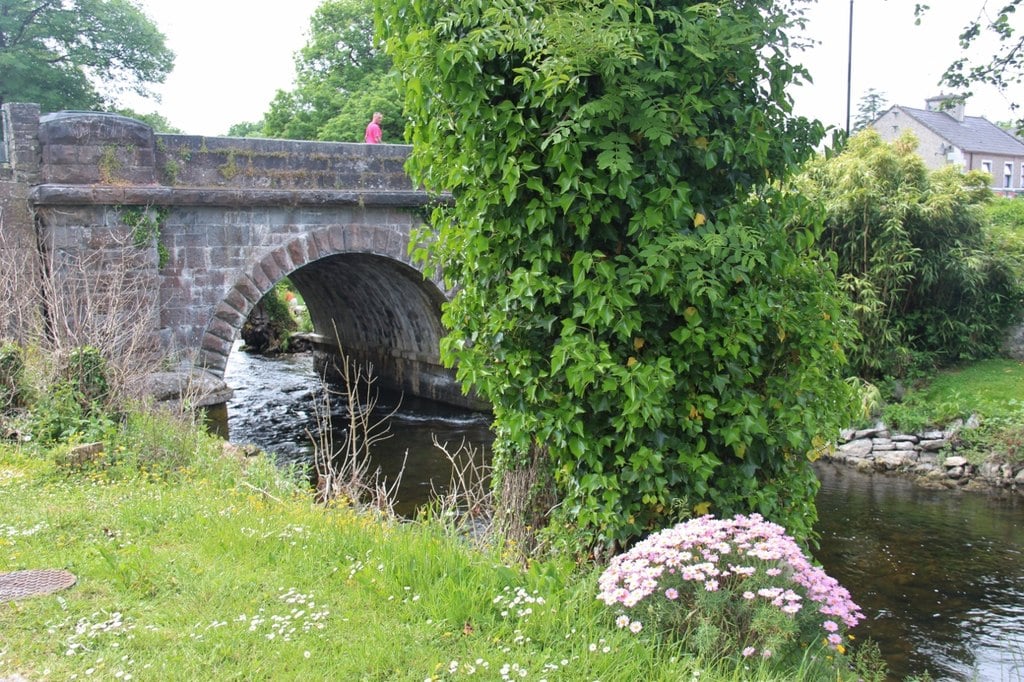
Photo: Alan Reid / Wikimedia Commons (CC BY-SA 2.0) — the old bridge over the River Cong, County Mayo
Discover more of Ireland every week.
The Love Ireland newsletter goes out each week with the best of Ireland — hidden places, cultural stories, and practical travel ideas. Over 64,000 readers. Always free.
Thinking about it seriously?
If you’ve started actually planning a move, our complete the full Move to Ireland guide walks through every step, every cost, and the paperwork that catches most people out.
Tours & experiences you might love


Powered by Viator. Some links are affiliate links — we may earn a small commission at no extra cost to you.
Secure Your Dream Irish Experience Before It’s Gone!
Planning a trip to Ireland? Don’t let sold-out tours or packed attractions spoil your journey. Iconic experiences like visiting the Cliffs of Moher, exploring the Rock of Cashel, or enjoying a guided walk through Ireland’s ancient past often sell out quickly—especially during peak travel seasons.

Booking in advance guarantees your place and ensures you can fully immerse yourself in the rich culture and breathtaking scenery without stress or disappointment. You’ll also free up time to explore Ireland’s hidden gems and savour those authentic moments that make your trip truly special.
Make the most of your journey—start planning today and secure those must-do experiences before they’re gone!