

If you want to trace your Irish roots from America, start with one question: what county in Ireland did your ancestor come from? Once you have the county, the records open up. More than 31 million Americans claim Irish ancestry, according to the most recent US Census Bureau estimates — one of the largest diaspora communities in the world — and the records that document their emigration are, in many cases, available for free online. This guide walks you through every step, from the documents already in your home to the national archives in Dublin and the heritage sites you can visit in person.
How to Trace Your Irish Roots from America: Start at Home
Before searching any website, look through what your family already holds. Every document kept at home is a clue, and many contain details that are not available in any online database.
Check these documents first:
- US death certificates — many states required the informant to record the deceased’s birthplace. If yours says “County Kerry” or “County Cork”, you have a starting point.
- Naturalisation papers — your ancestor’s citizenship application sometimes names the exact townland or parish in Ireland.
- US census records from 1900, 1910, 1920, and 1930 — these list country and sometimes county of birth.
- Ship passenger lists — searchable free of charge through Ancestry.com and FamilySearch.org. Many list the port of departure and county of origin.
- Old prayer books, letters, and photographs — handwritten inscriptions sometimes include the name of a townland or parish.
The death certificate is usually the most useful starting point. It often records the county of birth directly, especially for deaths before 1940. Start there if you have one.
The Three Details You Need Before You Search Online
☘️ Your Irish family has a story waiting to be found.
Discover where your Irish ancestors came from — their county, their name, their story. Our free step-by-step guide walks you through every record, DNA tool, and ancestry archive. No experience needed.
Claim Your Free Irish Ancestry Guide →Irish genealogy research works backwards. To find your ancestor in Irish records, you need three things before you open any database.
1. The County in Ireland
Ireland has 32 counties — 26 in the Republic and 6 in Northern Ireland. Records were kept at the parish level, and each county has its own archive and set of surviving records. Without the county, searching Irish records is like looking for a name in a phone book without knowing the city.
2. An Approximate Year of Emigration
Irish emigration to the United States concentrated in two major waves. The first was the Famine era of 1845 to 1852, when approximately 1 million people died and another million emigrated in under a decade. The second wave ran from 1880 to 1920, driven by cheaper transatlantic fares and established emigrant networks in cities including Boston, New York, and Chicago. Knowing which wave applies to your family helps narrow the records.
3. All Variants of the Surname
Irish surnames were anglicised over two centuries, and the same name was often recorded differently by different clerks. “Ó Briain” appears in records as “Brien”, “Brian”, “Bryan”, and occasionally “Brain”. Search for every plausible spelling. Understanding how Irish surnames were formed helps you predict which variants to look for.
Free Websites to Search Irish Ancestry Records
You do not need to pay to start your search. Several major databases give free access to millions of Irish records.
IrishGenealogy.ie
The Irish government’s official genealogy portal holds civil registration records of births from 1864, marriages from 1845, and deaths from 1864. It also contains Catholic parish registers for many counties, digitised and searchable by name. This is the first stop for any search of records after 1845.
FamilySearch.org
Run by the Church of Jesus Christ of Latter-day Saints, FamilySearch holds digitised Irish census records, Griffith’s Valuation, tithe applotment books, and a large collection of Catholic parish registers. It is completely free. The index is not perfect, so try name variants if your first search returns nothing.
Ask About Ireland
Maintained by the Irish public library network, this site contains Griffith’s Valuation — a survey carried out between 1847 and 1864 that recorded every householder in Ireland, their land, and what they paid in rent. If your ancestor was in Ireland in the 1840s to 1860s, they are almost certainly listed here. The site is free and requires no registration.
The 1901 and 1911 Census Records
Both censuses are available for free at census.nationalarchives.ie. Each record lists every person in a household, with their name, age, occupation, religion, and county of birth. If your ancestor’s parents or grandparents were still in Ireland in 1901 or 1911, they will be here. These are the only two 19th- or 20th-century Irish censuses that survived intact. The 1861 and 1871 returns were destroyed by government order once their statistics had been tabulated, the 1881 and 1891 returns were pulped for paper during the First World War, and most of what remained from 1821 to 1851 was lost in the 1922 Four Courts fire.
☘️ Enjoying this? 64,000+ Ireland lovers get stories like this every week.
Thinking about it for retirement? If you’ve started thinking seriously about retiring there, our complete our full Retire in Ireland guide covers the visa, healthcare, cost-of-living, and the regions worth shortlisting.
Paid Resources Worth Considering
Once you have exhausted the free options, paid databases open additional records.
- Ancestry.com — the largest genealogy database in the world. Holds US passenger lists, naturalisation records, and Irish birth, marriage, and death records. Subscription starts at approximately $25 per month. Many US public libraries offer free on-site access — check yours before paying.
- Findmypast.com — strong for Ireland and the UK. Holds the Irish Newspaper Archive (obituaries and emigration notices are rich sources). Subscription starts at approximately £10 per month.
- PRONI — Public Record Office of Northern Ireland — if your ancestors came from the six counties of Northern Ireland (Antrim, Armagh, Down, Fermanagh, Londonderry, Tyrone), proni.gov.uk offers free access to a large range of records online.
County Genealogy Centres: Local Knowledge No Database Holds
Every county in Ireland has at least one dedicated genealogy centre. These centres hold local records — estate papers, church registers, gravestone inscriptions, school rolls — that have never been digitised and are not available online.
Most centres offer a professional research service for a fee, typically €30 to €60, and will search records on your behalf if you provide the name, approximate dates, and county. Some examples:
- County Galway: The Galway Family History Society West holds Catholic registers from the 18th century. If your family came from Connacht, this is worth contacting.
- County Mayo: The Mayo North Family History Research Centre at Enniscoe, Ballina, specialises in the north of the county — one of the main emigration areas during the Famine.
- County Cork: Cork City and County Archives and the Mallow Heritage Centre both hold records for one of Ireland’s most populous counties and the main port of emigration.
- County Roscommon: The Roscommon Heritage and Genealogy Centre covers one of the counties with the highest Famine-era emigration rates.
A good county centre will often take your research further in a single hour than months of solo searching online.
National Archives and Libraries: Planning a Research Visit
If you plan to visit Ireland, two institutions in Dublin are essential for any serious genealogy research. Both are free to enter.
The National Archives of Ireland
Located on Bishop Street in Dublin, the National Archives holds the 1901 and 1911 census returns on microfilm, tithe applotment books from the 1820s and 1830s, estate papers, and surviving church records. You need to book a seat in the reading room in advance and bring photo ID. Entry is free. Their website at nationalarchives.ie has a detailed catalogue of what is held.
The National Library of Ireland
On Kildare Street, facing the Dáil, the National Library holds microfilm copies of Catholic parish registers from more than 1,000 parishes across Ireland and Northern Ireland. Their free online portal at registers.nli.ie gives access to digitised registers — but many are still microfilm-only, making a visit worthwhile. The Library also holds maps, estate records, and the country’s most complete collection of Irish newspapers dating from the 18th century. Entry is free. Book ahead.
Both institutions are within walking distance of each other in central Dublin. If you are planning your first trip to Ireland, building a day or two of archive research into your itinerary costs nothing extra and often produces results that no online search can match.
Finding the Townland: The Smallest Piece of the Map
Irish genealogy records use townlands — the smallest administrative division in Ireland — rather than street addresses. Ireland has more than 60,000 named townlands. Every record from Griffith’s Valuation to the 1901 census uses the townland name, not a street or house number.
Once you find a townland name in a record, you can locate it on a map using townlands.ie. This site lets you search any townland name and shows its exact location on the Ordnance Survey map. From there, you can identify the nearest Catholic parish (for church records), the nearest Church of Ireland (for earlier Protestant records), and the nearest market town where your ancestor would have traded, banked, and registered births and deaths.
Standing in the townland where your ancestor lived is a deeply moving experience. Many visitors find that even a few fields and an old lane are enough to make the history feel real in a way no screen can replicate.
The Emigration Story Behind the Records
Understanding why your ancestors left brings the records to life.
The Great Famine of 1845 to 1852 was the defining event of Irish emigration. Approximately 1 million people died of starvation and disease. A further 1 million emigrated between 1845 and 1850 alone. The population of Ireland fell from around 8 million in 1841 to 6.5 million by 1851 — and kept falling for generations.
Emigrants left from several ports. Cobh, County Cork — then called Queenstown — was the largest. The Cobh Heritage Centre holds records of those who departed and tells the story of the emigrant ships with extraordinary detail. For anyone with Cork roots, it is one of the most affecting heritage sites in Ireland.
The second great wave of emigration ran from 1880 to 1920. Cheaper steamships cut the crossing from six weeks to ten days. Established communities in cities like Boston, New York, and Chicago pulled emigrants to specific neighbourhoods. Many Irish-Americans today trace to this second wave rather than the Famine generation.
Both waves are well documented. Both left records that survive. The deep connection between Ireland and America runs far further back than most people realise — and the records are there to find it.
Planning Your Heritage Visit to Ireland
A heritage trip to Ireland is different from a sightseeing trip. The goal is the county, not the capital.
Once you know the county, plan your visit around it. County Tipperary, for example, is rich farmland with the Rock of Cashel, Holy Cross Abbey, and Cahir Castle — all within easy reach of each other. If your family came from Connacht, Galway and the west offers a completely different landscape: stone walls, Atlantic bog, and villages where Irish is still spoken.
When you are there:
- Visit the local Catholic church or Church of Ireland where your ancestors were baptised or married. Many churches are open during the week and welcome visitors with a heritage interest.
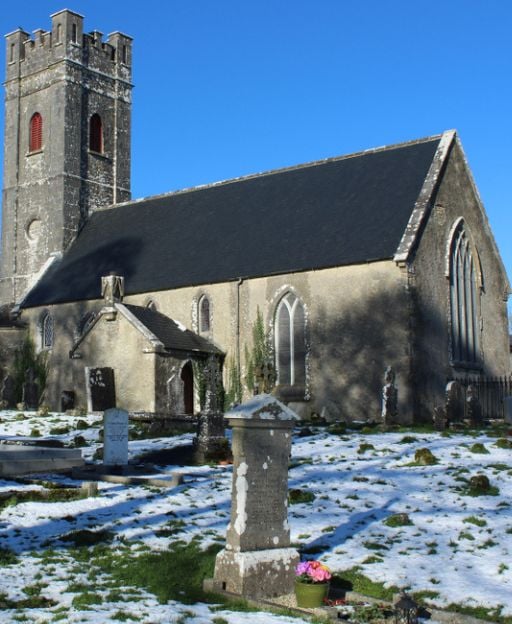
- Walk the graveyard. Irish graveyards hold family plots that often go back 200 years. The townlands.ie site will tell you which parish church is closest to your ancestor’s townland.
- Contact the county genealogy centre before you travel. They can confirm what records survive and save you hours of searching once you arrive.
- Look for the landscape. Famine-era cottage ruins are visible in many parts of the west and south. Walking the land your ancestors farmed is a different kind of research — and often just as revealing.
What is the best way to start tracing Irish roots from America?
Start with US records: your ancestor’s death certificate, naturalisation papers, and ship passenger lists often name the county of origin in Ireland. Once you have the county, search IrishGenealogy.ie for civil registration records from 1864, and FamilySearch.org for census records and Griffith’s Valuation.
Are Irish genealogy records available for free online?
Yes. IrishGenealogy.ie holds civil registration records of births from 1864, marriages from 1845, and deaths from 1864. FamilySearch.org gives free access to census records, Griffith’s Valuation (1847–1864), and many Catholic parish registers. The 1901 and 1911 census records are fully free at census.nationalarchives.ie.
What records survived the 1922 Dublin fire?
The 1901 and 1911 censuses both survived and are fully available online. Griffith’s Valuation (1847–1864), tithe applotment books (1820s–1830s), civil registration records from 1864, and most Catholic parish registers also survived. Many estate papers and older Protestant church records were lost in the fire, but duplicates exist in county archives and the National Library.
Is it worth visiting Ireland to research Irish ancestors?
Yes — especially once you have narrowed the search to a county. The National Archives and National Library in Dublin hold records not available online. County genealogy centres have local knowledge that national databases miss. Many visitors combine a heritage research trip with a wider tour of the county, and find that seeing the landscape where their family lived changes how they understand the history entirely.
☘️ Join 64,000+ Ireland Lovers
Every weekday morning, get Ireland’s hidden gems, local secrets, and travel inspiration — the kind you won’t find in any guidebook.
Subscribe free — enter your email:
Already subscribed? Download your free Ireland guide (PDF)
📲 Know someone who’d love this? Share on WhatsApp →
Love more? Join 43,000 Scotland lovers → · Join 29,000 Italy lovers → · Join 7,000 France lovers →
Free forever · Unsubscribe anytime
Tours & experiences you might love


Powered by Viator. Some links are affiliate links — we may earn a small commission at no extra cost to you.
Secure Your Dream Irish Experience Before It’s Gone!
Planning a trip to Ireland? Don’t let sold-out tours or packed attractions spoil your journey. Iconic experiences like visiting the Cliffs of Moher, exploring the Rock of Cashel, or enjoying a guided walk through Ireland’s ancient past often sell out quickly—especially during peak travel seasons.

Booking in advance guarantees your place and ensures you can fully immerse yourself in the rich culture and breathtaking scenery without stress or disappointment. You’ll also free up time to explore Ireland’s hidden gems and savour those authentic moments that make your trip truly special.
Make the most of your journey—start planning today and secure those must-do experiences before they’re gone!