

When you visit Ballykilcavan Farm & Brewery near Stradbally in County Laois, you are standing on ground that has been managed by the same family for 387 years. The old stone farmyards are still standing. The field boundaries, laid out by David Walsh-Kemmis’s ancestors, have not moved. The trees his forebears planted are mature now, part of the landscape as surely as the drumlins themselves.
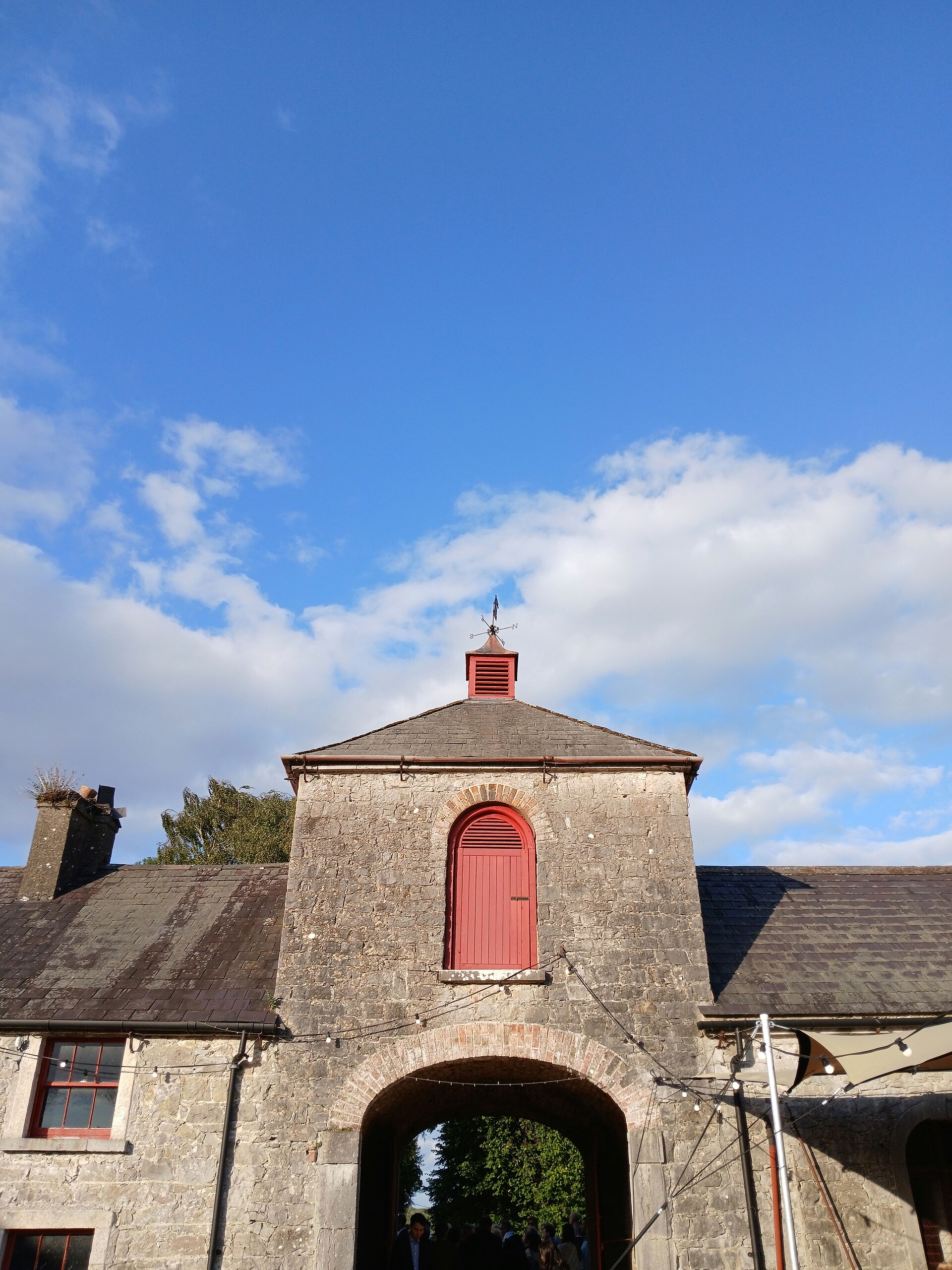
David is the thirteenth generation of the Walsh-Kemmis family to live here. He will tell you this with a kind of matter-of-fact pride — as if continuity, in Ireland, is simply something you tend to, the way you tend the land.
From Kilkenny, With a Loan
The family’s story in Ireland begins with the Normans. The Walsh-Kemmises arrived on this island in the 1170s and settled near Kilkenny, where they spent the next four centuries making their mark — as cattle rustlers, David says, and as poets. Apparently they were good enough at at least one of those trades to accumulate serious money, because in 1639 they acquired Ballykilcavan.
“I’d been telling tour groups for years that we bought the farm,” David says. A local historian who visited on a tour set him straight. The family had lent the equivalent of two million dollars to the previous owners. When those owners couldn’t repay the debt, the Walsh-Kemmises went to court — and won the estate.
It is the kind of origin story that only Irish history could produce: part legal manoeuvre, part inheritance, the land changing hands not through conquest but through a courtroom. Whatever its origins, the family have cared for it ever since. The farmyards they built, the woodland they tended, the boundaries they kept — all of it speaks to nearly four centuries of commitment to a particular patch of County Laois.
The Thirteenth Generation
☘️ Your Irish family has a story waiting to be found.
Discover where your Irish ancestors came from — their county, their name, their story. Our free step-by-step guide walks you through every record, DNA tool, and ancestry archive. No experience needed.
Claim Your Free Irish Ancestry Guide →David inherited Ballykilcavan in 2004. He is candid about what that meant. “Farming is a wonderful lifestyle,” he says. “It’s a terrible way to try and make money.” The estate runs primarily to forestry and malting barley — crops suited to the Laois soil and climate, which are among the best in Ireland for the purpose — but the economics of farming alone were never going to sustain the old buildings, the family, and the future.
So David and his wife Lisa did what each generation before them had done: they adapted. They looked at what the farm produced — malting barley, grown in fields their ancestors farmed through the Cromwellian period, the Penal Laws, the Famine, and Irish independence — and they asked what else they could make from it.
The answer was beer.
Field to Fermentation
Ballykilcavan Brewing Company opened in 2016. It is one of a tiny number of truly farm-to-glass breweries in Ireland — which is to say, the barley that goes into the beer is grown in the fields outside the brewery door. The soil and climate of County Laois suit malting barley exceptionally well; the region has long supplied Ireland’s major maltsters. Ballykilcavan simply closes the loop, keeping that barley on the farm and converting it, a few fields away from where it was grown, into something with a very good head on it.
The range includes a Farmhouse Pale Ale, a Barrel-Aged stout, and a selection of session beers — all brewed with an eye on drinkability and provenance in equal measure.
Opening the Doors
What began as a brewery has become something larger. In 2022, Ballykilcavan opened its visitor centre, welcoming tourists who arrive to taste the beer and hear the story. Events followed — and this May, the first Greenfields Festival took place on the farm, marking a new chapter in what the estate offers to visitors.
It is, in the end, the same instinct that has driven every generation of this family: the belief that Ballykilcavan has more to give, that the land can sustain not only crops and cattle but community, culture, and the occasional well-poured pint.
For Irish-heritage readers whose own family trees were interrupted by emigration — by the Famine, by poverty, by the slow drain of the rural west — there is something quietly moving about a place like this. Not a museum. Not a restoration. A working farm that simply never stopped.
The Walsh-Kemmises came to Ireland in the 1170s. They have been at Ballykilcavan since 1639. They are still there now.
Visit Ballykilcavan Farm & Brewery at ballykilcavan.com. The visitor centre is open for tours, tastings, and events throughout the summer season.
Article sourced by Alex Monroe at Synpro Media.
☘️ Join 64,000+ Ireland Lovers
Every weekday morning, get Ireland’s hidden gems, local secrets, and travel inspiration — the kind you won’t find in any guidebook.
Subscribe free — enter your email:
Already subscribed? Download your free Ireland guide (PDF)
Thinking about it seriously?
If you’ve started actually planning a move, our complete the full Move to Ireland guide walks through every step, every cost, and the paperwork that catches most people out.
Tours & experiences you might love


Powered by Viator. Some links are affiliate links — we may earn a small commission at no extra cost to you.
Secure Your Dream Irish Experience Before It’s Gone!
Planning a trip to Ireland? Don’t let sold-out tours or packed attractions spoil your journey. Iconic experiences like visiting the Cliffs of Moher, exploring the Rock of Cashel, or enjoying a guided walk through Ireland’s ancient past often sell out quickly—especially during peak travel seasons.

Booking in advance guarantees your place and ensures you can fully immerse yourself in the rich culture and breathtaking scenery without stress or disappointment. You’ll also free up time to explore Ireland’s hidden gems and savour those authentic moments that make your trip truly special.
Make the most of your journey—start planning today and secure those must-do experiences before they’re gone!
Subscribe Free