

Charles Fort in Kinsale is one of the finest examples of a star-shaped fortification in Ireland, and one of the most significant historic sites in County Cork. Built in the 1670s, this coastal military stronghold has stood through sieges, rebellions, and centuries of Irish history. If you are visiting Kinsale — or anywhere in Cork — this is worth your time.
Here is everything you need to know before you go.
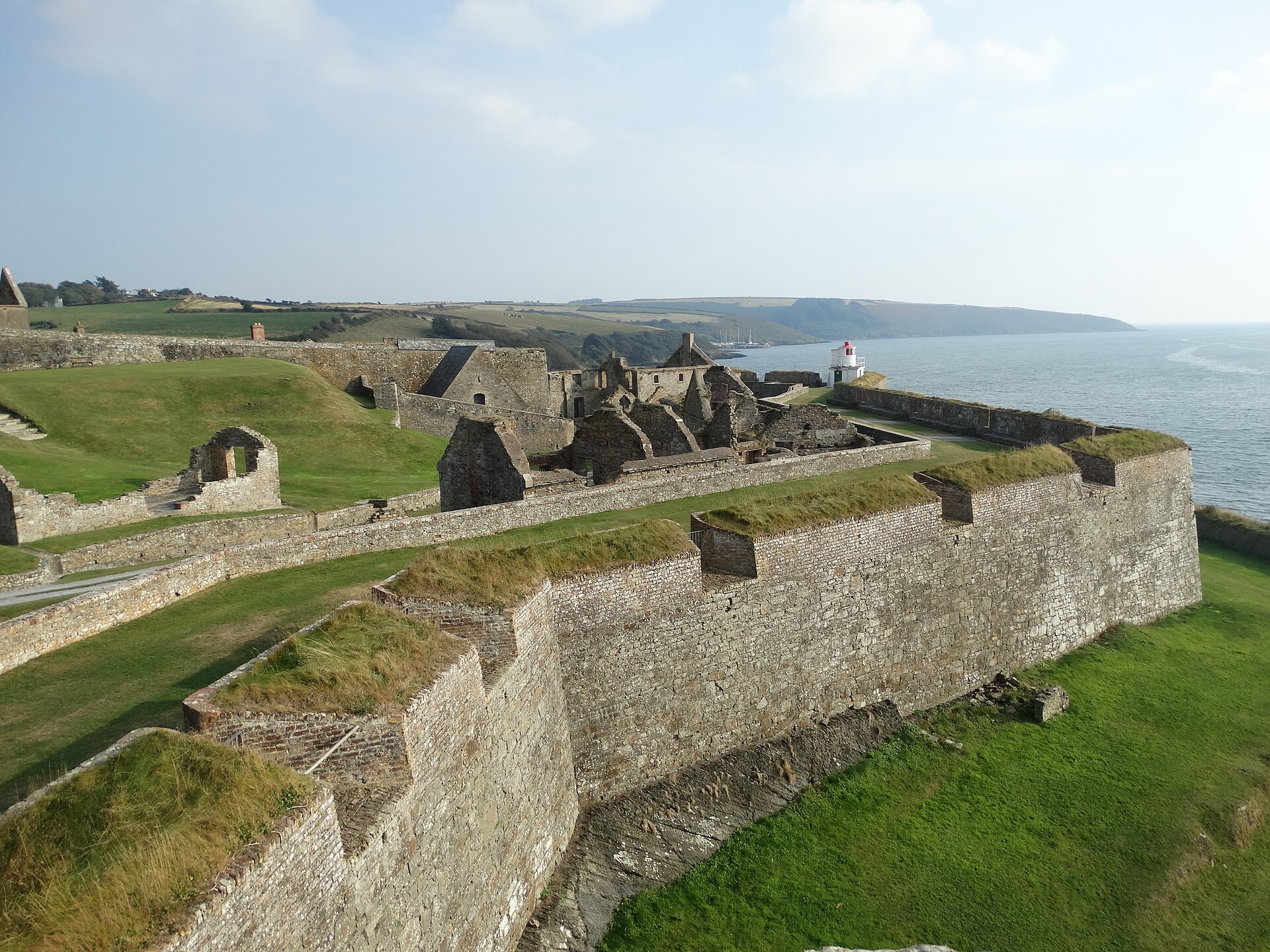

What Is Charles Fort?
Charles Fort is a 17th-century military fortification located on the eastern shore of Kinsale Harbour, about 3 kilometres from Kinsale town. It was built between 1677 and 1682 on the orders of King Charles II, after whom it is named, replacing an earlier structure known as Ringcurran Castle.
The fort is a classic example of a star fort — also known as a bastion fort or trace italienne — a type of fortification designed in response to the development of cannon warfare. Rather than tall, vertical walls that were vulnerable to cannon fire, star forts used low, angled bastions to deflect cannonballs and eliminate dead zones where attackers could shelter.
Charles Fort covers approximately 10 acres and is one of the largest and best-preserved examples of this fortification type in Ireland or Britain.
The History of Charles Fort
☘️ Your Irish family has a story waiting to be found.
Discover where your Irish ancestors came from — their county, their name, their story. Our free step-by-step guide walks you through every record, DNA tool, and ancestry archive. No experience needed.
Claim Your Free Irish Ancestry Guide →The site has a long military history that predates the current structure. The promontory on which Charles Fort stands was originally home to Ringcurran Castle, which played a role in the Battle of Kinsale in 1601 — a pivotal moment in Irish history when a Spanish-supported Irish force was defeated by English troops, effectively ending the Gaelic chieftain system in Ireland.
The current fortification was constructed in the 1670s under the direction of Sir William Robinson, the same architect who designed the Royal Hospital Kilmainham in Dublin. The fort was named after King Charles II and was built to protect Kinsale Harbour, which was considered strategically important for controlling shipping routes along the south coast of Ireland.
The Siege of 1690
Charles Fort’s most significant military engagement came during the Williamite War in Ireland. Following the Battle of the Boyne in July 1690, William of Orange’s forces marched south and laid siege to Charles Fort in October of that year. The Jacobite garrison, commanded by Lieutenant Colonel Edward Scott, held out for 13 days before surrendering. The fort subsequently passed into Williamite hands and continued to serve as a military base for the next two centuries.
The 20th Century
Charles Fort was garrisoned by British troops until 1921, when it was taken over by Irish Free State forces following the end of the Irish War of Independence. In the summer of 1922, during the Irish Civil War, the fort was partially burned by Anti-Treaty IRA forces during their retreat. Much of the internal barracks buildings were damaged in the fire and were never fully restored.
The fort was handed to the Office of Public Works in 1973 and has been maintained as a national monument ever since.
Want more stories like this?
Subscribe to our free weekly Ireland newsletter — delivered straight to your inbox every week.
What to See at Charles Fort
Despite the damage from the 1922 fire, Charles Fort remains remarkably well-preserved in terms of its defensive structures. Here is what to expect when you visit.
The Ramparts
The outer ramparts are the highlight of any visit. You can walk the full perimeter of the fort, which takes around 45 minutes at a relaxed pace. From the ramparts you get a clear view of the entrance to Kinsale Harbour, the town of Kinsale to the west, and the Atlantic coast stretching south towards the Old Head of Kinsale.
The Bastions
The five bastions — projecting sections of the wall — give the fort its distinctive star shape when viewed from above. Each bastion was designed to allow defenders to fire along the length of the walls, eliminating blind spots. You can walk along the tops of several bastions and see the original cannon emplacements still in position.
The Interior Buildings
Inside the fort, you can see the remains of the 18th and 19th century barracks, stables, and officers’ quarters. Many of these are roofless following the 1922 fire, but the stone walls remain and give a good impression of what the fort would have looked like when fully garrisoned. Information boards throughout the site explain the purpose of each building.
The Clifftop Views
The eastern side of the fort offers some of the best coastal views in County Cork. From the clifftop bastions you can look out over the Celtic Sea, down the harbour entrance, and across to the village of Summercove directly below. On a clear day the views extend for miles along the coastline in both directions.
Practical Information for Visitors
Getting There
Charles Fort is located about 3 kilometres from Kinsale town centre. It is a manageable walk along the waterfront if the weather is good — the route follows the harbour and takes around 40 minutes on foot. Alternatively, there is a car park at the fort itself.
If you are coming by car, head for Summercove, Kinsale, Co. Cork. The fort is clearly signposted from Kinsale town. From Cork city, Kinsale is approximately 18 miles (29km) south and takes around 25 to 35 minutes to drive depending on traffic.
Opening Hours and Admission
Charles Fort is managed by the Office of Public Works and is open year-round. Admission costs €5 for adults, €4 for seniors and groups, and €3 for children and students, with a family ticket priced at €13. The Heritage Ireland website has full seasonal opening hours, as these change between summer and winter.
How Long to Allow
Plan on spending at least an hour at Charles Fort if you want to walk the full ramparts and explore the interior. Two hours gives you time to read the interpretation panels and take in the views without rushing. If you are combining the visit with the harbour walk from Kinsale town, allow a full half-day.
What to Wear
The fort is entirely outdoors and exposed to the elements. Bring a waterproof layer regardless of the forecast — conditions on the harbour can change quickly. Comfortable walking shoes are advisable, as the surfaces include gravel paths, cobblestones, and uneven ground in places.
Heading to Cork?
Our Ireland newsletter covers the best heritage sites, hidden gems, and practical travel advice each week — all free.
Combining Charles Fort with a Visit to Kinsale
Charles Fort and Kinsale town work well together as a day out. Kinsale is one of the most attractive towns in County Cork — a compact harbour town known for its colourful buildings, food scene, and maritime history. The town is about a 30-minute drive south of Cork city. After exploring the fort, many visitors head into town to sample some of the best pubs in Kinsale or settle in for the night at one of its places to stay in Kinsale.
James Fort
Directly across the harbour from Charles Fort, you can see James Fort — an earlier fortification built between 1600 and 1604. James Fort is accessible via a short drive or a seasonal ferry crossing from Kinsale town. It is smaller and less well-preserved than Charles Fort, but worth a visit if you have time and want to understand the full picture of Kinsale’s defensive history.
The Kinsale Harbour Walk
The walk between Kinsale town and Charles Fort follows the western and southern shore of the harbour. It is a pleasant route of about 3 kilometres each way, with views across the water throughout. Many visitors make a loop — walking to Charles Fort and returning via the same path, or catching the seasonal ferry across to James Fort and looping back through the town.
Summercove
The village of Summercove sits directly below the walls of Charles Fort. It is a small, quiet village with the Bulman Bar, a pub with outdoor seating overlooking the harbour. It is a good stop for a drink before or after the fort — the outdoor terrace has a clear view across the water towards Kinsale town.
Why Charles Fort Is Worth Your Time
There are many historic forts along the Irish coast, but Charles Fort earns its reputation. The scale of the structure, the quality of preservation, and the dramatic clifftop location all combine to make it a genuinely impressive site. The combination of military architecture and coastal scenery is hard to match anywhere in Ireland.
It is the kind of place that rewards a slow walk. The ramparts offer different perspectives at every turn — looking inward over the ruined barracks, looking out to sea, looking back towards Kinsale town. More than 350 years of history are compressed into a space you can explore in an afternoon, and the setting alone is worth the drive.
If you are building an itinerary for County Cork, put Charles Fort on it.
Planning a trip to Ireland?
Subscribe to our free newsletter for weekly inspiration, local knowledge, and practical travel advice — straight to your inbox.
Thinking about it seriously?
If you’ve started actually planning a move, our complete the full Move to Ireland guide walks through every step, every cost, and the paperwork that catches most people out.
Tours & experiences you might love


Powered by Viator. Some links are affiliate links — we may earn a small commission at no extra cost to you.
Secure Your Dream Irish Experience Before It’s Gone!
Planning a trip to Ireland? Don’t let sold-out tours or packed attractions spoil your journey. Iconic experiences like visiting the Cliffs of Moher, exploring the Rock of Cashel, or enjoying a guided walk through Ireland’s ancient past often sell out quickly—especially during peak travel seasons.

Booking in advance guarantees your place and ensures you can fully immerse yourself in the rich culture and breathtaking scenery without stress or disappointment. You’ll also free up time to explore Ireland’s hidden gems and savour those authentic moments that make your trip truly special.
Make the most of your journey—start planning today and secure those must-do experiences before they’re gone!
Subscribe Free