

Try the Guinness Timer ⏱️
A perfect pour takes 119.5 seconds — the rest, two minutes, gives the stout time to settle. Time your own pint and see if you wait long enough.
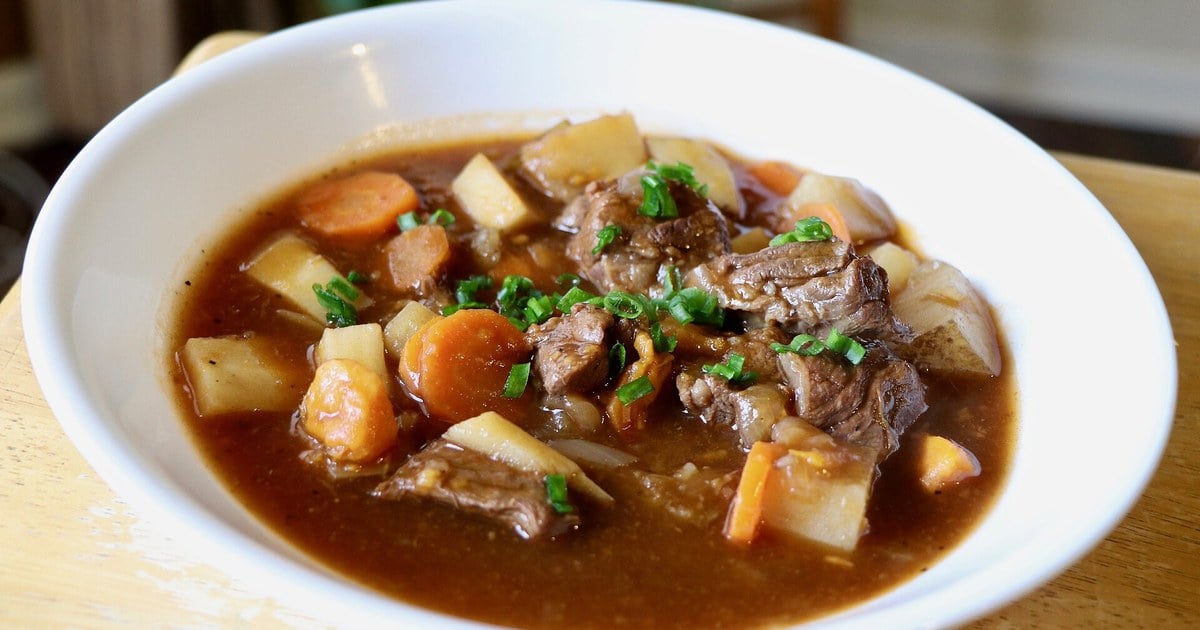
Irish Beef and Guinness Stew Recipe: A Slow-Braised Classic from the Heart of Ireland
Few dishes speak to the soul of Irish cooking quite like a deep, dark beef and Guinness stew. It is the kind of food that has warmed farmhouse kitchens and country pub dining rooms for generations — a one-pot meal built on patience, good ingredients, and the particular alchemy that happens when stout meets slow heat. The recipe belongs firmly in the tradition of Irish hearth cooking, where tough, inexpensive cuts of beef were transformed over long, gentle hours into something magnificent. Nothing was wasted, every flavour was coaxed rather than rushed, and the pot on the range was as much a part of daily life as the turf fire beside it.
Guinness has been brewed at St James’s Gate in Dublin since 1759, and it did not take long for cooks to discover what the stout could do to a braise. Its roasted barley bitterness cuts through the richness of the beef fat, its natural sugars caramelise into the gravy, and its deep colour gives the finished stew that characteristic dark mahogany depth. Contrary to what you might expect, the bitterness largely cooks away, leaving behind a rounded, almost smoky complexity that no other liquid quite replicates. Paired with root vegetables — carrot, parsnip, and waxy potatoes that hold their shape — this is a dish that is more than the sum of its parts.
Today Irish beef and Guinness stew appears on menus from Dingle to Donegal, served with soda bread to mop the gravy or a scattering of fresh parsley on top. But its real home is still the domestic kitchen, where it simmers away on a Sunday afternoon filling the house with a smell that makes everyone arrive early for dinner. The recipe below is honest and traditional — no shortcuts, no novelty additions, just the real thing done properly.
Ingredients
- 1 kg (2 lb 4 oz) beef chuck or stewing beef, cut into 4–5 cm (1½–2 inch) chunks
- 2 tablespoons plain flour, seasoned with salt and black pepper
- 2 medium onions, roughly chopped
- 3 garlic cloves, finely chopped
- 2 medium carrots, cut into chunky rounds
- 2 medium parsnips, cut into chunky pieces
- 500 g (1 lb 2 oz) waxy potatoes (such as Maris Piper or baby potatoes), halved
- 440 ml (1 can / 15 fl oz) Guinness or other Irish dry stout
- 400 ml (14 fl oz) good-quality beef stock
- 2 tablespoons tomato purée
- 2 teaspoons Worcestershire sauce
- 2 fresh thyme sprigs (or ½ teaspoon dried thyme)
- 2 bay leaves
- Salt and freshly ground black pepper to taste
- Small handful of fresh flatleaf parsley, roughly chopped, to serve
3 tablespoons sunflower or vegetable oil, divided
Method
- Preheat your oven to 160°C / 140°C fan / 325°F / Gas Mark 3.
- Toss the beef chunks in the seasoned flour until lightly coated on all sides, shaking off any excess.
- Heat 2 tablespoons of oil in a large, heavy-based, ovenproof casserole dish (a Dutch oven or cast-iron pot is ideal) over a medium-high heat. Brown the beef in batches — do not crowd the pan — until deeply coloured on all sides, about 3–4 minutes per batch. Remove each batch to a plate and set aside.
- Reduce the heat to medium, add the remaining tablespoon of oil, and gently soften the onions in the same pot for 6–8 minutes, scraping up any browned bits from the base as you go. Add the garlic and cook for a further minute.
- Stir in the tomato purée and cook for 1–2 minutes until it darkens slightly. Pour in the Guinness, stirring well to deglaze the pot completely, then add the beef stock, Worcestershire sauce, thyme, and bay leaves.
- Return the browned beef and any resting juices to the pot. Season generously with salt and pepper, then bring everything to a gentle simmer.
- Add the carrots and parsnips, stir to combine, then cover the casserole with a tight-fitting lid and transfer to the preheated oven. Cook for 1 hour 30 minutes.
- Remove the pot from the oven, add the potatoes, and return it to the oven for a further 45 minutes, or until the beef is completely tender and the potatoes are cooked through. Remove the thyme sprigs and bay leaves.
- Taste and adjust the seasoning. If the gravy looks a little thin, place the pot on the hob over a medium heat and simmer uncovered for 5–10 minutes to reduce. Scatter with fresh parsley and serve straight from the pot.
Tips
- Chuck steak is the ideal cut for this stew — its generous marbling breaks down beautifully over the long cooking time, giving the gravy its body and richness. Avoid lean cuts, which can turn dry and stringy.
- Browning the meat properly is the single most important step. Resist the urge to rush it; that dark crust is where much of the flavour lives.
- The stew improves enormously if made a day ahead and reheated gently. The flavours settle and deepen overnight in the fridge, making it perfect for entertaining.
- Serve with thick slices of brown soda bread or, for something more substantial, a generous heap of colcannon on the side.
- If you prefer a slightly thicker gravy, simply mash a few of the cooked potato pieces against the side of the pot before serving and stir them through.
There is something deeply satisfying about a dish that asks so little of you — a bit of chopping, a bit of browning, and then the oven does all the hard work — yet delivers so much in return. Irish beef and Guinness stew is not a recipe that needs improving or reinventing; it simply needs to be made with care, with good Irish beef, and with enough time to let it become what it is meant to be. We hope it brings a little warmth and a taste of Ireland to your kitchen, wherever in the world you happen to be.
☘️ Join 64,000+ Ireland Lovers
Every weekday morning, get Ireland’s hidden gems, local secrets, and travel inspiration — the kind you won’t find in any guidebook.
Subscribe free — enter your email:
📲 Know someone who’d love this? Share on WhatsApp →
Free forever · Unsubscribe anytime
Thinking about it for retirement?
If you’ve started thinking seriously about retiring there, our complete our full Retire in Ireland guide covers the visa, healthcare, cost-of-living, and the regions worth shortlisting.
Tours & experiences you might love


Powered by Viator. Some links are affiliate links — we may earn a small commission at no extra cost to you.
Secure Your Dream Irish Experience Before It’s Gone!
Planning a trip to Ireland? Don’t let sold-out tours or packed attractions spoil your journey. Iconic experiences like visiting the Cliffs of Moher, exploring the Rock of Cashel, or enjoying a guided walk through Ireland’s ancient past often sell out quickly—especially during peak travel seasons.

Booking in advance guarantees your place and ensures you can fully immerse yourself in the rich culture and breathtaking scenery without stress or disappointment. You’ll also free up time to explore Ireland’s hidden gems and savour those authentic moments that make your trip truly special.
Make the most of your journey—start planning today and secure those must-do experiences before they’re gone!
Subscribe Free