

What’s the best Irish dish of all time? ☘️
Vote in our Best Irish Food poll — recipes nominated by the community.
What’s your Irish county’s signature dish? ☘️
Different counties claim different dishes — Your County’s Signature Food tells you which one your county is known for, with a short story behind it.
Irish Brown Soda Bread Recipe: The Wholesome Loaf at the Heart of Every Irish Kitchen
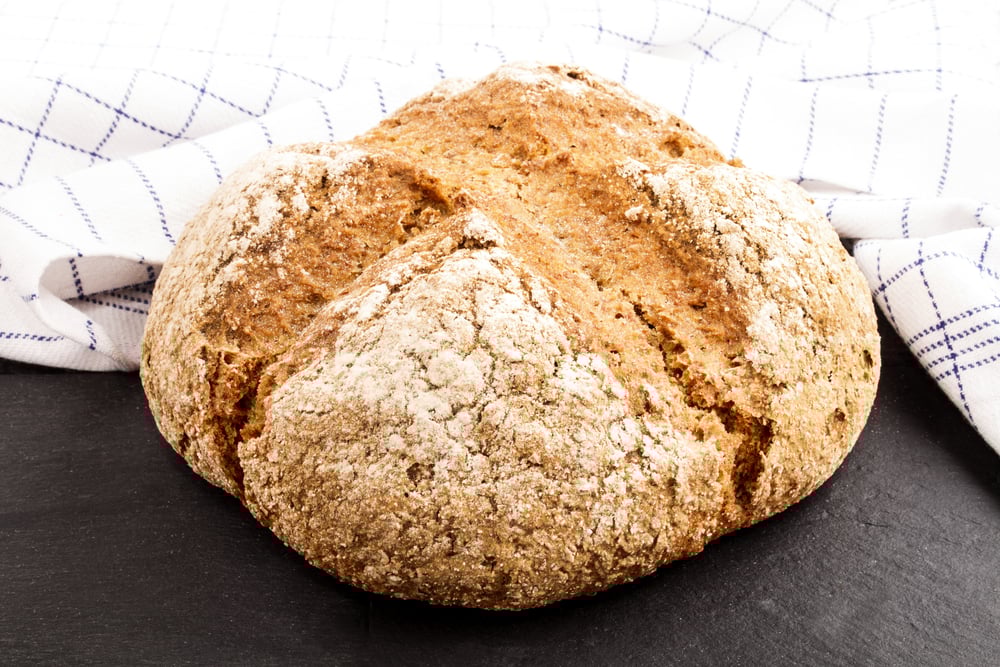
There are few smells in the world quite as welcoming as a loaf of brown soda bread fresh from the oven. In Ireland, this sturdy, nutty-flavoured bread has been a staple of the kitchen table for well over two centuries, and it remains as beloved today as it ever was. Unlike the yeasted loaves of continental Europe, Irish soda bread relies on the chemical reaction between bicarbonate of soda and buttermilk to give it its rise — a simple piece of culinary chemistry that transformed everyday baking when baking soda became widely available in Ireland in the 1840s. For many rural families during that era, a pot oven or a griddle over an open fire was the only cooking equipment they owned, and soda bread suited these conditions perfectly.
The brown variety — made with wholemeal flour rather than the white flour used in the lighter soda farl — has long been the more everyday, workaday loaf. It is the bread you find cooling on the countertop of a farmhouse kitchen on a Tuesday morning, sliced thick and spread generously with good Irish butter alongside a mug of strong tea. Every household, every townland, and seemingly every Irish grandmother has her own version, adjusted by instinct and habit. Some add a handful of oats; others swear by a spoonful of treacle. But the soul of the loaf remains constant: wholemeal flour, buttermilk, bread soda, and a pinch of salt.
What makes this bread so endearing, particularly to visitors arriving in Ireland for the first time, is how immediately it tastes of the place itself. You will find it served at breakfast in guesthouses along the Wild Atlantic Way, tucked alongside a bowl of chowder in a harbourside pub in Cork, and handed round in thick slices at family gatherings all over the country. It is the bread of welcome, of warmth, and of the kind of no-fuss, honest cooking that Irish food does better than almost anywhere else. Best of all, it takes less than an hour from mixing bowl to table.
Ingredients
- 300g (10½oz) wholemeal flour
- 150g (5½oz) plain white flour, plus a little extra for dusting
- 1 teaspoon bicarbonate of soda (bread soda)
- 1 teaspoon fine sea salt
- 350–375ml (12–13fl oz) buttermilk, at room temperature
- 1 tablespoon rolled oats, for scattering on top (optional)
Method
- Preheat your oven to 200°C (180°C fan) / 400°F / Gas Mark 6. Lightly dust a baking tray with flour or line it with baking parchment.
- Combine the wholemeal flour, plain white flour, bicarbonate of soda, and salt in a large mixing bowl. Stir them together well so the bread soda is evenly distributed throughout the flour — this is important for an even rise.
- Make a well in the centre of the dry ingredients and pour in 350ml of the buttermilk. Using one hand or a wooden spoon, mix the dough together in a light, circular motion, working from the inside outward. Add the remaining buttermilk as needed — the dough should come together into a soft, slightly sticky mass. Do not overwork it; mix only until it just comes together.
- Turn the dough out onto a lightly floured surface and gently shape it into a round about 20cm (8 inches) in diameter. Handle it as little as possible; the less you knead it, the lighter the crumb will be.
- Place the round onto your prepared baking tray. Using a sharp knife, cut a deep cross into the top of the loaf — almost all the way through the dough. This traditional mark, sometimes called the blessing of the bread, also allows the centre to cook through evenly. Scatter the oats over the top if using.
- Bake in the centre of the oven for 35–40 minutes, until the loaf is a deep, golden brown and sounds hollow when you tap it firmly on the base. If it sounds dense, return it to the oven for a further five minutes and check again.
- Remove from the oven and transfer to a wire rack. Cover loosely with a clean tea towel and leave to cool for at least 20 minutes before cutting. This resting time allows the crumb to settle and prevents a gummy texture when sliced.
Tips
- Buttermilk temperature matters: Cold buttermilk straight from the fridge can make the dough stiff and uneven. Let it sit at room temperature for 20 minutes before you begin.
- No buttermilk to hand? Add a tablespoon of white wine vinegar or lemon juice to 350ml of whole milk, stir, and leave for five minutes. It works a treat as a substitute.
- Do not overknead: This is not a yeast dough. Treat it gently — excessive handling develops gluten and makes the bread tough rather than tender.
- Eat it fresh: Irish soda bread is at its very best on the day it is baked. After that, slice and toast it; it is magnificent with butter and good marmalade.
- Flour balance: Using a mix of wholemeal and plain white flour gives a lighter crumb than wholemeal alone, while still retaining that characteristic nutty depth of flavour.
There is something deeply satisfying about making a loaf this honest and this good with so little effort and so few ingredients. Irish brown soda bread asks nothing of you except a light hand and a warm oven, and in return it fills your kitchen with an aroma that feels, somehow, like coming home. Whether you are baking it in a cottage in Connemara or at your kitchen table far from Irish shores, this is one of those recipes that carries a little piece of Ireland with it wherever it goes.
☘️ Join 64,000+ Ireland Lovers
Every weekday morning, get Ireland’s hidden gems, local secrets, and travel inspiration — the kind you won’t find in any guidebook.
Subscribe free — enter your email:
📲 Know someone who’d love this? Share on WhatsApp →
Free forever · Unsubscribe anytime
Thinking about it seriously?
If you’ve started actually planning a move, our complete the full Move to Ireland guide walks through every step, every cost, and the paperwork that catches most people out.
Tours & experiences you might love


Powered by Viator. Some links are affiliate links — we may earn a small commission at no extra cost to you.
Secure Your Dream Irish Experience Before It’s Gone!
Planning a trip to Ireland? Don’t let sold-out tours or packed attractions spoil your journey. Iconic experiences like visiting the Cliffs of Moher, exploring the Rock of Cashel, or enjoying a guided walk through Ireland’s ancient past often sell out quickly—especially during peak travel seasons.

Booking in advance guarantees your place and ensures you can fully immerse yourself in the rich culture and breathtaking scenery without stress or disappointment. You’ll also free up time to explore Ireland’s hidden gems and savour those authentic moments that make your trip truly special.
Make the most of your journey—start planning today and secure those must-do experiences before they’re gone!
Subscribe Free