

If you mapped every fiddle player in Ireland, county by county, the picture might surprise you. The fiddle is not concentrated in one corner of the country. But some counties have built such strong reputations that their names come up again and again in any conversation about Irish traditional music.
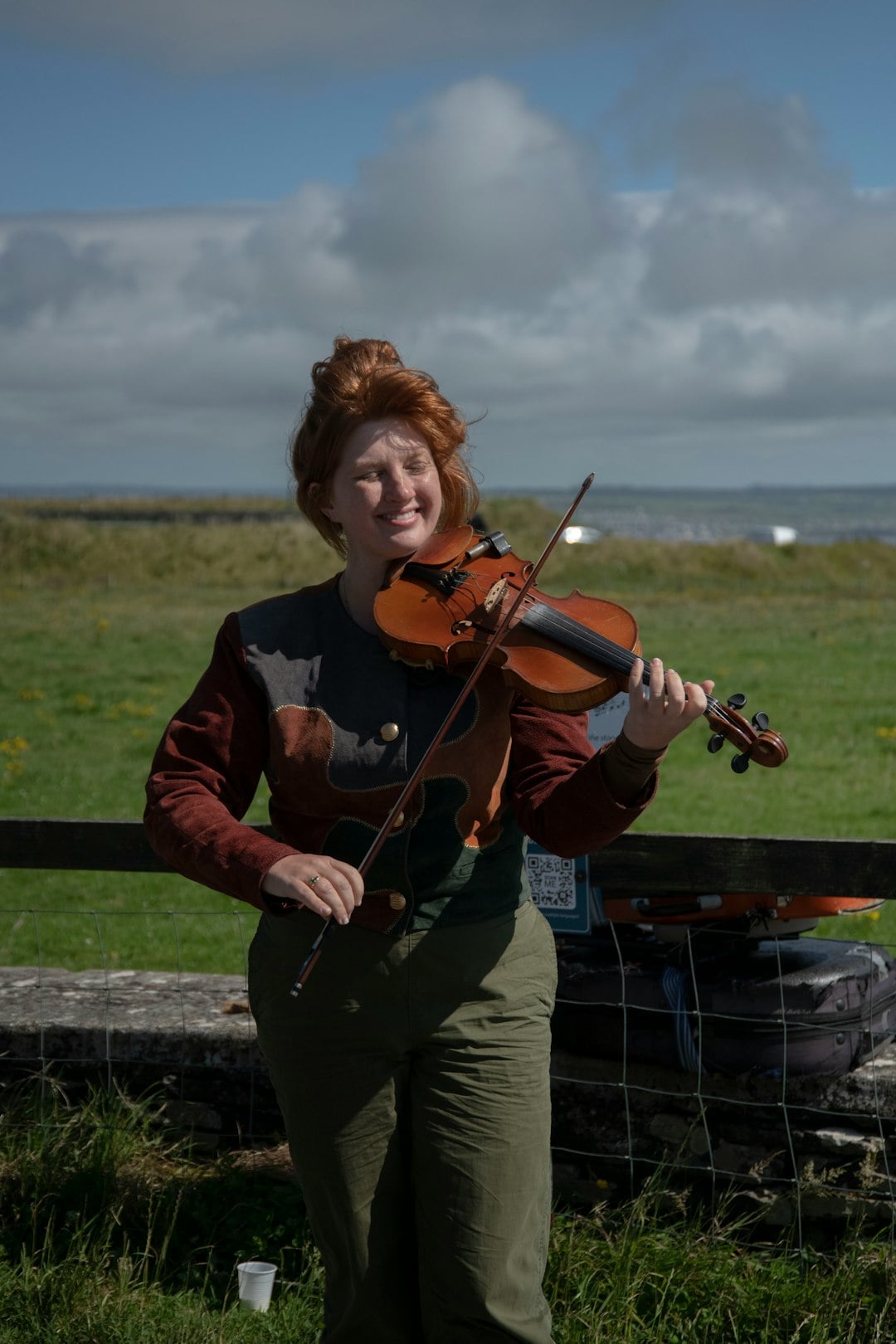
The short answer is that County Clare is most often cited as the heartland of Irish fiddle playing — at least in terms of active sessions and density of players. But the full picture is more interesting than that.
Get more stories from Ireland every week
Join thousands of readers who love Ireland. New stories, hidden gems, and seasonal guides — straight to your inbox.
Why Fiddle Playing Varies by County
Irish traditional music is not uniform. It developed region by region, shaped by local teachers, influential families, and the geography that kept communities separate for generations.
Each county developed what musicians call a “style” — a distinct way of bowing, ornamenting, and phrasing a tune. The same reel can sound completely different depending on whether a Clare fiddler plays it or a Donegal fiddler does. The notes are identical. The music is not.
This regional variation is one of the things that makes Irish fiddle playing unique in the world. It is not just one tradition. It is dozens, woven together over centuries of dancing, house parties, and pub sessions.
County Clare — The Heartland
County Clare is the county most often described as the home of Irish fiddle playing, and for good reason. It has an unusually high number of traditional musicians per head of population.
The Willie Clancy Summer School, held every July in Miltown Malbay, is one of the world’s most important traditional music events. Thousands of musicians travel there from across Ireland, the UK, North America, and Australia. Fiddle workshops are among the most popular on offer.
The Clare style is characterised by a strong, rhythmic bow arm and a clear, uncluttered approach to melody. Players like Martin Hayes, from East Clare, have brought this style to international stages without losing any of its local character.
Doolin, on the Clare coast, is one of the most famous traditional music villages in Ireland. On any night of the week, you can walk into a pub and hear fiddles, flutes, and uilleann pipes played by musicians who have been learning since childhood. The village is small — a few hundred people — but its reputation for music draws visitors from around the world.
County Sligo — The Early Recording Masters
If you were to judge by recorded history, County Sligo would have a strong claim to the title of Ireland’s fiddle capital.
In the 1920s and 1930s, a group of Sligo fiddlers travelled to New York and recorded hundreds of 78rpm records. Michael Coleman, James Morrison, and Paddy Killoran became the most widely heard Irish musicians of their generation. Their recordings travelled to homes across America and Ireland, shaping how an entire generation understood what Irish music sounded like.
The Sligo style is melodic and ornamented — more lyrical in feel than the Clare approach. Coleman in particular became so influential that fiddle players across the world still learn his versions of tunes today. His recording of “The Morning Dew” is considered one of the finest examples of Irish fiddle playing ever committed to disc.
Today, County Sligo still produces strong traditional musicians, and the Coleman Heritage Centre in Gurteen celebrates this legacy with an exhibition, archive, and regular performances.
County Donegal — The Northern Sound
County Donegal sits at the top of the island, separated from the rest of the Republic by the border, and its music reflects that geography. The Donegal style carries a strong Scottish influence — faster tempos, harder bow strokes, and a rhythmic drive that sets it apart from anything you will hear in Clare or Sligo.
Donegal is also known for the tradition of two fiddles playing together, known as twin fiddling. The sound is full and propulsive, built for dancing rather than listening quietly.
Tommy Peoples, one of the most admired fiddle players of the twentieth century, came from Donegal. Mairéad Ní Mhaonaigh, fiddle player and singer with the band Altan, is from Gweedore in the west of the county. Both represent a tradition that has never stopped moving.
Get more stories from Ireland every week
Join thousands of readers who love Ireland. New stories, hidden gems, and seasonal guides — straight to your inbox.
Sliabh Luachra — Kerry and Cork
Along the border between County Kerry and County Cork lies a region called Sliabh Luachra. This area has one of the most distinctive music traditions in Ireland, centred on the polka and the slide — dance forms that are rare everywhere else in the country.
The fiddle players of Sliabh Luachra developed a close, tight style that reflected the dance halls where the music was played. Denis Murphy and Julia Clifford are among the names most associated with the tradition. Their playing was direct and rhythmic, with minimal decoration.
Sliabh Luachra is a reminder that Irish traditional music is still full of regional pockets and unexpected sounds. You do not have to travel far to find something you have never heard before.
Where to Hear Fiddle Music in Ireland Today
You do not need to go to a festival to hear a fiddle session in Ireland. The pub session is the living backbone of the tradition, and most towns with any connection to trad music will have at least one session each week.
Some reliable places to find live fiddle music:
- Doolin, County Clare — three pubs (Gus O’Connor’s, McDermott’s, and McGann’s) all host regular sessions most nights of the year
- Miltown Malbay, County Clare — the Willie Clancy Summer School each July draws the finest players in the world
- Sligo town — Hargadon’s and Shoot the Crows both have regular traditional sessions
- Gweedore and Letterkenny, County Donegal — the north-west has a dense network of active players and local sessions
- Killarney, County Kerry — The Laurels and O’Connor’s are popular spots for visiting musicians
Sessions in Ireland are generally informal and open. Musicians sit together in a corner of the pub, someone starts a tune, and others join in. There is rarely a stage and often no announcement. You will know one is starting when the fiddle cases begin to open.
It is worth arriving early, getting a drink, and watching before the music starts. Seasoned session players tend to ignore tourists, and that is not rudeness — it is concentration. The music comes first.
So, Which County Wins?
There is no official count of fiddle players by county, and most traditional musicians would probably laugh at the idea of one. The tradition has never been built around competition.
But if you pressed most people in the Irish music world for an answer, they would point to County Clare. It has the density of active players, the major festivals, the infrastructure of teaching, and the pubs where sessions happen nightly even in the depths of winter. Clare-style fiddle playing is what many people picture when they imagine the sound of Irish music.
That said, Ireland is a small island with a lot of music in it. A week in Donegal would broaden your view considerably. A summer school in Clare might narrow it back again. That is the point. Every county has something worth hearing, and the only way to find it is to go.
Get more stories from Ireland every week
Join thousands of readers who love Ireland. New stories, hidden gems, and seasonal guides — straight to your inbox.
☘️ Join 64,000+ Ireland Lovers
Every weekday morning, get Ireland’s hidden gems, local secrets, and travel inspiration — the kind you won’t find in any guidebook.
Subscribe free — enter your email:
📲 Know someone who’d love this? Share on WhatsApp →
Free forever · Unsubscribe anytime
Tours & experiences you might love


Powered by Viator. Some links are affiliate links — we may earn a small commission at no extra cost to you.
Secure Your Dream Irish Experience Before It’s Gone!
Planning a trip to Ireland? Don’t let sold-out tours or packed attractions spoil your journey. Iconic experiences like visiting the Cliffs of Moher, exploring the Rock of Cashel, or enjoying a guided walk through Ireland’s ancient past often sell out quickly—especially during peak travel seasons.

Booking in advance guarantees your place and ensures you can fully immerse yourself in the rich culture and breathtaking scenery without stress or disappointment. You’ll also free up time to explore Ireland’s hidden gems and savour those authentic moments that make your trip truly special.
Make the most of your journey—start planning today and secure those must-do experiences before they’re gone!