

Griffith’s Valuation is the most useful record for tracing Irish ancestry. Conducted across all 32 counties of Ireland between 1847 and 1864, it names every head of household in the country — with their exact townland, civil parish, barony, and county. You can search it for free today and find where your family lived in the 1850s.
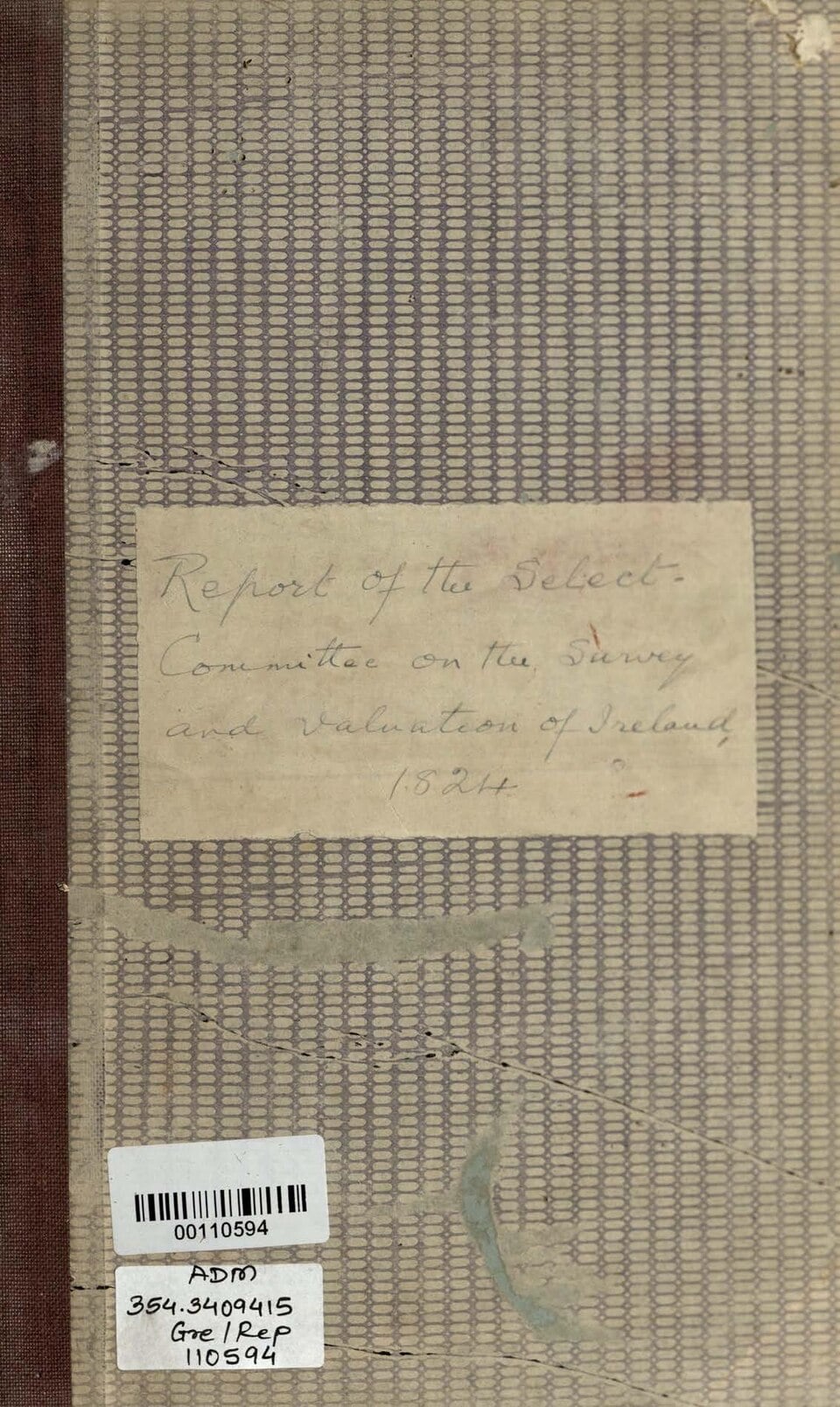
Griffith’s Primary Valuation surveyed every property in Ireland between 1847 and 1864 and recorded the head of each household, their townland, civil parish, barony, and county. Approximately 1.1 million households are listed across all 32 counties. For most Irish families who emigrated during or after the Famine, this is the last official record of where they lived. You can search the entire database for free at askaboutireland.ie — enter any Irish surname and county to find where a family paid rent in the mid-19th century.
Watch: Do You Qualify for an Irish Passport?
Tracing your Irish family? If one of your grandparents was born in Ireland, you may be able to become an Irish citizen. This 14-minute guide explains who qualifies, what it costs and how long it takes. Thinking of making the move? Get the free Moving to Ireland checklist.
This guide explains what Griffith’s Valuation is, how to search it, how to read the results, and how to use what you find to take your research further. A worked example using the Murphy surname shows you exactly how the process works.
What Is Griffith’s Valuation?
In the 1840s, the British government needed to assess every property in Ireland for tax purposes. They hired Sir Richard Griffith, a geologist and engineer, to lead the survey. His teams travelled every barony, parish, and townland in Ireland from 1847 to 1864. They recorded the following for each property:
- The name of the occupier (your ancestor)
- The name of the immediate lessor (the landlord or sub-landlord)
- A description of the land or building
- The area of the land in acres, roods, and perches
- The rateable value of the property for tax
The result was a complete record of every occupied property on the island of Ireland. It is the closest thing we have to a national census from that period.
This matters for a specific historical reason. Ireland’s 1841 and 1851 census returns were destroyed in a fire at the Public Record Office in Dublin in 1922. Griffith’s Valuation fills much of that gap. It was conducted at almost exactly the same time and gives you a precise location for your family — not just a county, but a townland.
A townland is the smallest land division in Ireland. There are about 61,000 townlands across the island. Each one is a named piece of ground — usually a few dozen to a few hundred acres. When you find your ancestor’s townland, you have their address. You know exactly where on the Irish landscape their family lived.
How to Search Griffith’s Valuation for Free
The entire database is available at askaboutireland.ie. You need no account and no subscription. The search is completely free.
Go to the site and find Griffith’s Valuation in the historical resources section. The search form asks for a surname, a county, and optional fields for barony, parish, and townland. Start simple: enter just a surname and county. Leave everything else blank. This gives you the widest set of results.
The results show a list of matching names. Each entry links to a specific townland and parish. Click any name to see the full record, including the immediate lessor, the description of the property, the area, and the valuation figure.
A second free resource is the FamilySearch.org index of Griffith’s Valuation, which allows searching by exact name spelling and also offers scanned images of the original printed pages. Use both sites together for the best results.
How to Read Griffith’s Valuation Results
When you click through to an individual record, you see several columns. Here is what each one means.
Townland: The specific named piece of land where your ancestor lived. This is the most valuable piece of information in the whole record. Write it down carefully, including the exact spelling.
Civil Parish: The administrative division that contains the townland. Civil parishes map closely to the Catholic parishes that kept baptism and burial records. When you know your ancestor’s civil parish, you know which church records to search next.
Barony: A larger division between the parish and the county. Baronies help you understand which part of a large county your family came from. County Cork, for example, has 23 baronies.
Immediate Lessor: The person your ancestor paid rent to. If this is a large landowner — an earl or a landlord with many tenants — their estate records may give you older generations of your family. If it is a small farmer’s name, your ancestor was likely a sub-tenant on a modest holding.
Valuation: The financial value of the property. A valuation under £1 usually means a small subsistence farm. A valuation of £3 to £5 suggests a more substantial holding. Very high valuations indicate a significant landowner or a commercial property.
☘️ Enjoying this? 64,000 Ireland lovers get stories like this every week. Subscribe free →
A Worked Example: Searching for Murphy in County Cork
Let me walk through a real search. Say your family name is Murphy and your grandmother always said the family came from County Cork.
Go to askaboutireland.ie. Type Murphy in the surname field. Select Cork from the county dropdown. Click search. You will get a long list — Murphy is one of the most common Cork surnames. That’s expected. Do not be put off.
Now look for patterns in the results. Ask yourself:
- Do most of the results cluster in a particular barony or set of parishes?
- Do any townland names appear more than once?
- Is there a combination of name, townland, and immediate lessor that repeats?
Now add anything else you know. Did your family ever mention a town, a river, or a village? Did your grandmother say east Cork or west Cork? Use what you have to filter the results.
If your family was from west Cork, select baronies in that area: Barryroe, East Carbery, or West Carbery. This cuts the list significantly. You are now looking at a much smaller group of Murphy families in a defined area.
Click through to the individual records in that area. Look at the immediate lessors. If several Murphy families share the same immediate lessor in the same townland, they are likely closely related. You have found a likely cluster.
Once you have a townland name, search that townland in the Catholic parish records at irishgenealogy.ie. Baptism records often go back to the 1820s or earlier for most Cork parishes. You may find your ancestor’s parents, grandparents, and siblings recorded there.
What to Do After You Find Your Ancestor
Finding a family in Griffith’s Valuation is a milestone, not an endpoint. The townland you’ve found opens several research paths.
Search Catholic parish records. Go to irishgenealogy.ie and search for baptisms and marriages in the civil parish that matches your townland. Records from the 1820s onwards are available for most of Ireland. Earlier records exist for some parishes.
Search the Tithe Applotment Books. These land records from 1823 to 1837 predate Griffith’s Valuation. If your ancestor’s family appears in both records under the same townland, you have confirmed their presence in that location across 30 or more years. The Tithe Books are free to search at askaboutireland.ie and through ancestry.com.
Search passenger lists. Once you have a confirmed townland, search emigration records with real confidence. Passenger lists from Ellis Island and other ports often recorded the last residence in Ireland. Use stevemorse.org to search Ellis Island records and match a townland or county to your arriving ancestor.
Consider a heritage trip. When you know which townland your family came from, you can visit it. Standing on the land your ancestors farmed — seeing the shape of the valley, the line of the hills, the stone walls they built — is different from reading a record on a screen. It closes something. For help planning that journey, see our guide to Irish heritage roots journeys.
How Griffith’s Valuation Fits Into the Wider Research Picture
Irish ancestry research usually follows a sequence. Griffith’s Valuation sits near the beginning of that process because it gives you a precise location. Once you have a location, every other record becomes searchable.
The typical sequence looks like this:
- Civil registration records (from 1864) — births, marriages, and deaths, free at irishgenealogy.ie
- Griffith’s Valuation (1847–1864) — where your family lived just before or during the Famine
- Tithe Applotment Books (1823–1837) — an earlier land record for the same location
- Catholic parish registers (from the 1780s–1820s) — baptism, marriage, and burial records
- Estate records — if you know the landlord’s name from Griffith’s, estate papers may show earlier generations
For a full guide to using each of these record sets together, see our step-by-step guide to tracing your Irish ancestry.
If you are researching a specific county, our county surname guides give useful background on the names you find in Griffith’s. The distributions and origins of surnames often explain why a particular name appears in one barony and not another. See our guide to Irish surnames from County Galway or Irish surnames from County Kerry for examples of how surname geography works in practice. You can also read what your Irish surname reveals about where your family came from.
For Irish-American families, Griffith’s Valuation is often the moment a story becomes a place. Your great-grandmother may have whispered the name of a townland in County Clare to her children before she died. The name was passed down, half-remembered, until it reached you. When you type it into askaboutireland.ie and find the record, that name becomes real again — a dot on a map, a slope of land above a river, a field where your family spent generations. Many County Clare families left during the 1840s famine years. Their children’s children are finding them now, one record at a time, in a database that has waited over 150 years to be searched.
This guide has focused on walking through one real search from start to finish. For a fuller reference covering the Great Famine context, every place you can access the records, and tips for planning a heritage visit, see our complete guide to Griffith’s Valuation.
Frequently Asked Questions
What is Griffith’s Valuation used for in genealogy?
Griffith’s Valuation is used to locate where an Irish ancestor lived in the mid-19th century. It gives the name of every householder in Ireland, their townland, civil parish, barony, and county. Because the 1841 and 1851 Irish census records were destroyed, Griffith’s Valuation is often the earliest surviving record that places a specific family in a specific location. Once you have a townland, you can search Catholic parish records, Tithe Applotment Books, and estate records for that same area.
Is Griffith’s Valuation free to search online?
Yes. The full database is searchable for free at askaboutireland.ie. No account or subscription is needed. You can search by surname and county, then narrow results by barony or parish. Scanned images of the original printed valuation books are also available free through FamilySearch.org, where you can see the original handwritten and printed pages.
What if I cannot find my ancestor in Griffith’s Valuation?
Several reasons can explain a missing result. The family may have emigrated before the survey reached their county, since the valuation was conducted over nearly 20 years across the whole island. The surname may be recorded under a variant spelling — try searching for alternate versions such as Brien for O’Brien or Murfy for Murphy. Some small landless labourers were not recorded as householders. In those cases, try searching the Tithe Applotment Books from 1823 to 1837, which sometimes record labourers who later disappeared from Griffith’s.
What is the difference between Griffith’s Valuation and the Tithe Applotment Books?
The Tithe Applotment Books were compiled between 1823 and 1837. Griffith’s Valuation was compiled between 1847 and 1864. The two records overlap for many families. The Tithe Books are generally less detailed but cover an earlier period — they are useful for identifying a family’s presence in a townland before the Famine. Together, the two records can place a family in the same location across a span of 30 to 40 years. Finding your ancestor in both is strong confirmation you have found the right family in the right place.
Can I visit the townland where my Irish ancestors lived?
Yes. Every townland in Ireland has a physical location you can visit. Once you have a townland name from Griffith’s Valuation, you can find it on a map using the Townlands of Ireland website or Google Maps with the townland name. Some rural townlands still have the ruins of 19th-century stone cottages visible in the landscape. Visiting the actual townland is a moving experience for many diaspora families. Our guide to planning an Irish heritage roots journey covers how to make the most of a visit to your ancestral county.
☘️ Join 64,000+ Ireland Lovers
Every Friday, get Ireland’s hidden gems, local secrets, and travel inspiration — the kind you won’t find in any guidebook.
Subscribe free — enter your email:
📲 Know someone who’d love this? Share on WhatsApp →
Free forever · One email per week · Unsubscribe anytime
Tours & experiences you might love


Powered by Viator. Some links are affiliate links — we may earn a small commission at no extra cost to you.
Secure Your Dream Irish Experience Before It’s Gone!
Planning a trip to Ireland? Don’t let sold-out tours or packed attractions spoil your journey. Iconic experiences like visiting the Cliffs of Moher, exploring the Rock of Cashel, or enjoying a guided walk through Ireland’s ancient past often sell out quickly—especially during peak travel seasons.

Booking in advance guarantees your place and ensures you can fully immerse yourself in the rich culture and breathtaking scenery without stress or disappointment. You’ll also free up time to explore Ireland’s hidden gems and savour those authentic moments that make your trip truly special.
Make the most of your journey—start planning today and secure those must-do experiences before they’re gone!