

There is something that happens when you step inside an Irish stone circle for the first time. The wind drops. The noise of the modern world recedes. And you find yourself wondering, with real urgency, who built this — and why. Ireland is scattered with more than 1,500 megalithic monuments: passage tombs, dolmens, standing stones, court cairns, and stone circles that were already ancient when the Egyptians were building the pyramids. They are the most extraordinary things in this extraordinary country, and most visitors drive straight past them.
Not you, though. We’ve ranked Ireland’s ten greatest stone circles and ancient sites — from the world-famous to the blissfully overlooked (for the folklore and solstice science behind them, see our full guide to Ireland’s stone circles). But we already know the arguments this will start. Newgrange at number one? Poulnabrone robbed of the top spot? The Uragh Stone Circle criminally underrated? Tell us where we’ve got it wrong in the comments. These stones have been waiting 5,000 years. They can handle the debate.
1. Newgrange, County Meath
Official visitor information for Newgrange →
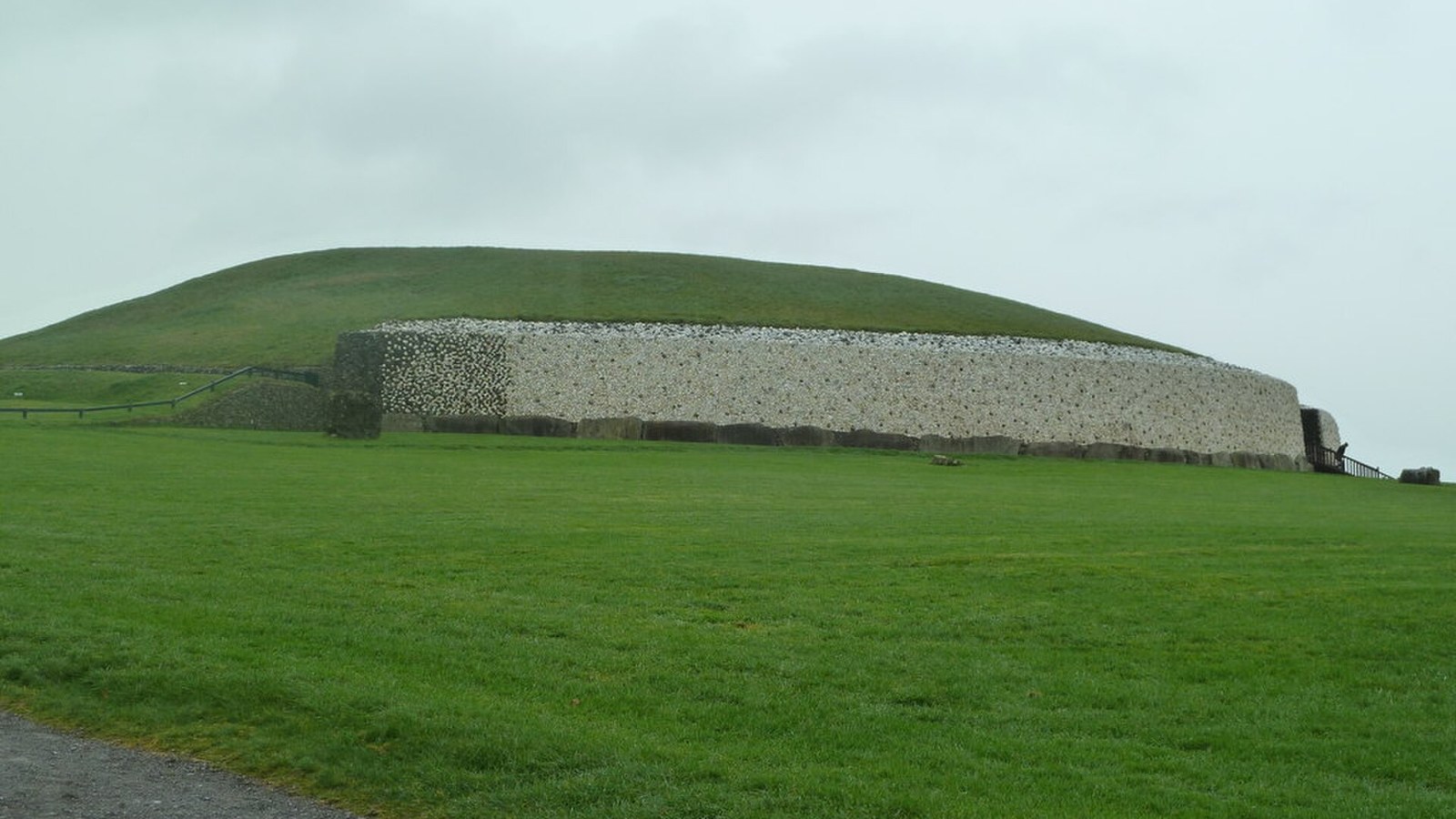
Nothing in Ireland — nothing in Europe — quite prepares you for Newgrange. Built around 3,200 BC, this vast passage tomb predates Stonehenge by around 1,000 years and the Great Pyramids of Giza by about 500 years. What makes it breathtaking is not just its age, but its precision: every year on the winter solstice, at precisely 8:58 in the morning, a shaft of sunlight enters the roof-box above the entrance and illuminates the chamber floor 19 metres inside. The builders of this place understood astronomy, mathematics, and the movement of the stars. The queue for the solstice ballot has thousands of names. Most of us will never stand inside during those three minutes of light. That somehow makes it more magnificent, not less. Newgrange shares the Boyne Valley with Knowth, Dowth, and the Hill of Tara — see our full guide to County Meath’s ancient sites for the rest of the story.
2. Poulnabrone Dolmen, County Clare
Official visitor information for Poulnabrone Dolmen →
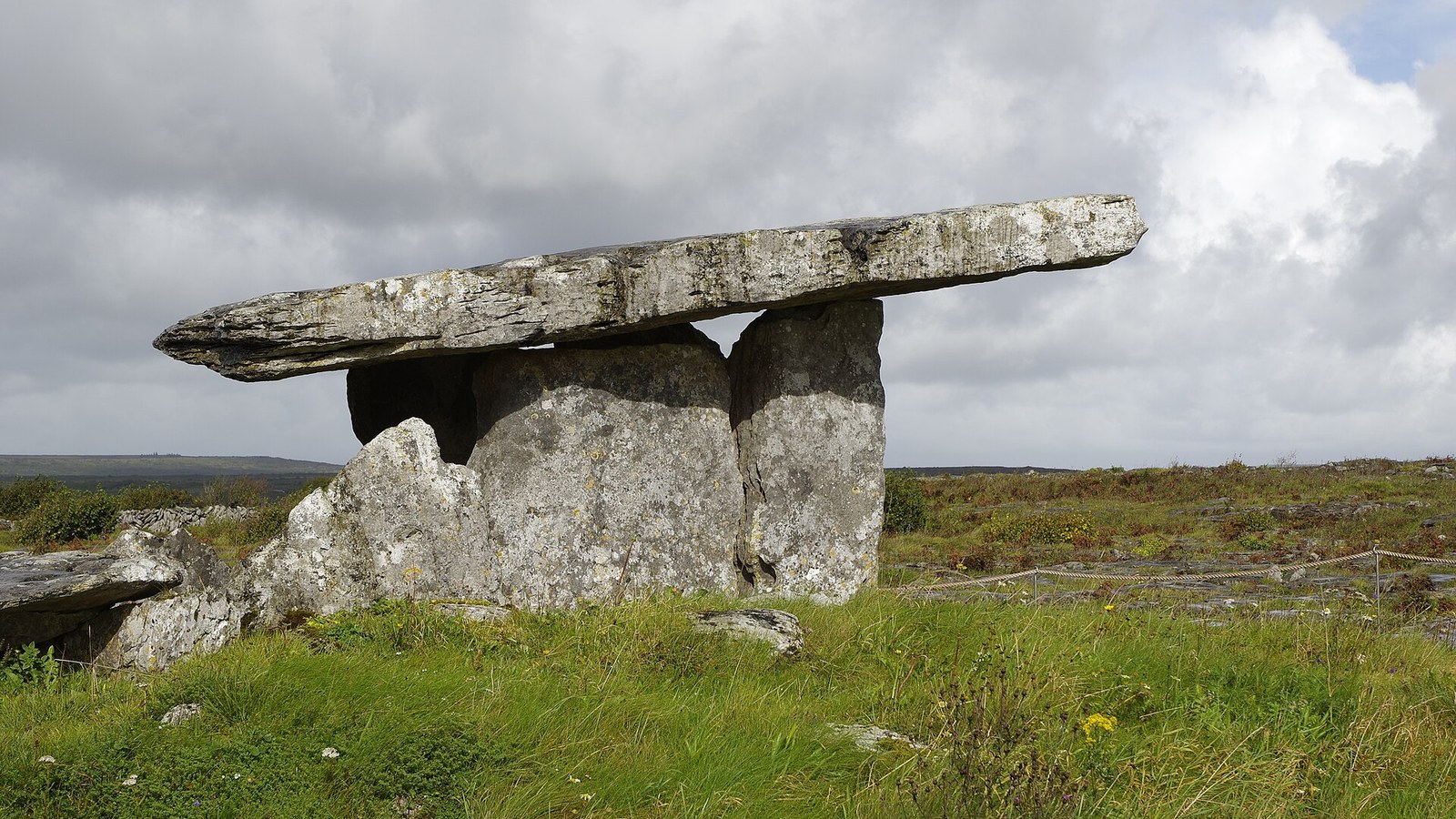
The Burren is a limestone landscape unlike anywhere else on earth — a vast, cracked plateau where Arctic flowers grow beside Mediterranean plants, and the bones of the land push through the thin soil. Rising from the middle of it, the Poulnabrone Dolmen looks like something that fell from the sky. Two portal stones support a massive horizontal capstone, creating a silhouette so striking that it appears on more postcards than almost any other Irish monument. Built around 4,200 BC, the chamber held the remains of at least 33 people. Stand here at dawn, when the mist sits low in the hollows of the limestone, and you will feel the weight of those 6,000 years. Nearby, the village of Kilfenora makes a fine base for exploring the Burren.
3. Drombeg Stone Circle, County Cork
Official visitor information for Drombeg Stone Circle →
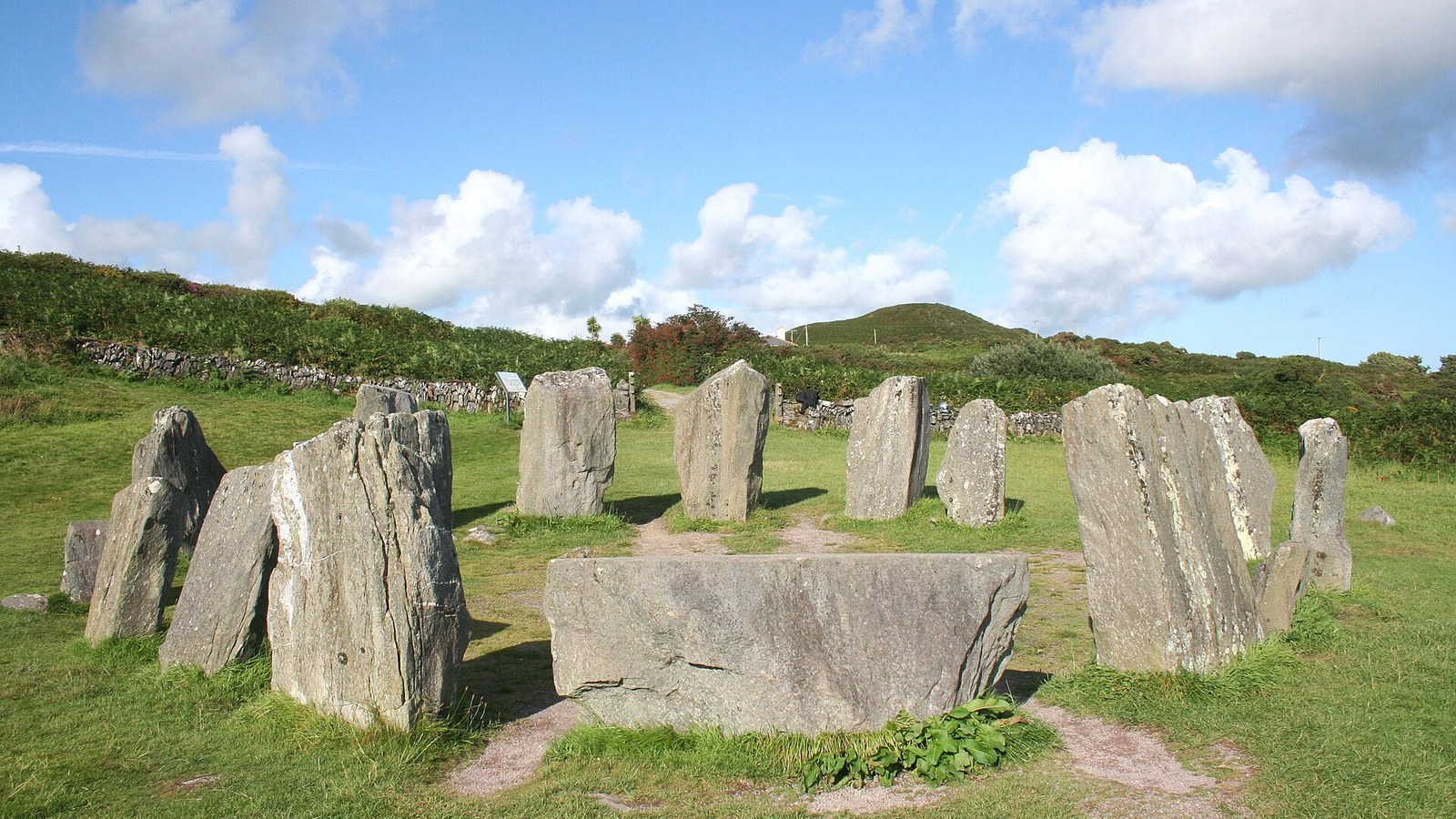
Seventeen stones arranged in a perfect circle on a south-facing hillside above the sea. Drombeg — known locally as “The Druid’s Altar” — is small enough to feel intimate and rugged enough to feel genuinely ancient. What elevates it to the extraordinary is its alignment: on the winter solstice, the setting sun passes directly through the two largest portal stones and strikes the axial stone on the far side of the circle. Someone, roughly 1,100 years before the birth of Christ, measured this landscape with enough precision to make it happen. Bring a flask of tea. Sit on the grass. Wait for the clouds to clear. There is no rush.
4. Hill of Tara, County Meath
Official visitor information for Hill of Tara →
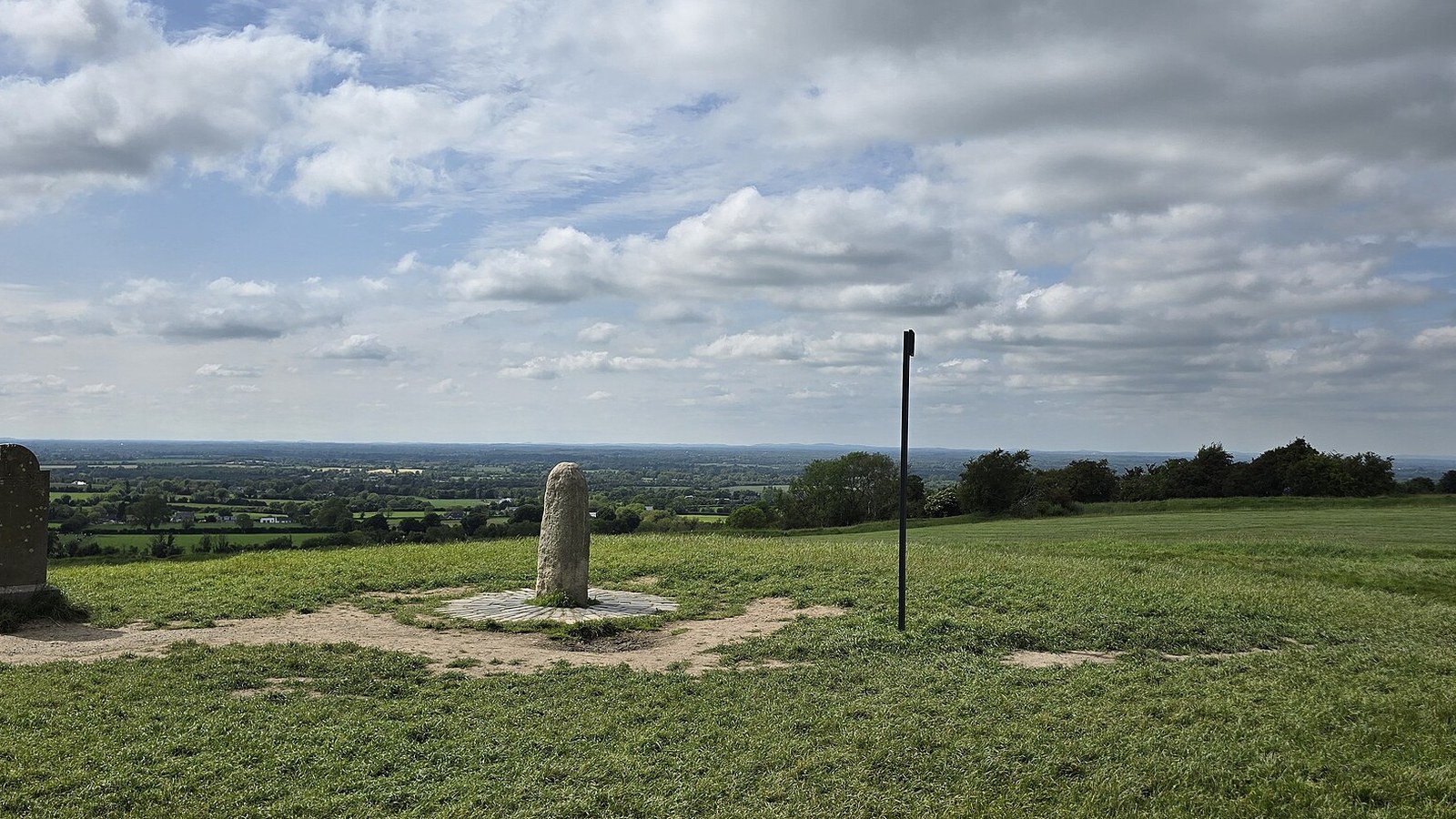
The Hill of Tara is not a stone circle in the strict sense, but no list of Ireland’s ancient sites is complete without it. This low, green hill in County Meath was the ceremonial and political capital of Ireland for thousands of years — the seat of the High Kings, the meeting place of the Feis Temro, the place where the Lia Fáil (the Stone of Destiny) still stands. On a clear day you can see four provinces from its summit. The monuments here include the Mound of the Hostages, a passage tomb dating to around 2,500 BC, and numerous ring forts and standing stones. It looks, from a distance, like any other Irish hill. It is anything but. If you’re exploring County Meath, Trim Castle is only a short drive away.
5. Lough Gur, County Limerick
Official visitor information for Lough Gur →
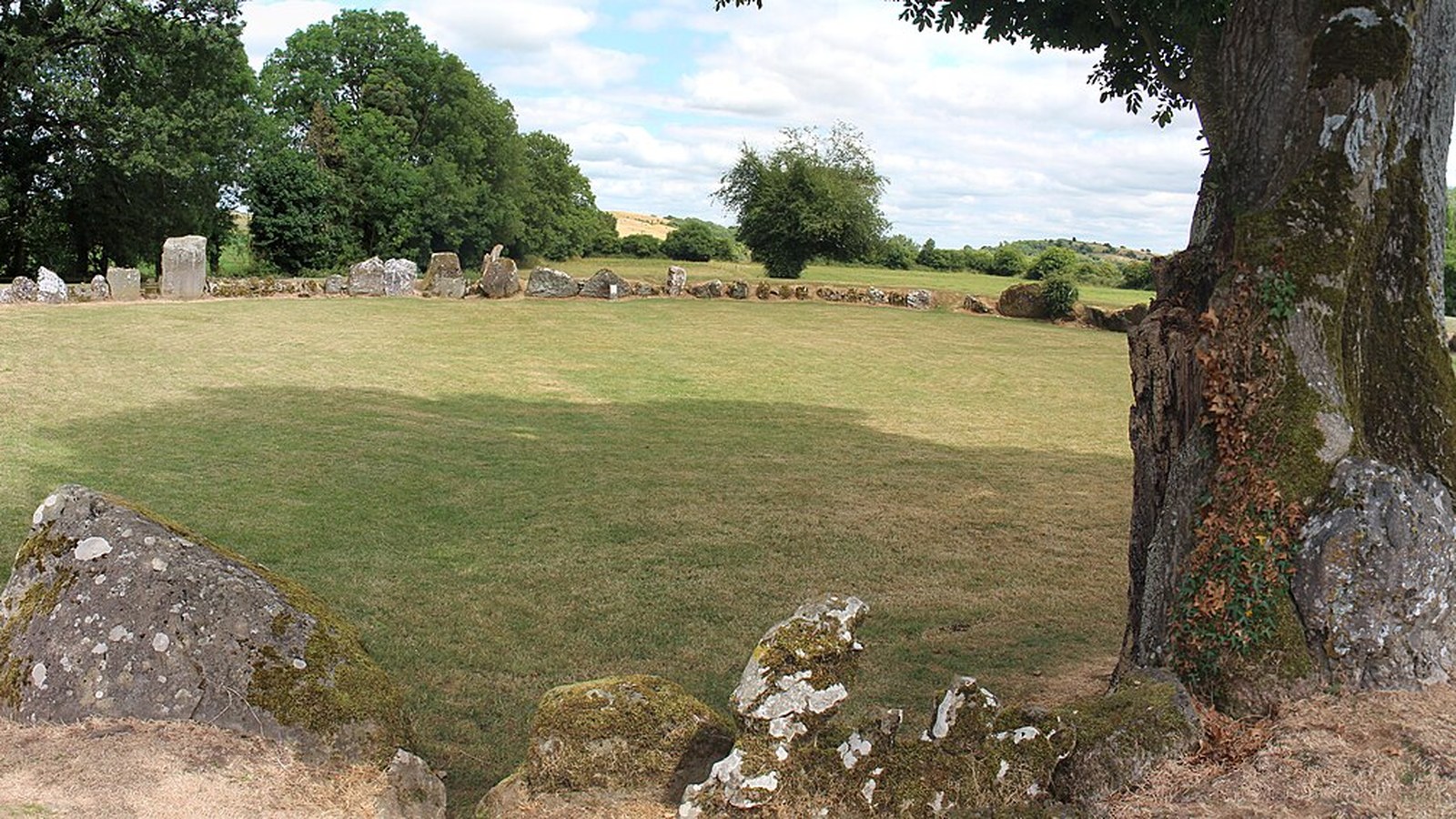
The Grange Stone Circle at Lough Gur is the largest intact stone circle in Ireland — 113 standing stones arranged in a ring roughly 50 metres across. The site sits in a hidden valley beside a crescent-shaped lake, and the scale of it stops you in your tracks. These stones were set in place around 2,200 BC, and they have not moved since. The surrounding landscape holds dozens of other monuments — wedge tombs, ring forts, a crannog, a fulacht fiadh — and the whole area has the feeling of a place that was sacred long before any religion gave it a name. The interpretive centre is modest and honest about what it does not know. We respect that.
6. Carrowmore, County Sligo
Official visitor information for Carrowmore →
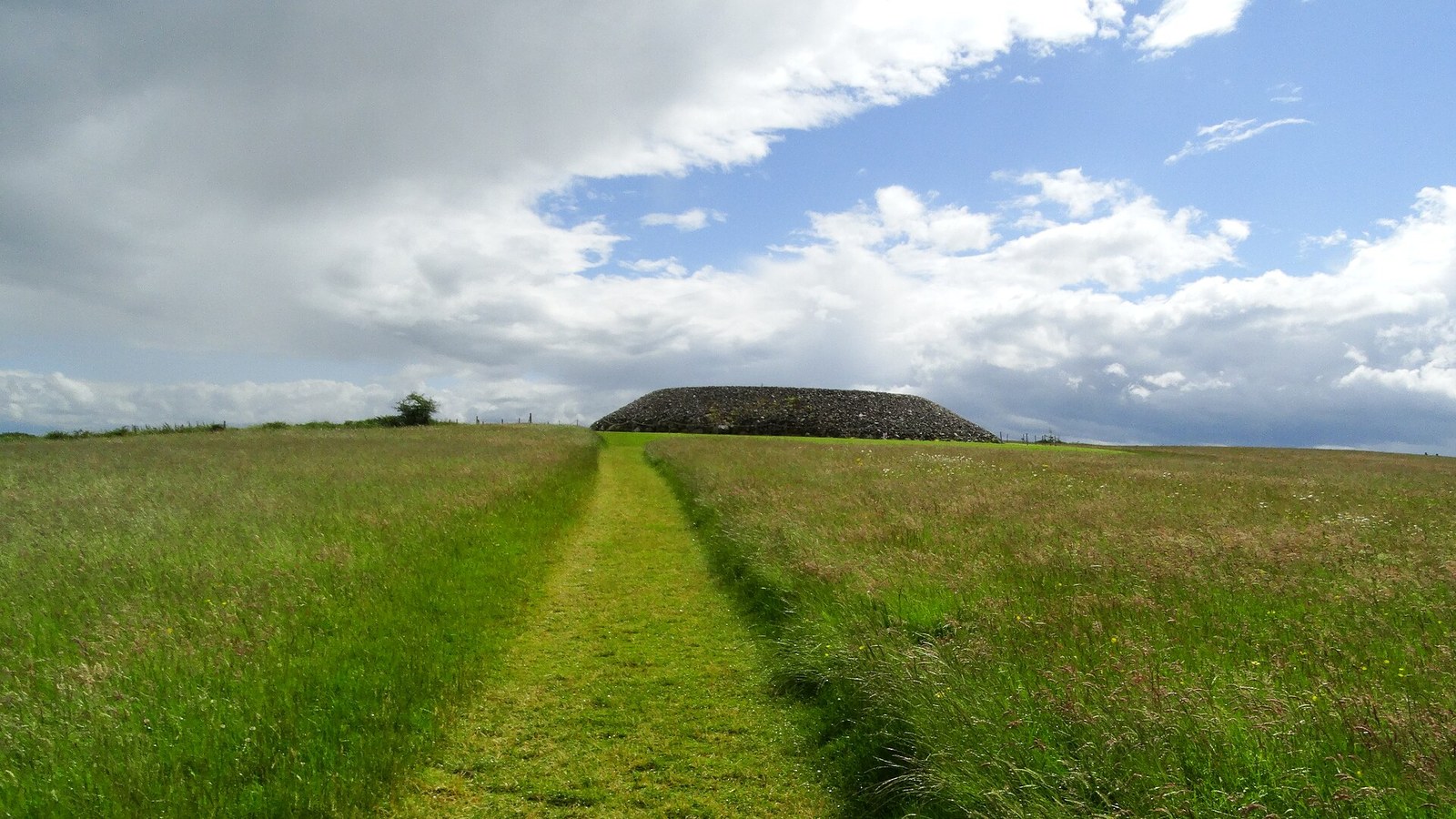
Sligo is megalith country. Carrowmore, on the outskirts of Sligo town, is the largest megalithic cemetery in Ireland and one of the oldest in the world — the earliest monuments here date to around 4,300 BC. More than 30 passage tombs, dolmens, and stone circles are scattered across a green hillside, with Knocknarea looming to the west (see below). You can walk freely among them, crouch to peer inside the chambers, and feel with some clarity the strangeness of standing in a place where people were burying their dead before the wheel was invented. The OPW heritage card gets you in; an early morning visit gets you almost to yourself.
7. Uragh Stone Circle, County Kerry
View Uragh Stone Circle on Google Maps →
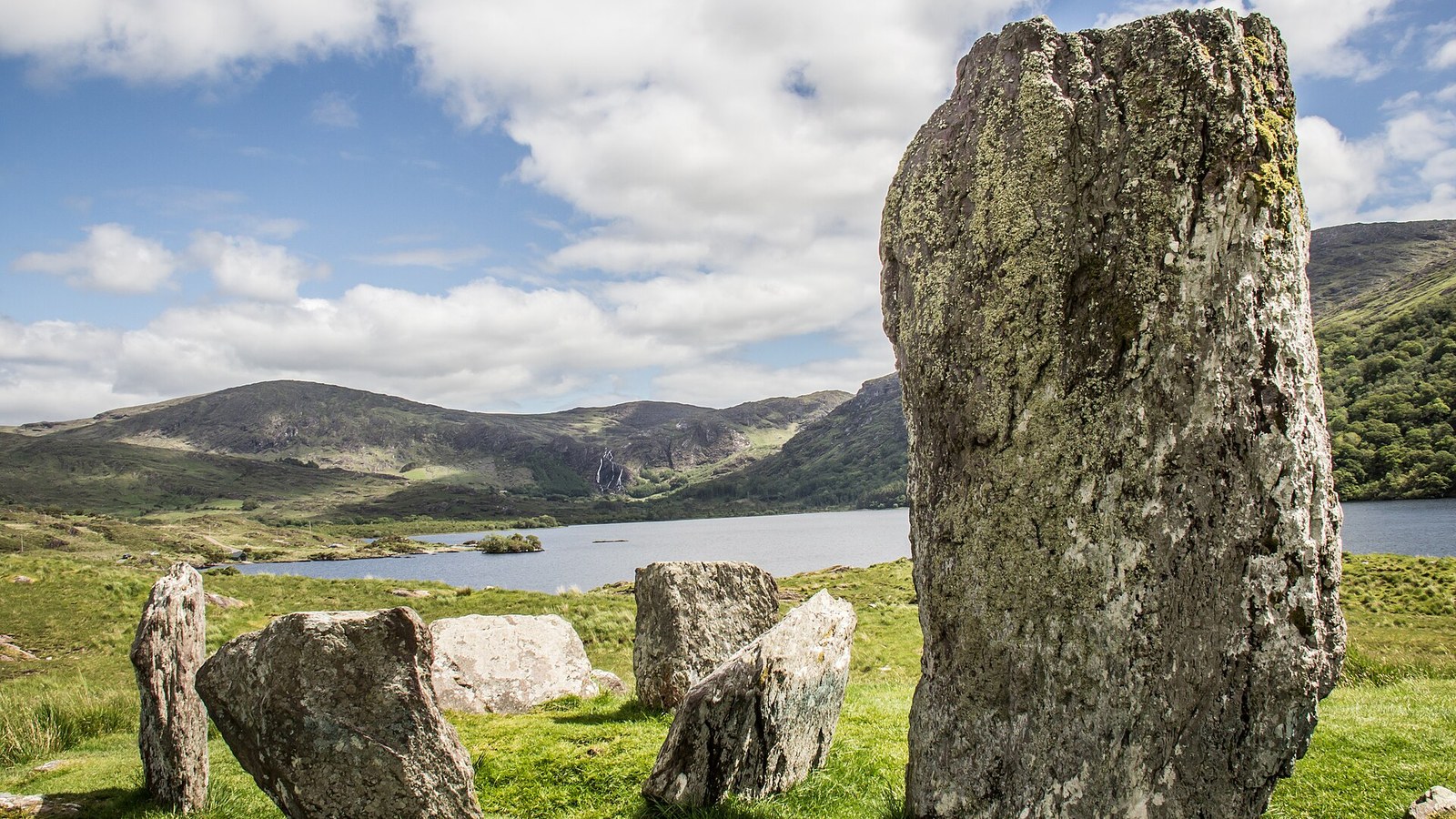
If any stone circle in Ireland has been unfairly overlooked, it is Uragh. Set at the head of Lough Inchiquin on the Beara Peninsula, the five-stone circle is framed by a waterfall, a lake, and the dark shoulders of the Kerry mountains. It requires a short walk to reach and a willingness to get your boots muddy. It rewards you with something close to perfection: a prehistoric monument in a landscape that appears entirely untouched. Early morning, when the mist sits on the water, this place is quietly extraordinary. The Skellig Peninsula nearby offers another layer of ancient Ireland at Skellig Michael.
8. Browne’s Hill Dolmen, County Carlow
Official visitor information for Browne’s Hill Dolmen →
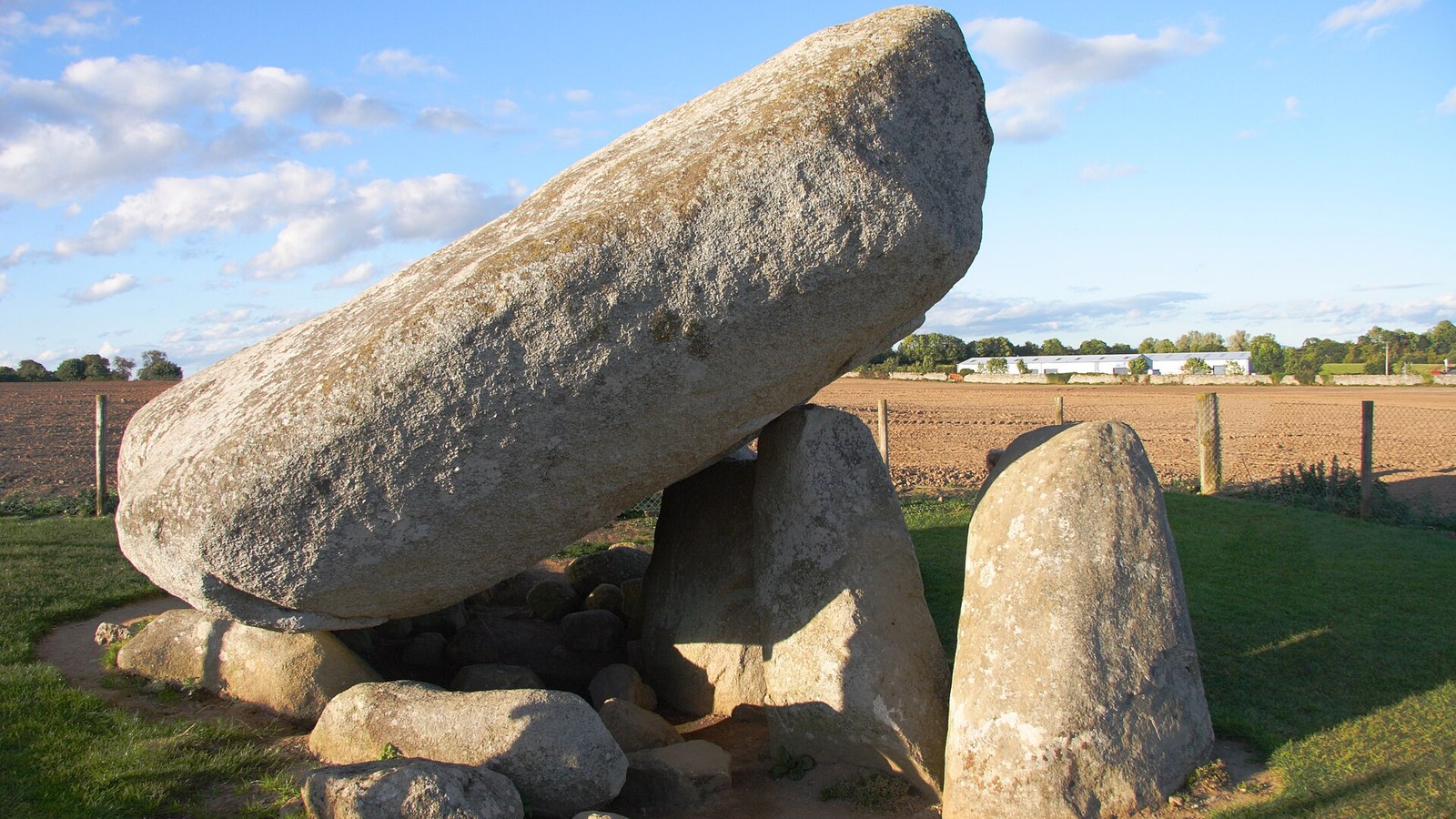
The capstone of Browne’s Hill Dolmen weighs an estimated 150 tonnes. One hundred and fifty tonnes. It is the largest portal dolmen capstone in Europe, and it sits — apparently impossibly — balanced on three upright portal stones beside a country road in County Carlow. It was built around 4,000 BC, and nobody has ever satisfactorily explained how. The monument sits behind a farmhouse in a field of lush Carlow grass, and you can walk up to it and put your hands on it. The intimacy of that — touching a thing that humans built 6,000 years ago — is what makes Irish ancient sites different from anything behind glass in a museum.
9. Knocknarea, County Sligo
Official visitor information for Knocknarea →
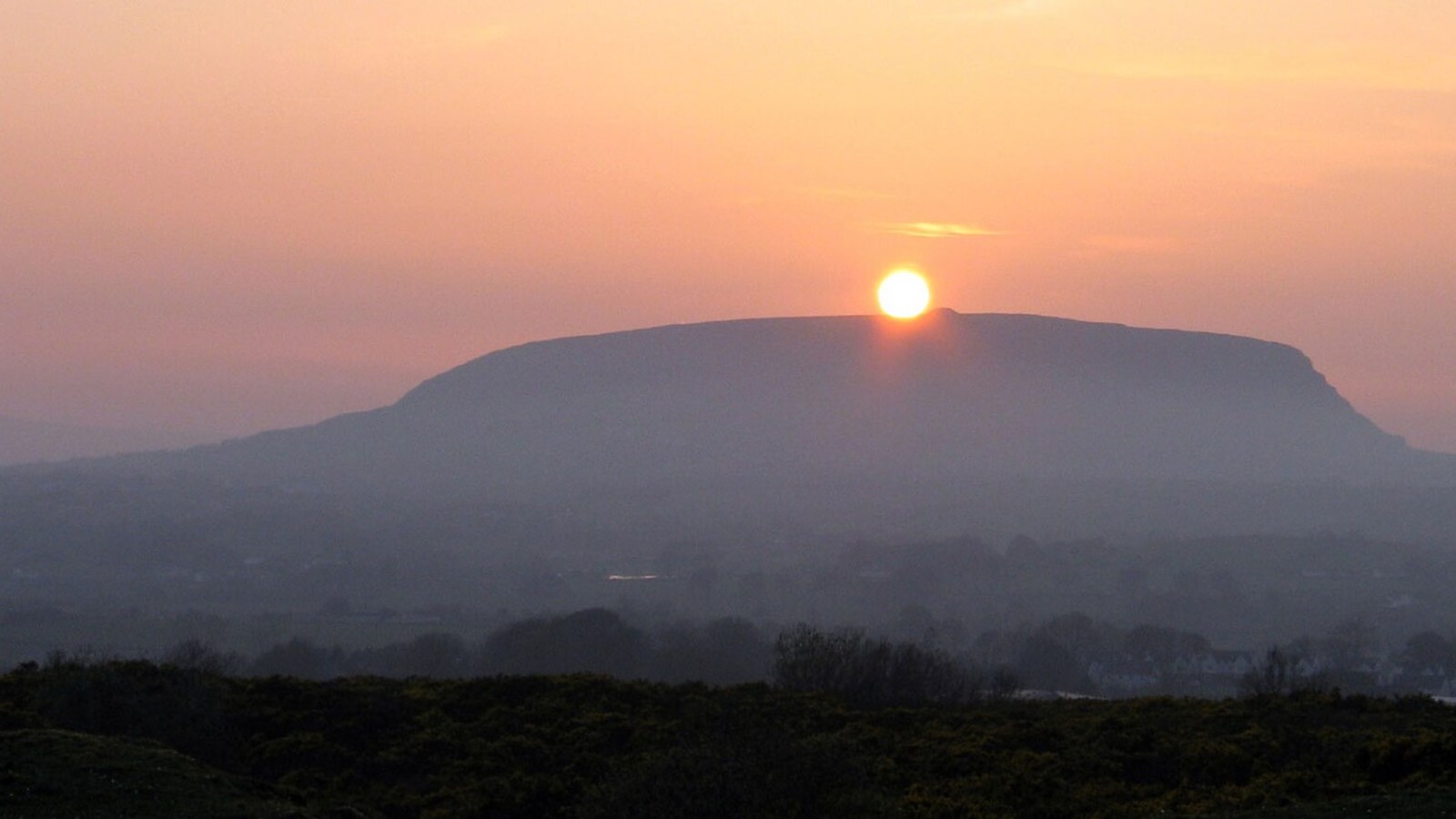
Visible from almost anywhere in County Sligo, Knocknarea is a flat-topped mountain with a vast cairn on its summit — Medb’s Cairn, traditionally said to be the burial place of Queen Maeve of Connacht, one of the great figures of Irish mythology. It has never been excavated. Whatever — or whoever — is inside remains undisturbed. The walk to the top takes about an hour from the car park at Knocknarea village, and the views across Sligo Bay, Carrowmore, and the Atlantic are genuinely dramatic. Tradition asks that visitors add a stone from the base when they climb. The cairn grows, almost imperceptibly, year by year.
10. Creevykeel Court Cairn, County Sligo
Official visitor information for Creevykeel Court Cairn →
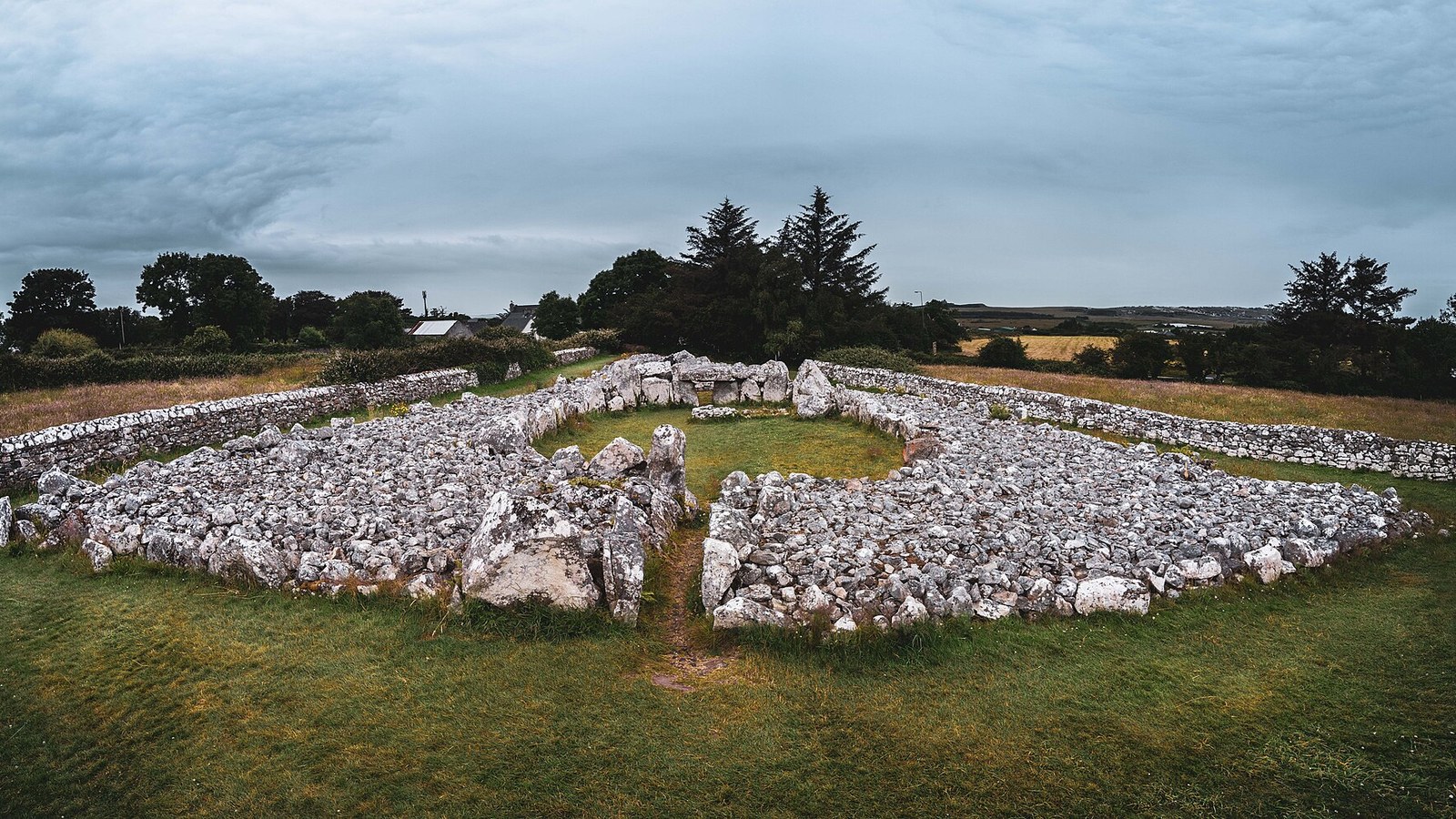
Creevykeel is the kind of ancient site that rewards the curious traveller who ignores the main road. This court cairn in north County Sligo dates to around 4,000 BC and is one of the finest examples of Neolithic court tomb architecture in Ireland. A wide ceremonial forecourt leads into a series of burial chambers, and the whole structure — though roofless — retains enough of its original form to make clear what an extraordinary feat of design and labour it once was. It is signposted off the N15, and on most days you will have it entirely to yourself. Bring the legend of the Fianna if you want atmosphere — Fionn Mac Cumhaill walked these same hills.
Which Ancient Site Stops You in Your Tracks?
We stand by this list — mostly. Newgrange at number one is, we think, defensible. But we are aware that Loughcrew Cairns deserves a mention, that Knockroe in County Kilkenny has a solstice alignment that rivals anything on this list, and that the Four Knocks passage tomb in County Meath has a carved interior that once seen is never forgotten. Ireland has more ancient monuments than it knows what to do with. We’ve simply run out of room.
So tell us: have we ranked your favourite too low? Have we left something out that should be on every list? And if you’ve discovered a stone circle or dolmen that most people walk straight past, share it in the comments below. We’re all ears.
Know someone who loves Ireland’s ancient history? Forward this to them — it’s completely free to subscribe to the Love Ireland newsletter for weekly stories like this.
Frequently Asked Questions
What is the oldest stone circle in Ireland?
The monuments at Carrowmore in County Sligo are among the oldest megalithic structures in Ireland, with the earliest dating to approximately 4,300 BC — making them older than Stonehenge by nearly 2,000 years. Newgrange is slightly younger at around 3,200 BC but is considerably more complex in its construction and astronomical alignment.
How many stone circles and megalithic monuments are there in Ireland?
Ireland has more than 1,500 recorded megalithic monuments, including passage tombs, dolmens, court cairns, wedge tombs, and stone circles. County Cork alone contains over 100 stone circles. Many remain in private fields and are not marked on tourist maps, making exploration of rural Ireland a genuinely rewarding pursuit for those with curiosity and comfortable footwear.
What is the best time of year to visit Irish stone circles?
Many Irish stone circles and passage tombs are aligned to the winter solstice (around 21 December), making late December the most dramatically significant time to visit sites like Newgrange, Drombeg, and Knockroe. That said, spring and early autumn offer the best combination of manageable crowds, longer daylight hours, and the kind of atmospheric light — golden, shifting, often dramatic — that these landscapes deserve.
☘️ Join 64,000+ Ireland Lovers
Every weekday morning, get Ireland’s hidden gems, local secrets, and travel inspiration — the kind you won’t find in any guidebook.
Subscribe free — enter your email:
📲 Know someone who’d love this? Share on WhatsApp →
Free forever · Unsubscribe anytime
Tours & experiences you might love


Powered by Viator. Some links are affiliate links — we may earn a small commission at no extra cost to you.
Secure Your Dream Irish Experience Before It’s Gone!
Planning a trip to Ireland? Don’t let sold-out tours or packed attractions spoil your journey. Iconic experiences like visiting the Cliffs of Moher, exploring the Rock of Cashel, or enjoying a guided walk through Ireland’s ancient past often sell out quickly—especially during peak travel seasons.

Booking in advance guarantees your place and ensures you can fully immerse yourself in the rich culture and breathtaking scenery without stress or disappointment. You’ll also free up time to explore Ireland’s hidden gems and savour those authentic moments that make your trip truly special.
Make the most of your journey—start planning today and secure those must-do experiences before they’re gone!