

Ireland has more than 1,500 recorded megalithic monuments, from passage tombs to dolmens, court cairns and stone circles. We picked these ten because you can actually visit them and each offers something different, from the big guided experience at Newgrange to quiet unguided fields. Every entry gives you the practical details, checked against official sources in November 2026. For the folklore and solstice science, see our guide to Ireland’s stone circles.
Several are free and unguided; Newgrange and Carrowmore are ticketed. Check opening times before you travel, as winter hours are shorter.
| Site | County | Why go | Key fact |
|---|---|---|---|
| Newgrange | Meath | Guided passage tomb, c. 3,200 BC | Pre-book; guided tours only |
| Poulnabrone | Clare | Iconic Burren dolmen | Free; ~250 m walk |
| Drombeg | Cork | 17-stone circle by the sea | Free; unguided |
| Hill of Tara | Meath | Seat of the High Kings | Open site; guides ceased 2026 |
| Grange, Lough Gur | Limerick | Ireland’s largest circle, 113 stones | Unguided; visitor centre nearby |
| Carrowmore | Sligo | 30+ monuments, ~6,000 years old | €5 adult; open to 2 Dec |
| Uragh | Kerry | 5-stone circle by a lake | Short walk; parking charge reported |
| Browne’s Hill | Carlow | 100+ tonne capstone | Free; car park |
| Knocknarea | Sligo | Unexcavated cairn, 200 ft across | Hill walk; unguided |
| Creevykeel | Sligo | Court tomb, 4000–2500 BC | Free; unguided |
1. Newgrange, County Meath
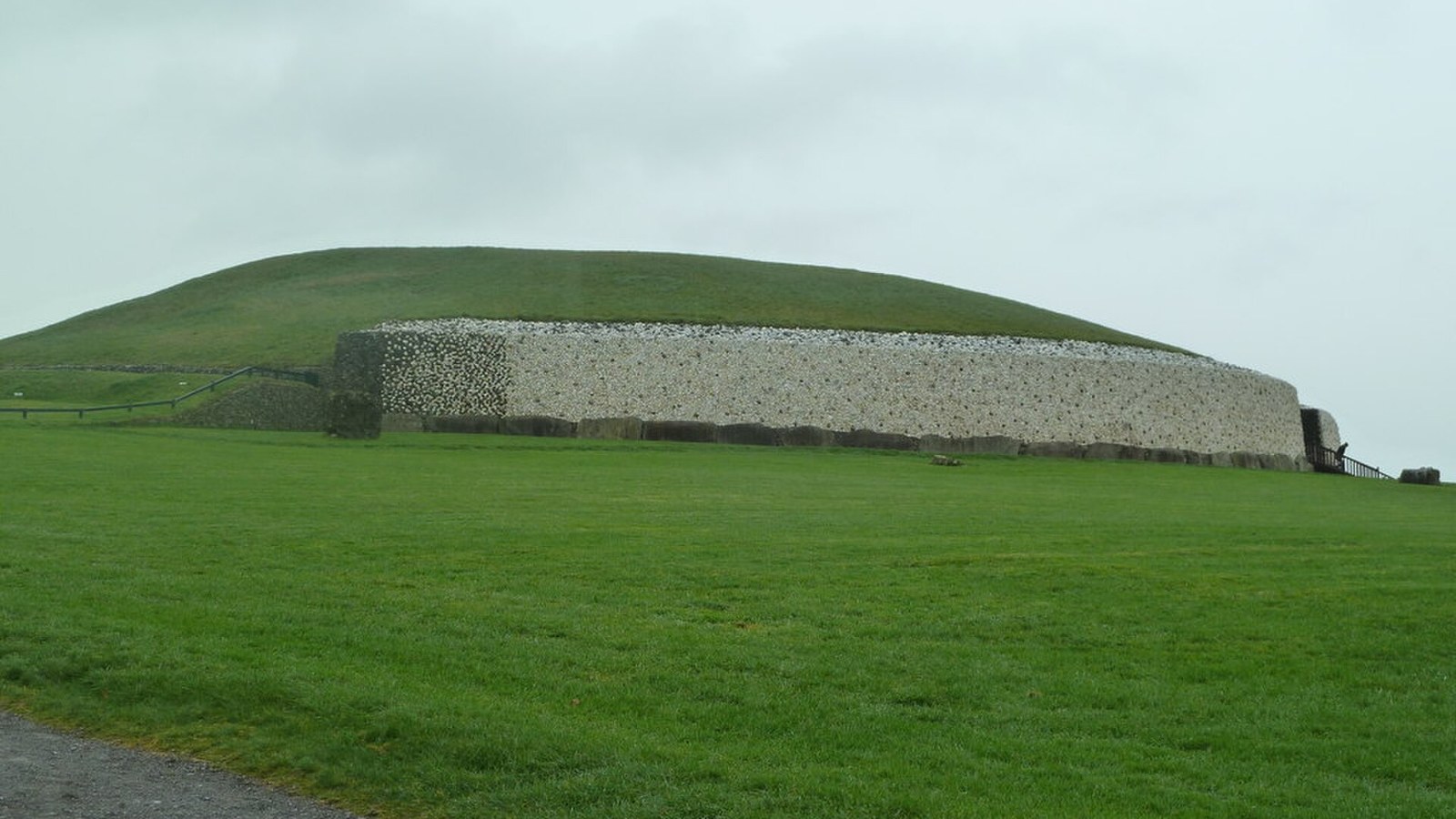
Built around 3,200 BC, Newgrange is a passage tomb that predates Stonehenge and the Great Pyramids of Giza. Its 19-metre passage is aligned so that at dawn around the winter solstice sunlight enters through the roof-box above the entrance and lights the chamber floor for about 17 minutes. Newgrange stands in the Boyne Valley alongside Knowth and Dowth; see our guide to County Meath’s ancient sites.
Know before you go
- Access: you cannot go straight to the monument. Start at the Brú na Bóinne Visitor Centre, where a shuttle bus takes guided tours to Newgrange. Pre-booking is essential and tickets sell out.
- Booking window: 7 days ahead from 2 November to 1 March, 30 days ahead from 1 April to 1 November. Buy only from the official site; resale tickets are not honoured.
- Winter 2 November to 28 February: only the Newgrange tour with exhibition runs. Visitor centre hours are 9:00 to 16:15 in November, December, January and February. Closed 23 to 27 December and 1 January; regular tours are suspended 18 to 22 December.
- Price: see the 2026 admission charges PDF on the official page. Children and infants need tickets; under-18s must be accompanied.
- Good to know: car park on site; only assistance dogs; the passage is low and narrow, so it may not suit claustrophobic visitors or those with limited mobility.
Brú na Bóinne official visitor information and booking →
2. Poulnabrone Dolmen, County Clare
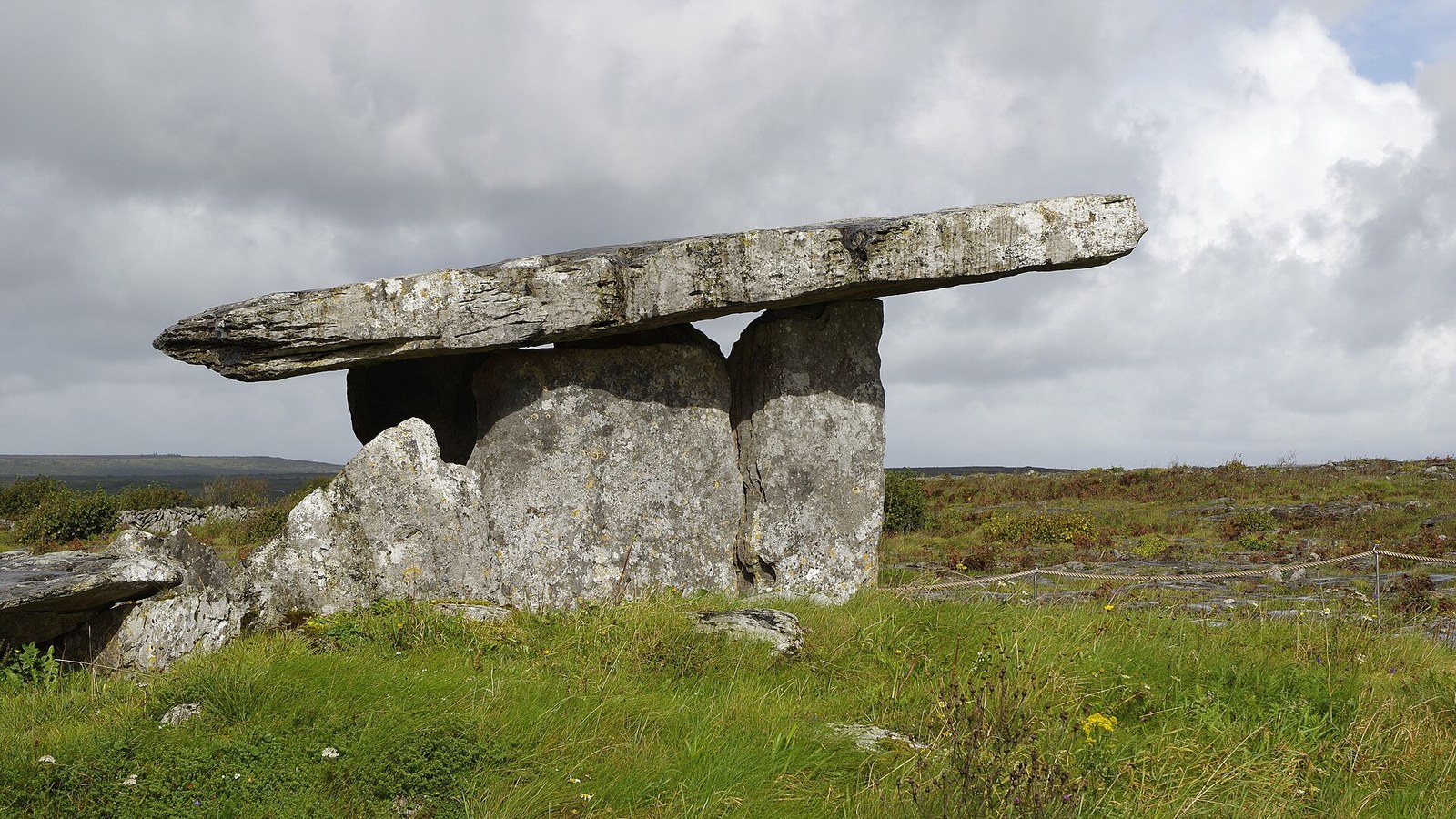
Two portal stones carry a thin, tilted capstone in the middle of the Burren’s limestone pavement. Excavations found the remains of more than 20 people, and radiocarbon dates place the burials between roughly 4,200 and 2,900 BC. It is one of the most photographed monuments in Ireland and one of the easiest to reach. The villages of County Clare make a good base for exploring the Burren.
Know before you go
- Where: beside the road in the Burren, County Clare. Open all year; no admission charge.
- Getting there: free car park, then a short walk of roughly 250 metres on very uneven ground. It is not suitable for wheelchairs.
- Good to know: exposed and often windy, so bring a waterproof. Do not climb on the stones.
Burren & Cliffs of Moher Geopark: Poulnabrone →
3. Drombeg Stone Circle, County Cork
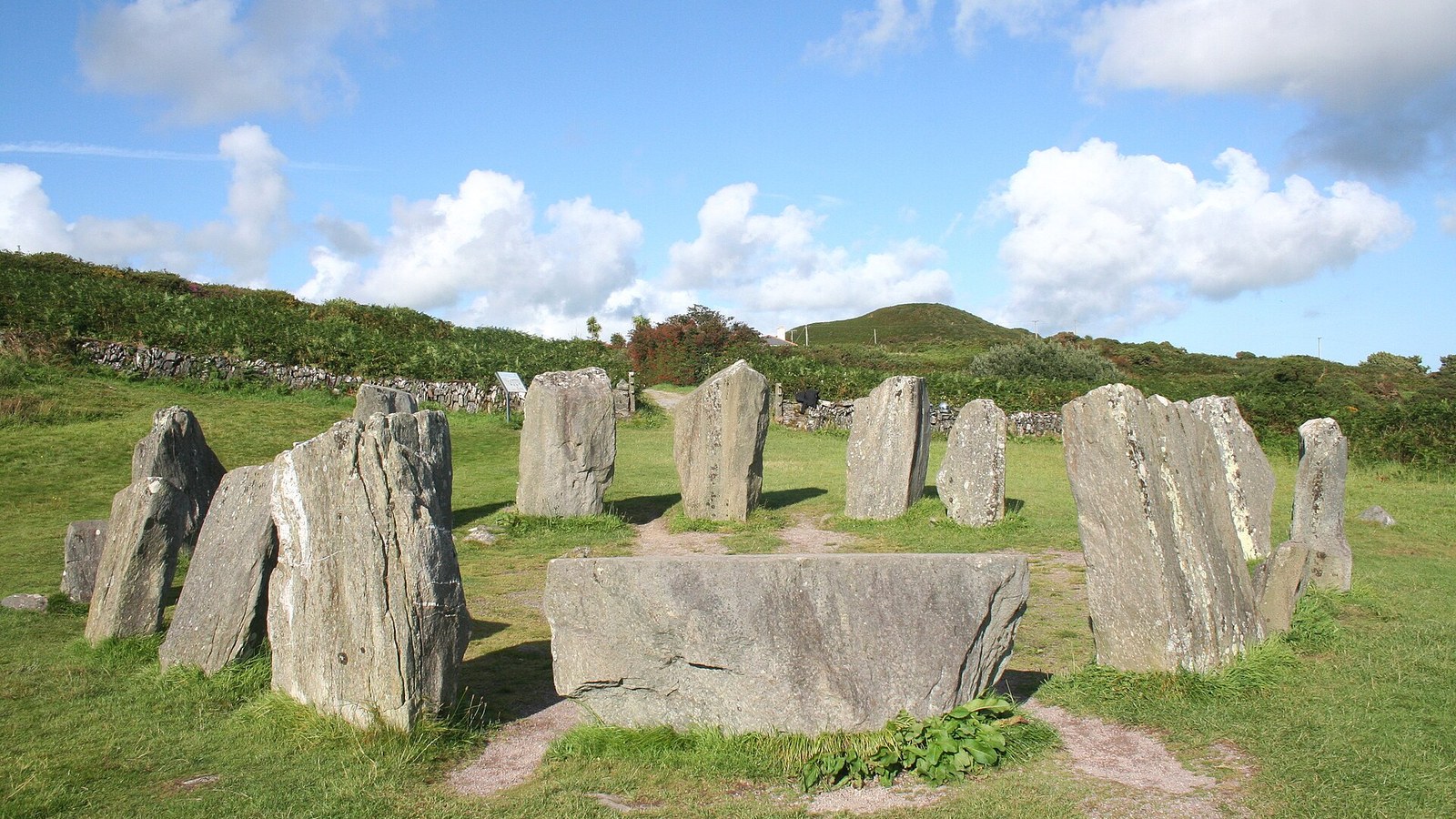
Seventeen upright stones stand in a ring on a hillside less than 3 km east of Glandore. The flat axial stone carries two cup-marks, and the circle is laid out on a north-east to south-west axis so the setting sun marks the winter and summer solstices. To the south-east are the remains of a hut site and a fulacht fiadh, a horseshoe-shaped prehistoric cooking site, which makes Drombeg more than just a circle.
Know before you go
- Where: less than 3 km east of Glandore, West Cork. Unguided OPW site.
- Cost: no admission charge is listed.
- Good to know: unguided, so take care on uneven ground. For the solstice alignment, arrive well before sunset on or near 21 December.
Heritage Ireland: Drombeg Stone Circle →
4. Hill of Tara, County Meath
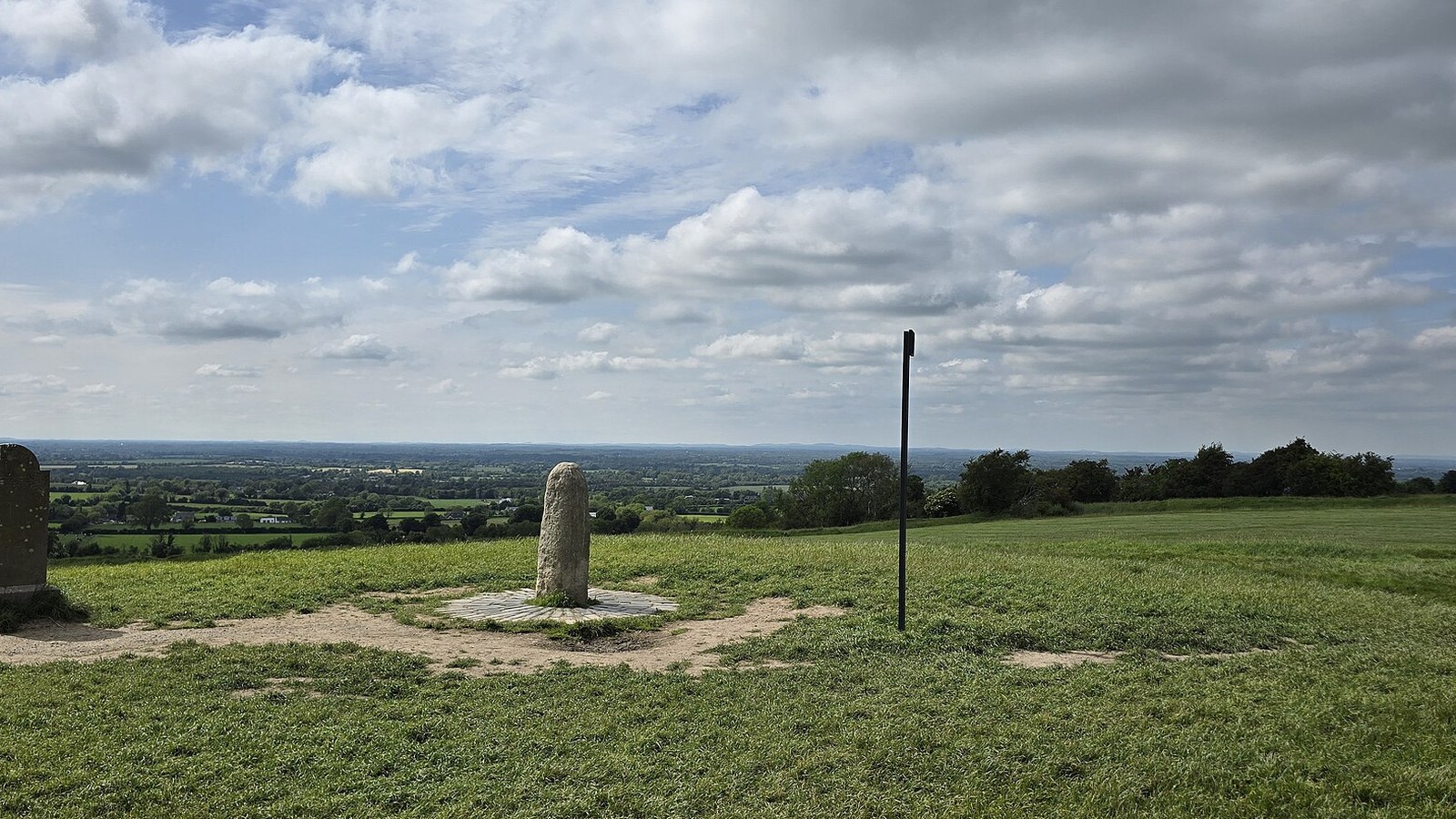
Tara is not a stone circle, but it is Ireland’s most famous ceremonial hill and the traditional seat of the High Kings. What survives is mostly earthworks: the Mound of the Hostages, a passage tomb about 5,000 years old; Ráith na Rí, the largest monument on the hill, built around 100 BC with a circumference of about 1,000 metres; and the Lia Fáil, the coronation stone, standing on An Forradh. Just down the road, Trim Castle makes an easy second stop.
Know before you go
- Where: 12 km south of Navan, off the N3. Eircode C15 P44W.
- Access: the hill is open all year. Heritage Ireland lists guided tours at €5 adult, €4 senior, €3 child/student and €13 family, but guides have ceased for the 2026 season, so check before you travel.
- Good to know: toilets and a gift shop are in the car park, which is off-site. Dogs must be on leads outdoors. Wear walking shoes; the ground is uneven.
Heritage Ireland: Hill of Tara →
5. Grange Stone Circle, Lough Gur, County Limerick
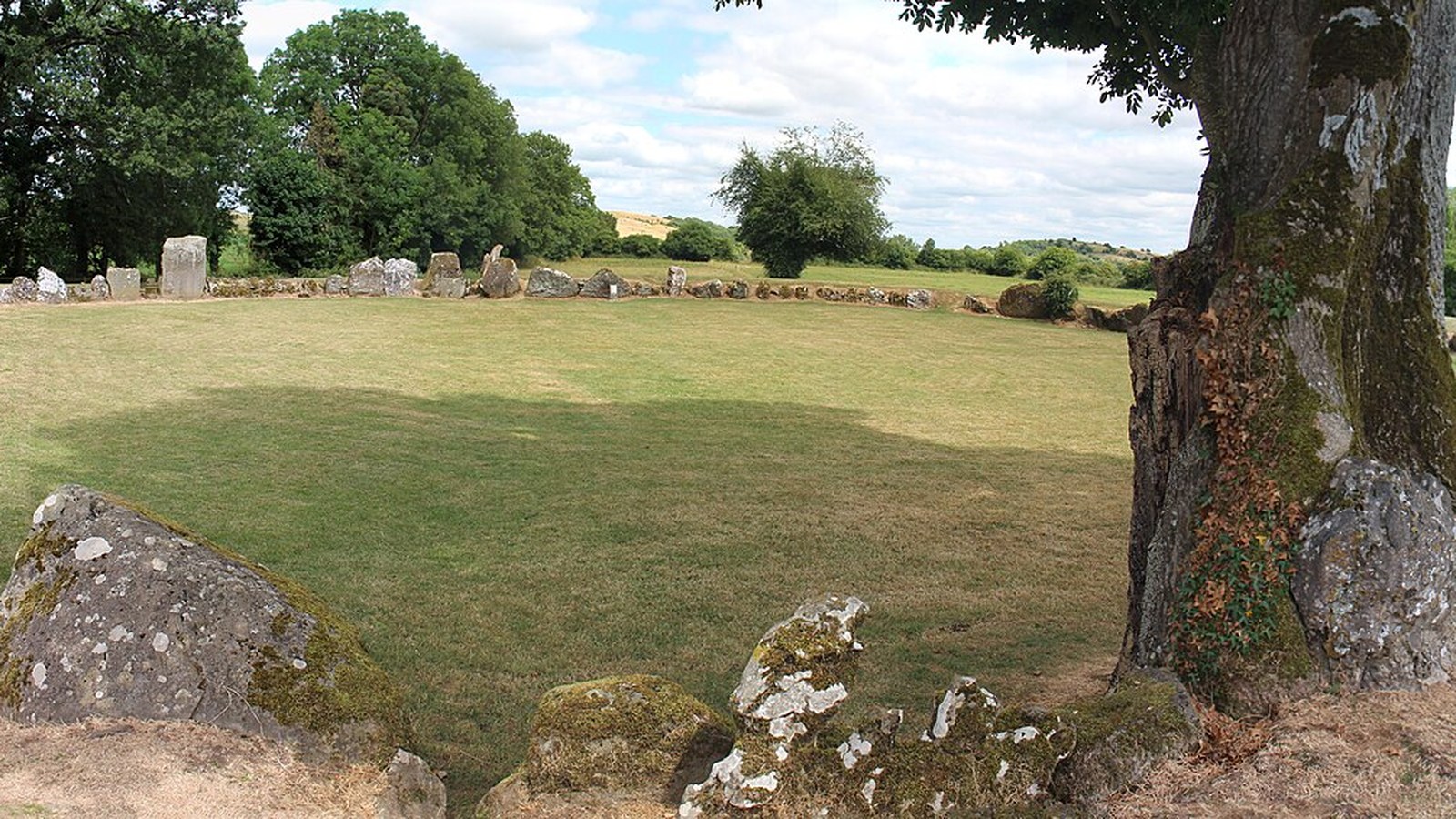
The Grange Stone Circle is the largest of its kind in Ireland: 113 contiguous standing stones in a ring about 45 metres across, built roughly 4,000 years ago in the Bronze Age. It sits beside Lough Gur, a lake valley that also has a wedge tomb and a crannog, so you can fill half a day. The visitor centre explains the history from the Stone Age to the 19th century.
Know before you go
- Where: Grange, Lough Gur, near Bruff, County Limerick. The circle is an unguided OPW National Monument.
- Visitor centre: Lough Gur Visitor Centre, Bruff (V35 ED96), is listed as open daily 9:30 to 17:00; confirm seasonal changes on 061 385 186. It is wheelchair accessible.
- Good to know: the circle itself is on open farmland; take care on wet ground.
Lough Gur Visitor Centre & Lakeshore Park →
6. Carrowmore Megalithic Cemetery, County Sligo
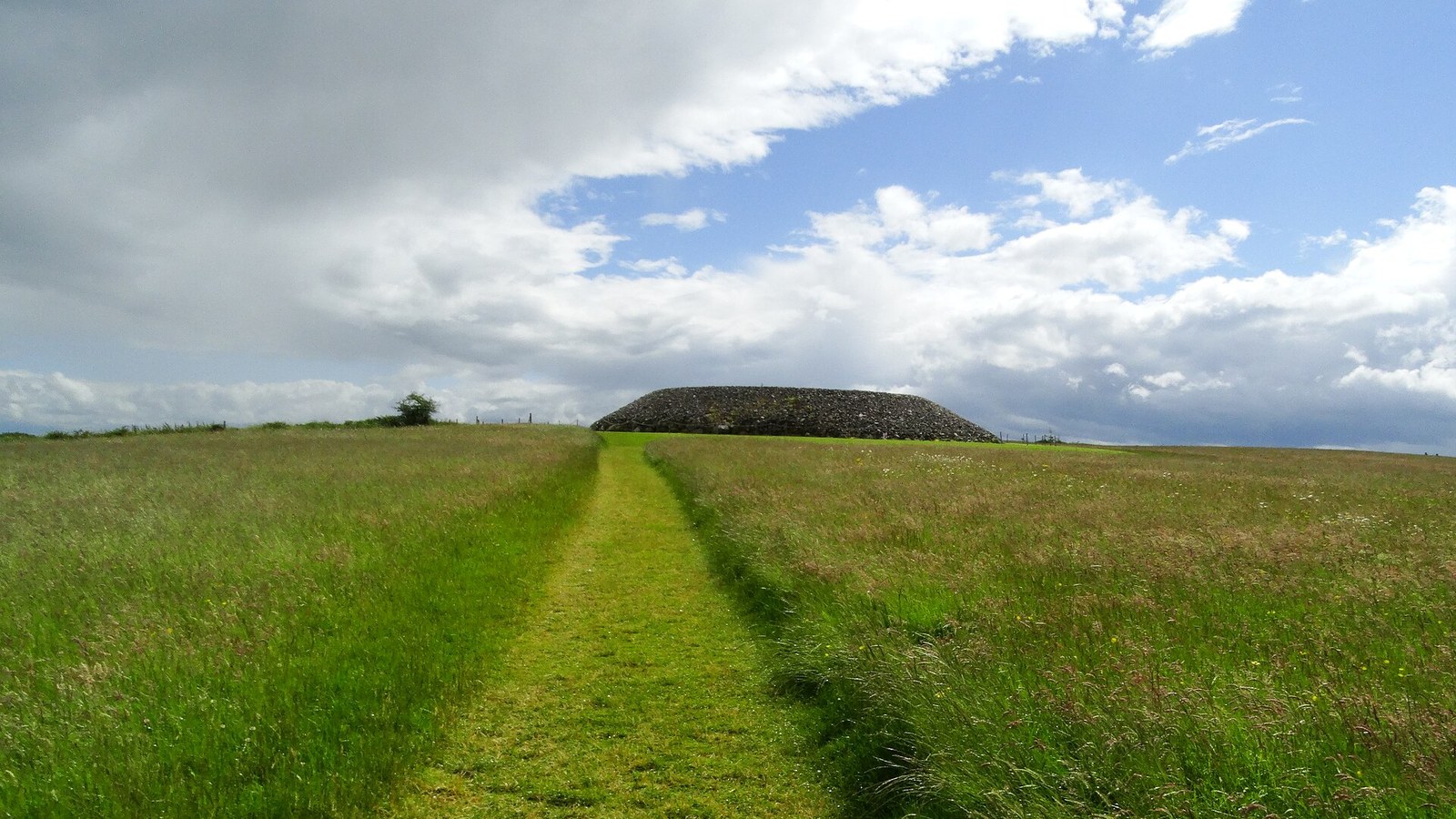
Carrowmore is a cemetery of more than 30 surviving monuments, passage tombs, dolmens and stone circles, spread across fields on the edge of Sligo town, some almost 6,000 years old. Knocknarea rises to the west (see no. 9). The visitor centre was upgraded and reopened in April 2026.
Know before you go
- Season: 12 March to 2 December 2026. From 5 November to 2 December it opens at 9:00 with last admission at 16:00.
- Price: adult €5, senior or group €4, child or student €3, family €13.
- Getting there: about 4 km from Sligo town on the R292 towards Strandhill; car park on site. Guided tours available.
- Good to know: uneven walkways and limited wheelchair access; only assistance dogs allowed.
Heritage Ireland: Carrowmore →
7. Uragh Stone Circle, County Kerry
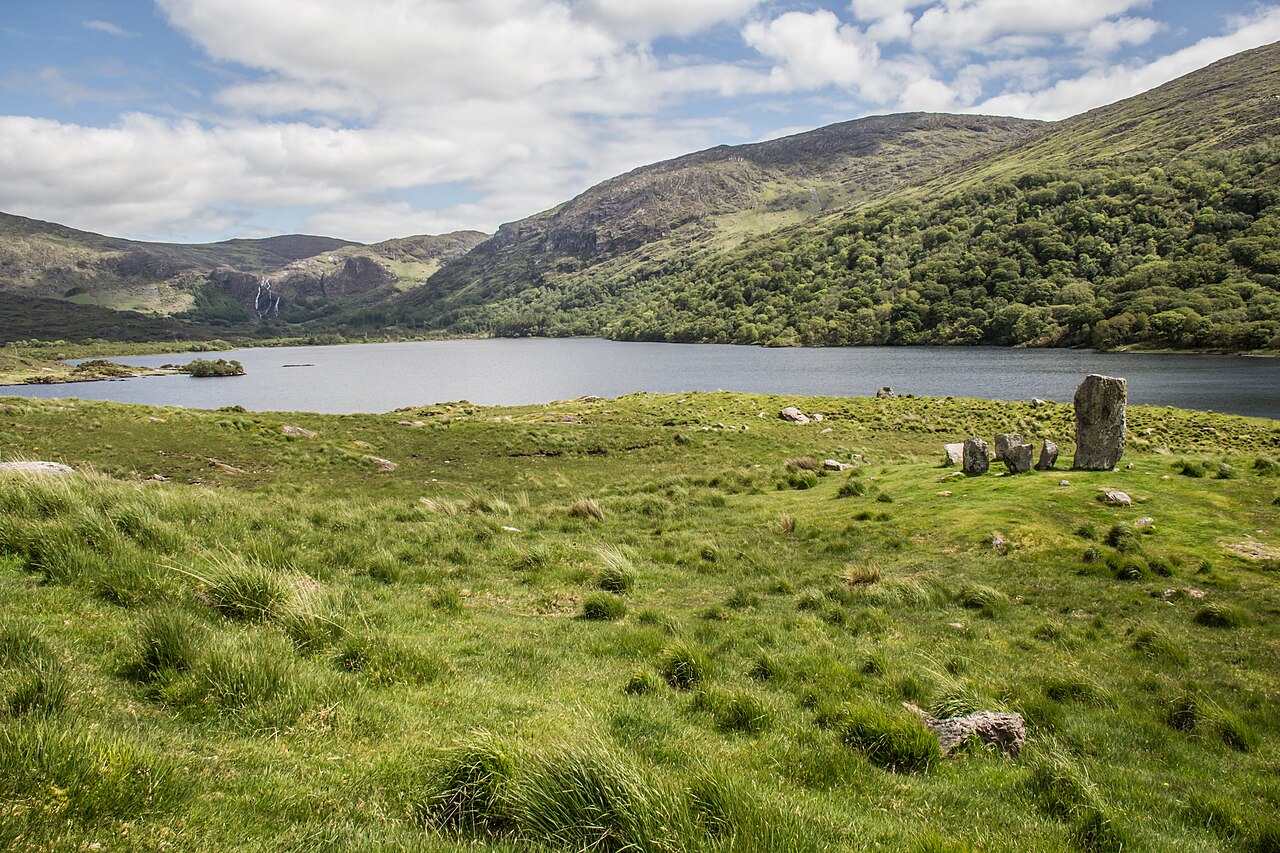
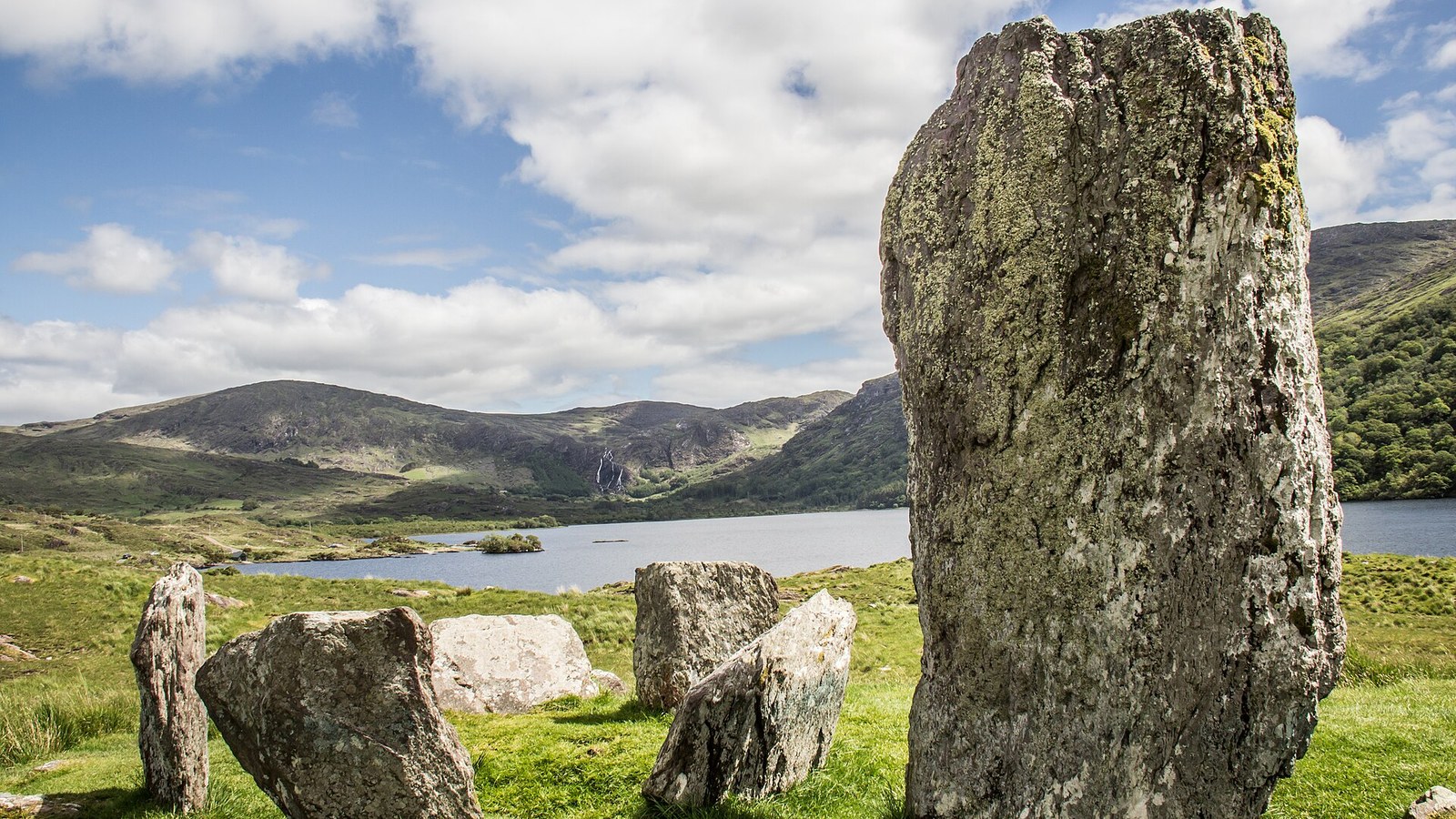
A small Bronze Age circle of five stones, two portal stones, two side stones and an axial stone, beside a single standing stone about 3 metres tall. It sits on the Beara Peninsula near Gleninchaquin Park, between Lough Inchiquin and Lough Cloonee Upper, and the setting is what makes it. It is not a major site, but few circles have a view like this. The Skellig coast is a long drive away but fits into the same trip.
Know before you go
- Getting there: follow the signs for Gleninchaquin Park and Uragh Stone Circle off the R571. Public transport is practically non-existent.
- Walk: a short walk from the car park across farmland; the ground can be soft, so wear waterproof boots. It is not wheelchair accessible.
- Parking: visitors report a charge at a private car park; carry cash and check locally. The land is private, so keep to the path.
Uragh Stone Circle: background and location →
8. Browne’s Hill Dolmen, County Carlow
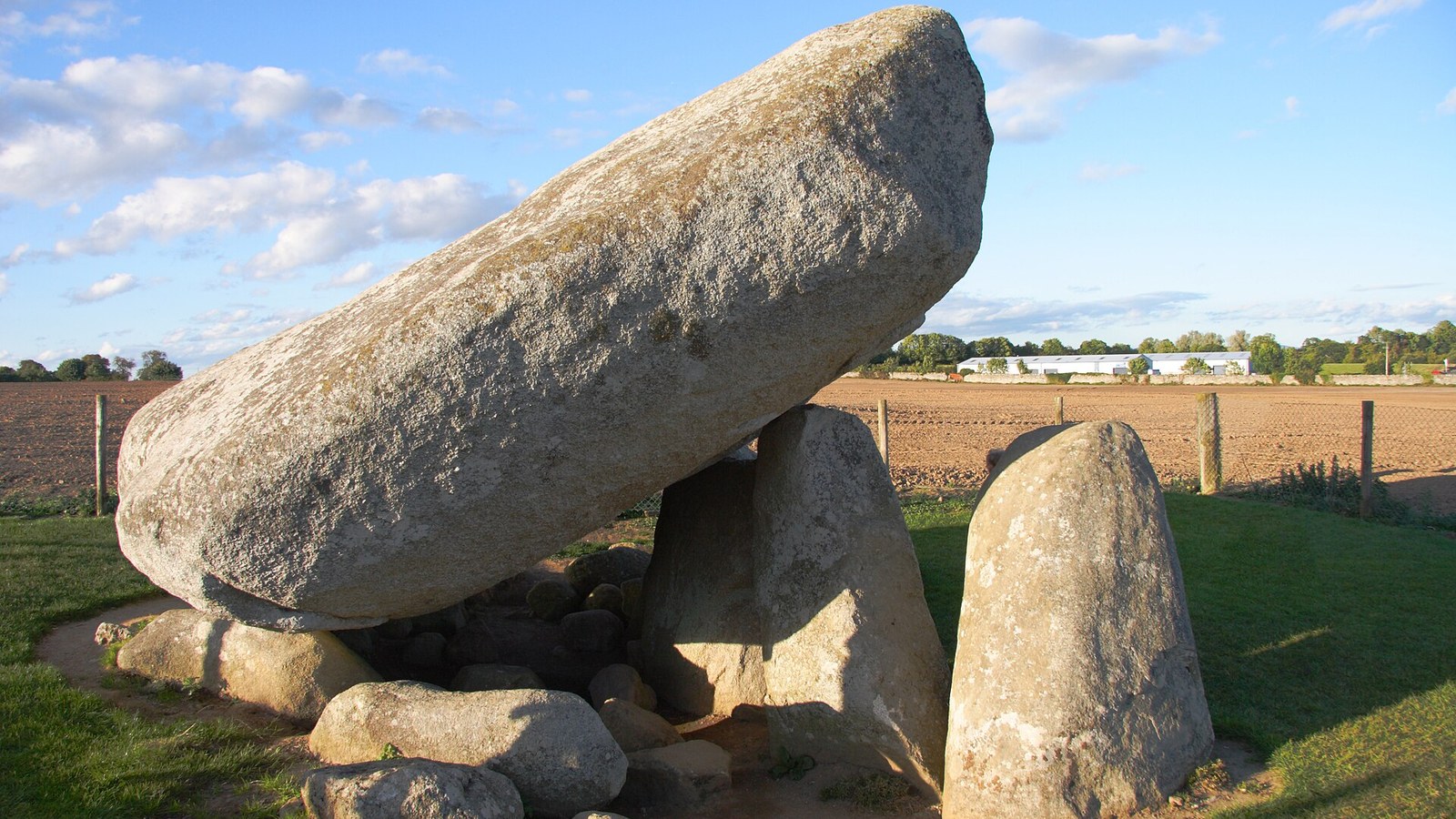
The granite capstone, about 4.7 m by 6.1 m by 2 m, is believed to weigh over 100 tonnes, and is often quoted nearer 150. It rests on portal stones and was raised 4,900 to 5,500 years ago in the Early Neolithic. The dolmen itself has never been excavated. Unlike some sites here, you can walk right up to it.
Know before you go
- Where: Kernanstown, about 3 km east of Carlow town. Unguided National Monument.
- Getting there: a car park is provided. No admission charge is listed.
- Good to know: it is a protected monument: look, photograph and touch gently, but do not climb on it.
Heritage Ireland: Browne’s Hill Dolmen →
9. Knocknarea (Queen Medb’s Cairn), County Sligo
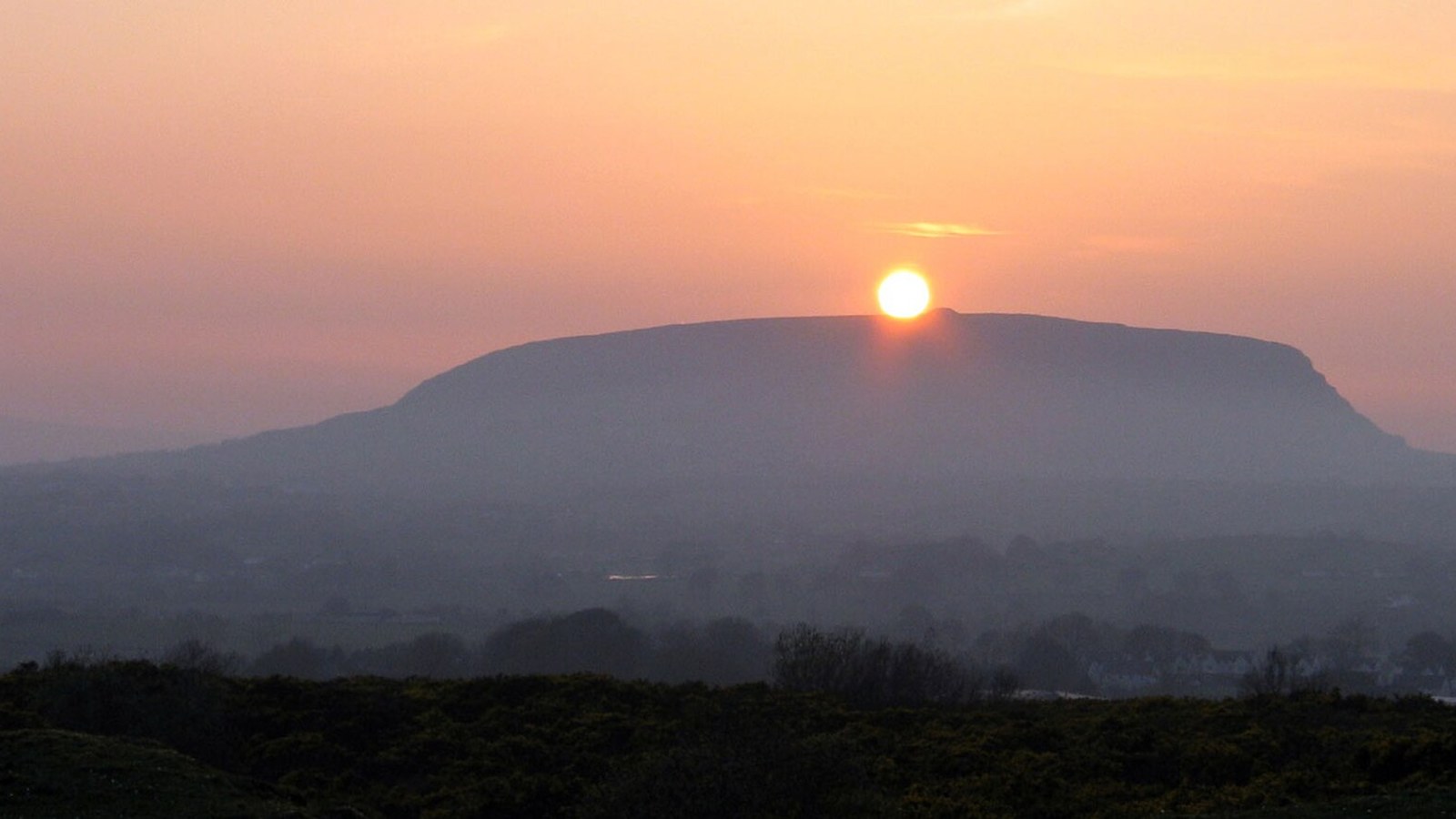
The flat-topped mountain is crowned by a huge cairn, about 35 feet high and 200 feet across, traditionally the burial place of Queen Medb of Connacht. It has never been excavated, so whatever is inside is undisturbed. It is probably of the same period as Newgrange, and it is visible from Carrowmore (no. 6), so the two combine well.
Know before you go
- Where: Knocknarea South, near Sligo town. Unguided National Monument.
- Access: a hill walk to the summit; wear proper footwear and take waterproofs. Heritage Ireland does not publish a route length, so check a local trail map.
- Good to know: take care at every stage; the OPW accepts no responsibility for injury on unguided sites.
Heritage Ireland: Knocknarea →
10. Creevykeel Court Tomb, County Sligo
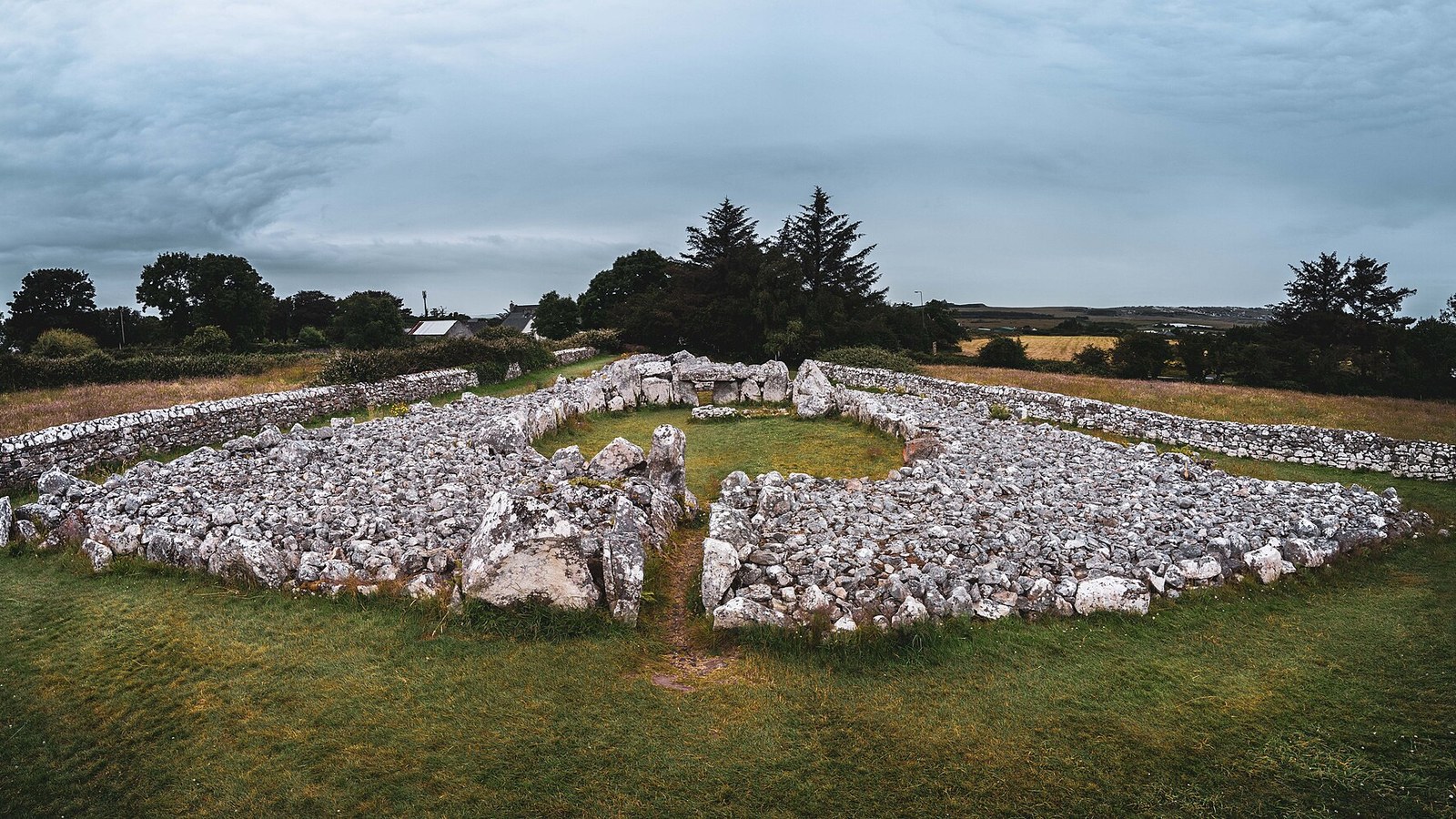
A trapezoidal stone cairn with an oval inner court of about 15 m by 9 m, entered through a passage into a two-part chamber. It dates to roughly 4000 to 2500 BC and was excavated by Hugh O’Neill Hencken in 1935. It is one of the best-preserved court tombs in Ireland, and often quiet. Fionn Mac Cumhaill legends cling to this part of the north-west.
Know before you go
- Where: about 2 km north-east of Cliffoney, north County Sligo. Unguided National Monument.
- Cost: no admission charge is listed. Parking is not described on the official page.
- Good to know: no staff on site; take care on uneven ground.
Heritage Ireland: Creevykeel Court Tomb →
Planning your visit
When to go: Newgrange and Carrowmore have seasons and set hours (see above); the unguided sites are open all year. Spring to early autumn gives the longest days; for solstice alignments, late December. Safety: ground is uneven and often wet, so wear boots, and most unguided OPW sites accept no liability for injury. Getting around: almost all of these need a car; Newgrange and Tara are the easiest from Dublin. Please do not climb on or move stones.
Which one is your favourite?
Tell us which ancient site you would add, or which one you would send a friend to first, in the comments below.
Know someone who loves Ireland’s ancient history? Forward this to them — it’s completely free to subscribe to the Love Ireland newsletter for weekly stories like this.
Frequently Asked Questions
What is the oldest stone circle in Ireland?
Carrowmore in County Sligo has monuments almost 6,000 years old, making it among the oldest megalithic sites in Ireland. Newgrange is later, at around 3,200 BC. The Grange Stone Circle at Lough Gur dates to the Bronze Age, roughly 4,000 years ago.
How many megalithic monuments are there in Ireland?
More than 1,500 recorded megalithic monuments, including passage tombs, dolmens, court cairns, wedge tombs and stone circles. Many sit in private fields; stick to signposted sites.
Can you visit Newgrange without booking?
No. Entry is by guided tour only from the Brú na Bóinne Visitor Centre, and pre-booking is essential. Do not go directly to the monument; you will not be admitted.
Free PDF by email. You’ll also get a few short emails from us; unsubscribe any time.
Tours & experiences you might love


Powered by Viator. Some links are affiliate links — we may earn a small commission at no extra cost to you.
Secure Your Dream Irish Experience Before It’s Gone!
Planning a trip to Ireland? Don’t let sold-out tours or packed attractions spoil your journey. Iconic experiences like visiting the Cliffs of Moher, exploring the Rock of Cashel, or enjoying a guided walk through Ireland’s ancient past often sell out quickly—especially during peak travel seasons.

Booking in advance guarantees your place and ensures you can fully immerse yourself in the rich culture and breathtaking scenery without stress or disappointment. You’ll also free up time to explore Ireland’s hidden gems and savour those authentic moments that make your trip truly special.
Make the most of your journey—start planning today and secure those must-do experiences before they’re gone!