

It happens more often than you might think. You arrive in an Irish town to find the streets blocked off, bunting strung between lamp posts, and a crowd you weren’t expecting. Your carefully planned quiet lunch in a pub has become front-row seats to a trad session that’s been going since noon. Your hotel says there’s a booking mix-up, and every B&B in the surrounding parishes is full.
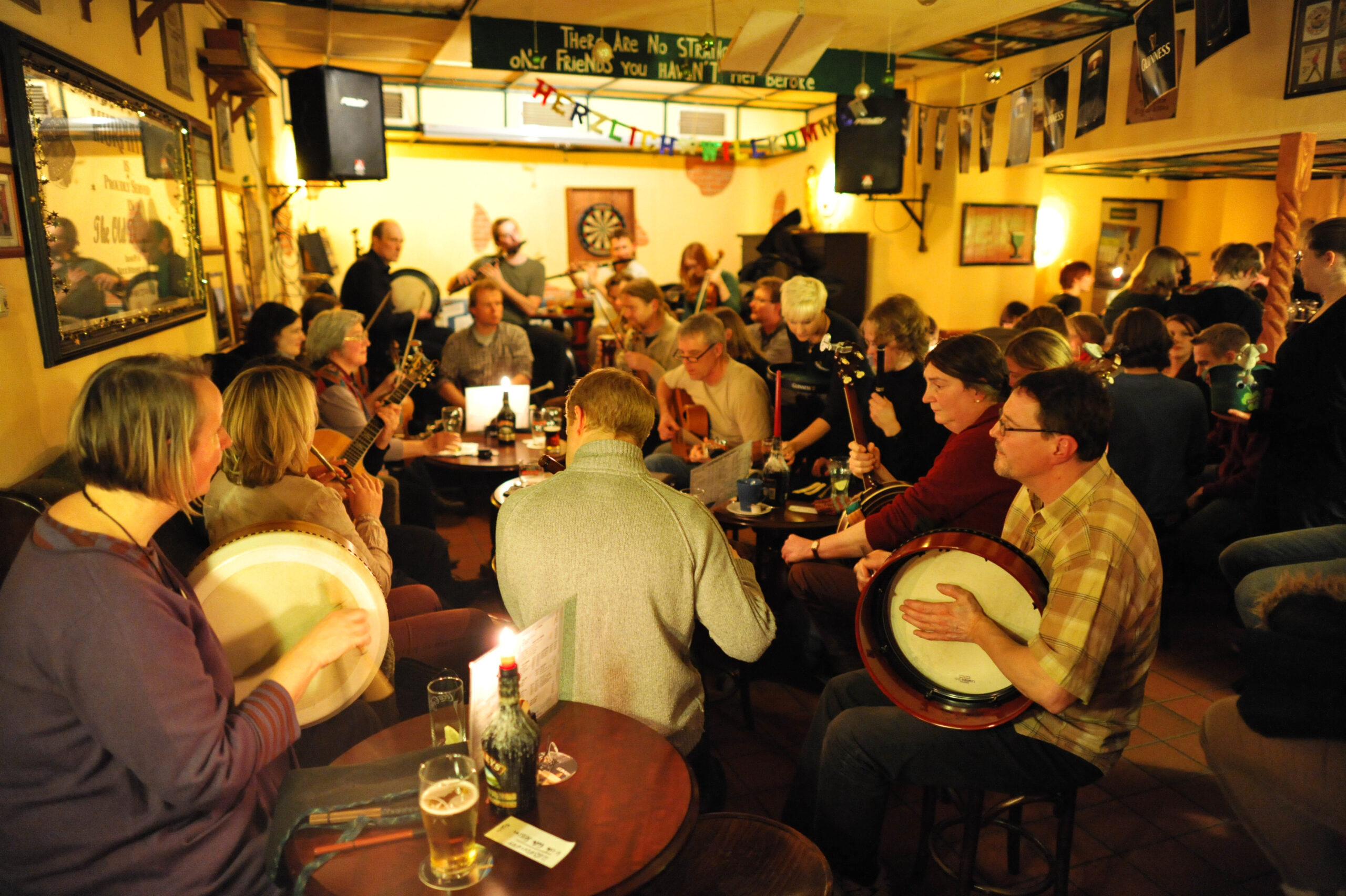
Ireland has more festivals per square kilometre than almost anywhere in Europe. The island runs on a calendar of events — music, food, literature, sport, horse trading, opera, comedy, surfing, walking — that stretches from January to December. If you’re visiting without checking that calendar first, you will eventually stumble into one. This is either a gift or a logistical problem. Usually both.
This guide explains which festivals are most likely to catch you off guard, what to actually do when you arrive mid-celebration, and how to make the most of the situation rather than fighting it.
Want to know what’s on before you go? Our free newsletter covers festivals, local events, and travel tips across Ireland every week. Subscribe here — it’s free.
Why Ireland Has So Many Festivals
Ireland’s festival culture is not a marketing invention. It’s rooted in a long tradition of communal gathering — pattern days, fairs, fleadhs — that predate tourism by centuries. The county fair, the harvest celebration, the gathering of musicians in a particular town: these things happened long before anyone thought to put them on a brochure.
Today, Ireland hosts well over 400 festivals annually. Arts, music, food, sport, and literature events draw visitors but are fundamentally built around local communities. That’s why they can feel so disorienting when you arrive from outside: you’ve walked into something that wasn’t designed to be discovered. It was designed to be lived.
The good news is that the Irish are remarkably good at absorbing unexpected guests.
The Festivals Most Likely to Surprise You
Some Irish festivals are famous enough that you’d know to book ahead. Others are enormous by local standards and virtually unknown outside their county. Here are the ones that catch visitors off guard most often.
Fleadh Cheoil na hÉireann
The Fleadh (pronounced “flah”) is the world’s largest Irish traditional music festival, and its crowds have grown well beyond old estimates — the 2026 Fleadh in Belfast drew an estimated 1.65 million people over its eight days in August. The host town or city rotates annually — past hosts include Mullingar, Drogheda, Ennis, and Sligo, with Belfast taking its turn in 2026 — so somewhere you’d never expect can suddenly become the epicentre of Irish music culture (see our guide to the 2026 Belfast Fleadh for what to expect). Streets fill with sessions that spill out of every pub doorway. There’s no single venue; the whole town becomes the stage. If you happen to be passing through the host town in the first week of August, you will not be passing through quietly.
Puck Fair, Killorglin
Held every August in Killorglin, County Kerry, Puck Fair is one of Ireland’s oldest festivals — records of it go back to 1603, though the tradition is likely much older. A wild mountain goat is crowned King Puck and elevated on a platform in the town square for three days. The town fills with traders, musicians, and visitors from across the county. It’s held on 10, 11, and 12 August each year, without fail. If you’re on the Ring of Kerry at that time, you may find accommodation in Killorglin completely unavailable.
Galway Arts Festival
Galway is Ireland’s festival city in a way that other places simply aren’t. The Galway Arts Festival, held over two weeks in July, is the largest arts festival in Ireland and one of the largest in Europe. The city’s streets, squares, and venues are taken over by theatre, visual art, street performance, and live music. Accommodation prices in Galway double or triple during this period. If you’ve booked a trip to the west coast in mid-July without knowing this, you’ll discover it quickly.
Wexford Opera Festival
The Wexford Festival Opera runs for more than two weeks each October. It’s a serious international opera festival that punches well above Ireland’s weight — the National Opera House draws performers and audiences from across Europe. The town of Wexford transforms: restaurants book out weeks ahead, pubs host late-night sessions, and the streets have a particular energy that’s hard to describe if you’ve never encountered a town in full festival mode. Arriving in Wexford during the festival without a reservation is optimistic at best.
Ballinasloe Horse Fair
The Ballinasloe October Fair, held in County Galway, is one of Europe’s oldest horse fairs. It dates back to at least the 18th century. For a week in early October, the town’s population swells significantly as horse traders, Traveller families, buyers, and visitors converge. The fair itself is a remarkable thing to witness — horses traded by hand, deals sealed in the old way — but the town’s infrastructure is stretched to its limit. If you’ve booked a night in Ballinasloe in the first week of October, know what you’re arriving into.
Kilkenny Arts Festival
Kilkenny hosts an eleven-day arts festival every August that fills the medieval city with music, theatre, visual art, and outdoor performance. The castle grounds, the streets, the pubs — all of them host events across the festival period. Kilkenny is a small city; when tens of thousands of people come through across those eleven days, you feel it. Parking, accommodation, and pub space all become contested resources.
Planning a trip to Ireland? Our newsletter covers the best times to visit each region, practical tips, and festival dates — delivered free to your inbox. Join thousands of Ireland lovers here.
What to Do When You Arrive Mid-Festival
So you’ve arrived in the middle of something you didn’t plan for. Here’s what actually helps.
Don’t try to fight it
If you’ve arrived during a festival, the worst thing you can do is treat it as an inconvenience to route around. Closed streets, full pubs, noise until midnight — these things are happening whether you engage or not. The people who have a terrible time at unexpected festivals are those who spend it being annoyed. The people who have a great time are those who walk into the nearest session and order a pint.
Sort accommodation first, everything else second
If you haven’t pre-booked, accommodation is your first priority. Don’t wait until evening. Use Booking.com or ring ahead to nearby towns — the festival’s footprint rarely extends more than 20 to 30 kilometres, so a village further along the road may have rooms available. It’s worth a phone call before you accept that you’ll be sleeping in the car.
Ask a local what not to miss
Every festival has a highlight that doesn’t make it into the programme. A session that runs until 4am in a particular pub. A craft stall where the maker is genuinely remarkable. A performance that sold out months ago but occasionally has returns. The person serving your coffee or pulling your pint will know. Ask them.
Adjust your timetable
Festival towns run on different rhythms. Lunch extends later, dinner starts later, pubs close later. If you’re trying to eat at the times you would at home, you’ll be fighting the crowd at every turn. Eat early or late. Visit the sites you planned in the morning before the crowds build. Let the rest of the day follow the festival’s pace.
How to Avoid Being Caught Out Next Time
The simplest thing you can do before any trip to Ireland is check what’s happening in the towns you’ll pass through. A few minutes on Google — or a look at our guide to Ireland’s best festivals — will tell you whether the week you’ve chosen overlaps with anything significant. The major festivals publish their dates a year in advance.
Key festival months to be aware of:
- May: Listowel Writers’ Week (County Kerry), Belfast Cathedral Quarter Arts Festival
- June: Bloomsday (Dublin, 16 June), Cat Laughs Comedy Festival (Kilkenny)
- July: Galway Arts Festival, Galway Film Fleadh, Longitude (Dublin)
- August: Fleadh Cheoil, Puck Fair, Kilkenny Arts Festival, Rose of Tralee
- September: All Together Now (County Waterford), Clifden Arts Festival
- October: Ballinasloe Horse Fair, Wexford Festival Opera, Cork Jazz Festival
That’s not a complete list — it doesn’t include the dozens of smaller local festivals, walking festivals, food festivals, and heritage events that run across the year. But it covers the ones most likely to affect accommodation and road access.
The Honest Truth About Festival Timing
Many of the best experiences people have in Ireland happen by accident. The village that turned out to be holding its annual pattern day. The town where every pub had a session because the county hurling final had just been won. The harbour town where a regatta meant the whole pier was covered in boats and the evening ended around a bonfire.
These things aren’t in the guidebooks because they can’t be predicted in advance. They’re the texture of a place — what it actually feels like to be there rather than to visit it. An Irish festival, even one you stumbled into by mistake, is almost always worth staying for.
Book the accommodation. Ask about the session. Miss the museum. You can always go back for the museum.
Never miss what’s on in Ireland again. Our free weekly newsletter covers festivals, seasonal events, hidden gems, and travel advice — straight to your inbox. Subscribe for free today.
☘️ Join 64,000+ Ireland Lovers
Every weekday morning, get Ireland’s hidden gems, local secrets, and travel inspiration — the kind you won’t find in any guidebook.
Subscribe free — enter your email:
📲 Know someone who’d love this? Share on WhatsApp →
Free forever · Unsubscribe anytime
Tours & experiences you might love


Powered by Viator. Some links are affiliate links — we may earn a small commission at no extra cost to you.
Secure Your Dream Irish Experience Before It’s Gone!
Planning a trip to Ireland? Don’t let sold-out tours or packed attractions spoil your journey. Iconic experiences like visiting the Cliffs of Moher, exploring the Rock of Cashel, or enjoying a guided walk through Ireland’s ancient past often sell out quickly—especially during peak travel seasons.

Booking in advance guarantees your place and ensures you can fully immerse yourself in the rich culture and breathtaking scenery without stress or disappointment. You’ll also free up time to explore Ireland’s hidden gems and savour those authentic moments that make your trip truly special.
Make the most of your journey—start planning today and secure those must-do experiences before they’re gone!