

The Burren looks like nowhere else in Ireland — a limestone landscape that confused geologists for a century. This episode explains what you’re actually looking at.
Watch the full episode, then read on below for the complete story and practical visiting details.
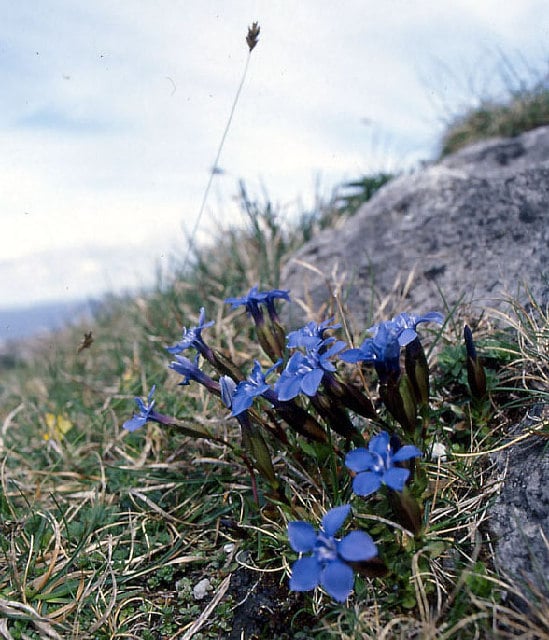
Seventy percent of Ireland’s native plant species grow on bare rock — the floor of a tropical sea, lifted out of the ocean 350 million years ago and stripped bare by ice. Not in rich farmland. Not in protected forests. On limestone that looks like the surface of the moon. The Burren in County Clare shouldn’t support life at all — Cromwell’s surveyor declared there wasn’t enough earth here to bury a man. Yet somehow, Arctic gentians bloom inches from Mediterranean orchids, plants that shouldn’t exist on the same continent growing side by side in the cracks of this ancient seabed turned to stone. Scientists still can’t fully explain it. This is the most unexpected landscape in Ireland — and one of the strangest places on Earth.
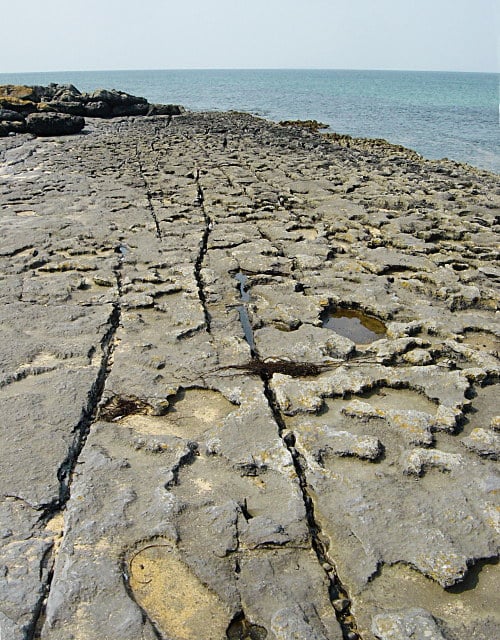
The Burren covers 250 square kilometres of northwest Clare, stretching from the Atlantic coast inland to the edge of the Galway hills. The name comes from the Irish Boireann — rocky place — and that’s exactly what you see: endless terraces of grey limestone, split by deep fissures called grikes, polished smooth by glaciers that retreated twelve thousand years ago.
But this rock is ancient. We’re walking on the floor of a tropical sea that existed 350 million years before the dinosaurs. The shells of countless marine creatures compressed into calcium carbonate, lifted by tectonic forces, then sculpted by ice and rain into these vast pavements.
What makes the Burren unique isn’t just age — it’s chemistry. Limestone is solite. Rainwater, slightly acidified by the atmosphere, dissolves it slowly. Every crack deepens. Every fissure widens. Over millions of years, this created an underground labyrinth of caves and rivers. Water doesn’t flow across the Burren — it flows through it.
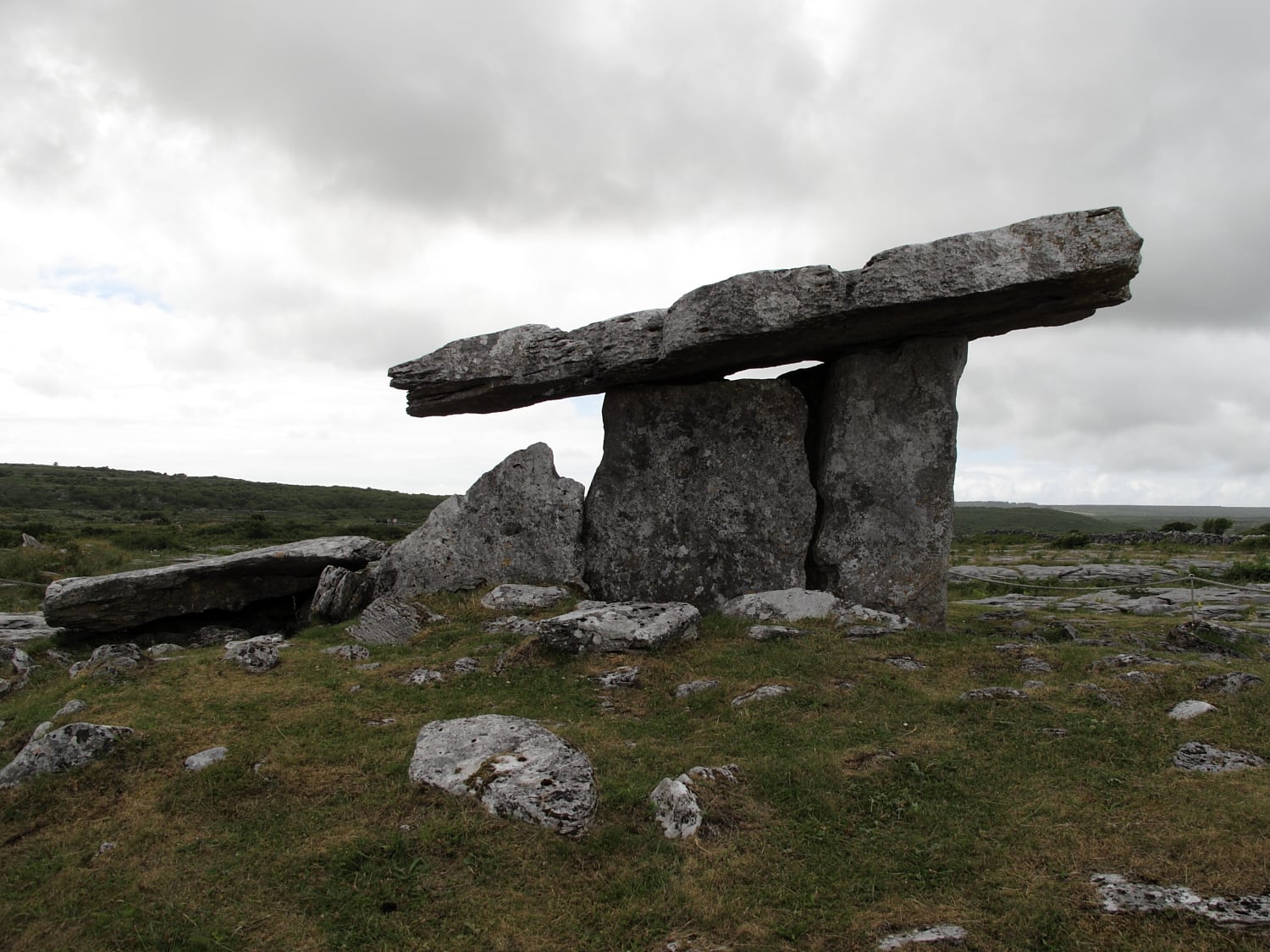
The ancient Irish understood this place had power. They built portal tombs here five thousand years ago. The Poulnabrone Dolmen still stands — a Stone Age burial site older than the Egyptian pyramids — its capstone balanced impossibly on slender uprights, looking out over a landscape that hasn’t fundamentally changed since the tomb builders placed it there.
The Burren’s apparent emptiness is deceptive — and relatively recent.
Archaeological surveys have identified over 2,800 ancient monuments across this small region. Ring forts. Wedge tombs. Stone circles. This wasn’t wasteland — it was densely settled. The mystery isn’t why people left. It’s why they came in the first place, and how they survived.
The answer lies beneath your feet. That limestone, constantly dissolving, releases calcium and other minerals directly into the soil pockets that form in the grikes. Despite appearances, the Burren is extraordinarily fertile — if you know where to look.
Medieval farmers practiced winterage — grazing cattle here from November through April. Counterintuitive, but brilliant. The dark limestone absorbs winter sun, keeping the grass growing longer than surrounding lowlands. In summer, they moved livestock to the cooler upland pastures.
But the system collapsed. The Great Famine devastated Clare. Emigration hollowed out communities. The intricate local knowledge that made Burren farming work began dying with the people who held it. By the twentieth century, scrub hazel was colonising abandoned fields. The traditional cattle walks were vanishing. UNESCO had designated this a globally significant landscape, but it was slowly being smothered by the very nature it was famous for.
The revival came through conservation — but not the kind that locks gates and hangs signs.
The Burren Programme, launched in 2010, pays farmers to continue traditional winterage. It sounds simple. It’s actually revolutionary. Instead of subsidising production or penalising activity, it rewards ecological results — healthy wildflower populations, maintained stone walls, controlled scrub. Over 300 farming families now participate.
For visitors, this means the Burren is accessible in ways most protected landscapes aren’t. You walk through working farmland, past cattle grazing winter pastures, along tracks maintained for centuries.
Start at the Burren National Park visitor centre at Corofin for orientation. The park itself is compact — only 15 square kilometres — but it includes some of the finest limestone pavement and the easiest walking trails.
The Burren Perfumery near Carron makes soap and fragrances from plants harvested locally — gentian, wild thyme, hawthorn. It’s genuinely artisanal, and the surrounding demonstration garden shows what grows in Burren soil.
At Aillwee Cave, you descend into the underworld the limestone creates: a river carved this tunnel over two million years ago, leaving formations still dripping into existence. The on-site raptor experience keeps owls, hawks, and eagles in a landscape that once teemed with them.
But the essential Burren experience is Poulnabrone. No visitor centre. No admission fee. Just a 5,000-year-old tomb standing in open limestone, accessible twenty-four hours a day. Go at dawn. You’ll have Neolithic Ireland to yourself.
Here’s what most visitors miss.
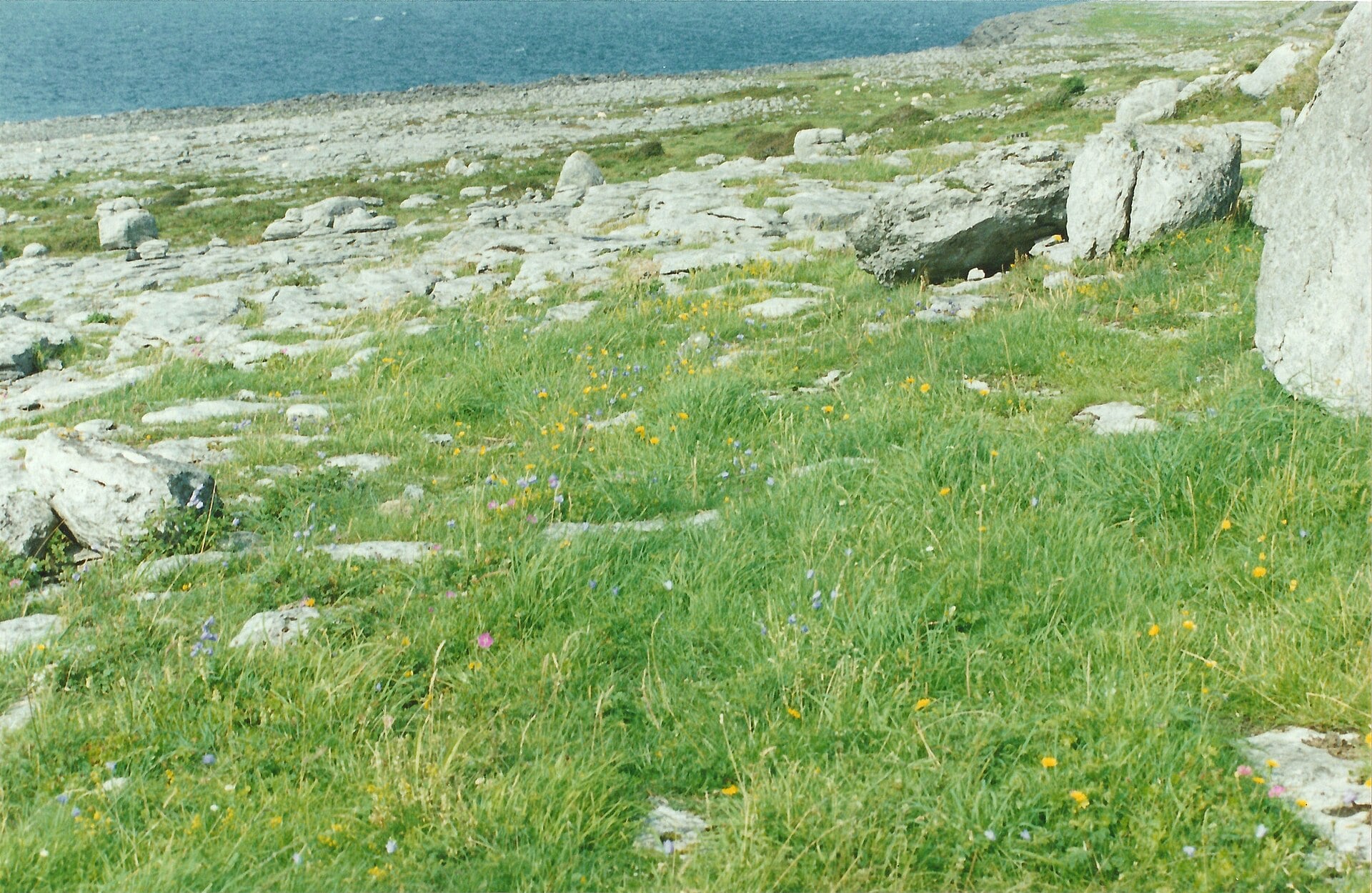
The Burren’s famous flora requires timing. May through June is peak season — orchids, gentians, bloody cranesbill carpeting the grikes. But the real secret is microclimate. The limestone creates sheltered pockets warmer than their surroundings. In early June, you might find spring flowers and summer flowers blooming simultaneously in spots a hundred metres apart.
Wear sturdy boots with good ankle support. The grikes — those deep fissures between limestone blocks — can be thirty centimetres deep, hidden by vegetation. Twisted ankles are the Burren’s most common visitor injury.
For the Poulnabrone visit, time matters. Tour buses arrive between 11 and 3. Outside those hours, you’re alone with a Stone Age monument. Sunset lights the capstone gold. Sunrise throws long shadows across the pavement. Either beats the noon crowds.
The Burren Way is a 114-kilometre marked trail from Lahinch to Corofin. You don’t need to walk the whole thing — the section from Fanore to Black Head covers the most dramatic coastal limestone in about four hours.
And if the weather turns — which in Clare means most days — Gregans Castle Hotel near Ballyvaughan serves one of Ireland’s finest country house meals with views over Galway Bay. Or find Monk’s Bar & Seafood Restaurant in Ballyvaughan for seafood chowder that could end arguments.
One more thing: the Burren is quieter than the Cliffs of Moher, just thirty minutes away. If you’re planning both, do the Burren first. After standing alone at Poulnabrone, the Moher crowds will feel like another planet.
The Burren is Ireland turned inside out — the rock exposed, the soil hidden, the impossible made ordinary. Five thousand years of human history sit openly on a landscape three hundred and fifty million years in the making. Arctic flowers bloom beside Mediterranean herbs. Cattle graze in winter. Tombs older than Stonehenge stand unguarded.
This is one of the planet’s true oddities, and it’s thirty minutes from Shannon Airport.
Walk the limestone. Time your orchid hunt. Watch the light change on Neolithic stone.
Then tell me what surprised you — drop your Burren moment in the comments below.
Full guide linked below. See you next Monday.
Never miss an episode. Bob’s next long-form episode drops every Monday on our YouTube channel. Subscribe to the free Love Ireland newsletter and we’ll let you know the moment a new one is live: https://loveireland.substack.com/subscribe
☘️ Join 64,000+ Ireland Lovers
Every weekday morning, get Ireland’s hidden gems, local secrets, and travel inspiration — the kind you won’t find in any guidebook.
Subscribe free — enter your email:
📲 Know someone who’d love this? Share on WhatsApp →
Free forever · Unsubscribe anytime
Tours & experiences you might love


Powered by Viator. Some links are affiliate links — we may earn a small commission at no extra cost to you.
Secure Your Dream Irish Experience Before It’s Gone!
Planning a trip to Ireland? Don’t let sold-out tours or packed attractions spoil your journey. Iconic experiences like visiting the Cliffs of Moher, exploring the Rock of Cashel, or enjoying a guided walk through Ireland’s ancient past often sell out quickly—especially during peak travel seasons.

Booking in advance guarantees your place and ensures you can fully immerse yourself in the rich culture and breathtaking scenery without stress or disappointment. You’ll also free up time to explore Ireland’s hidden gems and savour those authentic moments that make your trip truly special.
Make the most of your journey—start planning today and secure those must-do experiences before they’re gone!