

Galway pulls people back. It always has. Perhaps your great-grandparents left the county during the Famine years, packed what they could carry, and walked to Galway docks. Perhaps they were Joyce farmers from the hills of Connemara, or Lynch merchants from the walled city. Whatever your connection, this county has a way of reaching across generations.
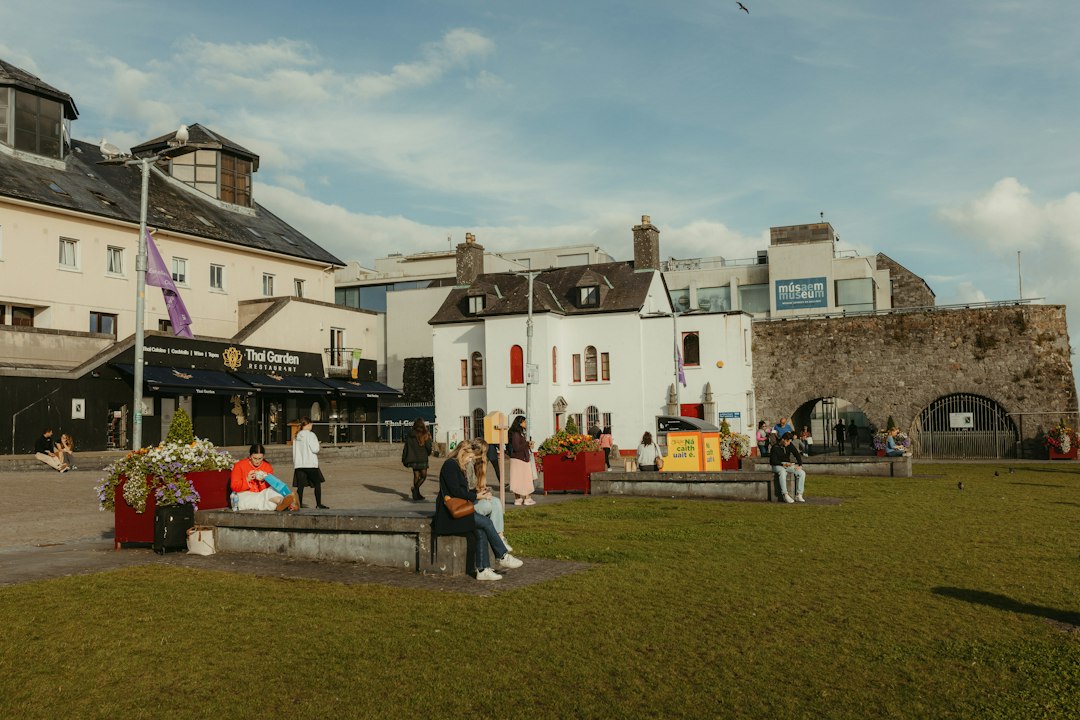
County Galway is one of Ireland’s richest counties for heritage research. It gave the world the 14 Tribes — the medieval merchant families who shaped Galway city for centuries. It holds the wild heartland of Connemara, where Irish has been spoken without a break since ancient times. And it sent hundreds of thousands of people across the Atlantic during the 19th century, many of them leaving from Galway’s own docks.
This five-day plan helps you trace your Galway roots properly. You will visit the archives, walk the land your family farmed, and connect the names in the records to the places where real people lived and worked.
A good starting point before any trip is our guide on tracing your Irish ancestry step by step. It will help you gather what you need before you arrive.
Before You Leave Home
Good preparation makes a five-day trip far more productive. Spend a few evenings at home before you travel searching the free databases.
Start at IrishGenealogy.ie. This free site holds civil records for County Galway — births from 1 January 1864, deaths from the same date, and marriages for all denominations from the same date (non-Catholic marriages were registered even earlier, from 1845). Search your family surname and see what appears. Note the district, the townland, and the parents’ names. These details will guide your time in Galway.
Next, check the 1901 and 1911 Census returns. Both are free at IrishGenealogy.ie. Enter your surname and choose County Galway. The census records every person in each household, with their age, townland, occupation, and religion. Finding your great-grandparents or great-great-grandparents here is often the breakthrough moment.
Then search Griffith’s Valuation at askaboutireland.ie. This land survey, conducted between 1847 and 1864, listed every property holder in County Galway alongside their exact townland. Our full guide to using Griffith’s Valuation for Irish ancestry research explains how to read the results.
Write down every piece of information you find. Bring printed copies with you. Archives work best when you arrive with a list of specific names, dates, and townlands to search.
☘️ Your Irish family has a story waiting to be found.
Discover where your Irish ancestors came from — their county, their name, their story. Our free step-by-step guide walks you through every record, DNA tool, and ancestry archive. No experience needed.
Claim Your Free Irish Ancestry Guide →Day 1 — Galway City and the County Archives
Begin your trip in Galway city. This is where the records are, and it is also where many Galway families came to sell their produce, attend courts, and sail to America.
In the morning, go straight to the Galway County Archives at Island House, Cathedral Square. The archives hold estate papers, land records, rate books, and administrative documents going back to the 1820s. Staff can help you identify which collections are most useful for your family’s part of the county. You do not need to make a formal appointment, but it is worth ringing ahead on your first day.
In the afternoon, continue at the Local Studies collection, based at Galway Public Libraries’ headquarters, also at Island House (the same building as the County Archives). This holds newspaper collections, local history books, and printed genealogy guides specific to County Galway. The Connacht Tribune archives, dating from 1909, can be useful if your family stayed in Galway into the 20th century.
End the day with a walk around the old city. Stop at the Spanish Arch, built in 1584. For centuries, Galway was one of Ireland’s busiest ports, trading wine and fish with Spain and France. The 14 Tribes — the merchant families of Galway — lived in the streets around here. Names like Lynch, Blake, Kirwan, Joyce, and Morris shaped the city for hundreds of years. If any of these names appear in your research, their roots go very deep in Galway city.
The Galway City Museum, beside the Spanish Arch, has a good exhibition on the city’s history and its people. It is free to enter and a useful complement to your archive work.
Day 2 — Tuam and North Galway
Tuam is about 30 kilometres north of Galway city. It was one of the most important towns in the county for centuries, holding both a Catholic archdiocese and a Church of Ireland archdiocese. That matters for genealogy research.
The Catholic Diocesan Archives in Tuam hold some of the oldest church records for the north Galway area. Parish registers from the Diocese of Tuam cover a wide swathe of north and east Galway. Staff can advise on which parishes have the earliest surviving records.
Tuam is also home to the North Connacht Family History Society, which has indexed many local records and can help with searches specific to the north Galway region. If your family came from the barony of Clare, Dunmore, or Loughrea, this is a useful stop.
From Tuam, drive east towards Ballinasloe. This is east Galway’s main town, close to the Roscommon border. Many east Galway families emigrated through Ballinasloe to the coast. The East Galway Family History Society operates in the area and specialises in records from the baronies of Loughrea, Portumna, and Ballinasloe.
If you have family connected to any of the Church of Ireland communities in Galway, the Representative Church Body Library in Dublin holds many of the surviving vestry books and registers. These often date to the 1700s, considerably earlier than Catholic parish records.
☘️ Enjoying this? 64,000 Ireland lovers get stories like this every week. Subscribe free →
Day 3 — Connemara and the Ancestral Landscape
Day three takes you west into Connemara. This is where the land itself tells you something about your ancestors.
Connemara is a hard, beautiful country. Thin soil over limestone rock. Bog stretching to the mountains. Stone walls dividing tiny fields that barely fed a family. In the mid-19th century, Connemara was one of the most densely populated rural areas in Ireland — and one of the worst hit by the Famine. Between 1845 and 1852, the population of west Galway fell by nearly half.
The dominant families here were the Joyces and the O’Flahertys. Joyce’s Country — the area around Lough Mask and Lough Corrib — takes its name from the Joyce family, a Welsh-Norman family that settled in Connemara in the 14th century and became entirely Gaelic in character. If Joyce is in your family tree, this is almost certainly where they came from.
The O’Flahertys were the ancient Gaelic lords of Connaught before the Normans arrived. They held west Galway for centuries. A plaque on Galway’s West Gate once read: “From the ferocious O’Flahertys, good Lord deliver us.” They were powerful enough that the city needed protecting from them. If you are an O’Flaherty, your people once ruled this land.
Drive the Sky Road west of Clifden. This coastal loop shows you the Atlantic coast where emigrant ships once departed. In the townland of Kingstown, you can still see the ruins of stone cottages — small, roofless shells in the bog — left by families who never came back.
Visit the Connemara National Park Visitor Centre in Letterfrack. The exhibition here explains the landscape, the Gaeltacht (Irish-speaking community), and how people lived in this part of Galway for centuries. It gives important context to the records you are searching.
Connemara also remains Ireland’s strongest Gaeltacht — an area where Irish is still the everyday language. If your family spoke Irish at home in America, passed down a few words or phrases, they almost certainly came from west Galway or a place very much like it.
Day 4 — The Aran Islands
The Aran Islands sit at the mouth of Galway Bay, visible from the Connemara coast. They have been inhabited since the Iron Age. For most of their history, they were almost entirely cut off from the mainland, which meant they preserved the old Irish language, traditions, and way of life well into the 20th century.
The ferry from Ros a’ Mhíl (Rossaveal) takes about 45 minutes to reach Inis Mór, the largest island. There is also a ferry from Galway city pier, which takes about 90 minutes. Book in advance during summer months.
The main attraction on Inis Mór is Dún Aonghasa, a dramatic Iron Age stone fort perched on cliffs above the Atlantic. It is one of the most impressive prehistoric sites in Ireland. The fort itself dates to roughly 1100 BCE, though it was used and modified over many centuries.
But for heritage visitors, the real value is in the island itself. Walk the roads between the stone-walled fields. The Aran families — names like Gill, O’Flaherty, O’Brien, and Faherty — have farmed this limestone rock for generations. The island is small enough that many residents know exactly which family held which fields going back to the 19th century.
The Inis Mór Heritage Centre on the island holds local history materials and can help connect visitors to island families. If your ancestry traces to Aran, this is essential.
For a fuller understanding of the island’s culture, the playwright J.M. Synge spent several summers on the Aran Islands in the early 1900s, documenting daily life. His book The Aran Islands describes a way of life that would have been familiar to your ancestors well within living memory.
Day 5 — Making Sense of What You Found
Your last day is for putting it all together.
Return to the Galway County Archives in the morning with everything you have gathered over the four previous days. You may have found a townland name from the census, a parish from the civil records, and a family surname from Griffith’s Valuation. The archivist can often help identify which estate records survive for that particular townland, potentially taking you back even further than the civil record era.
If you have not yet checked how your family left Ireland, our guide to finding which Irish port your ancestors left from is useful at this stage. Many Galway emigrants left from Galway docks directly, particularly during the Famine years. Others travelled to Queenstown (Cobh) in Cork.
Consider booking a session with a local genealogist. The Galway County Archives can provide a list of professional researchers who work with County Galway records. An hour with a local expert, armed with the information you have gathered, can move research forward considerably.
DNA testing works best when combined with paper records rather than on its own. If you have already done a DNA test with AncestryDNA or MyHeritage, check your matches for Irish surnames from Galway. A cluster of Galway-linked matches alongside a townland from Griffith’s Valuation is a strong confirmation.
To see how we approached this process for another county, read our guide to tracing your roots in Kerry — similar structure, same careful approach.
Galway’s Most Common Heritage Surnames
Knowing which surnames are historically associated with County Galway helps you confirm whether your research is on the right track. Here are some of the most common ones.
The 14 Tribes of Galway were the merchant families of Galway city from medieval times. These were largely Anglo-Norman families who came to dominate trade and civic life:
- Lynch — the most powerful of the Tribes, merchants and mayors
- Blake — major landowners across south Galway
- Kirwan — traders with strong Spanish connections
- Joyce — settled in north Connemara, gave the area “Joyce’s Country”
- Martin — large estates across Connemara (Humanity Dick Martin was the most famous)
- Burke — descended from the great de Burgh family, dominant in east Galway
- French, Morris, Athy, Bodkin, Deane, Darcy, Skerrett, Browne — all historic city families
The Gaelic families of County Galway go back to ancient Connacht:
- O’Flaherty — Lords of Connaught, based in west Galway and Connemara
- O’Madden — south Galway, near the Shannon
- O’Kelly — east Galway, one of the great Connacht families
- O’Halloran — south Galway
- Faherty, Conneely, O’Toole, Ward — strong in west Galway and the islands
For a broader look at how Irish surnames cluster by county, see our guide to Irish surname origins and their county connections.
Practical Tips for Your Galway Heritage Trip
Here is what you need to know before you travel.
When to go: May to September is the most practical period. The archives are open year-round, but the days are longer in summer and the islands run more frequent ferry services.
Where to stay: Galway city is the best base for Days 1–2 and Day 5. For Day 3, consider staying in Clifden or Letterfrack in Connemara — a full day in the west is much more rewarding when you do not have to drive back in the evening. For the Aran Islands, there is accommodation on Inis Mór if you want to spend a night there.
Archive appointments: The Galway County Archives sometimes requires an appointment for access to certain collections. Email ahead and explain what you are researching. Staff are helpful and experienced with family history queries.
Similar county articles: If your research spans more than one county, we also have a guide to finding your Dublin ancestors and a guide to tracing your Donegal ancestors that follow the same structured approach.
Frequently Asked Questions
What is the best archive for Galway family history research?
Galway County Archives, based at Island House, Cathedral Square in Galway city, is the primary local repository. It holds estate papers, land records, and administrative documents. For civil records (births, marriages, deaths from 1864), use IrishGenealogy.ie. For census records from 1901 and 1911, both sites carry the Galway returns free of charge.
Are the records for Connemara hard to find?
Connemara was severely affected by the Famine, which disrupted record-keeping in many parishes. However, civil records from 1864 onwards exist for most west Galway parishes, and Griffith’s Valuation (1847–1864) provides a snapshot of who held land in the area just before and during the Famine. Earlier records depend on which parish your family came from and what survived.
How do I find out which townland my Galway ancestors came from?
The 1901 or 1911 census is the most reliable source. Each entry records the townland of the household. Griffith’s Valuation also lists townlands. If you have a birth or death certificate, it should include the townland. Once you have a townland name, you can locate it on historical maps at the Ordnance Survey Ireland website and plan a visit to the area.
Did many Galway emigrants go to America?
Yes. The Famine years from 1845 to 1852 drove enormous emigration from County Galway. Many left from Galway docks. Some went through Queenstown (now Cobh) in Cork. Major destinations included Boston, New York, Philadelphia, and cities across Canada and Australia. Passenger records from this period are available at Ancestry.com and through the Irish Heritage Trust collections.
Can I visit the actual townland my ancestors came from?
Yes. Once you have a townland name, you can find it on the Logainm.ie website, which maps every townland in Ireland. Many Galway townlands still have the same name and roughly the same boundaries they held in the 19th century. Standing in the townland your family left can be a powerful moment in any heritage trip.
☘️ Join 64,000+ Ireland Lovers
Every Friday, get Ireland’s hidden gems, local secrets, and travel inspiration — the kind you won’t find in any guidebook.
Subscribe free — enter your email:
Already subscribed? Download your free Ireland guide (PDF)
📲 Know someone who’d love this? Share on WhatsApp →
Love more? Join 43,000 Scotland lovers → · Join 29,000 Italy lovers → · Join 7,000 France lovers →
Free forever · One email per week · Unsubscribe anytime
Tours & experiences you might love


Powered by Viator. Some links are affiliate links — we may earn a small commission at no extra cost to you.
Secure Your Dream Irish Experience Before It’s Gone!
Planning a trip to Ireland? Don’t let sold-out tours or packed attractions spoil your journey. Iconic experiences like visiting the Cliffs of Moher, exploring the Rock of Cashel, or enjoying a guided walk through Ireland’s ancient past often sell out quickly—especially during peak travel seasons.

Booking in advance guarantees your place and ensures you can fully immerse yourself in the rich culture and breathtaking scenery without stress or disappointment. You’ll also free up time to explore Ireland’s hidden gems and savour those authentic moments that make your trip truly special.
Make the most of your journey—start planning today and secure those must-do experiences before they’re gone!