

There is something about Ireland that quietly dismantles the distances between people. No matter where you come from or how far you have travelled, Ireland makes the world feel smaller — and, more importantly, a great deal kinder. It is not something you can easily pin down in a travel guide or a list of must-see sights. It is something you feel the moment a stranger in a Galway pub pulls up a stool and starts talking to you as though you have known each other for years. It is the unprompted directions from a farmer on a quiet Clare road, the genuine interest in your story, the warmth that stays with you long after the ferry has sailed.
This is not an accident of Irish character. It is a tradition — ancient, deliberate, and woven deep into the fabric of how Ireland relates to the rest of the world. And if you have ever stood on Irish soil and felt, inexplicably, that you belonged there, you already know exactly what we mean.
The Ancient Roots of Irish Warmth
Long before “hospitality” became a hotel-industry buzzword, Ireland was encoding it into law. The ancient Brehon Laws — the sophisticated legal system that governed Ireland for centuries — treated the welcoming of strangers not as a personal nicety but as a civic and moral obligation. A household that turned away a traveller in need was considered dishonoured. Generosity was a virtue that held communities together, and its absence was a stain on a family’s reputation.
This was not a rural quirk confined to one corner of the island. It was a way of organising society — the understanding that your wellbeing and mine are connected, that no one should be left to struggle alone if a helping hand is within reach. The phrase céad míle fáilte — a hundred thousand welcomes — is famous because it is a promise of scale: whatever warmth we have, we are offering you all of it.
Meitheal: Community as a Shared Responsibility
The old Irish concept of meitheal describes a system in which neighbours would come together to help one another with the harvest, with building work, with anything that required more than a single pair of hands. There was no payment expected. The understanding was simply that when your need came, the community would show up for you too. It is a model of human connection that predates the nation-state and outlasts every political system that has tried to replace it. You still see traces of it everywhere — in the fundraising when a family faces hardship, in the volunteers who staff the festivals, in the way a small town closes ranks around one of its own when trouble arrives.
How the Irish Diaspora Carried This Warmth Around the World
Ireland’s gift for connection did not stay on the island. The great waves of Irish emigration — to America, Australia, Argentina, Britain, and beyond — sent millions of people carrying this warmth into every corner of the globe. In Boston and Chicago, in Melbourne and Buenos Aires, in London and Auckland, Irish emigrants built communities that were defined by the same instinct: look after your neighbours, make space for the newcomer, and never let someone face hardship alone.
The result is something remarkable. The Irish diaspora — around 70 million people worldwide claim Irish ancestry — does not simply remember Ireland. It recreates Ireland wherever it settles. It creates the conditions for that world-shrinking feeling. You can walk into an Irish bar in New York or Cape Town and find yourself in a conversation that feels genuinely Irish: personal, curious, warm, and completely unconcerned with social hierarchy. Strangers become friends before the first pint is finished.
This is why, for so many visitors, Ireland feels strangely familiar even on a first trip. They have already met Ireland — in a grandmother’s stories, in a friend’s family, in an Irish colleague who invited them home for dinner without a second thought. When they finally arrive on the island itself, it feels less like discovery and more like homecoming.
The Pub as the World’s Greatest Leveller
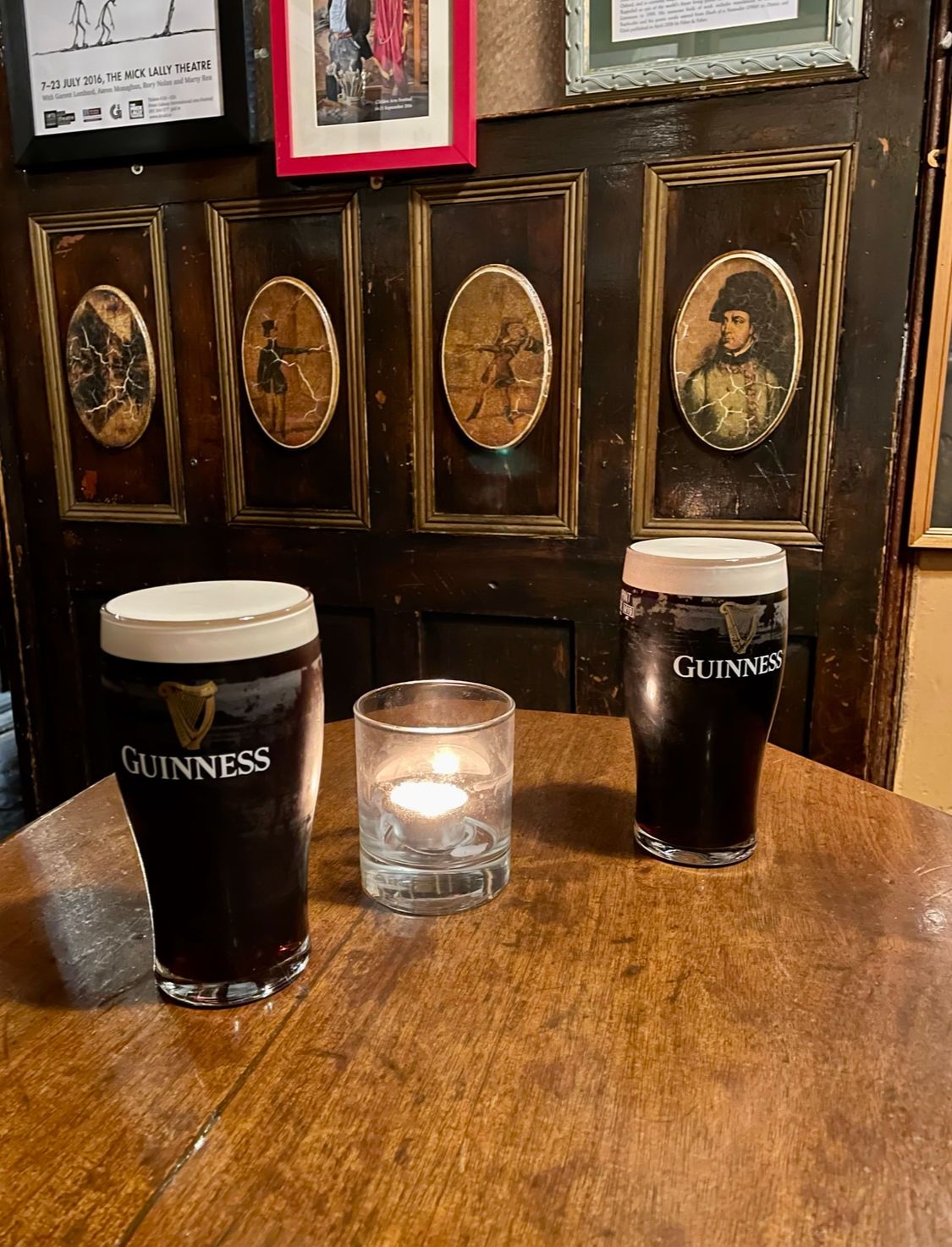
No institution has done more to make Ireland feel smaller than the Irish pub. Not because of the Guinness — though that helps — but because of what the pub actually is: a room in which social distance is expected to shrink and human difference is treated as a reason to talk rather than a reason to stay separate.
In an Irish pub, the rules of engagement are different. You are not in your own private bubble. You are in a shared space, and the understanding is that shared space invites shared conversation. Someone will ask where you are from. Someone will know someone from there. The game of who do you know is an Irish pastime that doubles as a reminder that the world is, in fact, quite small — and that its smallness is a good thing. Even the ritual of the round is part of the same unwritten etiquette; our guide to the round-buying tradition in Irish pubs explains how it works.
Music accelerates all of this. A trad session in a pub in Doolin or Dingle does not require you to be Irish, or even to be particularly musical. It invites you in. Feet start tapping in a language that needs no translation. By the end of the night, you are not a tourist watching Irish culture — you are briefly part of it. That is not an experience you forget easily.
The Small Moments That Stay With You
Ask anyone who has spent time in Ireland what they remember most, and it is rarely the big-ticket sights. It is the small moments. The farmer who stopped his tractor to ask if you were lost — and stayed to talk for twenty minutes once he had pointed you in the right direction. The café owner who brought out a slice of something unprompted because you looked like you needed it. The table in the pub that shuffled up to make room without being asked.
These are not performances for tourists. They are habits. The Irish you’re grand — that gentle reassurance that everything is fine, that whatever small disaster has befallen you is nothing that cannot be sorted — is a philosophy as much as a phrase. It says: I see that you are struggling, and I want you to know that you are among people who will help. You do not need to earn that. You just need to be here.
Bringing That Feeling Home With You
If you are planning a trip to Ireland, the best advice is this: slow down enough to let the connection happen. It will not force itself on you, but it will meet you wherever you are. Stop in the villages, not just the landmarks. Walk into a pub mid-afternoon and strike up a conversation. Accept the invitation to stay for one more. Let the directions turn into a chat about your journey.
For those planning their first visit, our Ireland travel planning hub is the place to start — it will help you build an itinerary that leaves room for the unexpected moments that become the best stories. And for a deeper sense of why Irish hospitality is so powerful as a travel force, read our piece on céad míle fáilte and what it really means.
Ireland makes the world feel smaller because it has spent centuries practising the art of making people feel seen. That is not a small thing. In a world that can feel vast and indifferent, it is, in fact, everything.
Tours & experiences you might love


Powered by Viator. Some links are affiliate links — we may earn a small commission at no extra cost to you.
Secure Your Dream Irish Experience Before It’s Gone!
Planning a trip to Ireland? Don’t let sold-out tours or packed attractions spoil your journey. Iconic experiences like visiting the Cliffs of Moher, exploring the Rock of Cashel, or enjoying a guided walk through Ireland’s ancient past often sell out quickly—especially during peak travel seasons.

Booking in advance guarantees your place and ensures you can fully immerse yourself in the rich culture and breathtaking scenery without stress or disappointment. You’ll also free up time to explore Ireland’s hidden gems and savour those authentic moments that make your trip truly special.
Make the most of your journey—start planning today and secure those must-do experiences before they’re gone!