

A bowl of beef and stout stew is one of the most comforting meals you can eat in Ireland. It is simple food. Beef, root vegetables, a dark pint and time. Yet the result tastes far richer than the short ingredient list suggests. Here is how it works, how to make it at home and where to enjoy it on a trip.
Try the Guinness Timer ⏱️
A perfect pour takes 119.5 seconds — the rest, two minutes, gives the stout time to settle. Time your own pint and see if you wait long enough.
What Is Beef and Stout Stew?
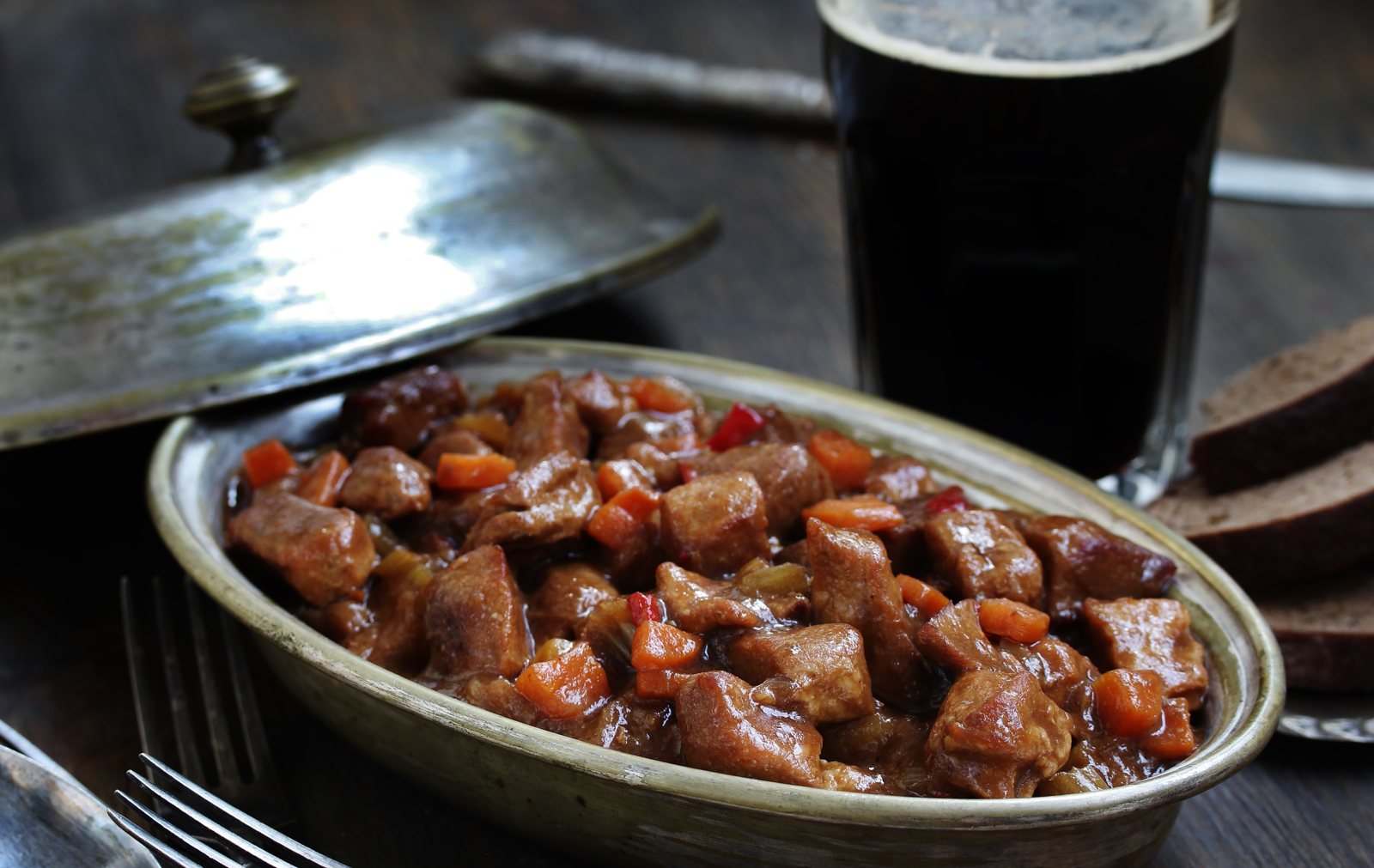
Beef and stout stew is a slow-cooked dish of braising beef, onions, carrots and stock, with stout added to the pot. The stout replaces some of the water or stock. As it simmers, it turns the liquid dark, glossy and slightly sweet.
It is often confused with traditional Irish stew. The classic Irish stew is made with lamb or mutton, potatoes, onions and water, and it is pale and plain. Beef and stout stew is a pub-style cousin. It is darker, deeper and a little more savoury. You will find both on menus across the country, and both are worth ordering.
Why Stout Works So Well in a Stew
☘️ Join 64,000+ Ireland Lovers
Every weekday morning, get Ireland’s hidden gems, local secrets, and travel inspiration — the kind you won’t find in any guidebook.
Subscribe free — enter your email:
Already subscribed? Download your free Ireland guide (PDF)
📲 Know someone who’d love this? Share on WhatsApp →
Free forever · Unsubscribe anytime
Stout is brewed with roasted barley. That gives it its dark colour and its toasty, slightly bitter edge. When you cook it for a long time, three things happen.
- The bitterness softens. Gentle heat mellows the sharp edge of the roasted grain.
- The liquid reduces. Water evaporates and the flavour becomes more concentrated.
- The gravy thickens. Collagen from the beef melts into the liquid and gives it body and shine.
Long, slow cooking is what does it. Rush the stew and the gravy stays thin and the beef stays tough. Give it two to three hours and the stout cooks down until the gravy turns dark and glossy.
Ingredients for Four to Six People
You do not need anything fancy. Most of this is probably in your kitchen already.
- 1 kg braising beef, such as chuck, shin or featherblade, cut into large chunks
- 2 tablespoons plain flour, seasoned with salt and pepper
- 2 tablespoons oil or beef dripping
- 2 large onions, roughly chopped
- 3 carrots, cut into thick chunks
- 1 parsnip or small turnip, chopped (optional)
- 3 cloves of garlic, crushed
- 1 tablespoon tomato purée
- 440 ml of stout (one standard can)
- 500 ml beef stock
- 2 sprigs of fresh thyme and 2 bay leaves
- 1 teaspoon Worcestershire sauce
- 500 g potatoes, peeled and chopped, if you want it as a one-pot meal
Choose a cut with some fat and connective tissue running through it. Lean steak, such as sirloin, dries out in a long braise. Cheaper cuts are better here.
How to Make It, Step by Step
- Heat the oven. Set it to 150°C (130°C fan, gas mark 2).
- Coat the beef. Toss the chunks in the seasoned flour. Shake off the extra.
- Brown the meat. Heat the oil in a heavy casserole dish. Brown the beef in batches. Do not crowd the pan, or the meat will steam rather than brown. Set each batch aside.
- Soften the vegetables. In the same pot, cook the onions for about eight minutes until soft and golden. Add the carrots, parsnip and garlic and cook for two more minutes.
- Add the tomato purée. Stir it in and cook for one minute.
- Pour in the stout. Scrape the brown bits from the bottom of the pot. These bits carry a lot of flavour. Let the stout bubble for a few minutes.
- Add the rest. Return the beef to the pot. Add the stock, thyme, bay leaves and Worcestershire sauce. Bring it to a gentle simmer.
- Cook slowly. Cover and place in the oven for two to two and a half hours. If you are adding potatoes, put them in for the last 45 minutes.
- Finish. Take off the lid for the last 20 minutes if the gravy needs to thicken. Taste and adjust the salt. Remove the bay leaves and thyme stalks.
The stew is ready when a piece of beef falls apart under a fork. If it still feels firm, give it another 30 minutes.
Love Irish food and stories? Join our free daily email for recipes, traditions and travel ideas from across Ireland.
Tips for a Better Stew
- Use a standard stout. Guinness Draught, Murphy’s and Beamish are all common choices in Ireland. Some very bitter or heavily hopped craft stouts can leave a sharp taste, so try a milder one first.
- Cook it low. A hard boil makes the meat stringy. You want small, lazy bubbles.
- Make it a day ahead. Like most stews, it tastes better the next day. Cool it, chill it, then reheat gently.
- Add a little sweetness if needed. If the gravy tastes bitter, stir in a teaspoon of brown sugar or a splash of balsamic vinegar.
- Skim the fat. If a layer of fat sits on top, lift it off with a spoon before serving.
What to Serve With Beef and Stout Stew
The classic partner is bread, and dark bread is best. Brown soda bread, made with wholemeal flour and buttermilk, is the usual choice. It is quick to bake and has a dense crumb that soaks up gravy well. A slice of buttered brown bread, torn and used to mop the bowl, is part of the meal.
Other good sides include:
- Creamy mashed potatoes or buttery colcannon
- Steamed cabbage or green beans
- A pint of stout, if you are not driving
If you prefer a lighter drink, a pot of strong tea is just as Irish and works well on a cold day.
Where to Eat Beef and Stout Stew in Ireland
If you would rather have someone else do the cooking, you are in luck. Beef and stout stew is a staple of pub menus in every county. A few things help you find a good one.
- Look for a pub that cooks at lunchtime. Stew is slow food, so places that serve it from midday often have a pot on since the morning.
- Check the specials board. Many pubs make a fresh batch daily and run out by evening.
- Ask about the bread. Homemade brown bread is a good sign.
- Expect a hearty portion. Prices vary by location, but a bowl in a pub is usually a filling meal on its own.
Dublin, Galway, Cork and Kilkenny all have pubs known for traditional food, but you can also find a great bowl in a small village pub with no website at all. Locals are usually happy to point you to the best one.
Make It Your Own
Every family has its own version. Some add a spoonful of mustard. Some use a splash of whiskey. Others add pearl barley to thicken the gravy or swap the beef for lamb. Some cooks put in a square of dark chocolate to deepen the colour, and others add mushrooms for extra savoury flavour.
There is no wrong answer, as long as you cook it slowly and season it well. So what goes into your stew that is not in anyone else’s? Tell us in the comments. We love hearing family recipes.
Want more Irish recipes and traditions? Our free newsletter lands in your inbox every day.
Storing and Reheating Leftovers
Leftover stew keeps well. Let it cool for no more than two hours, then store it in a covered container in the fridge. It will keep for up to three days. For longer storage, freeze it in portions for up to three months. If you have added potatoes, the texture may change a little after freezing, so it is better to freeze the stew without them.
To reheat, warm it slowly in a pan over a low heat until it is steaming hot all the way through. Add a splash of stock or water if the gravy has become too thick.
A Simple Meal With a Long History
Slow-cooked stews have fed Irish families for generations. They suited busy households because they used cheaper cuts, needed little attention and stretched a small amount of meat a long way. Today, beef and stout stew is both a family favourite and a dish visitors often look for first. Try it at home on a wet evening, or order a bowl in a pub by the fire. Either way, keep a piece of dark bread for the last of the gravy.
Planning a trip to Ireland? Get food tips, travel ideas and stories from the Love Ireland team.
Tours & experiences you might love


Powered by Viator. Some links are affiliate links — we may earn a small commission at no extra cost to you.
Secure Your Dream Irish Experience Before It’s Gone!
Planning a trip to Ireland? Don’t let sold-out tours or packed attractions spoil your journey. Iconic experiences like visiting the Cliffs of Moher, exploring the Rock of Cashel, or enjoying a guided walk through Ireland’s ancient past often sell out quickly—especially during peak travel seasons.

Booking in advance guarantees your place and ensures you can fully immerse yourself in the rich culture and breathtaking scenery without stress or disappointment. You’ll also free up time to explore Ireland’s hidden gems and savour those authentic moments that make your trip truly special.
Make the most of your journey—start planning today and secure those must-do experiences before they’re gone!