

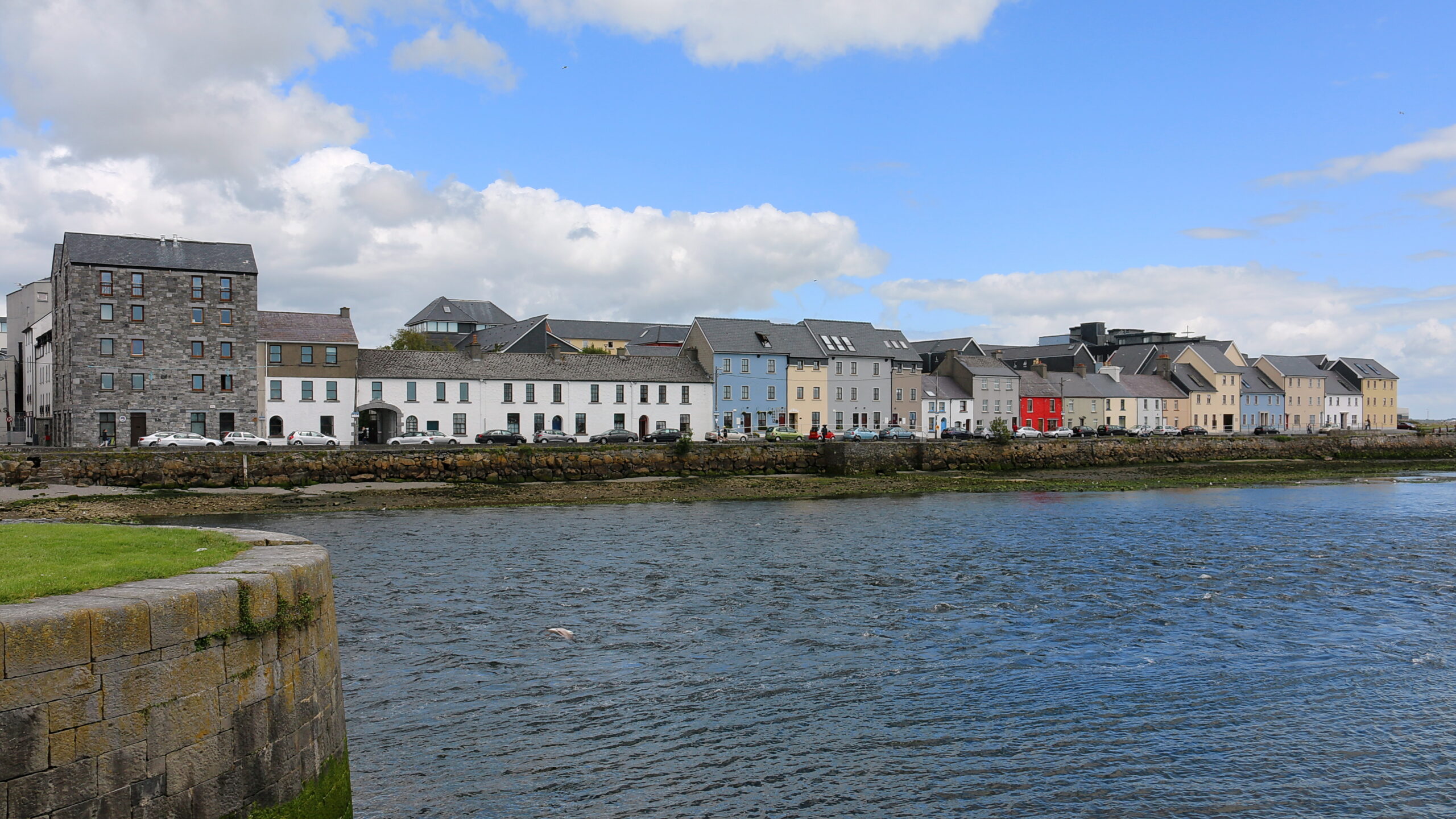
Walk along the quay in Galway city and you will see a row of painted houses facing the water. One is bright red, another yellow, another pink. They sit above the River Corrib, and their colours shake in the water below. This is the Long Walk, and it is one of the most photographed spots in the west of Ireland.
It is also an easy, free thing to do. This guide covers where the Long Walk is, how to get there, what to see on the way, and what to do next. If you are planning a trip, it makes a good first stop.
What Is the Long Walk in Galway?
The Long Walk is a short stretch of quayside on the east bank of the River Corrib, just beyond the Spanish Arch. The name comes from the walk along the water. The row of houses behind it is what people photograph most.
The terrace is a mix of tall, narrow townhouses. Each one is painted in a different colour. Together they make a bright line against the grey stone of the quay wall. On a still day, the reflections in the river are sharp. On a windy day, they break into streaks of colour.
Across the water you can see the area known as the Claddagh. The river meets Galway Bay a short way downstream, so the view often includes boats, swans and gulls.
How to Find the Long Walk
☘️ Join 64,000+ Ireland Lovers
Every weekday morning, get Ireland’s hidden gems, local secrets, and travel inspiration — the kind you won’t find in any guidebook.
Subscribe free — enter your email:
Already subscribed? Download your free Ireland guide (PDF)
📲 Know someone who’d love this? Share on WhatsApp →
Free forever · Unsubscribe anytime
The Long Walk is in the heart of the city, so you do not need a car. Most visitors reach it on foot.
- From Eyre Square: walk down Shop Street and William Street, then follow the lanes towards the river. It takes about 15 minutes.
- From the Latin Quarter: head south along Quay Street until you reach the Spanish Arch. The Long Walk begins right beside it.
- From the train or bus station: both are close to Eyre Square, so the same route applies.
The ground is flat and paved, so the walk suits most people, including families with pushchairs. Wear comfortable shoes, as the stone can be slippery after rain.
The Spanish Arch and Galway City Museum
The Spanish Arch stands at the start of the Long Walk. It dates from the 16th century and was part of the old city defences. Galway was a busy trading port then, and ships brought wine and goods from Spain and elsewhere. That link is where the name comes from.
Beside the arch you will find Galway City Museum. It is free to enter and tells the story of the city from early times. It is a good wet-weather option, and the top floor gives you a fine view over the river. Opening hours change by season, so check before you go.
The grassy area by the arch is a popular place to sit. On dry days, locals and students bring coffee and lunch and watch the river.
Get our free Ireland travel tips by email. Subscribe to the newsletter.
The Best Time to Visit
Early morning is the quietest time. You will have the quay almost to yourself, and the light is soft for photos. Late afternoon is also good, especially in summer when the sun stays out late.
Weather in Galway can change quickly. A bright morning can turn showery by noon, so bring a light waterproof coat in any season. Showers often pass fast, and the clouds can make the colours of the houses look even stronger.
Summer weekends are the busiest. If you want a calm visit, go on a weekday outside July and August.
Tips for Taking Good Photos
- Look for reflections. Calm, windless moments give the best mirror effect in the water.
- Stand low. Crouching near the quay edge helps you fit more of the water into the frame.
- Wait for the boats. A moored sailing boat or a passing traditional vessel adds a focus point.
- Take a wider shot and a close one. A single bright house, such as the red one, makes a strong detail shot.
- Keep off private property. The houses are people’s homes, so please stay on the public quay.
Mind the edge of the quay, too. There is a drop to the water, and children should stay close.
Walk On to the Claddagh
From the Long Walk, you can cross the river by the Salmon Weir Bridge or the nearby Wolfe Tone Bridge to reach the Claddagh. This was once a small fishing village just outside the old city walls. Today it is part of Galway, but it still has a strong local identity.
The Claddagh is best known as the home of the Claddagh ring. The design shows two hands holding a crown above a heart. It is often given as a symbol of love, loyalty and friendship. You can see the ring in jewellers across Galway, including shops on Shop Street.
The Claddagh is also linked with Galway hookers. These are traditional wooden sailing boats with dark hulls and red-brown sails. They were once used to carry turf, fish and other goods around the bay. You may spot one on the water, and the boat in the photo from the Long Walk reflects that sailing tradition.
What to Do Nearby
The Long Walk fits easily into a day in the city. Here are some good places to add.
Shop Street and the Latin Quarter
These pedestrian streets are full of pubs, cafés, bookshops and street musicians. Many pubs have live traditional music in the evening. It is a good place to try seafood, as Galway is known for its oysters and fresh fish.
Salthill Promenade
Salthill is a seaside suburb to the west. The promenade runs along the bay and is popular for evening strolls. A walk from the Claddagh to Salthill takes around 30 to 40 minutes at an easy pace. Locals have a tradition of walking to the diving boards at the end and kicking the wall.
Galway Cathedral
The cathedral stands beside the Salmon Weir Bridge. It was completed in the 1960s and has a large dome and detailed mosaics inside. Visitors are welcome outside service times.
Saturday Market
Near St Nicholas’ Collegiate Church, a market sells food, crafts and flowers. It is busiest at weekends and is a good place for a snack before you walk to the river.
Planning Galway? Join our free newsletter for practical Ireland guides.
Day Trips from Galway
Galway is also a handy base for the wider west coast.
- Connemara: a drive of lakes, mountains and bogland. Many tour companies run day trips, and you can also go by car.
- The Aran Islands: ferries run from Rossaveel, west of the city, with a coach link from Galway. The largest island, Inis Mór, has the ancient fort of Dún Aonghasa.
- The Cliffs of Moher: about 1.5 to 2 hours by road, in County Clare. Book a coach or hire a car, and allow a full day.
- Kylemore Abbey: a lakeside abbey in Connemara with a walled Victorian garden.
Where to Stay and Eat
Staying close to the centre means you can walk to the Long Walk and most sights. The area around Eyre Square, the Latin Quarter and the Docks all work well. Book early for summer, and for busy event weekends such as the Galway Arts Festival in July and the Galway Races in late summer.
For food, look for chowder, fresh fish and local oysters. Many restaurants and pubs serve them. Prices vary, so check menus before you sit down.
Quick Planning Tips
- Allow 30 minutes for the Long Walk and the Spanish Arch, or two hours if you add the museum and the Claddagh.
- Bring a rain jacket, whatever the forecast says.
- Keep small change or a card handy for coffee stops.
- Travel by foot in the city centre. Parking is limited and can be costly.
- Check opening times for the museum and the cathedral before you go.
So, What Is the First Thing You Do in Galway?
Many people say they head straight for the water. The Long Walk is a good reason why. It is free, easy to reach and gives you the best view of the city’s colour. Take a few photos, watch the river, then wander into town for music and a bite to eat.
What is the first thing you do when you get to Galway? Tell us in the comments, and we will add your best ideas to future guides.
Never miss a guide. Subscribe to Love Ireland’s free newsletter.
Tours & experiences you might love


Powered by Viator. Some links are affiliate links — we may earn a small commission at no extra cost to you.
Secure Your Dream Irish Experience Before It’s Gone!
Planning a trip to Ireland? Don’t let sold-out tours or packed attractions spoil your journey. Iconic experiences like visiting the Cliffs of Moher, exploring the Rock of Cashel, or enjoying a guided walk through Ireland’s ancient past often sell out quickly—especially during peak travel seasons.

Booking in advance guarantees your place and ensures you can fully immerse yourself in the rich culture and breathtaking scenery without stress or disappointment. You’ll also free up time to explore Ireland’s hidden gems and savour those authentic moments that make your trip truly special.
Make the most of your journey—start planning today and secure those must-do experiences before they’re gone!