

What’s the best Irish dish of all time? ☘️
Vote in our Best Irish Food poll — recipes nominated by the community.
What’s your Irish county’s signature dish? ☘️
Different counties claim different dishes — Your County’s Signature Food tells you which one your county is known for, with a short story behind it.
Seville Orange Marmalade Recipe: Ireland’s Beloved Bitter-Orange January Preserve
Every January, when the brief window of Seville orange season opens — those knobbled, fiercely bitter fruits arriving from Spain for just a few precious weeks — kitchens across Ireland are filled with the sharp, floral steam of marmalade making. It is one of the great rituals of the Irish country-house calendar, a tradition passed down through generations of farmhouse and manor kitchen alike, written in pencilled notes in the margins of battered recipe books. Long before supermarket shelves offered marmalade year-round, Irish households planned ahead, buying Sevilles by the box and spending a January weekend at the preserving pan, setting up enough jars to last the entire year.
The love of a good sharp marmalade runs deep in Ireland. Unlike the sweeter, gentler preserves that became fashionable elsewhere, the traditional Irish recipe leans into the Seville orange’s natural ferocity — the thick-cut peel providing a chewy, pleasingly bitter counterpoint to the deep amber set of the jelly. Country houses prided themselves on their marmalade, and it was as much a mark of a well-run household as a fine soda bread or a proper pot of strong tea. Visitors would be sent home with a jar or two; a good marmalade was currency of hospitality.
What makes the traditional Irish version distinctive is its simplicity and its honesty. There are no shortcuts here — no pectin sachets, no blender — just whole Seville oranges, lemons, water, and sugar, coaxed slowly into a deep, glossy preserve with a long, clean set. The peel is cut by hand, thick enough to give proper bite, and the pips are tied in muslin and simmered along with everything else, releasing their natural pectin and giving the finished marmalade its beautiful trembling set. This is the recipe as it has always been made, and it does not need improving.
Ingredients
- 1 kg (2¼ lb) Seville oranges (roughly 6–8 fruits, unwaxed if possible)
- 2 lemons, juice only
- 2 litres (3½ pints) cold water
- 2 kg (4½ lb) granulated white sugar
- Muslin square and kitchen string, for the pip bag
Method
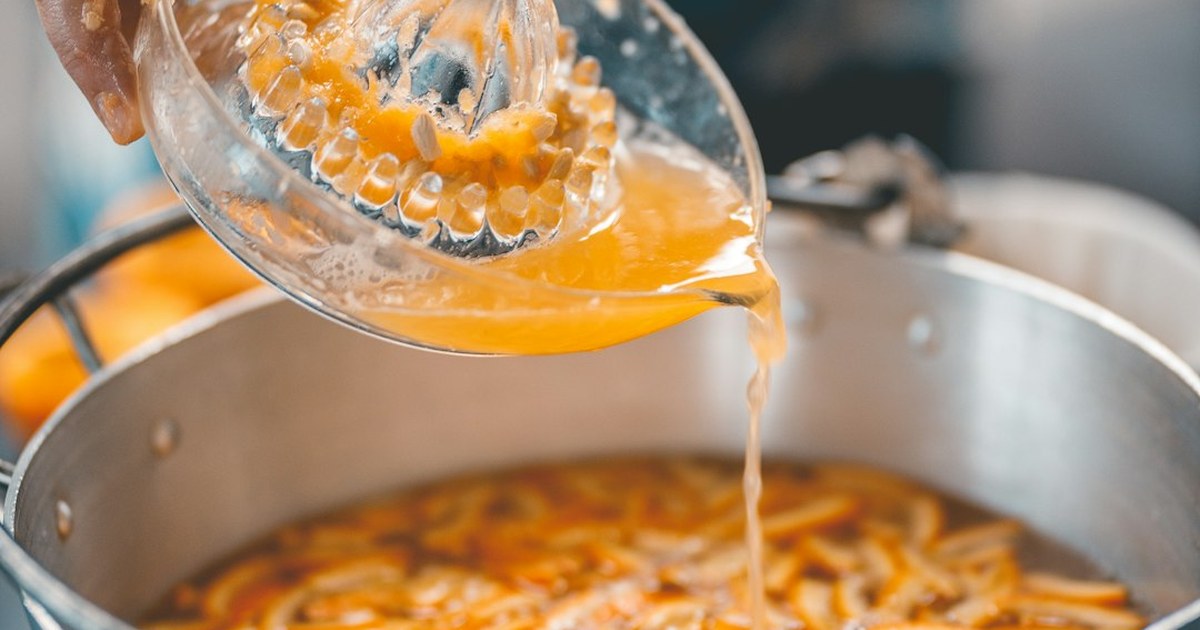
- Wash the Seville oranges well. Halve them and squeeze out the juice, reserving every pip. Pour the juice into a large preserving pan or heavy-bottomed stockpot.
- Collect all the pips and any loose membrane into a square of muslin. Tie it securely into a bag and add it to the pan.
- Using a sharp knife, slice the orange halves into strips. The thickness is a matter of taste — traditional Irish marmalade is typically cut to around 5 mm (¼ inch) for a satisfying, chewy bite. Add all the cut peel to the pan.
- Add the lemon juice and the cold water. Bring everything to a gentle boil, then reduce to a steady simmer. Cook uncovered for approximately 2 hours, or until the peel is completely tender and the liquid has reduced by roughly half. The peel should be easily pierced with a fingernail — this stage is crucial, as the peel will not soften further once the sugar is added.
- While the peel is simmering, place your sugar in a low oven at 140°C / 275°F / Gas Mark 1 to warm through — this helps it dissolve quickly and evenly.
- When the peel is tender, remove the muslin bag, squeezing it well against the side of the pan to release all the pectin-rich liquid. Discard the bag.
- Add the warmed sugar to the pan and stir over a low heat until every grain has fully dissolved — do not allow it to boil at this stage. Once dissolved, bring to a full, rolling boil and boil hard for 15–20 minutes without stirring.
- Test for a set: place a small saucer in the freezer beforehand. Drop a teaspoon of marmalade onto the cold saucer, wait 30 seconds, then push it gently with your finger. If the surface wrinkles, the marmalade has reached setting point (approximately 104°C / 220°F on a sugar thermometer). If not, boil for a further 5 minutes and test again.
- Remove from the heat and leave to rest for 10–15 minutes — this allows the peel to settle evenly through the jelly rather than floating to the tops of the jars.
- Pour into warm sterilised jars, seal immediately, and leave undisturbed to set. Label when fully cool. Makes approximately 5–6 jars (450 g / 1 lb jars).
Tips
- Sterilise jars properly: wash in hot soapy water, rinse well, and warm in the oven at 140°C / 275°F for 15 minutes before filling.
- Don’t rush the peel: under-cooked peel is the most common mistake — it must be truly soft before the sugar goes in.
- Seville oranges are seasonal: look for them in Irish supermarkets and greengrocers from early January through to mid-February at the latest. They freeze beautifully whole, so buy extra if you find them.
- A rolling boil means a proper boil: the surface should be bubbling vigorously across its entire width, not just simmering around the edges.
- Stored in a cool, dark place, traditional Seville orange marmalade will keep happily for up to two years — though it rarely lasts that long.
There is something deeply satisfying about lifting a finished jar of homemade marmalade up to the light and seeing that deep, glowing amber, the peel suspended perfectly through the set jelly — the reward for patience, for not cutting corners, for trusting a recipe that has been doing its job faithfully for generations. Spread generously on buttered Irish brown soda bread or a slice of brown toast beside a pot of strong Irish breakfast tea, it is one of the finest simple pleasures an Irish kitchen can offer, and a jar on the breakfast table in July is a little piece of that January afternoon, kept safe and waiting. For more of the recipes that define the Irish table, see our 10 most beloved traditional Irish dishes.
☘️ Join 64,000+ Ireland Lovers
Every Friday, get Ireland’s hidden gems, local secrets, and travel inspiration — the kind you won’t find in any guidebook.
Already subscribed? Download your free Ireland guide (PDF)
Free forever · One email per week · Unsubscribe anytime
Tours & experiences you might love


Powered by Viator. Some links are affiliate links — we may earn a small commission at no extra cost to you.
Secure Your Dream Irish Experience Before It’s Gone!
Planning a trip to Ireland? Don’t let sold-out tours or packed attractions spoil your journey. Iconic experiences like visiting the Cliffs of Moher, exploring the Rock of Cashel, or enjoying a guided walk through Ireland’s ancient past often sell out quickly—especially during peak travel seasons.

Booking in advance guarantees your place and ensures you can fully immerse yourself in the rich culture and breathtaking scenery without stress or disappointment. You’ll also free up time to explore Ireland’s hidden gems and savour those authentic moments that make your trip truly special.
Make the most of your journey—start planning today and secure those must-do experiences before they’re gone!