

Ashford Castle stands on the shores of Lough Corrib in County Mayo. It is one of the most recognisable buildings in Ireland and, by most measures, one of the finest hotels in the world. The castle has over 800 years of history behind it, 350 acres of estate grounds around it, and a guest list that has included US presidents, members of the British royal family, and some of the most famous names in Hollywood.
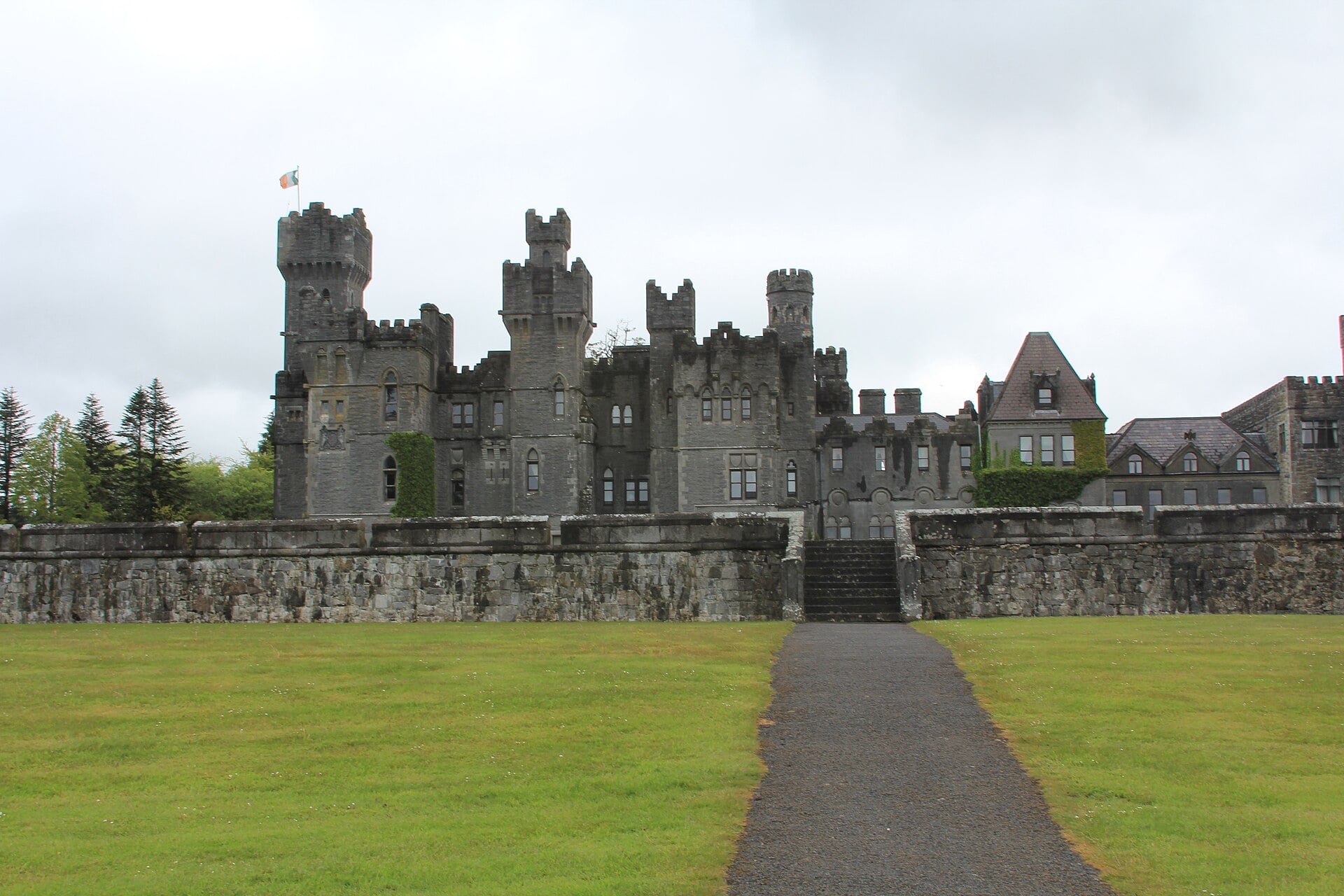
Whether you are planning to stay, want to visit for the afternoon, or are simply curious about one of Ireland’s great landmark buildings, this guide covers everything you need to know.
Want more of Ireland’s best places and travel guides delivered free to your inbox? Subscribe to the Love Ireland newsletter — join over 64,000 readers who never miss a thing.
A History Spanning Eight Centuries
The castle was first built in 1228 by the Anglo-Norman de Burgo family, who constructed a fortified tower on the western shore of Lough Corrib. Over the following centuries the building changed hands repeatedly, and each new owner left their mark on the structure. The de Burgos were followed by the Browne family, who held the estate for several generations before selling in the 19th century.
The most transformative period in the castle’s history came in 1852, when Benjamin Lee Guinness — heir to the famous Dublin brewery — purchased the estate. He began an extensive programme of restoration and expansion, and his son Arthur Guinness — later Lord Ardilaun — continued the work on an even grander scale. Over the following decades, towers were added, wings extended, and formal gardens laid out along the lakeshore. The estate grew to encompass hundreds of acres of woodland, farmland, and lake frontage.
What visitors see today is largely the result of that Victorian transformation. The battlements, the stone façades, the ornate interiors, and the manicured grounds all bear the Guinness stamp. The family used the castle as a private residence and hunting estate until the early 20th century.
In 1939, Ashford Castle opened its doors as a hotel for the first time. It has operated as one ever since. Today it is managed by the Red Carnation Hotel Collection and rated as a five-star property. It has been voted the Best Hotel in Ireland on multiple occasions and has featured prominently in international travel rankings including those published by Travel + Leisure magazine.
What to Expect When You Stay
The hotel has 83 rooms and suites spread across the castle and its connected buildings. Accommodation ranges from Classic Rooms — which are well-appointed by any standard — through to the Bishop’s Suite, which occupies a tower room above the lake and offers views across Lough Corrib. The furnishings throughout are traditional in style, with heavy fabrics, carved timber, and period artwork that suits the building’s age and character.
Dining is central to the Ashford experience. The George V Dining Room is the flagship restaurant, a formal space that has been in use since the 1800s. Guests dress for dinner, and the menu reflects the quality of local produce available across the west of Ireland, including freshwater fish from the lake and meat from surrounding farms. The Cullen’s at the Cottage restaurant takes a more relaxed approach and is suitable for families or those who prefer a less formal meal. There is also the Dungeon Bar for drinks and lighter food, a dedicated afternoon tea service, and private dining rooms for events.
The castle has a full spa, added in recent years, which includes a swimming pool, thermal suite, steam room, and treatment rooms. A private cinema, a billiard room, and several sitting rooms are available to guests throughout the day.
Ireland is full of stories like this one. Get them every week, straight to your inbox. Sign up free to the Love Ireland newsletter — it only takes a moment.
Activities and Experiences on the Estate
The 350-acre estate gives Ashford Castle an unusual depth of activity options that most Irish hotels simply cannot match. Most are available exclusively to guests staying at the castle.
The School of Falconry is arguably the castle’s most distinctive offering. Established in 1999, it is the oldest falconry school in Ireland and works with a variety of birds including Harris hawks, peregrine falcons, and barn owls. Sessions range from a one-hour introductory experience to a half-day intensive programme. The school has won awards and is consistently cited as a highlight by guests.
Fishing is another major draw. Lough Corrib is one of the great wild trout and salmon fishing lakes in Ireland, covering over 17,000 hectares with over 360 islands. The castle maintains its own fleet of wooden boats and can provide experienced ghillies — local fishing guides — who know the lake and its habits intimately. Brown trout fishing is available from February, and wild salmon arrive from spring onwards.
Beyond falconry and fishing, the estate offers:
- Horse riding and carriage rides on the estate’s own roads and woodland tracks
- Clay pigeon shooting and archery on the estate’s dedicated ranges
- Cycling through marked routes on the grounds
- Tennis courts, available throughout the year
- Guided nature walks and lake tours by boat
Guided tours of the castle interior are also available and are recommended for anyone with an interest in the building’s history, its architecture, or the Guinness family’s role in shaping the estate.
Getting There: Location and Travel
Ashford Castle is located in the village of Cong, on the border of County Mayo and County Galway. Cong sits at the point where Lough Corrib meets the River Cong, approximately 45 kilometres north of Galway city.
By car from Dublin, the journey takes roughly three hours via the M6 motorway and the N84 through Headford. The approach road into Cong passes through quiet farmland and gives little indication of what lies ahead — the castle reveals itself suddenly as you pass through the estate gates.
Galway is the most practical option for visitors arriving by public transport. The city has regular rail connections from Dublin and Cork, and the castle can arrange transfers. Ireland West Airport Knock, approximately 60 kilometres to the north, handles domestic flights and some UK routes and is worth considering for travellers coming from Britain or other parts of Ireland.
The village of Cong itself is worth an hour or two of exploration. The ruins of Cong Abbey, founded in the 7th century and rebuilt in Romanesque style in the 12th century, stand in the centre of the village and are freely accessible. The Cross of Cong — one of the finest examples of Romanesque metalwork in Ireland — was made here, though the original is now held at the National Museum of Ireland in Dublin.
The Quiet Man Connection
The area around Cong has an additional layer of fame that draws visitors from across the world, particularly from the United States and among the Irish diaspora. The 1952 film The Quiet Man, directed by John Ford and starring John Wayne and Maureen O’Hara, was shot almost entirely on location in and around Cong. The landscape, the stone walls, the village streets, and the surrounding countryside are recognisable from the film to this day.
Ashford Castle appears in the film and served as accommodation for the cast and crew during production. The connection is celebrated in the village with the Quiet Man Museum, which houses original costumes, props, scripts, and photographs from the shoot. Guided tours of the filming locations are available from the village.
For visitors with Irish-American heritage, or for anyone who grew up watching the film, Cong carries a weight that goes beyond typical tourism. The landscape that John Ford captured in 1951 has changed very little.
Practical Tips Before You Visit
Ashford Castle is primarily a hotel, and most of its facilities are reserved for overnight guests. However, non-residents can book afternoon tea in the castle, dinner at the restaurants, and certain activities in advance. Reservations are essential — the castle does not accommodate walk-ins for dining.
Room rates vary considerably by season and room category. Expect to pay upwards of €900 per night for the lower-category rooms during the summer months, with suites considerably more. The castle offers packages for special occasions, activity breaks, and spa stays that can represent better value than booking components separately. If Ashford Castle is outside your budget or fully booked, see our guide to the best hotels in Mayo for more options across the county.
The best time to visit is May through September, when the grounds are in full growth and weather in County Mayo is at its most amenable. Autumn brings its own appeal — the woodland on the estate turns in October, and the lake fishing extends into the season. Winter stays have a dedicated following: the fires are lit, the building is quiet, and rates are generally lower.
Parking is available on site at no charge. Dogs are welcome and the estate grounds give them ample space to exercise. The castle is also a popular wedding venue and hosts events throughout the year, so it is worth checking when you book whether a large event coincides with your stay.
If you love Ireland’s heritage, history, and hidden gems, our weekly newsletter is for you. Subscribe free to Love Ireland and join 64,000 readers across the world.
Thinking about it seriously?
If you’ve started actually planning a move, our complete the full Move to Ireland guide walks through every step, every cost, and the paperwork that catches most people out.
Tours & experiences you might love


Powered by Viator. Some links are affiliate links — we may earn a small commission at no extra cost to you.
Secure Your Dream Irish Experience Before It’s Gone!
Planning a trip to Ireland? Don’t let sold-out tours or packed attractions spoil your journey. Iconic experiences like visiting the Cliffs of Moher, exploring the Rock of Cashel, or enjoying a guided walk through Ireland’s ancient past often sell out quickly—especially during peak travel seasons.

Booking in advance guarantees your place and ensures you can fully immerse yourself in the rich culture and breathtaking scenery without stress or disappointment. You’ll also free up time to explore Ireland’s hidden gems and savour those authentic moments that make your trip truly special.
Make the most of your journey—start planning today and secure those must-do experiences before they’re gone!
Subscribe Free