

It is easy to feel a pang of wonder when you see an Atlantic puffin perched on the rugged cliffs of Skellig Michael, surrounded by the vast, unforgiving Atlantic Ocean. There is something genuinely striking about this resilient little bird making its home in one of Ireland’s most remote and dramatic corners. But beyond the spectacle, Skellig Michael offers one of the most accessible close-range wildlife encounters in the country — if you know when to go and how to plan.
Love Ireland? Get our free weekly newsletter — stories, guides, and hidden gems delivered straight to your inbox. Subscribe free here.
What Makes Skellig Michael Special for Puffin Watching
Skellig Michael is a UNESCO World Heritage Site sitting approximately 11 kilometres off the coast of County Kerry in south-west Ireland. This remote island rises steeply from the Atlantic Ocean, its dramatic peaks reaching 218 metres at the highest point. The island is best known for its remarkably well-preserved 6th-century monastic settlement, but for wildlife lovers, it is one of Ireland’s most important seabird colonies.
Atlantic puffins (Fratercula arctica) arrive at Skellig Michael each spring, typically from late April, and remain through early August before returning to open sea for the winter. At peak season, the island hosts thousands of breeding pairs. Their burrows are dug into the soft, peaty soil on the island’s upper slopes, and the noise and activity of the colony during the summer months can be extraordinary.
Atlantic Puffins: The Basics
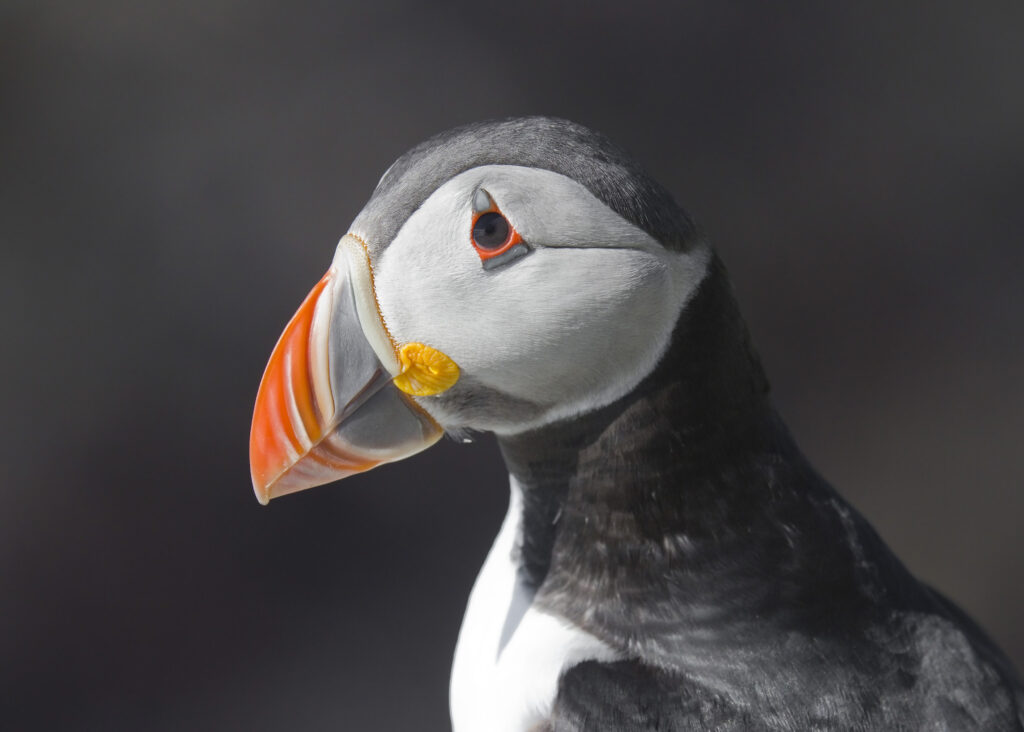
The Atlantic puffin is a seabird with a distinctive appearance: a black-and-white body, a large orange-red bill, and bright orange feet. These features become especially vivid during the breeding season. Outside of this period, their bill markings fade and they look considerably plainer.
Adult puffins are roughly 28 to 30 centimetres in length and weigh around 380 to 500 grams. Despite their compact size, they are capable long-distance travellers. Outside of breeding season, they spend months at sea, sleeping on the water and diving for fish — sometimes reaching depths of 60 metres.
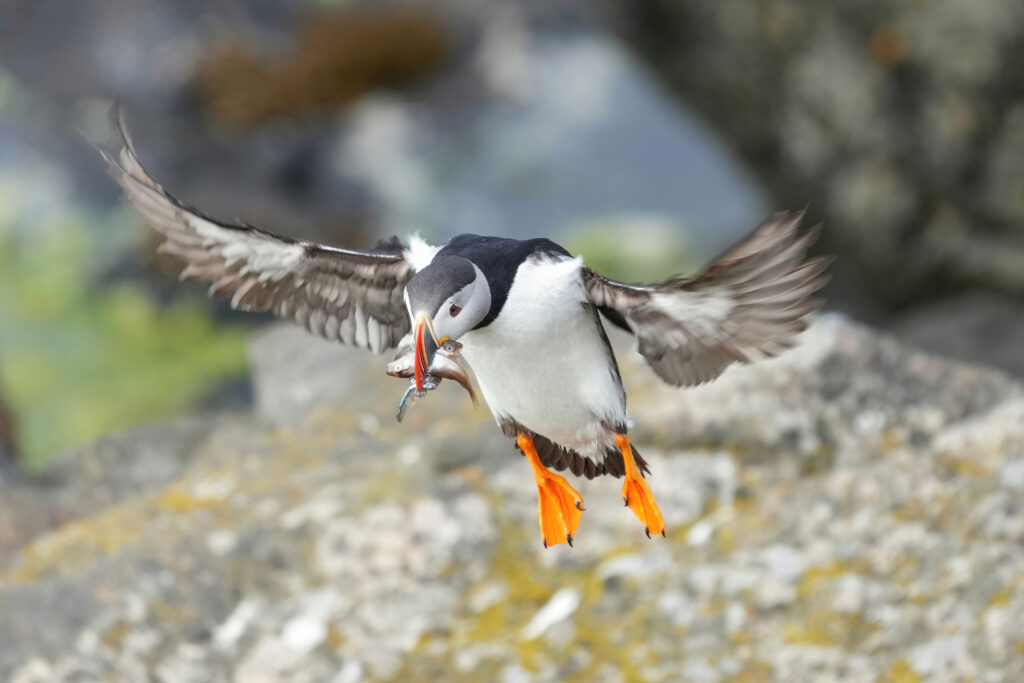
Puffins are monogamous and typically return to the same burrow year after year. They lay a single egg per season. Both parents share incubation duties and take turns feeding their chick, called a puffling, on small fish such as sand eels and sprats. Puffins can carry multiple fish in their bills at once — sometimes up to 60 small fish in a single trip — thanks to a mechanism that allows their upper and lower bill to grip fish in parallel rows.
Their lifespan is surprisingly long for a small seabird. Puffins commonly live 20 years or more, with some individuals reaching their late 30s.
Getting to Skellig Michael
Skellig Michael is accessible only by boat from the Kerry coast, with most trips departing from Portmagee, Ballinskelligs, or Caherdaniel. The crossing takes approximately 45 minutes to an hour each way, depending on the point of departure and sea conditions. For more on what to expect from the island overall, see our guide to whether Skellig Michael is worth visiting.
The island is open to visitors from mid-May to late September, though this is subject to weather. The Atlantic can be unpredictable, and trips are regularly cancelled or delayed due to rough conditions. If you are planning a visit specifically to see puffins, aim for June or early July — this is when the birds are most active and easiest to observe.
Visitor numbers are strictly controlled. Only licensed boat operators can land passengers, and each holds a licence allowing a fixed number of visitors per day. Advance booking is essential. Popular slots, particularly in July, fill up weeks or months ahead.
The boat journey itself can be rough. If you are prone to seasickness, take precautions before boarding. There are no facilities on the island beyond basic toilets, so bring water and food for the duration of your visit.
Love Ireland? Get our free weekly newsletter — stories, guides, and hidden gems delivered straight to your inbox. Subscribe free here.
What to Expect When You Arrive
Skellig Michael is not a managed tourist attraction in the conventional sense. There are no cafés, no visitor centre, and very limited shelter. What you will find is a steeply climbing pathway, a small team of on-site guides, and one of the most spectacular natural environments in Ireland.
The puffins are not confined to a viewing area. They move freely across the island and are often seen at close range — sometimes just a metre or two away — sitting near their burrow entrances or standing on rocky outcrops. This proximity is part of what makes Skellig Michael such an exceptional wildlife experience.
During peak season, you may also see other seabirds including gannets, guillemots, razorbills, and kittiwakes. The noise and activity of the combined colony can feel overwhelming on first arrival.
Access to the island requires a reasonable level of physical fitness. The steps leading up to the monastic settlement are steep and uneven, with no lifts or ramps available. Visitors should wear sturdy shoes and be prepared for wind and cold, even in midsummer.
The Conservation Status of Atlantic Puffins
Despite the striking numbers visible at Skellig Michael, the Atlantic puffin is listed as a vulnerable species by the International Union for Conservation of Nature (IUCN). Puffin populations have declined significantly in parts of their range, particularly around Iceland and the Faroe Islands, which host the largest concentrations worldwide.
The main threats include changes in fish stocks — particularly sand eels, a critical food source — driven by warming seas and commercial fishing pressure. Predation by introduced rats has devastated colonies on some islands. Climate change is also disrupting the timing of fish availability, which can affect chick survival rates.
In Ireland, protected sites such as the Skellig Islands are managed to minimise disturbance. The strict visitor limits at Skellig Michael are not simply logistical — they are an active conservation measure. Numbers are capped precisely because large-scale footfall close to active burrows can cause breeding failures.
Other Places to See Puffins in Ireland
Skellig Michael is the most famous location, but not the only place where puffins breed in Ireland.
The Cliffs of Moher, County Clare, support a breeding colony of puffins during the summer months. The birds can often be spotted from the clifftop path, particularly near the O’Brien’s Tower viewing point. The Cliffs are far more accessible than Skellig Michael and offer a straightforward way to see puffins without a sea crossing.
Rathlin Island, off the north Antrim coast, is home to one of Ireland’s largest seabird colonies. Puffins breed here alongside razorbills, guillemots, and fulmars. Rathlin is accessible by ferry from Ballycastle and has a dedicated RSPB seabird viewing centre at the West Light.
The Blasket Islands, also off the Kerry coast, support puffins and are accessible by ferry from Dunquin during the summer months.
Practical Tips Before You Go
- Book boat trips to Skellig Michael as early as possible — months in advance if your dates are fixed.
- Check the operator’s cancellation policy before booking. Trips are regularly cancelled due to weather, and most operators will offer a rescheduled date or refund.
- Bring layers regardless of the time of year. Wind chill on the island can be significant even in July.
- Binoculars are not essential but will enhance the experience, particularly for watching puffins in flight over the water.
- Photography is unrestricted, but keep a respectful distance from burrow entrances to avoid disturbing nesting birds.
- Stay on marked paths, do not approach or handle wildlife, and take all litter back with you.
Skellig Michael does not offer a comfortable day out in the usual sense. The crossing is demanding, the terrain is uneven, and the weather can turn quickly. But for those willing to make the effort, it is one of the most memorable wildlife experiences available anywhere in Ireland.
Love Ireland? Get our free weekly newsletter — stories, guides, and hidden gems delivered straight to your inbox. Subscribe free here.
Thinking about it seriously?
If you’ve started actually planning a move, our complete the full Move to Ireland guide walks through every step, every cost, and the paperwork that catches most people out.
Tours & experiences you might love


Powered by Viator. Some links are affiliate links — we may earn a small commission at no extra cost to you.
Secure Your Dream Irish Experience Before It’s Gone!
Planning a trip to Ireland? Don’t let sold-out tours or packed attractions spoil your journey. Iconic experiences like visiting the Cliffs of Moher, exploring the Rock of Cashel, or enjoying a guided walk through Ireland’s ancient past often sell out quickly—especially during peak travel seasons.

Booking in advance guarantees your place and ensures you can fully immerse yourself in the rich culture and breathtaking scenery without stress or disappointment. You’ll also free up time to explore Ireland’s hidden gems and savour those authentic moments that make your trip truly special.
Make the most of your journey—start planning today and secure those must-do experiences before they’re gone!