

County Cavan sits in the heart of Ulster, a quiet, lake-studded landscape of rolling drumlins and old stone bridges that most visitors drive past on their way somewhere else. That is precisely what makes it worth stopping for. Cavan is not trying to impress you with dramatic cliffs or tourist attractions. It is simply beautiful — a county of hidden loughs, ancient forests, and small towns where the pace of life still follows the seasons.
The Lakeland
Cavan is sometimes called the Lake County, and with good reason. There are said to be 365 lakes in the county — one for every day of the year. Whether that number is strictly accurate is beside the point. The effect of all this water is unmistakable. Every road seems to wind between glinting loughs, and every hilltop reveals another silver sheet of water tucked between green drumlins.
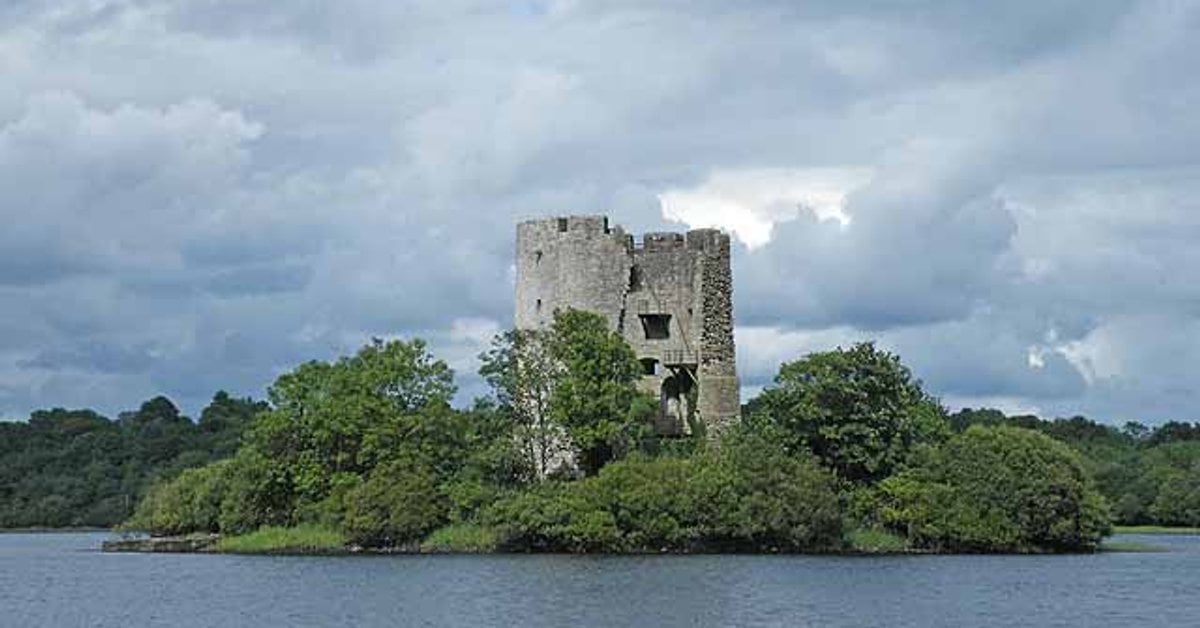
The most famous is Lough Oughter, a sprawling, island-dotted lake in the west of the county that forms the centrepiece of Killykeen Forest Park. At its heart sits Clogh Oughter Castle, a 13th-century circular tower house built on a crannog — an artificial island. The castle was the last O’Reilly stronghold to fall during the Cromwellian wars and is one of Ireland’s most atmospheric ruins, reachable only by boat.
If stories like this make your heart sing, our free weekly newsletter brings Ireland to your inbox every Tuesday morning. Join 64,000 readers — subscribe here.
Killykeen Forest Park
Killykeen Forest Park wraps around the shores of Lough Oughter, offering waymarked trails through mixed woodland, along lakeside paths, and across small bridges to wooded islands. The park is a haven for wildlife — kingfishers, herons, and otters are regular sights. There are walking trails for every ability, from gentle lakeside strolls to longer forest loops, and the quiet is remarkable. On a still morning, the only sounds are birdsong and the soft lap of water against stone.
The Shannon Pot
The River Shannon, Ireland’s longest river, begins its 360-kilometre journey to the Atlantic in a quiet pool on the slopes of Cuilcagh Mountain in northwest Cavan. The Shannon Pot is a modest, spring-fed pool surrounded by bog and heather, but there is something powerful about standing at the source of a river that shaped so much of Irish history and geography. The site is signposted and accessible via a short walk from a car park on the road between Dowra and Glangevlin.
☘️ Enjoying this? 64,000+ Ireland lovers get stories like this every week. Subscribe free →
Cavan Town
Cavan town is the county’s commercial centre, a pleasant market town with good pubs, a fine cathedral, and a bustling Friday market. The town grew around a Franciscan friary founded in 1300, and while little of the medieval settlement survives, the streetscape retains a traditional Irish market town character. The Cavan County Museum in nearby Ballyjamesduff is one of the best small museums in Ireland, with collections spanning the Stone Age through to the 1916 Rising.
The Cavan Way
The Cavan Way is a 26-kilometre waymarked walking trail that runs from Dowra to Blacklion, crossing the uplands between the Shannon Pot and the Marble Arch Caves. The route passes through some of the most unspoilt landscape in the Irish midlands — open bogland, quiet valleys, and ancient field systems. It connects at Blacklion with the Ulster Way, making it possible to walk onward into Fermanagh. The trail is not heavily walked, which is part of its appeal. You are likely to have much of it to yourself.
Virginia and Lough Ramor
Virginia is one of Cavan’s prettiest towns, a planned Plantation settlement on the shores of Lough Ramor. The lake wraps around the town in a horseshoe shape, and the wooded shoreline is beautiful in every season. Jonathan Swift is said to have written parts of Gulliver’s Travels while staying at Quilca House near Virginia, and the local landscape — gentle, enclosed, slightly otherworldly — does seem to lend itself to imaginative wandering.
Ballyconnell and the Erne-Shannon Waterway
Ballyconnell sits on the Woodford River in western Cavan, at a key point on the Shannon-Erne Waterway. This 63-kilometre canal, reopened in 1994, links the Shannon and Erne river systems and is popular with cruisers and kayakers. The waterway passes through some of the most peaceful countryside in Ireland, and Ballyconnell is a good base for exploring it. The town has a relaxed feel, with a couple of decent pubs and easy access to the surrounding lakeland.
The Drumlins
Cavan’s landscape is defined by drumlins — small, rounded hills deposited by retreating glaciers at the end of the last Ice Age. These grass-covered mounds, rising no more than a few dozen metres above the surrounding lowland, give the county its distinctive undulating character. Seen from a high point, the drumlins roll away to the horizon like waves frozen in green. Between them sit the county’s countless lakes, filling the hollows left by the same glacial forces. It is a gentle, intimate landscape, quite unlike the dramatic coasts and mountains of the west — and all the more rewarding for being unexpected.
Getting There
Cavan is roughly 130 kilometres northwest of Dublin, about two hours by car on the N3. Regular Bus Éireann services connect Dublin to Cavan town. The county sits on the border with Northern Ireland, making it easily combined with visits to Fermanagh (for the Marble Arch Caves) or Monaghan. Cavan is also a convenient stopping point on the road between Dublin and Donegal.
Love discovering Ireland’s hidden corners? Subscribe to our free newsletter and never miss a story — https://lovetovisitireland.com/subscribe
☘️ You Might Also Love
☘️ Want More Hidden Ireland?
Join 64,000+ subscribers who discover Ireland’s best-kept secrets every week.
Subscribe Free — Join the Community →
Free forever · Unsubscribe anytime · No spam
📥 Free Download: Ireland Travel Planning Guide
Our most popular resource — itineraries, insider tips, and the 50 places you must not miss.
Tours & experiences you might love


Powered by Viator. Some links are affiliate links — we may earn a small commission at no extra cost to you.
Secure Your Dream Irish Experience Before It’s Gone!
Planning a trip to Ireland? Don’t let sold-out tours or packed attractions spoil your journey. Iconic experiences like visiting the Cliffs of Moher, exploring the Rock of Cashel, or enjoying a guided walk through Ireland’s ancient past often sell out quickly—especially during peak travel seasons.

Booking in advance guarantees your place and ensures you can fully immerse yourself in the rich culture and breathtaking scenery without stress or disappointment. You’ll also free up time to explore Ireland’s hidden gems and savour those authentic moments that make your trip truly special.
Make the most of your journey—start planning today and secure those must-do experiences before they’re gone!