

Dindshenchas is the medieval Irish name for “the lore of places”. It is a collection of poems and short prose tales. Each one explains how a hill, a river or a plain got its name. If you have ever wondered why the Boyne is called the Boyne, this is where the old answer lives.
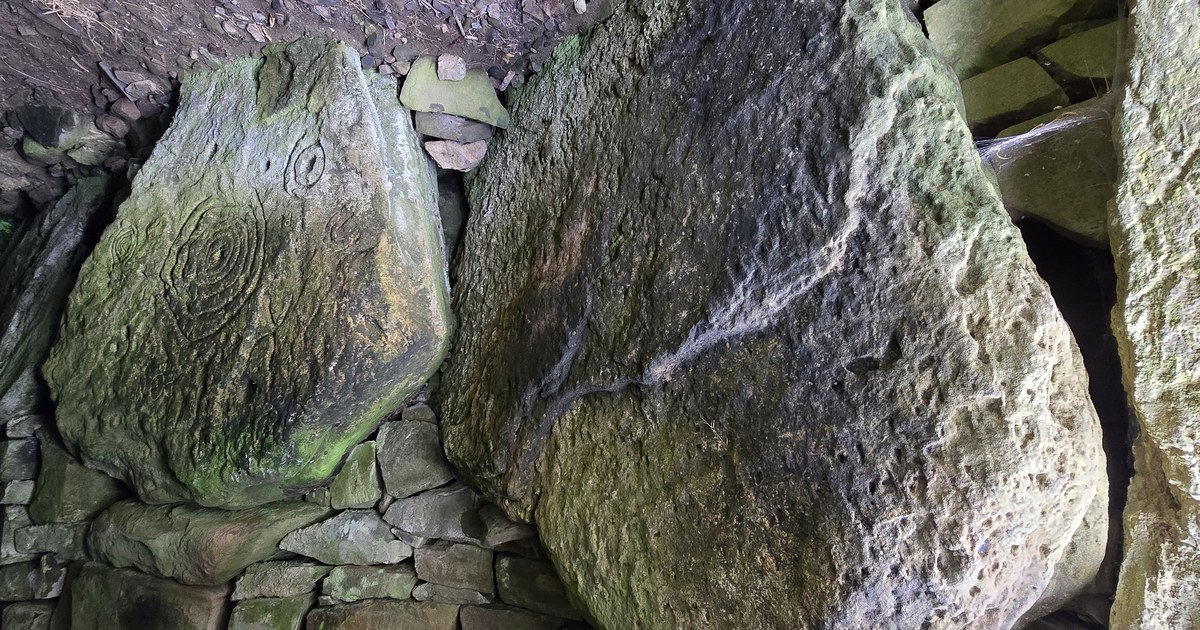
What Is the Dindshenchas?
The word comes from Old Irish. “Dind” means a notable place. “Senchas” means lore or tradition. Put them together and you get the story behind a place name.
The texts survive in medieval manuscripts, including the Book of Leinster from the twelfth century. There are two main versions. One is in verse and the other is in prose. Edward Gwynn edited the poems in five volumes in the early twentieth century.
Here is the key point. The stories are not science. The medieval writers often invented a person to explain a name. But they tell us how early Irish people saw their own land. Every hill had a person behind it. Every river had a story.
Boann and the River Boyne
The best-known tale is about a woman called Boann. Her husband Nechtan owned a sacred well. Hazel trees grew around it. Their nuts held all the wisdom in the world.
Only Nechtan and his cupbearers could go near the well. Boann went anyway. She walked around it the wrong way, against the sun. The water rose up in a rush. It struck her and took her arm, her leg and her eye.
She ran for the sea. The water chased her all the way. That flood became the river. The Boyne is named for her, from the old Irish form Bóand.
The tale ties in with the salmon of wisdom that ate the hazelnuts. If you know the Fionn stories, you will spot the link. Many of our legends share the same few roots.
Sinann and the River Shannon
The Shannon has a very similar tale. A woman named Sinann went to a hidden well under the sea. It was called Connla’s Well. She wanted its wisdom too.
The well rose up and swept her away. Her body washed up at the river mouth. The river carries her name still.
Two rivers. Two women. Two wells. The same warning in both: wisdom is dangerous, and it takes a price.
Tea and the Hill of Tara
Tara was the ritual heart of ancient Ireland. The Dindshenchas explains the name in a simple way. It says the hill was named for Tea, the wife of Éremón. In this tradition she was buried there, and the place became “Tea’s rampart”.
Modern scholars give other explanations. But the story shows what the writers cared about. Kings, queens and burial all gave a place its weight. When you walk the hill today, you walk through that layered memory.
Tara is also part of the wider story of how Ireland was settled. Our guide to the mythological invasions of Ireland shows where Éremón fits. And the three queens in Banba, Fódla and Ériu give Ireland its own names.
☘️ Enjoying this? 64,000 Ireland lovers get stories like this every week. Subscribe free →
Places Named for Women and Gods
The Dindshenchas is full of women who give their names to land. This is no accident. Early Irish tradition often saw the land itself as female.
Here are some more places the lore explains:
- Teltown, County Meath: named for Tailtiu, the foster-mother of Lugh. Read her story in Tailtiu and Teltown.
- Navan Fort, County Armagh: Emain Macha, the “twins of Macha”. See Macha and the race against the king’s horses.
- Hill of Ward, County Meath: Tlachtga, who gave birth to three sons there and died on the hill. It later became a place of Samhain fires.
- The Boyne and the Shannon: Boann and Sinann, as told above.
How Much of It Is True?
Be honest about this. The place-name tales are legend. Most modern name scholars trace Irish place names to ordinary Irish words. A name like “Kilkenny” means the church of Cainnech. It is not a story about a queen.
That does not make the lore worthless. It is a window into medieval minds. It tells us what people thought a place meant. Real history and folklore sit side by side here. Treat the tales as culture, not as fact.
Many of these figures belong to the same cast. The Tuatha Dé Danann and the sage in Fintan mac Bóchra appear again and again across the old texts.
How to Read the Place Names in Your Own Family Story
If your family came from Ireland, a place name may already sit in your records. A townland or parish name is a good start. You can look up what it means for free.
The Placenames Database of Ireland at logainm.ie is the official source. It gives the Irish form of a name and its meaning. Use it to separate the real roots from the old stories.
- Write down the place name exactly as your records spell it.
- Search for it on logainm.ie and note the Irish form.
- Check what the name means. It is often a simple word for a hill, ford or church.
- Then see whether the old lore has a tale for that place.
When you do this, a dry name on a certificate turns into a living place. That is exactly what the medieval poets wanted to do.
Frequently Asked Questions
What does Dindshenchas mean?
It means “the lore of places” in Old Irish. It is a body of poems and prose that explain how Irish places got their names.
Where can I read the Dindshenchas?
Edward Gwynn edited the verse version in five volumes in the early twentieth century. Many libraries hold it, and good translations are also online.
Are the stories historically true?
No. They are legends and medieval explanations. Most place names come from ordinary Irish words, not from the people in the tales.
Why are so many places named for women?
Early Irish tradition often linked the land and its rivers to goddesses and queens. The tales reflect that older way of seeing the landscape.
How do I find out what my ancestral townland name means?
Search the name on logainm.ie, the official Placenames Database of Ireland. It lists the Irish form and gives the likely meaning.
Can I visit the places in the stories?
Yes. The Hill of Tara, Teltown, Navan Fort and the Boyne valley are all in the east and north of Ireland. Check the official site of each one for access before you go.
Next time you cross a river in Ireland, ask yourself who it was named for. There may be a story. If you grew up with Irish place names in your family, the lore is part of your heritage too. It is a lasting link between you and the land your family came from.
☘️ Join 64,000+ Ireland Lovers
Every Friday, get Ireland’s lesser-known corners, local stories and secrets, straight to your inbox.
Subscribe free — enter your email:
📲 Know someone who’d love this? Share on WhatsApp →
Free forever · One email per week · Unsubscribe anytime
Tours & experiences you might love


Powered by Viator. Some links are affiliate links — we may earn a small commission at no extra cost to you.
Secure Your Dream Irish Experience Before It’s Gone!
Planning a trip to Ireland? Don’t let sold-out tours or packed attractions spoil your journey. Iconic experiences like visiting the Cliffs of Moher, exploring the Rock of Cashel, or enjoying a guided walk through Ireland’s ancient past often sell out quickly—especially during peak travel seasons.

Booking in advance guarantees your place and ensures you can fully immerse yourself in the rich culture and breathtaking scenery without stress or disappointment. You’ll also free up time to explore Ireland’s hidden gems and savour those authentic moments that make your trip truly special.
Make the most of your journey—start planning today and secure those must-do experiences before they’re gone!