

Banba, Fódla and Ériu are three sisters from Irish myth. Each one asked the first Irish poets to name the island after her. Ériu won, and her name became Éire, the Irish word for Ireland. It also gave us the English name “Ireland”. The other two names live on in poetry.
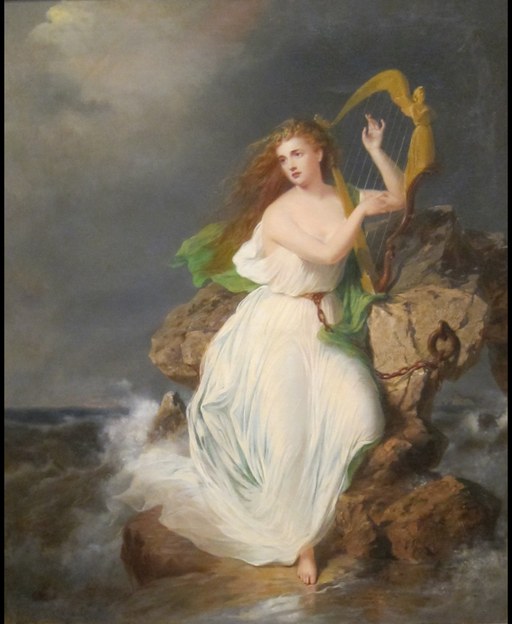
Most visitors know Ireland as the Emerald Isle. Fewer know it has a goddess for a name. The story is a medieval legend, not history. Yet it tells us how the Irish thought about the land under their feet.
Who Are Banba, Fódla and Ériu?
In Irish mythology, the three sisters belong to the Tuatha Dé Danann. That is the divine people of the old tales. Their parents are usually given as Delbáeth and Ernmas. Many tellings call them goddesses of sovereignty. That means the land itself is a woman, and a king must be right for her.
The sisters have husbands, but the tales do not agree on who they were. In one list, the husbands are three grandsons of the Dagda. In another, the three men are called Cetar, Etar and Detar. Old stories often exist in several versions. Medieval writers simply wrote them all down.
You can meet the wider family in our guide to the Tuatha Dé Danann and our profile of the Dagda.
The Poets Who Came Across the Sea
The Book of Invasions tells how six waves of people took Ireland. The last wave was the Milesians. They sailed from Spain, in the legend. Their poet and leader was Amergin. We tell the full story in our piece on the six mythological invasions of Ireland.
As the Milesians came ashore, they met the three sisters in turn. Each queen asked for one thing. She wanted the island to carry her name. The Milesians agreed. Banba and Fódla both got their wish, and so did Ériu.
But Ériu became the chief name. In Old Irish she is Ériu. In modern Irish it is Éire. That is the name on Irish coins, stamps and passports today.
Where Does the Name “Ireland” Come From?
The link between the goddess and the country is real in language. Scholars trace Ériu to an old form that may mean “land of abundance”. Greek and Roman writers heard that name and shaped it into Iernē and Hibernia. The English word “Ireland” joins Ériu with the Germanic word “land”.
So the goddess and the country share one name. That is why the myth has lasted. It is a story about a word every Irish family still says. For more on how place names work, read our guide to what all 32 Irish county names mean.
☘️ Enjoying this? 64,000 Ireland lovers get stories like this every week. Subscribe free →
Banba and Fódla: The Names That Stayed Poetic
Banba and Fódla never became everyday names. Yet poets kept them alive. Writers still use Banba and Fódla as poetic names for Ireland. English poets once did the same with Albion for Britain.
Fódla may come from an Old Irish word, fót, meaning land or sod. Medieval writers also gave it a fanciful meaning, tied to a grave. The old texts love word-play like this. They give every place name a story.
The Irish diaspora kept the sisters close too. Irish-American writers often called Ireland “Erin”. That is the English form of Ériu’s name. A pub, a society or a ballad called “Erin” is, in a small way, a nod to the goddess.
A Land Fed by a Foster-Father
One odd tale comes from the Dindshenchas. That is a medieval collection of place-name lore. It says Ériu had a foster-father called Codal. He fed her on a peak named Benn Codail. As she grew, the land swelled up towards the sky. The tale says it might have kept rising until the sun scorched her.
It is a strange picture. The goddess and the land are the same thing. When she is fed, the hills grow. The monks who wrote it down were describing an Ireland that felt alive.
Three Sisters, Three Faces of the Land
Scholars have offered several ideas for what the trio means. Here are the main ones:
- Sovereignty. A king was said to “marry” the land. The goddess stood for the right to rule.
- A shared name. The tale explains why Ireland has more than one old name.
- Older goddesses, new labels. The writer Geoffrey Keating, in the 1600s, said the three were really the Badb, Macha and the Morrígan. You can read more in our guide to the Morrígan.
- A bridge to the Church. Christian monks kept the old goddesses by turning them into figures of history.
If you like the older side of Irish tradition, you may also enjoy the tales of Manannán mac Lir and Lugh. For another story about the first people on the island, try Cesair and the Flood.
Where to Feel the Legend Today
You do not need a special site to feel this story. The whole island is the goddess in the old tales. Still, a few places make good starting points.
- The Slieve Mish Mountains, County Kerry. In the legend, this is where Banba met the Milesians. The range rises above Tralee Bay on the Dingle Peninsula. It is a fine place for a walk, on a clear day.
- Any Irish coast. Stand on a beach at dusk and say the word “Éire” out loud. You are saying the goddess’s name.
- Your local library or heritage centre. Many hold copies of the Book of Invasions in translation.
Mountain weather changes fast, so check the forecast and wear sturdy boots before you set out.
A Name You Carry
Families in Boston, Chicago and Sydney have said “Erin go bragh” for generations. Few knew they were calling on a goddess. Next time you hear it, you will.
That is the quiet charm of Irish myth. It sits inside everyday words. Ireland is not just a place on a map. In the old stories, she is a woman who asked to be remembered, and the name she won is still the island’s name today.
Frequently Asked Questions
Who are Banba, Fódla and Ériu?
They are three sister goddesses of the Tuatha Dé Danann in Irish myth. Each is a goddess of sovereignty tied to the land of Ireland.
Why is Ireland named after Ériu?
In the legend, each sister asked the Milesians to name the island after her. Ériu’s name became the main one. The Irish word Éire comes from it.
What does Ériu mean?
Scholars link it to an old word that may mean “fertile land” or “land of abundance”. The Greek and Latin forms Iernē and Hibernia come from the same root.
Are Banba and Fódla still used as names for Ireland?
Yes, but only in poetry and song. Writers use them as poetic names for the island, much like Albion for Britain.
Is the story of the three goddesses true?
No. It is a medieval legend from texts such as the Book of Invasions. It shows how early Irish writers explained the names of their land.
☘️ Join 64,000+ Ireland Lovers
Every Friday, get Ireland’s lesser-known corners, local stories and secrets, straight to your inbox.
Subscribe free — enter your email:
Already subscribed? Download your free Ireland guide (PDF)
📲 Know someone who’d love this? Share on WhatsApp →
Free forever · One email per week · Unsubscribe anytime
Tours & experiences you might love


Powered by Viator. Some links are affiliate links — we may earn a small commission at no extra cost to you.
Secure Your Dream Irish Experience Before It’s Gone!
Planning a trip to Ireland? Don’t let sold-out tours or packed attractions spoil your journey. Iconic experiences like visiting the Cliffs of Moher, exploring the Rock of Cashel, or enjoying a guided walk through Ireland’s ancient past often sell out quickly—especially during peak travel seasons.

Booking in advance guarantees your place and ensures you can fully immerse yourself in the rich culture and breathtaking scenery without stress or disappointment. You’ll also free up time to explore Ireland’s hidden gems and savour those authentic moments that make your trip truly special.
Make the most of your journey—start planning today and secure those must-do experiences before they’re gone!