

Before you visit Ireland, you carry a picture of it in your head. Green hills, warm pubs, a farmer waving from a stone wall, a dramatic coastline with no one else on it. When you arrive, some of that is real. A fair amount of it is not quite right. This article looks honestly at the gap — what most people imagine, and what they actually find when they get here.
Join thousands of Ireland lovers getting weekly guides, heritage stories, and travel inspiration straight to their inbox.
Subscribe to the Love to Visit Ireland newsletter →
The Ireland Most People Picture Before They Visit
The idea of Ireland that travels furthest is built from a handful of images. Rolling green hills. Thatched cottages. Red-haired locals. A dramatic coastline with no one else on it. A pub full of music and laughter.
These images are not invented. They exist. But they are not the whole picture, and they are often the exception rather than the rule.
Much of Ireland looks like any other European country. You will drive through retail parks and housing estates. You will pass through towns with the same chain restaurants you have at home. The motorway from Dublin to Cork is efficient and unremarkable. Limerick and Waterford are working cities, not film sets.
That is not a criticism. It is useful to know before you go. The Ireland of the postcards is real, but it requires some effort to reach. It is rarely right outside the airport. The west coast — Clare, Galway, Mayo, Kerry, Donegal — is where the landscape that lives in people’s imaginations is most reliably found. Plan your route with that in mind.
The Weather: Steady Your Expectations
Most people know Ireland is wet. They still seem surprised by how wet it can be.
June, July and August are the driest months, but that does not mean dry. A week in Ireland in summer will almost always include rain — often more than once a day. The west coast, where most of the dramatic scenery is, gets the worst of it. County Clare, Galway and Kerry face the Atlantic directly. They earn their green.
Pack a proper waterproof. Not a light shower jacket — a waterproof with a sealed hood. This single piece of kit will make a larger difference to your trip than any amount of detailed planning.
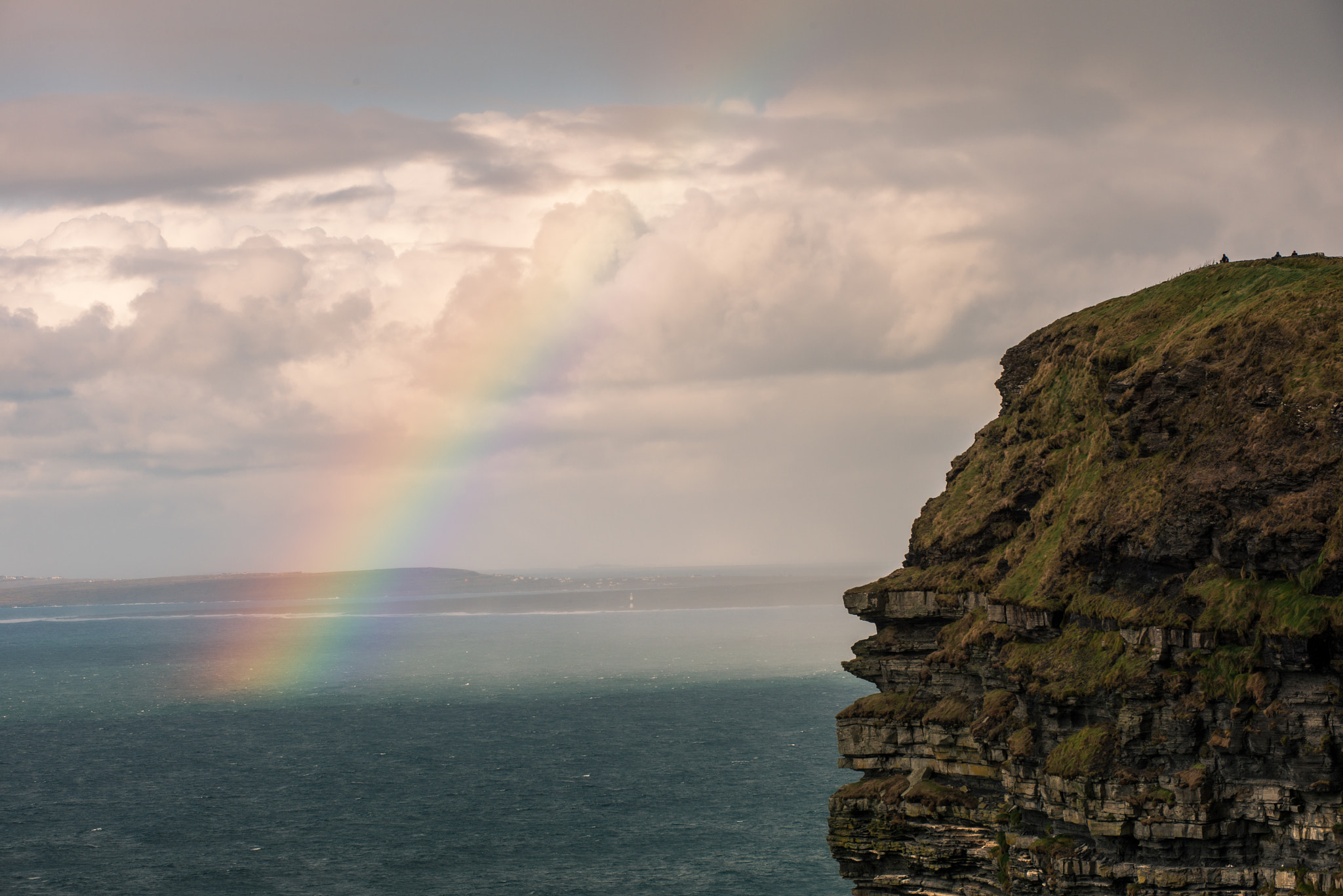
The upside: Irish light when the sun does come out is remarkable. The greens are intense in a way that genuinely surprises people who have not seen them. Rain followed by sun produces rainbows with a frequency that makes you understand why Irish mythology spent so much time on them. The weather changes fast, and that is part of what makes the landscape feel so alive.
The Crowds at Famous Landmarks
The Cliffs of Moher are extraordinary. They are also very busy in summer. The car park fills by mid-morning on clear days. The main viewing area has fences, ticket machines and a visitor centre. This is all sensible and necessary — the cliffs are dangerous and over a million people visit each year — but it is not the lone clifftop moment that people imagine.
This pattern repeats at many of Ireland’s most famous sites. The Rock of Cashel is a genuine highlight, but you will share it with coach tours. The Giant’s Causeway in Northern Ireland is spectacular, but also heavily visited and commercially managed. Newgrange in the Boyne Valley releases its limited chamber-access tickets around a month ahead in peak season, and they sell out within hours — book the moment they go on sale rather than waiting.
The solution is not to skip these places. They are famous for good reason. The solution is to go early — as early as possible — and to look at what surrounds them, not just at the main attraction. A short walk past the primary viewing platform at the Cliffs of Moher takes you somewhere much quieter and equally impressive. Kerry’s lesser-known Loher Fort sits above Waterville with almost no visitors most days, yet it is Iron Age stone construction of the same quality as sites that attract thousands.
What Actually Surpasses Expectations
This is where most first-time visitors get a pleasant surprise.
The people. The reputation for friendliness is not exaggerated. Conversations start easily. Directions come with stories attached. A question about a restaurant recommendation can turn into a twenty-minute chat. If you have Irish ancestry, people take a genuine interest in you and your family’s history. It is not performance — it is how people actually are.
The food. Ireland’s food scene has changed completely in the last fifteen years. Dublin, Galway, Cork and Killarney all have excellent restaurants. Local ingredients — beef, lamb, seafood, dairy — are of a very high standard. The standard pub meal is now far better than it was a decade ago. You will not struggle to eat well.
The small roads. The N and M roads get you places efficiently. The R roads — the regional routes — are where Ireland actually lives. These roads wind past fields, through small villages, alongside rivers and lakes. They are slow, sometimes alarmingly narrow, and worth every minute. Hire a car if you can. This is not a country that reveals itself from a coach window or a train.
The silence. Parts of Ireland are genuinely quiet in a way that is increasingly rare in Europe. The Burren in County Clare, the Beara Peninsula in Cork, the hills of Donegal — these are places where you can walk for an hour and see almost no one. That experience still exists in Ireland if you go looking for it.
Ready to go deeper into what Ireland really has to offer? Join our weekly newsletter for local knowledge, seasonal guides and stories you will not find in a guidebook.
Subscribe free to Love to Visit Ireland →
The Size of the Country
Ireland is smaller than most visitors expect. The island is roughly 500km from north to south. Dublin to Galway is about two and a half hours by car on a good day. Dublin to Cork is less than three hours.
This means you do not need to choose between regions in the way you might for a larger country. A week gives you enough time to see significant parts of the west coast, visit a few historic sites and spend time in one or two cities.
The catch is that distances look shorter on a map than they feel on the road. The coastal and mountain routes are beautiful but slow. The Atlantic Drive around Achill Island, or the R572 through the Beara Peninsula — all of these routes reward patience. Two hours for fifty kilometres on a scenic road is not unusual. Build in more time than you think you need.
The Republic and Northern Ireland Are Different Countries
This catches some visitors off guard. Northern Ireland is part of the United Kingdom. You cross a border when you drive from Donegal to Derry, or from Armagh to Monaghan. There are no passport controls on the road, but you do enter a different jurisdiction. The currency changes from euro to pound sterling. Speed limits switch from kilometres to miles per hour.
For most tourists this has minimal practical impact. But it is worth knowing, particularly for budgeting and for mobile data charges if you are travelling from outside Europe.
Belfast is worth a visit. It is a different city from Dublin — more compact, with a strong industrial history, excellent museums and the Titanic Quarter, which is one of the best-executed heritage visitor experiences in these islands. The political murals in the Falls Road and Shankill areas are sobering, visually striking and contextualised by knowledgeable taxi drivers who run tours focused on the area’s history.
What to Expect From an Irish Pub
The pub is central to Irish social life. That part of the image is accurate. But the experience varies enormously depending on where you go.
A tourist pub in Dublin’s Temple Bar on a Saturday night is loud, expensive, and tells you very little about how Irish people actually use pubs. A pub in a village on a Tuesday evening is quiet, has a handful of regulars, and may have live traditional music that starts without announcement and costs nothing extra.
Seek out the second type. Ask the person at your guesthouse where the locals actually drink. The best pub experiences in Ireland happen away from the places that appear first in search results. Doolin in Clare, Dingle in Kerry and Westport in Mayo all have pubs worth going out of your way for — but even within those towns, the busiest spot on the main street is rarely the best one.
Guinness is better in Ireland. That part of the cliché is broadly true, though it has more to do with freshness and turnover than anything mystical about the water.
The Honest Summary
Ireland will not match the image in your head precisely. No place does. The tourist infrastructure is more developed than the films suggest. The weather is more persistent. The famous spots are busier than people imagine.
But the things that make Ireland genuinely different — the landscape on the back roads, the ease of conversation, the quality of the food, the depth of the history — those things are real and they hold up. Most people who come expecting too much of the cliché still leave planning to come back. That is probably the most honest thing you can say about the place.
Get the insider knowledge before your next trip to Ireland — heritage walks, hidden villages, seasonal festivals and practical guides, delivered every week.
Subscribe to our free Ireland newsletter →
Tours & experiences you might love


Powered by Viator. Some links are affiliate links — we may earn a small commission at no extra cost to you.
Secure Your Dream Irish Experience Before It’s Gone!
Planning a trip to Ireland? Don’t let sold-out tours or packed attractions spoil your journey. Iconic experiences like visiting the Cliffs of Moher, exploring the Rock of Cashel, or enjoying a guided walk through Ireland’s ancient past often sell out quickly—especially during peak travel seasons.

Booking in advance guarantees your place and ensures you can fully immerse yourself in the rich culture and breathtaking scenery without stress or disappointment. You’ll also free up time to explore Ireland’s hidden gems and savour those authentic moments that make your trip truly special.
Make the most of your journey—start planning today and secure those must-do experiences before they’re gone!