

These are ten of the best waterfalls in Ireland to visit, picked because each has a clear way in: a short walk from a car park, a roadside view, or a signed trail. For every one we give the walk time, what it costs, and a link to the official page, which is where to check opening times before you set off. Heights are approximate, and flow varies a lot, so the best time to see any of them is after a spell of rain.
We have left out waterfalls with no public access and those that dry up in summer. Northern Ireland’s Glenariff Forest Park falls are worth a separate trip.
Quick guide to the waterfalls
| Waterfall | County | Why go | Key fact |
|---|---|---|---|
| Torc Waterfall | Kerry | Easiest to reach, set in Killarney National Park | About 20 m; short walk, free |
| Glencar Waterfall | Leitrim | Quick roadside stop with a Yeats link | About 15 m; 200 m walk, free |
| Glenmacnass Waterfall | Wicklow | Seen from the road on the Military Road | About 80 m; no hike, free |
| Assaranca Waterfall | Donegal | Visible from the roadside car park | No walk needed; free |
| Powerscourt Waterfall | Wicklow | Often called Ireland’s highest | 121 m; paid entry |
| Aasleagh Falls | Mayo | Wide ledge with summer salmon | A few metres high; free |
| Mahon Falls | Waterford | Corrie setting in the Comeraghs | About 80 m; 40-minute walk |
| Astelleen Burn Waterfall | Donegal | Remote cascade in Glenveagh | About 3 km walk; free park entry |
| Gleninchaquin Waterfall | Kerry | Private glen on the Beara | Paid entry; 1-hour Farm Walk |
| Clare Glens Waterfall | Limerick / Tipperary | Wooded gorge near Limerick | 2 km or 4 km loops |
1. Torc Waterfall, Killarney, County Kerry
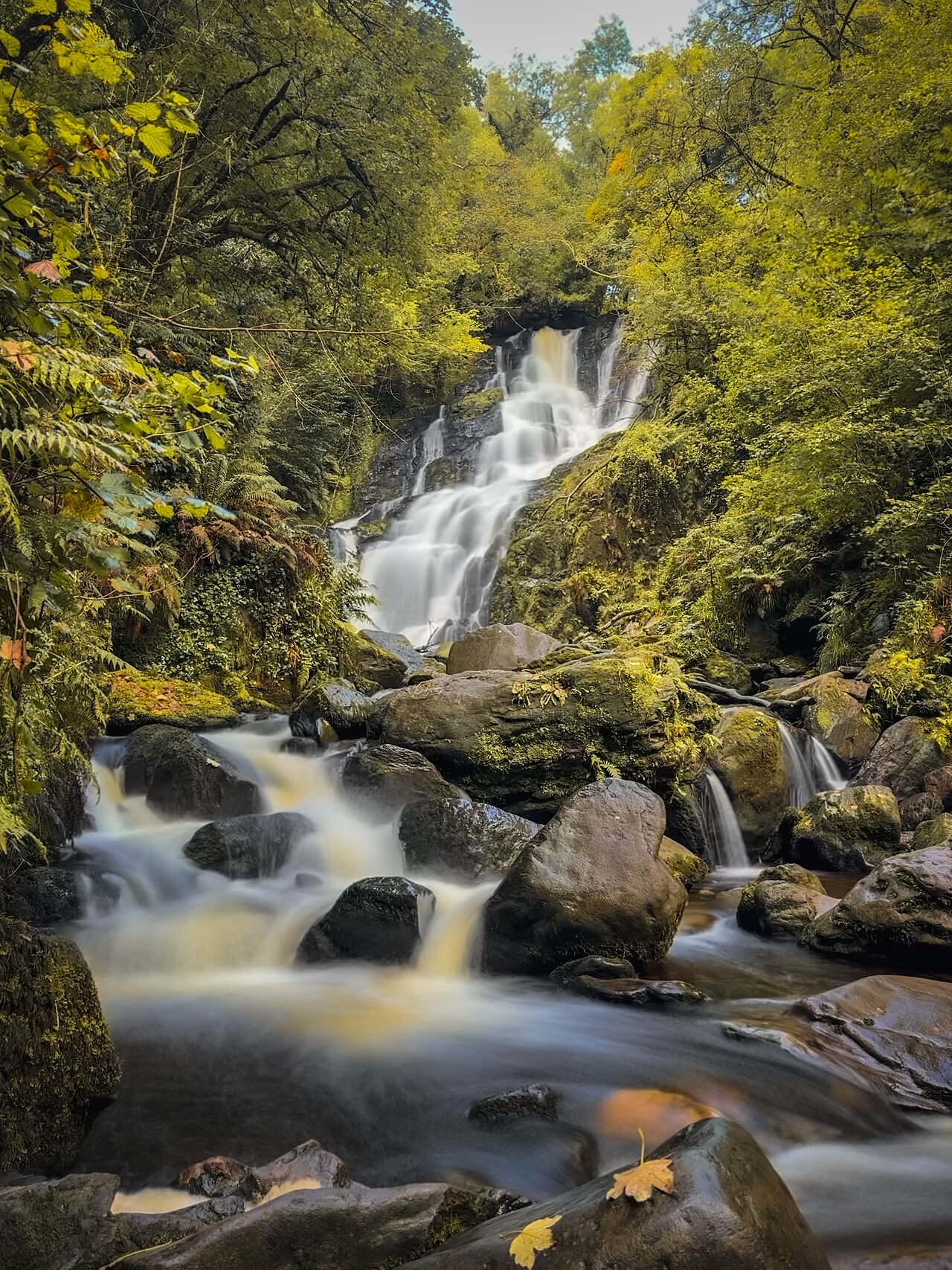
Torc drops about 20 metres over a series of rock steps in oak and yew woodland inside Killarney National Park. It is the easiest waterfall on this list to reach, so it is also the busiest. Go early, or after rain when the flow is strongest.
Know before you go
- Walk: a few minutes from the car park on the N71 (about 200–300 metres), on a surfaced path with steps to the upper viewpoints.
- Cost: entry to Killarney National Park is free. The car park is small and fills up in summer.
- Longer option: the Torc Mountain loop starts at the Old Kenmare Road car park and takes roughly 2–2.5 hours.
More: Killarney National Park (official) · our Kerry guide
2. Glencar Waterfall, County Leitrim
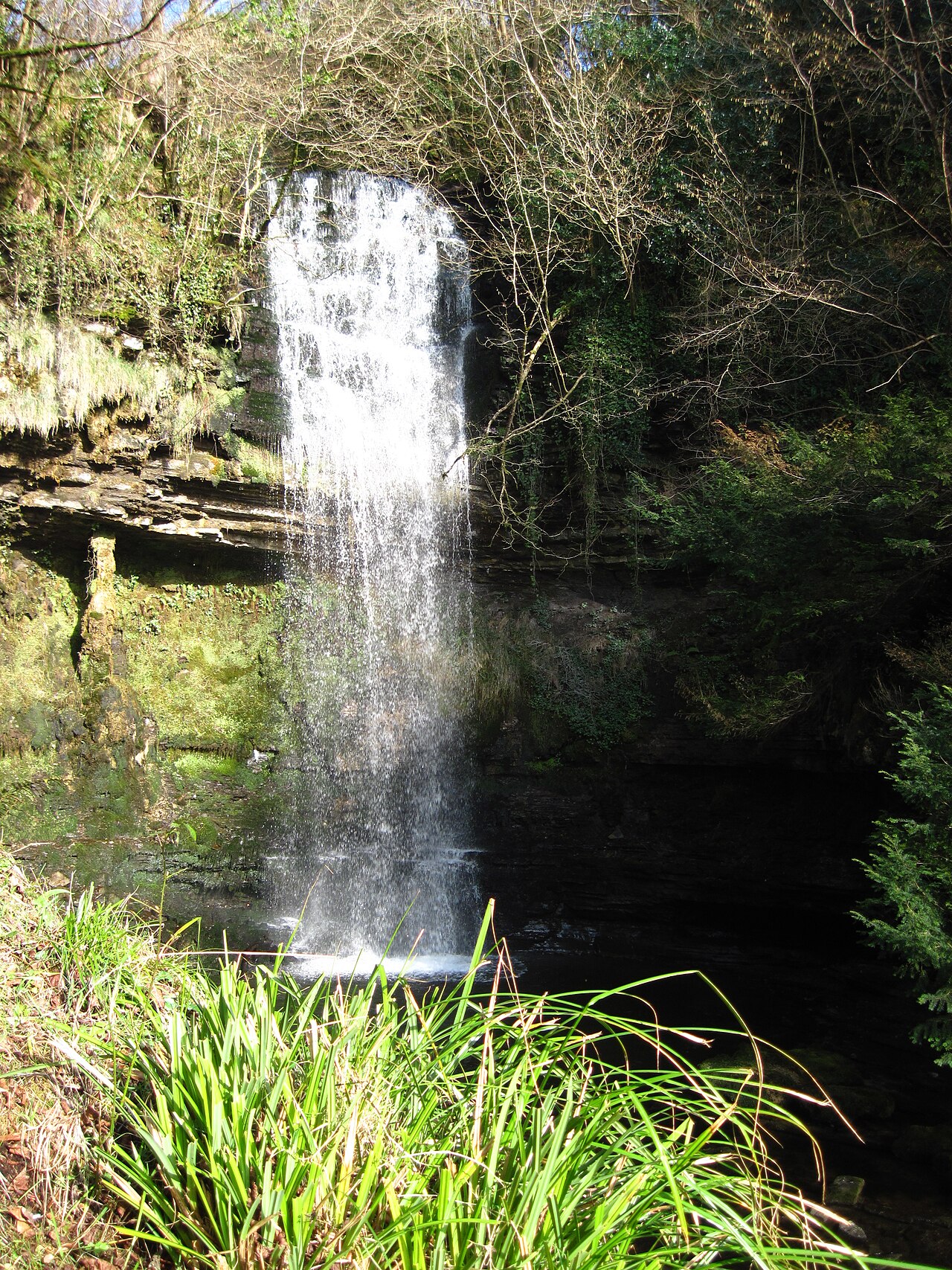
A single fall of around 15 metres drops over a mossy rock lip into a wooded glen on the Leitrim–Sligo border. Yeats named the glen in The Stolen Child, and the waterfall sits beside the road above Glencar Lough, so it works as a quick stop on a drive.
Know before you go
- Walk: about 200 metres from the car park on a hard-surfaced path.
- Cost: free entry and parking. Picnic area, public toilets, playground and a tourist information point on site.
- Best after rain, when the flow is full.
More: Leitrim Tourism (official) · our Leitrim guide
3. Glenmacnass Waterfall, County Wicklow
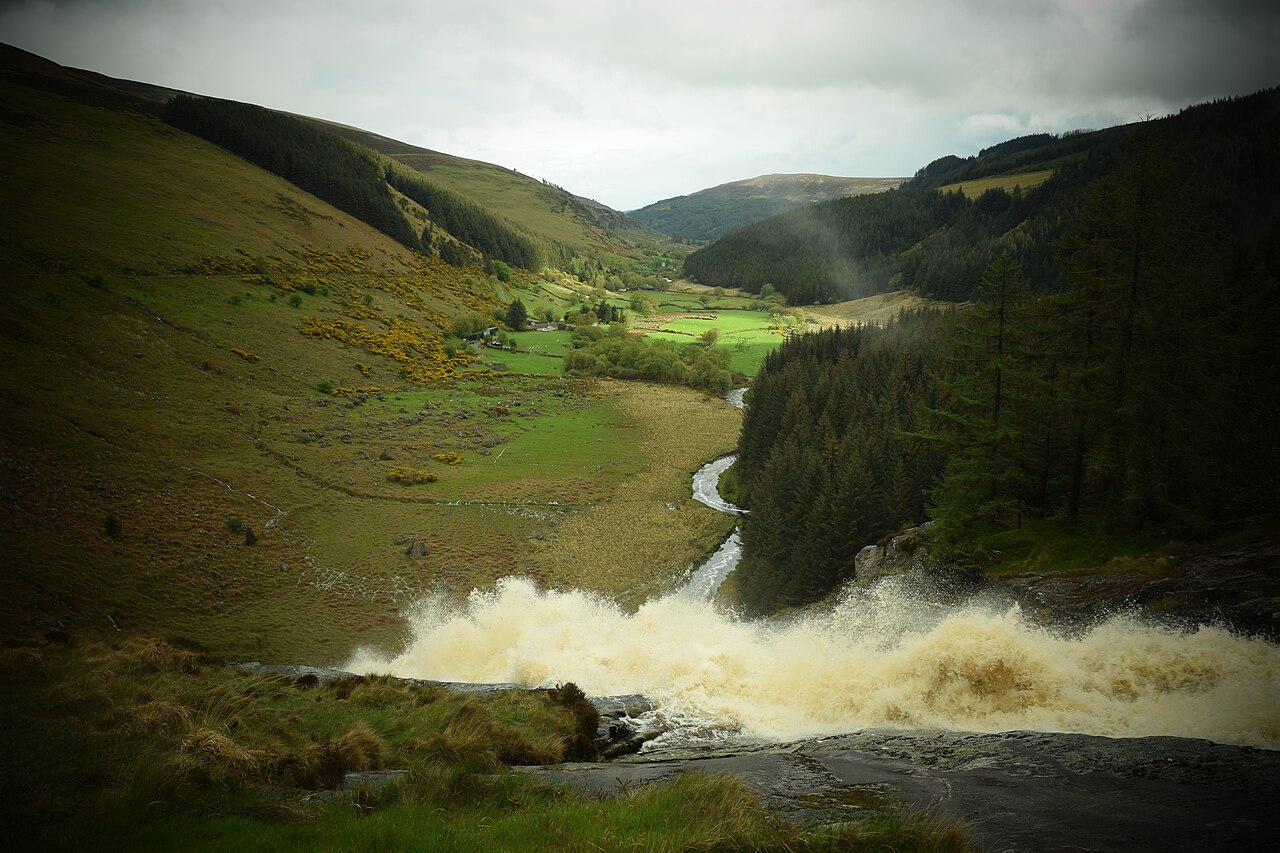
The Glenmacnass River tumbles about 80 metres in a series of drops down the side of the glen, in open heather and bog country on the Military Road above Laragh. You see the whole fall from the road, so it needs no hiking at all.
Know before you go
- Getting there: on the Military Road (R115) between Laragh and the Sally Gap. A car park sits above the falls, with a short walk to the best viewpoint.
- Cost: free.
- Safety: the rock beside the fall is steep and wet. Stay on the viewing paths.
More: Wicklow Mountains National Park (official) · our Glenmacnass guide
4. Assaranca Waterfall, near Ardara, County Donegal
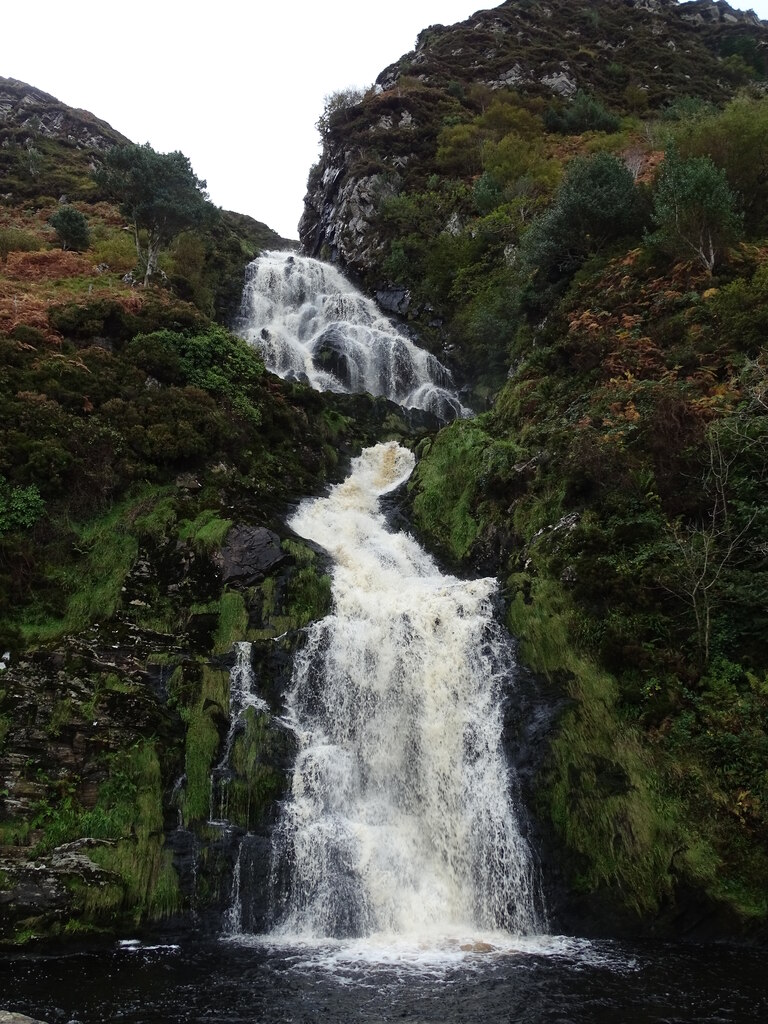
Assaranca (Eas a’ Ranca) falls down a rocky gully beside the road near Maghera, west of Ardara, and you can see it straight from the roadside car park. It looks best after heavy rain, when the stream thickens and the whole gully turns white. Published heights vary widely, so treat any figure with caution.
Know before you go
- Walk: none needed to see it. The roadside car park has a direct view.
- Cost: free entry and parking. Spaces are limited in summer, so never block the road.
- Combine it with: Maghera beach and the caves nearby, and the drive through the Glengesh Pass.
More: Go Visit Donegal (official) · our Assaranca guide
5. Powerscourt Waterfall, Enniskerry, County Wicklow
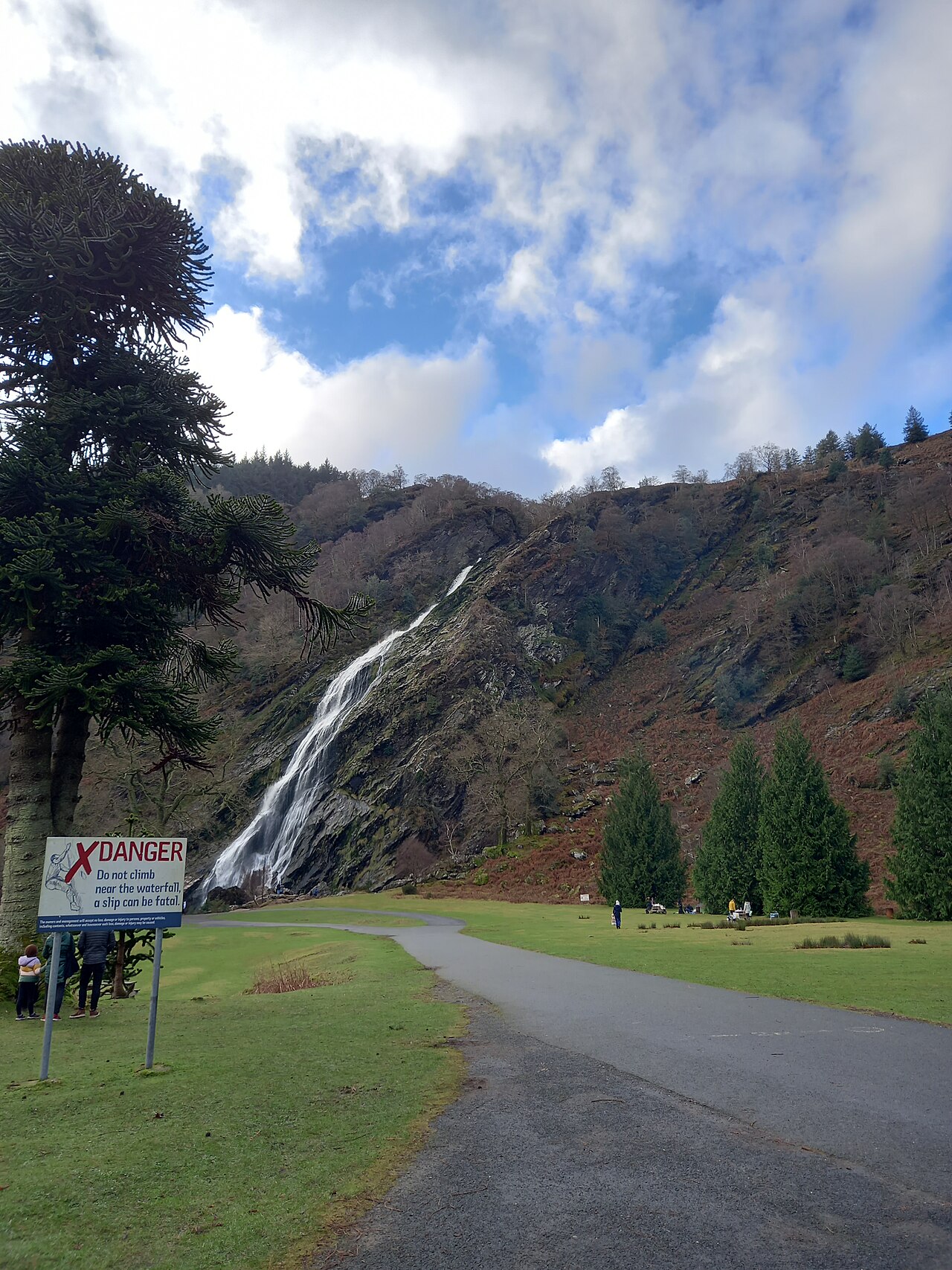
At 121 metres, Powerscourt is usually described as the highest waterfall in Ireland, though the measurement is debated. It sits within the Powerscourt Estate near Enniskerry.
Know before you go
- Getting there: signposted from Enniskerry. The waterfall has its own entrance, separate from Powerscourt Gardens.
- Cost: paid entry, with seasonal opening hours and winter closures. Check the current price and hours on the Powerscourt website before you go.
- Best after rain, when the flow is at its fullest.
More: Powerscourt Estate (official) · our Wicklow guide
6. Aasleagh Falls, County Mayo
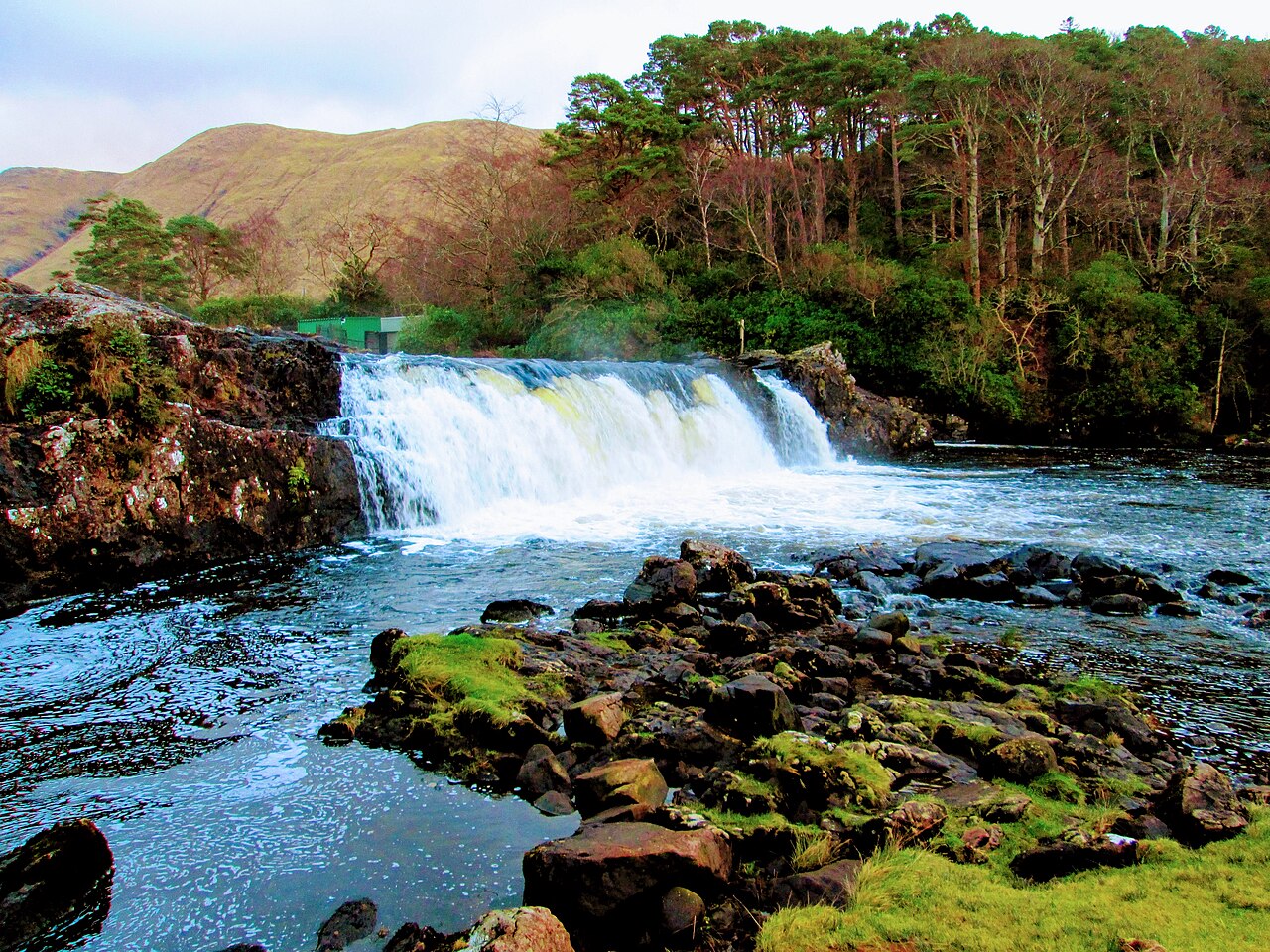
Aasleagh is wide rather than tall: the Erriff River spreads across a broad rock ledge, a drop of only a few metres, just before it reaches Killary Harbour. Its draw is the setting and, in summer, salmon leaping the ledge on their way upstream.
Know before you go
- Walk: a few steps from the roadside. There are parking areas on both sides of the R335 near the bridge, but no footpath between the bridge and the main parking, so take care on the road.
- Cost: free.
- Salmon season: sightings are most likely in the summer run, from roughly June to September, and depend on water levels.
More: Mayo.ie (official) · our walking guide
7. Mahon Falls, County Waterford
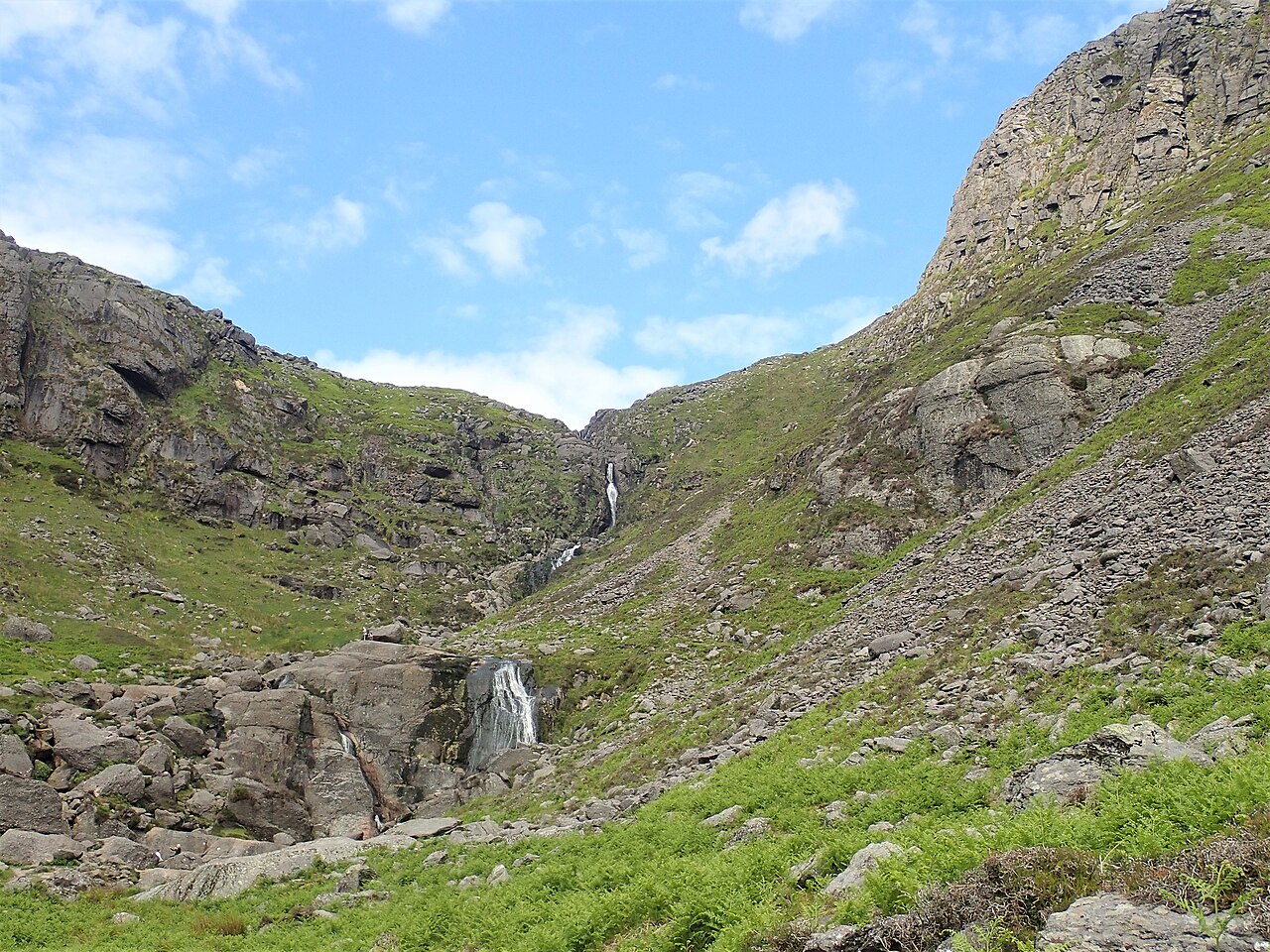
Mahon Falls pours about 80 metres down the back wall of a glacial corrie in the Comeragh Mountains. Several separate drops add up to that figure. The walk in is short, and the corrie itself is the real spectacle.
Know before you go
- Walk: 2.5 km return, about 40 minutes, on a gravel path. Visit Waterford calls it an easy family walk.
- Getting there: leave the N25 at Mahon Bridge and follow the Comeragh Drive signs for about 1 km to the Mahon Falls car park (GPS 52.22379, -7.54121).
- Bring: sturdy shoes and rain gear. Weather changes quickly on the mountain.
More: Visit Waterford (official)
8. Astelleen Burn Waterfall, Glenveagh National Park, County Donegal
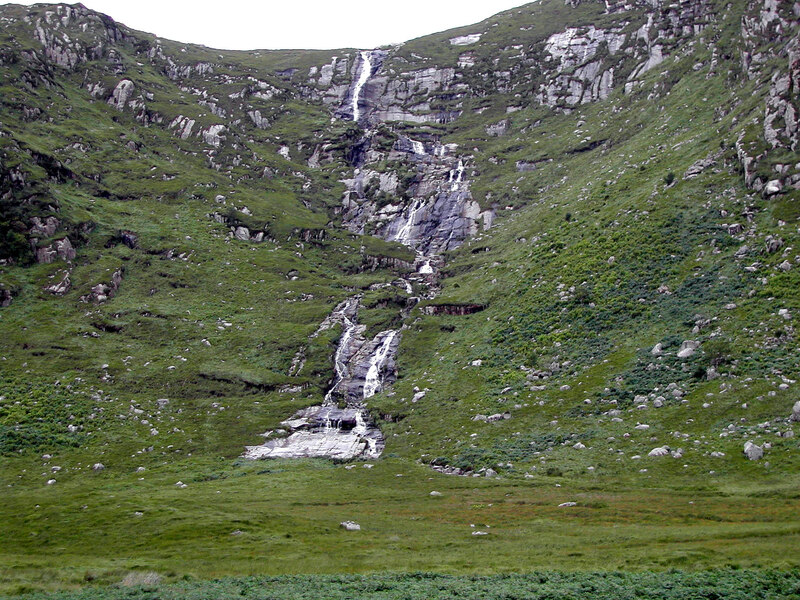
Glenveagh’s best-known waterfall is Astelleen Burn, a thin cascade that you see from a distance. You walk the lakeside trail past the castle gardens and through the Mullangore woods to reach it. You can’t get right up to the fall; a bench gives a distant view.
Know before you go
- Walk: about 3 km along the Lough Beagh trail beyond the castle gardens. The track is rocky and bumpy, though buggies and bicycles can use it.
- Cost: park entry is free and the park is open all year. Free parking. Dogs are allowed on a lead.
- Take care: wear sturdy shoes and watch for ticks in the long grass by the river.
More: Glenveagh National Park (official) · our Glenveagh guide
9. Gleninchaquin Waterfall, County Kerry
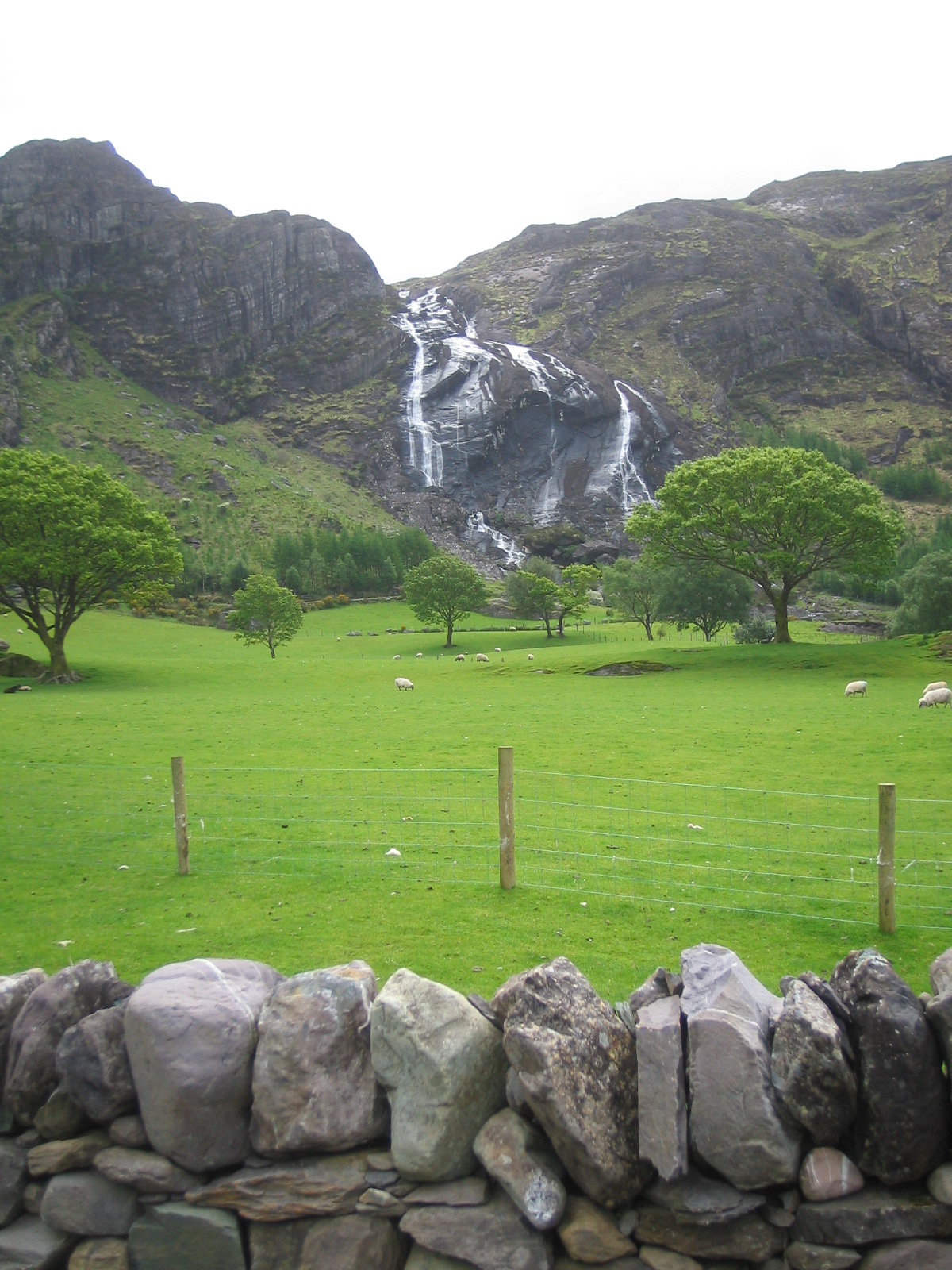
Gleninchaquin Park is a privately run glen on the Kerry side of the Beara Peninsula, with a tall fall dropping from the cliffs above a glacial valley. Several waymarked trails start at the car park, and the Farm Walk is a one-hour loop.
Know before you go
- Getting there: from Kenmare, follow the R571 west for about 12 km, turn left at the signpost, then follow a narrow road for about 8 km.
- Cost: paid entry to the private park. Visitor guides say it is usually closed in winter, so check current prices and opening months on the park’s website first.
- Bring: waterproofs and good boots if you plan to go beyond the Farm Walk.
More: Gleninchaquin Park (official) · our Kerry guide
10. Clare Glens Waterfall, Limerick–Tipperary border
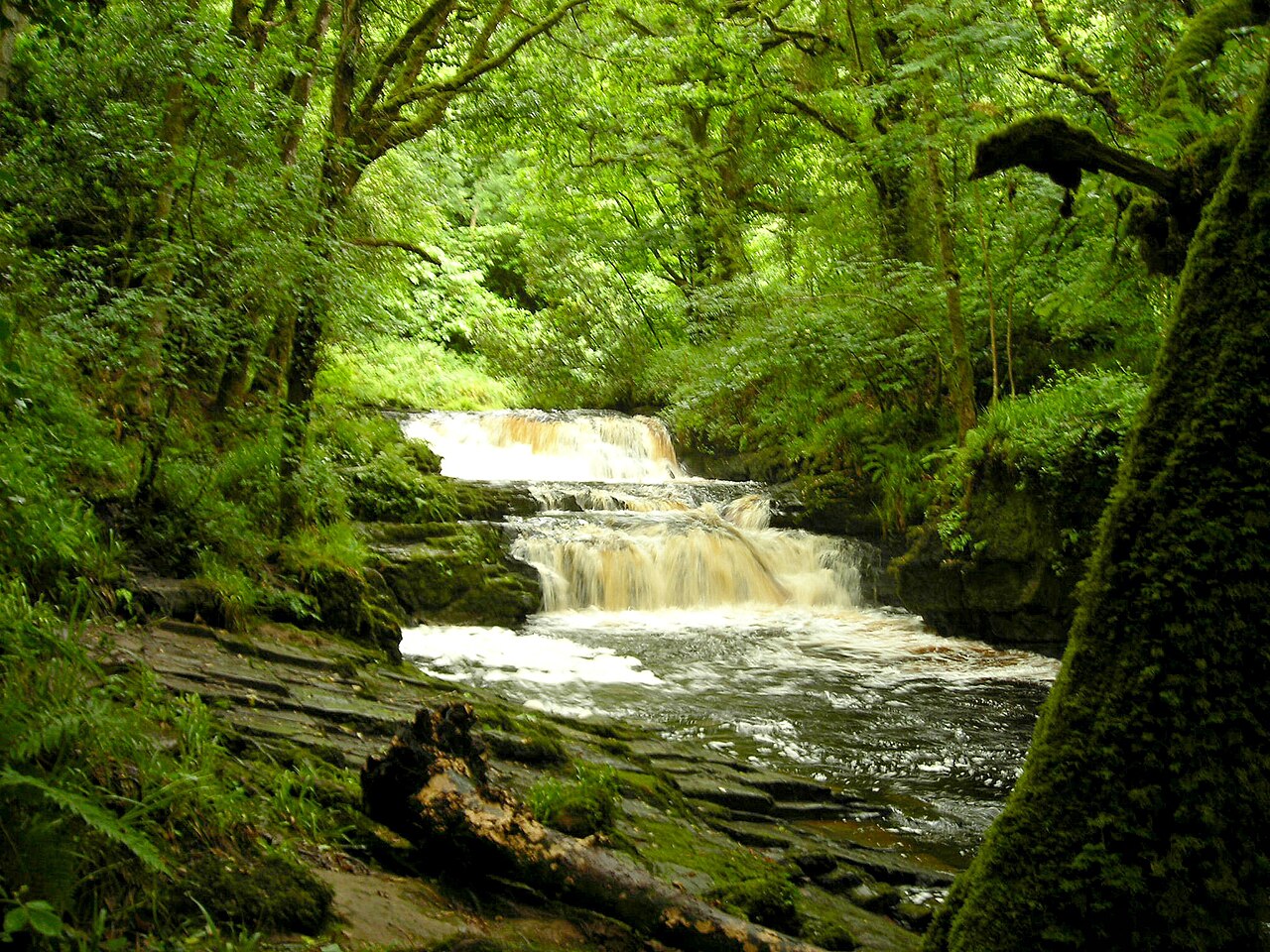
The Clare River tumbles over a series of rock steps through a wooded gorge on the Limerick–Tipperary border, close to Murroe. It is a lesser-known alternative to the Wicklow and Kerry classics and is only about a 15-minute drive from Limerick city.
Know before you go
- Walk: the Nature Loop is 2 km (30–60 minutes). The longer Clare Glens Loop is 4 km (1–1.5 hours), with some strenuous sections.
- Parking: a car park near the bridge and playground, busy on fine weekends. Listings conflict on whether there is a charge, so check on arrival.
- Safety: the water is fast and the rocks are slippery. Avoid swimming.
More: Limerick.ie trail page (official)
When to go and staying safe
Waterfalls run strongest after rain, so winter and wet spells give the biggest flow, but paths are also muddier and some private sites close. Summer can leave the high mountain falls, such as Mahon and Astelleen Burn, little more than a trickle. Wear footwear with grip, keep to marked paths and viewing areas, and never climb on wet rock beside a fall. Several of these sites have limited parking, so go early on fine weekends.
Which waterfall is your favourite?
Which waterfall would you add to this list? Tell us in the comments.
Frequently Asked Questions
What is the highest waterfall in Ireland?
Powerscourt Waterfall in County Wicklow, at 121 metres, is usually described as the highest in Ireland. It has its own entrance within the Powerscourt Estate near Enniskerry, and entry is paid.
Which Irish waterfall can you see without walking?
Assaranca in Donegal can be seen from its roadside car park, and Glenmacnass in Wicklow is visible from the Military Road. Glencar in Leitrim is about 200 metres from its car park on a hard-surfaced path.
Is Torc Waterfall worth visiting in Killarney?
Yes. It is a few minutes’ walk from the car park on the N71, entry to Killarney National Park is free, and the fall is about 20 metres high in oak and yew woodland. It is busy in summer, so go early.
Many of Ireland’s most dramatic waterfalls flow through counties — Donegal, Wicklow, Kerry — that sent hundreds of thousands of families abroad during the 19th century. If you have Irish roots, the landscapes in this article may be the same ones your ancestors walked. Our free Irish Ancestral Heritage Guide helps you trace your specific county line, with emigration records, townland maps, and passenger lists. Discover your Irish county roots — free.
☘️ Join 64,000+ Ireland Lovers
Every weekday morning, get Ireland’s hidden gems, local secrets, and travel inspiration — the kind you won’t find in any guidebook.
Subscribe free — enter your email:
📲 Know someone who’d love this? Share on WhatsApp →
Free forever · Unsubscribe anytime
Tours & experiences you might love


Powered by Viator. Some links are affiliate links — we may earn a small commission at no extra cost to you.
Secure Your Dream Irish Experience Before It’s Gone!
Planning a trip to Ireland? Don’t let sold-out tours or packed attractions spoil your journey. Iconic experiences like visiting the Cliffs of Moher, exploring the Rock of Cashel, or enjoying a guided walk through Ireland’s ancient past often sell out quickly—especially during peak travel seasons.

Booking in advance guarantees your place and ensures you can fully immerse yourself in the rich culture and breathtaking scenery without stress or disappointment. You’ll also free up time to explore Ireland’s hidden gems and savour those authentic moments that make your trip truly special.
Make the most of your journey—start planning today and secure those must-do experiences before they’re gone!