

One Irish county is named after a god. County Louth, in Irish Lú, comes from Lug, a pre-Christian Celtic god. The name probably began with a mound or a standing stone where Lugh was remembered. Every one of Ireland's thirty-two counties has a name like that, with a story inside it. Many began as the name of a single town, and the county took it over later.
Prefer to watch? The video above covers everything on this page. Published 23 October 2026 · 8 min 3 s (8:03).
Subscribe to Love Ireland on YouTube for a new plain-English guide to Ireland every week.
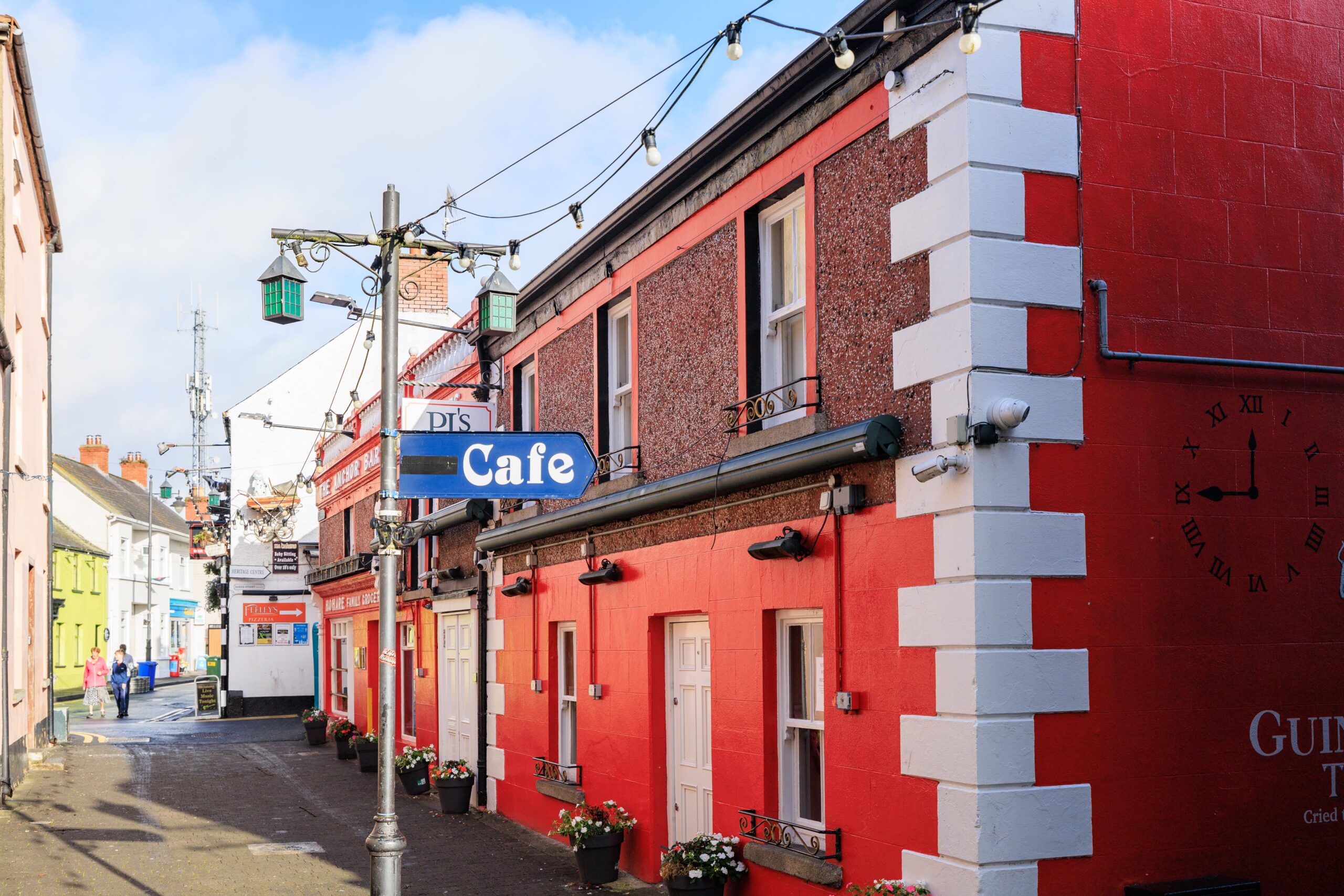
Forts
Start with the forts. Donegal is Dún na nGall, the fort of the foreigners. Gall means a foreigner, though the same word can also mean a standing stone. Down, An Dún, is simply the fort: the old ring-fort round which Downpatrick grew. The name Downpatrick, Dún Pádraig, does not appear until the seventeenth century; before that, the town was just Down. Longford, An Longfort, is from longphort, a camp or a temporary stronghold, the same word the old annals use for the camps of the foreigners.
Churches and a ford
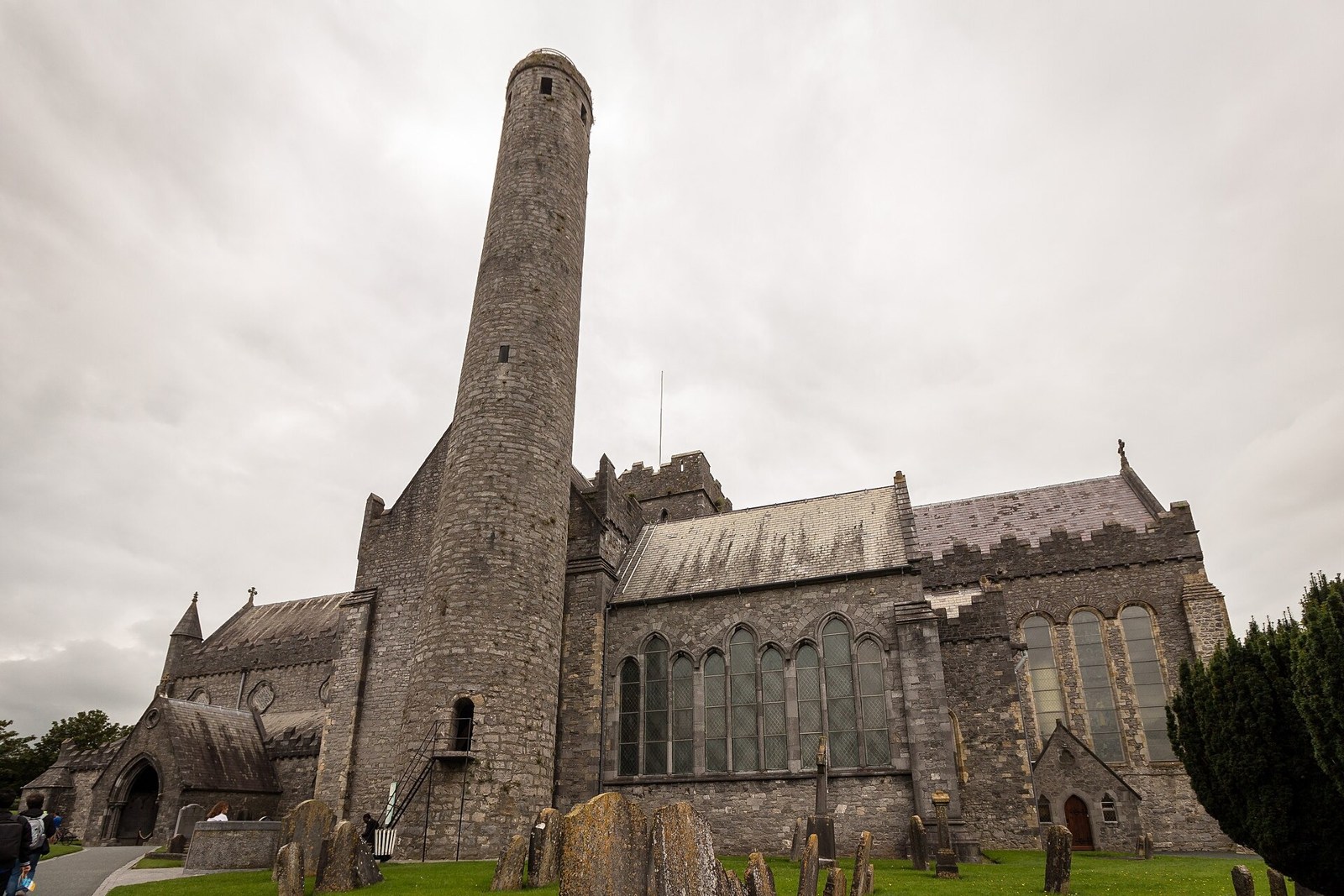
Then the churches. The Irish word is cill, and it is the Kil in dozens of Irish place names. Kildare is Cill Dara, the church of the oak. Kilkenny is Cill Chainnigh, Canice's church, although the cathedral that carries his name says there is no evidence he founded a church there himself. And Wicklow's Irish name is Cill Mhantáin, the church of Mantán. Dublin has two names with two meanings. Baile Átha Cliath means the town of the hurdle ford: a crossing on the river made of woven wattles. The English name comes from Duibhlinn, the black pool, and old Irish poems also call the place Dún Duibhlinne, the fort of the black pool.
People and a goddess
Some counties carry the names of people. Kerry is Ciarraí, named after the descendants of the tribe of Ciar. Fermanagh, Fear Manach, is named from a people, the Fir Manach, who are said to have come north from Leinster. Tyrone is Tír Eoghain, Eoghan's land. Tír means land or territory, one of the common words in Irish place names. Roscommon, Ros Comáin, is Comán's wood. Derry, Doire, is an oak-wood: first Calgach's oak-wood, later the oak-wood of Saint Colm Cille. In sixteen thirteen the planters, the London Companies, renamed it Londonderry, for their link with the City of London. And Armagh, Ard Mhacha, is the height of Macha: a word for pasture, and in the old stories, the name of a goddess. The same Macha is in Eamhain Mhacha, Navan Fort, the ancient capital of Ulster.
The land itself
Most of the rest describe the land. Cork, Corcaigh, is a marsh. Sligo, Sligeach, is the place of shells. Leitrim, Liatroim, is the grey ridge. Mayo, Maigh Eo, is the plain of the yew. Monaghan, Muineachán, is the place of thickets. Cavan, An Cabhán, is a hollow, although the same word can mean the opposite, a round hill. Clare, An Clár, is either a plank bridge or a plain: the word means both, and the records do not say which. Meath, An Mhí, means the middle. The original Meath was bigger: it took in Westmeath, Longford and part of Offaly. Westmeath is the west of it. Tipperary, Tiobraid Árann, is the well of Ára. And Antrim, Aontroim, began as a single house, an early monastery, and was later understood as a single ridge. The monastery's round tower still stands; locally it is the Steeple.
The Vikings
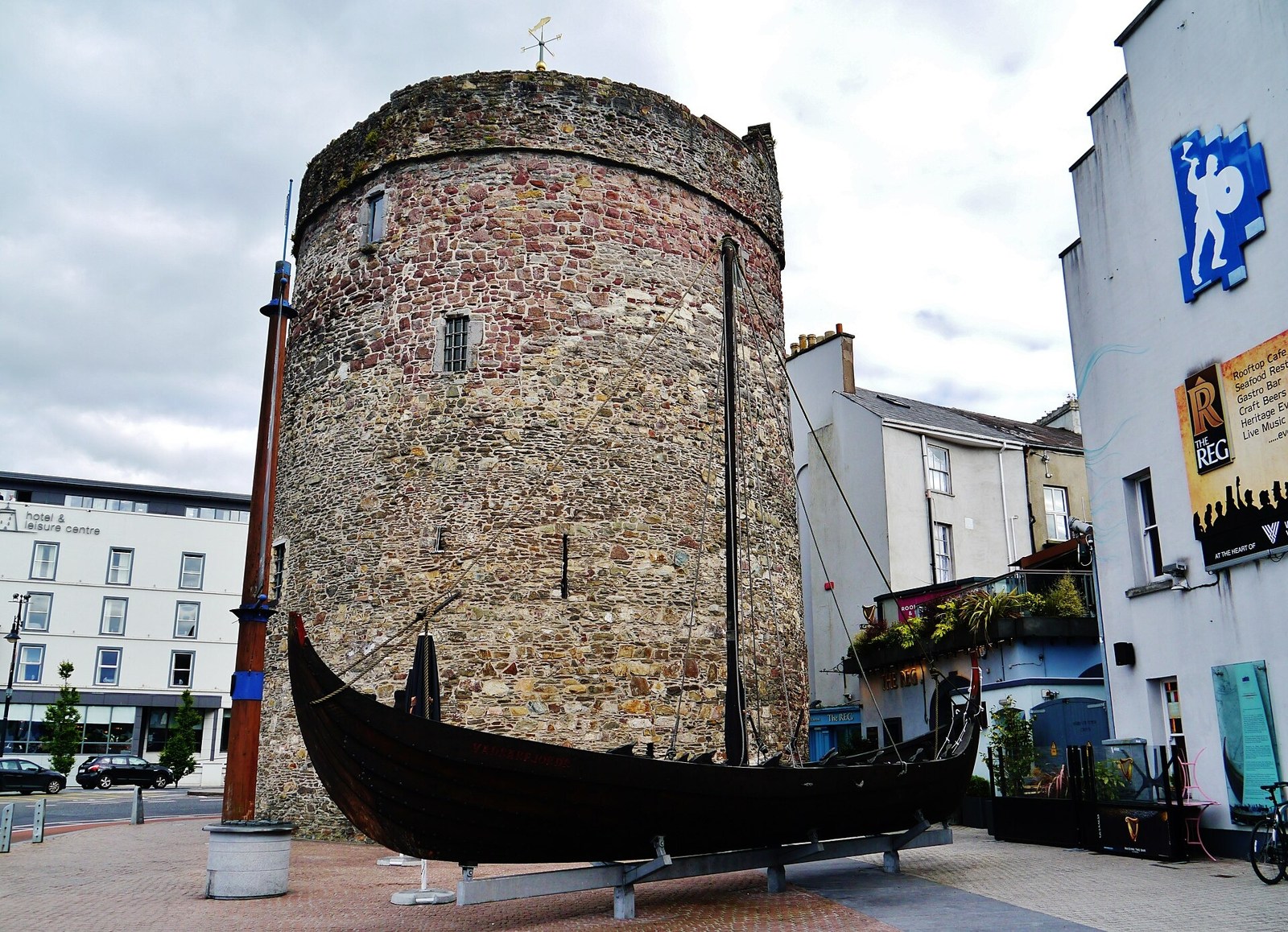
Three counties on the east and south coast have English names that are probably not English at all, but Norse. A fjord, in Old Norse, is an inlet from the sea. Wexford comes from a Norse fjord name: either the inlet of the waterlogged island, or a broad shallow bay. The experts give both. In Irish it is Loch Garman, and loch can mean either a lake or an inlet of the sea. Waterford was the Vikings' Veðrafjǫrðr. As early as eight eighty-eight, the Norse of Waterford and Wexford were defeated by the Irish. Its Irish name is Port Láirge. And Wicklow's English name is thought to be Norse too, beside its Irish church of Mantán. Viking bases like these grew into Ireland's first towns.
King's County and Queen's County
Two counties had their names changed. In fifteen fifty-six, in the reign of Philip and Mary, an act of the Irish parliament dealt with the counties of Leix and Offaly. For centuries after that they were King's County, named for Philip, Mary Tudor's husband, and Queen's County. The first census of the new Irish state, in nineteen twenty-six, lists them as Offaly County, formerly known as King's County, and Laoighise County, formerly known as Queen's County. Offaly, in Irish Uíbh Fhailí, means the descendants of Failge. What Failge meant, nobody knows. Offaly is commonly pronounced like the English word awfully, though that is not how it sounds in Irish. And Laois, the old Queen's County, went back to the name of old Leix: Laois comes from Loígis, the people said to descend from Lugaid Laígne.
The honest unknowns
And three names come with a question mark. Galway, Gaillimh: we could not find a meaning that the experts agree on. Limerick, Luimneach: the Placenames Database simply says, meaning unclear. One old scholar said a bare spot of land; the dictionary suggests cloaked, or shielded. Some say it first named the Shannon estuary. And Carlow, Ceatharlach, is the story you may have heard: four lakes. John O'Donovan heard it from Irish speakers in Kilkenny in the eighteen-thirties, and even the man who popularised it noted there is no lake there now. The database says it is, in all probability, the place of cattle, or herds.
All 32 counties, A to Z
| County | Irish name | Meaning |
|---|---|---|
| Antrim | Aontroim | a single house, then a single ridge |
| Armagh | Ard Mhacha | the height of Macha |
| Carlow | Ceatharlach | a place of cattle (not four lakes) |
| Cavan | An Cabhán | a hollow (or a round hill) |
| Clare | An Clár | a plank bridge, or a plain |
| Cork | Corcaigh | a marsh |
| Derry | Doire | an oak-wood |
| Donegal | Dún na nGall | the fort of the foreigners |
| Down | An Dún | the fort |
| Dublin | Baile Átha Cliath | the town of the hurdle ford |
| Fermanagh | Fear Manach | the Fir Manach, a people |
| Galway | Gaillimh | no agreed meaning |
| Kerry | Ciarraí | the people of Ciar |
| Kildare | Cill Dara | the church of the oak |
| Kilkenny | Cill Chainnigh | Canice's church |
| Laois | Laois | from Loígis, the people of Lugaid Laígne |
| Leitrim | Liatroim | the grey ridge |
| Limerick | Luimneach | meaning unclear |
| Longford | An Longfort | a camp, a stronghold |
| Louth | Lú | from Lug, a Celtic god |
| Mayo | Maigh Eo | the plain of the yew |
| Meath | An Mhí | the middle |
| Monaghan | Muineachán | the place of thickets |
| Offaly | Uíbh Fhailí | the descendants of Failge |
| Roscommon | Ros Comáin | Comán's wood |
| Sligo | Sligeach | the place of shells |
| Tipperary | Tiobraid Árann | the well of Ára |
| Tyrone | Tír Eoghain | Eoghan's land |
| Waterford | Port Láirge | Norse: Veðrafjǫrðr |
| Westmeath | An Iarmhí | Westmeath: the west of Meath |
| Wexford | Loch Garman | Norse: an inlet, or a broad shallow bay |
| Wicklow | Cill Mhantáin | the church of Mantán |
The Irish spellings are the validated forms in the Placenames Database of Ireland (logainm.ie).
Sources
- Irish names and meanings: the Placenames Database of Ireland (logainm.ie), Fiontar & Scoil na Gaeilge, DCU, with the Department of Culture
- The six northern counties: the Northern Ireland Place-Name Project, Queen's University Belfast
- Word meanings: eDIL, the electronic Dictionary of the Irish Language (Royal Irish Academy)
- Kerry: Kerry County Council
- Wexford's Norse name: Wexford County Council (Trinity Wharf EIAR, chapter 14) and the Heritage Council (Wexford Town Walls Conservation Plan)
- Waterford's Norse name: Waterford Treasures
- Viking towns: the National Museum of Ireland and the Royal Irish Academy (Irish Historic Towns Atlas)
- Kilkenny: St Canice's Cathedral
- The 1556 acts: the Irish Statute Book
- King's County and Queen's County: Central Statistics Office, Census of Population 1926, Volume 1
Checked against each source on 15 October 2026.
Subscribe to Love Ireland on YouTube for a new plain-English guide to Ireland every week.
Tours & experiences you might love


Powered by Viator. Some links are affiliate links — we may earn a small commission at no extra cost to you.
Secure Your Dream Irish Experience Before It’s Gone!
Planning a trip to Ireland? Don’t let sold-out tours or packed attractions spoil your journey. Iconic experiences like visiting the Cliffs of Moher, exploring the Rock of Cashel, or enjoying a guided walk through Ireland’s ancient past often sell out quickly—especially during peak travel seasons.

Booking in advance guarantees your place and ensures you can fully immerse yourself in the rich culture and breathtaking scenery without stress or disappointment. You’ll also free up time to explore Ireland’s hidden gems and savour those authentic moments that make your trip truly special.
Make the most of your journey—start planning today and secure those must-do experiences before they’re gone!