

In rural Irish kitchens — going back hundreds of years and well into the early 20th century — there was one stone that nobody ever moved. Not for cleaning. Not when the chimney was repointed. Not when the family rebuilt the house around it. The hearth stone, the large flat slab set directly in front of the open fire, was placed first when a new home was built. Everything else — walls, rafters, roof — came after. And once set, it stayed until the house itself fell. In Irish tradition, the hearth stone was not furniture. It was the soul of the home.
The Stone Laid Before the Walls Went Up
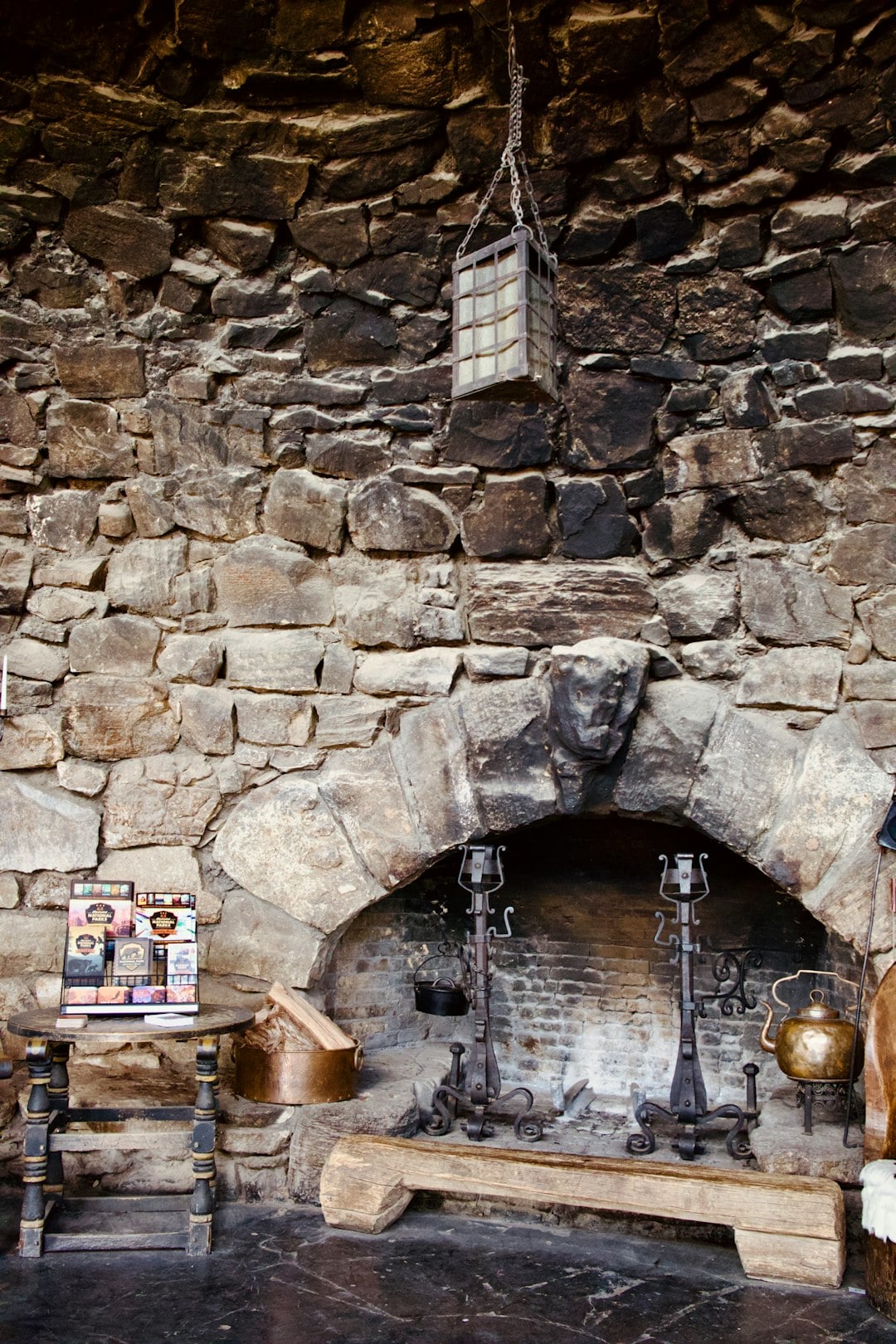
The hearth stone — sometimes called the leac tineadh (fire stone) in Irish — was typically a wide, flat piece of local limestone or sandstone, set flush with the kitchen floor directly in front of the open fireplace. In most rural Irish cottages built between the 16th and 19th centuries, this stone was the first permanent element placed in the home. Builders observed the tradition as a matter of course: the hearth stone went down before the first course of wall stone was laid.
This was not purely practical. In Irish folk belief, the hearth stone marked the exact centre of household life. Everything in the kitchen — the table, the settle bed, the dresser — was arranged in relation to it. Children sat on it to warm themselves in the morning. The elderly sat closest to it in the evenings. The dead were laid out on the kitchen floor near it before burial. The hearth stone witnessed every important event in the life of an Irish family, from birth to marriage to the last breath of the oldest member of the household.
In County Clare, County Mayo, and across Connacht particularly, the tradition held that the hearth stone could never be disturbed without the direct permission of the bean a’ tí — the woman of the house. In practise, that permission was almost never given. Moving the stone was considered an act that broke the continuity of the home’s luck. You did not do it lightly. You did not do it at all.
Why the Hearth Fire Was Sacred
Irish reverence for the home fire stretches back long before Christianity. The Celts believed fire was a living gift — not a tool people owned but a presence they were privileged to host. When a fire was lit for the first time in a new home, it was an occasion of genuine spiritual weight, something close to a blessing or a christening.
The Irish Folklore Commission, which collected more than 70,000 pages of oral testimony between 1935 and 1971 from rural communities across Ireland, recorded dozens of rituals centred on the hearth fire. Many had their roots in pre-Christian practice. In accounts from County Galway, County Donegal, and County Kerry, collectors found families who still performed fire-related rituals on St Brigid’s Day — 1st February — that scholars traced back 1,500 years or more to the Celtic feast of Imbolc.
Brigid — whose Christian cult absorbed an older pagan goddess of the same name — was the patron of the hearth flame. On her feast day, women in rural Irish homes performed the smaladh: a careful ritual banking of the night fire in her honour. The fire was never allowed to die on Brigid’s night. In an uninsulated stone cottage in the west of Ireland in February — where Atlantic winds dropped temperatures to near 0°C and the walls ran with condensation — letting the fire die was not merely bad luck. It could mean a cold death for the elderly and the very young. The ritual gave spiritual form to practical necessity.
The Bean a’ Tí: More Than a Housekeeper
The bean a’ tí — literally “woman of the house” in Irish — held authority over the fire that went well beyond domestic duty. In the social structure of rural Ireland, she occupied a role closer to a household custodian than a servant. She decided when the fire was lit, when it was banked for the night, and when it was fed. She determined who sat closest to the warmth. She maintained the leac tineadh — scrubbing it clean, ensuring it was never used carelessly as a step or a work surface.
Accounts from the Irish Folklore Commission describe women speaking of the hearth fire as something they were “responsible for to God.” One account from County Galway records a woman who, when her husband sold a plot of land without her agreement, refused to light the fire for a week. The action required no explanation. Everyone in the townland understood: the fire and everything it represented belonged to her. The stone beneath it answered to no one else.
If you want to understand the world those accounts describe, the best preparation is a visit to our full Ireland planning guide, which covers heritage sites and folk museums where these traditions are still preserved in living form.
☘️ Enjoying this? 64,000+ Ireland lovers get stories like this every week.
Thinking about it seriously?
If you’ve started actually planning a move, our complete the full Move to Ireland guide walks through every step, every cost, and the paperwork that catches most people out.
Subscribe free →
What Happened When the Fire Went Out
A fire that died by accident was a serious matter. In Irish folklore, a cold hearth was an opening — a gap in the household’s defences through which the aos sí, the fairy folk, might enter. In some accounts from the west of Ireland, a household where the fire went out unexpectedly was considered vulnerable to fairy interference for up to three days afterward.
The practical response was equally telling. You did not simply strike a match and relight. You went to a neighbour’s house and asked — carefully and indirectly, never bluntly — for a live coal, a griosach, to restart the flame. Bringing it home, you lit your fire from your neighbour’s. By doing so, you maintained the continuity of the fire itself: the flame in your kitchen was, in a meaningful sense, part of an unbroken chain stretching back through your neighbour’s hearth to generations before.
In Irish-speaking areas, asking directly for the coal was considered impolite — almost presumptuous. You commented on the cold. You admired your neighbour’s fire. They understood without being asked. This exchange bound households together through mutual obligation that had nothing to do with money and everything to do with winter survival. The leac tineadh that witnessed the relighting was the same stone that had witnessed every relighting before it.
The Smooring Ritual: Putting the Fire to Sleep
Every night before the household slept, the fire was smoored — a word from the Scottish Gaelic smaladh, meaning to bank or cover. The embers were raked together, covered with ash to slow their burning, and arranged so the fire would survive until morning. Most rural Irish families performed this act every single evening of their lives.
In its formal version, particularly in the accounts collected by Scottish folklorist Alexander Carmichael in the 1860s and in parallel Irish records from Donegal, the smooring included a spoken blessing. The woman of the house would rake the embers into a circle representing the Trinity, place a piece of peat at the centre, and speak words asking the fire to burn safely through the night. In County Donegal versions recorded by the Folklore Commission, the blessing invoked both St Brigid and the household’s own ancestors — the dead who had sat on this same hearth stone before them.
The hearth stone absorbed every one of these rituals. It held the warmth of five, six, seven generations of fires. You can read about the remarkable effort made to preserve traditions like this in the article the year 100,000 Irish schoolchildren were sent to record their grandparents’ stories — perhaps the most extraordinary folklore project in modern European history.
What Families Carried When They Left
When an Irish family left a house — moving to a larger farm, being evicted, or emigrating to America — one of the most widely documented customs was carrying a live coal or ember from the old hearth to the new one. This appears in accounts from at least six counties and in letters sent home from emigrants in the 19th century.
The coal was wrapped in cloth or carried in a small pot and brought by the bean a’ tí herself, often the first item she carried over the threshold of the new home. The new fire was lit from the old one. The household’s hearth — its luck, its continuity, its ancestral presence — was transferred rather than abandoned. The stone could not come. The fire could.
For the estimated 1 million or more Irish people who emigrated during the Famine years of 1845 to 1852, this was impossible in any literal sense — they crossed an ocean, not a field. But the emotional register of those early letters home reflects something of the same tradition. There is a recurring quality to how Irish emigrants in America describe lighting their first fire in a new country: grief for the stone they left behind, pride in the flame they managed to carry.
You can trace those emigration routes today. The article on ancient Irish laws and customs gives context for the legal and social framework that shaped life around the hearth, including who owned the fire and what it meant when a household dissolved.
Where the Hearth Stone Tradition Survives Today
The open-hearth Irish kitchen is largely gone from daily life. Central heating and modern construction have ended the physical reality of the tradition. But its emotional weight has not entirely disappeared.
St Brigid’s Day on 1st February became a public holiday in Ireland for the first time in 2023 — the first new public holiday in decades — partly in recognition that something important had been quietly maintained in the folk memory even when it appeared to have been erased. The fire traditions associated with Brigid were among the most persistent in the Folklore Commission’s records, surviving in rural Connacht and Donegal well into the 1960s.
In Connemara and parts of County Donegal, a small number of restored traditional farmhouses and folk museums have preserved original hearth stones in situ — exactly where they were laid, sometimes more than two centuries ago. Standing beside one of them, on the same flagstone that a family tended through ice winters and Famine years and the emigration of half their children, is a different kind of history from anything a museum display case can offer.
If you are visiting Ireland to understand where your family came from, or simply to stand in places that hold a very long memory, the hearth stone is one of the most direct connections available. It did not go anywhere. It was never moved. And in the handful of old cottages where it still survives in its original setting, it still holds the warmth of every fire that was ever lit on it.
What is the Irish word for hearth stone?
The Irish word most often used for the hearth stone is leac tineadh — meaning “fire stone” or “fire slab.” In different dialects, especially in Connacht and Munster, related terms including cloch tineadh (fire rock) also appear in the Irish Folklore Commission’s records. The word tine (fire) is one of the oldest words in the Irish language, appearing in texts dating back to the 7th century.
Why was it bad luck to move the hearth stone in Ireland?
In Irish folk tradition, the hearth stone was considered the seat of the household’s luck and the point through which the family’s ancestors remained connected to the home. Moving it was believed to break that connection — inviting misfortune, disturbing the dead, and opening the house to unwanted supernatural attention. The tradition had deep roots in pre-Christian belief, in which fire was regarded as a living presence that required care and respect rather than a simple tool to be managed.
Where can you see traditional Irish hearth stones today?
Preserved traditional hearth stones can be found in restored cottages at several folk museums across Ireland. The Ulster Folk Museum near Belfast preserves full traditional farmhouse interiors including original hearth arrangements. In the west of Ireland, heritage centres in County Clare, Connemara, and County Donegal maintain traditional cottages where original hearth stones remain in their original positions. Many are accessible to visitors and offer guided interpretation of the fire traditions associated with them.
📲 Know someone who’d love this? Share on WhatsApp →
Love more? Join 43,000 Scotland lovers → · Join 29,000 Italy lovers → · Join 7,000 France lovers →
Free forever · Unsubscribe anytime
Tours & experiences you might love


Powered by Viator. Some links are affiliate links — we may earn a small commission at no extra cost to you.
Secure Your Dream Irish Experience Before It’s Gone!
Planning a trip to Ireland? Don’t let sold-out tours or packed attractions spoil your journey. Iconic experiences like visiting the Cliffs of Moher, exploring the Rock of Cashel, or enjoying a guided walk through Ireland’s ancient past often sell out quickly—especially during peak travel seasons.

Booking in advance guarantees your place and ensures you can fully immerse yourself in the rich culture and breathtaking scenery without stress or disappointment. You’ll also free up time to explore Ireland’s hidden gems and savour those authentic moments that make your trip truly special.
Make the most of your journey—start planning today and secure those must-do experiences before they’re gone!
Subscribe Free