

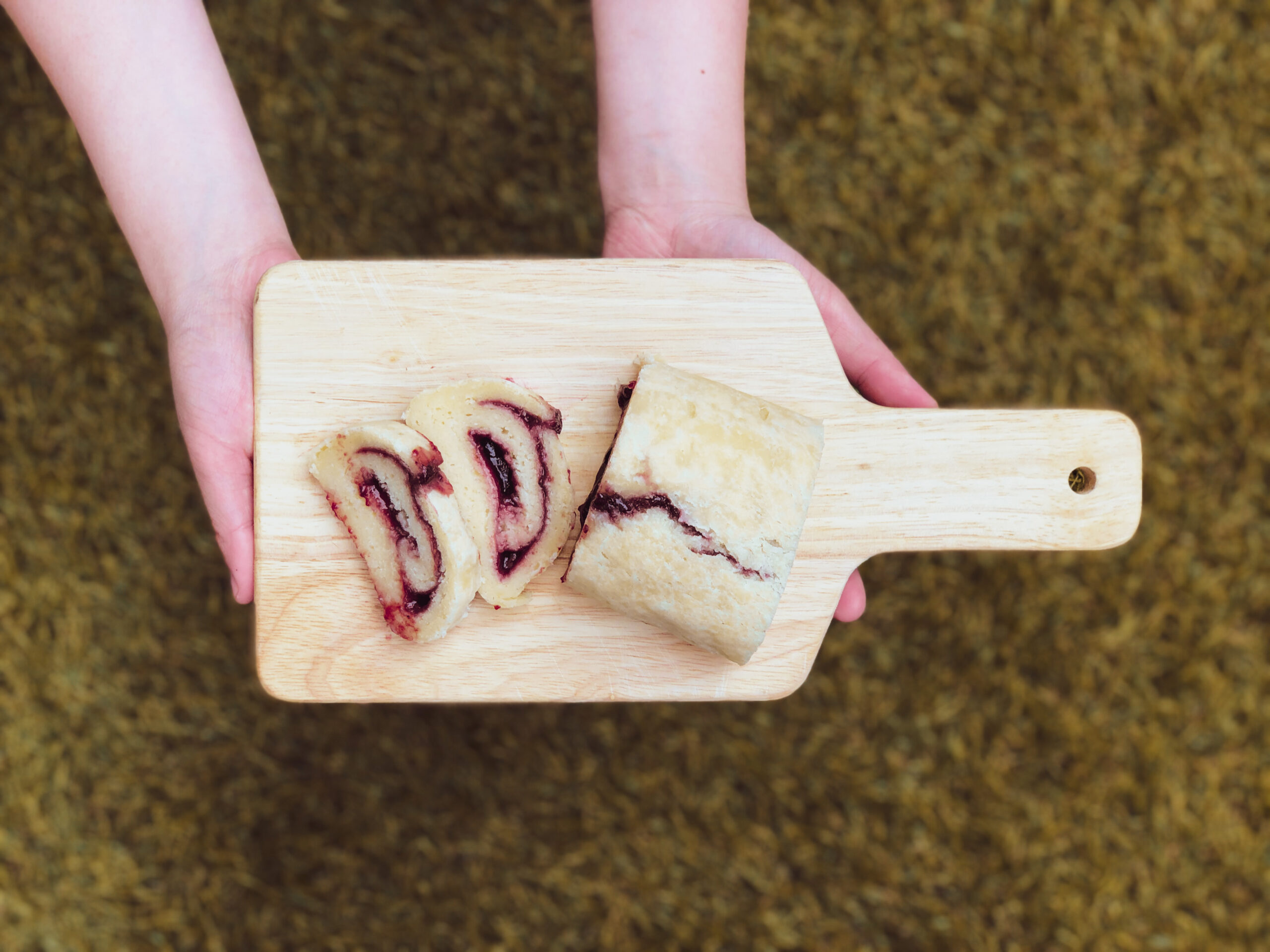
Jam Roly-Poly Recipe: Ireland’s Beloved Steamed Schoolroom Pudding
There are puddings that belong to restaurants and there are puddings that belong to people — and Jam Roly-Poly has always belonged firmly to the people. For generations of schoolchildren across Ireland and Britain, the sight of a fat, jam-streaked roll arriving on the dinner table was one of the great reliable pleasures of the week. Cooked in a floured cloth and steamed until gloriously soft, it was the kind of pudding that asked nothing of you except that you eat it warm, preferably with a generous pour of custard alongside. Simple, filling, and deeply satisfying, it was exactly what was needed on a cold Tuesday afternoon in a draughty school hall somewhere in Munster or Connacht.
The recipe itself is rooted in the suet pudding tradition that stretches back centuries across these islands. The dish as we know it is an English creation at heart — the Victorian cookery writer Eliza Acton published an early rolled jam suet pudding recipe in the 1840s, and it became a fixture of British school dinners from the 1870s onwards — but the same suet-pudding tradition took root in Irish kitchens too, and the roly-poly earned its own place on Irish tables alongside it. Suet — the hard fat rendered from around beef kidney — gives the pastry its distinctive tenderness and a subtle richness that butter alone cannot replicate. Rolled out flat, spread with a good sharp strawberry jam (Irish strawberries, when you can get them, are unbeatable for this), and then rolled up tightly into a log, the pudding is wrapped in a cloth and steamed low and slow until the pastry becomes soft and yielding and the jam bubbles sweetly into every layer. It is not a complicated dish. It was never meant to be. It was meant to feed children well, cheaply, and warmly.
What makes the Irish version of this pudding particularly special is the jam at its heart. Ireland’s strawberry-growing regions — parts of Wexford above all — produce fruit of exceptional quality, and a good homemade or artisan Irish strawberry jam brings a brightness and a slight tartness to the finished pudding that lifts the whole thing out of the ordinary. If you can find a jar with real fruit content and a generous set, you will taste the difference in every mouthful. This is a pudding worth reviving, not just for nostalgia’s sake, but because it is genuinely, uncomplicatedly delicious.
Ingredients
- 225g (8oz) self-raising flour, plus extra for dusting
- ½ tsp fine salt
- 110g (4oz) shredded beef suet
- 150ml (5fl oz / ¼ pint) cold water, approximately
- 150g (5oz) good-quality Irish strawberry jam
- A little milk for brushing (optional)
- Custard or cream, to serve
Method
- Prepare a large piece of muslin cloth or a clean cotton pudding cloth by wetting it thoroughly, wringing it out well, and laying it flat on a clean surface. Dust generously with flour and set aside. Have a large, deep saucepan or fish kettle ready with a steamer rack or an upturned heatproof plate in the base. Fill it with boiling water to a depth of about 5cm (2 inches) and bring it to a steady simmer over a medium heat.
- Sift the flour and salt together into a large mixing bowl. Add the shredded suet and stir briefly to combine. Make a well in the centre and add the cold water a little at a time, mixing with a flat-bladed knife or your fingertips, until the dough just comes together into a soft but not sticky pastry. You may not need every drop of the water.
- Turn the dough out onto a lightly floured surface and roll it out into a rectangle roughly 25cm × 20cm (10 × 8 inches) and about 5–7mm (¼ inch) thick. Try to keep the edges as even as you can.
- Spread the strawberry jam evenly over the dough, leaving a 2cm (¾ inch) border clear along all edges. Brush the far long edge lightly with a little cold water or milk to help it seal.
- Starting from the near long edge, roll the dough up firmly and evenly — not too tightly, as the pudding needs a little room to expand — into a log shape. Pinch the seam and the ends together firmly to seal the jam inside.
- Lift the roly-poly carefully onto the prepared cloth and roll the cloth around it, twisting and tying each end securely with kitchen string, leaving a little space at each end for the pudding to swell. It should look like a large Christmas cracker.
- Place the cloth-wrapped pudding onto the rack or plate in the saucepan. Cover with a tight-fitting lid. Steam over a medium-low heat for 1 hour 30 minutes, checking the water level every 30 minutes and topping up with boiling water as needed to prevent the pan from boiling dry.
- Carefully lift the pudding from the pan. Unwrap the cloth on a warm serving plate — take care, as the steam inside will be very hot. Slice into generous rounds and serve immediately with hot custard or lightly whipped cream.
Tips
- Do not roll the dough too thin or the jam will burst through during steaming — 5–7mm thickness gives a good result.
- A jam with a firm set works best here; a very loose or runny jam may leak out at the ends.
- Keep the steam at a steady, gentle simmer throughout — a fierce boil can make the pudding heavy and slightly gummy.
- Leftovers (if there are any) can be sliced and reheated in a steamer basket for 10–15 minutes the following day.
- Shredded suet is widely available in Irish and British supermarkets; vegetable suet works as a direct substitute if preferred.
There is something quietly wonderful about pulling a steaming Jam Roly-Poly from the pot — the cloth falling away to reveal that glossy, softly swollen roll with its pink jam peeking out at the ends. It is the sort of pudding that makes a kitchen smell like somewhere you want to be, and makes whoever you share it with feel properly looked after. Serve it on a cold afternoon with a jug of custard and good company, and you will understand exactly why it earned its place at so many Irish tables. If you love steamed suet puddings, our classic Irish Christmas pudding recipe and our Irish bread pudding are well worth trying next.
☘️ Join 64,000+ Ireland Lovers
Every Friday, get Ireland’s hidden gems, local secrets, and travel inspiration — the kind you won’t find in any guidebook.
Already subscribed? Download your free Ireland guide (PDF)
Free forever · One email per week · Unsubscribe anytime
Tours & experiences you might love


Powered by Viator. Some links are affiliate links — we may earn a small commission at no extra cost to you.
Secure Your Dream Irish Experience Before It’s Gone!
Planning a trip to Ireland? Don’t let sold-out tours or packed attractions spoil your journey. Iconic experiences like visiting the Cliffs of Moher, exploring the Rock of Cashel, or enjoying a guided walk through Ireland’s ancient past often sell out quickly—especially during peak travel seasons.

Booking in advance guarantees your place and ensures you can fully immerse yourself in the rich culture and breathtaking scenery without stress or disappointment. You’ll also free up time to explore Ireland’s hidden gems and savour those authentic moments that make your trip truly special.
Make the most of your journey—start planning today and secure those must-do experiences before they’re gone!