

Most visitors photograph Kylemore Abbey from across the lake and move on. Almost none of them are told why it was built, or what happened to the woman it was built for.
Watch the full episode, then read on below for the complete story and practical visiting details.
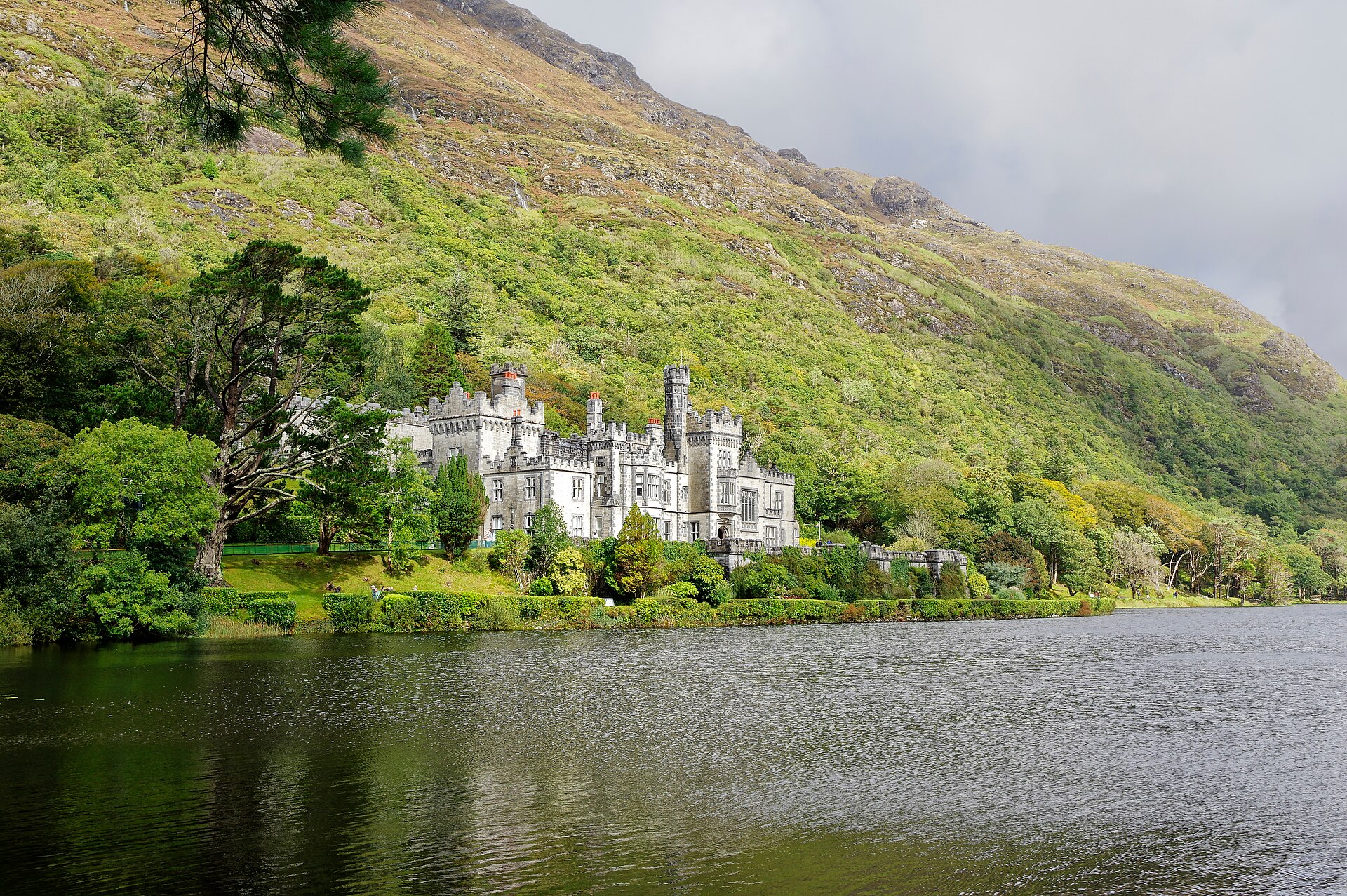
A man built a castle for the woman he loved. She died before they could grow old in it together. He buried her in the shadow of those walls, then spent the rest of his life trying to outrun the grief.
That castle still stands — on the edge of a black lake, beneath the mountains of Connemara. And for over a century now, it’s been home not to heartbreak, but to Benedictine nuns who fled a war, started a school, and turned a monument to loss into something entirely different.
This is Kylemore Abbey. And its story is stranger than anything you’d invent.
Mitchell Henry was a London surgeon and MP, but his heart was in the west of Ireland. In 1867, he bought thirteen thousand acres of Connemara bogland — and on it, he built Margaret a castle.
Not a hunting lodge. Not a summer retreat. A seventy-room Gothic fantasy with turrets, battlements, and a lake that mirrors it all back like a dream you can’t quite wake from.
He brought in a hundred workers. Planted trees by the thousands — oak, beech, pine — transforming bare hillside into forest. Built a model farm. A school for local children. Brought the railway closer to this corner of Galway.
Mitchell and Margaret had nine children. They hosted parties. They employed half the parish. For a few years in the 1870s, Kylemore was exactly what he’d imagined — a fairy tale made real.
In 1874, the Henrys travelled to Egypt. Margaret contracted dysentery in Cairo. She was dead within weeks. She was forty-five.
Mitchell brought her body back to Connemara and buried her in a mausoleum on the estate — then spent the next decade building a Gothic church in her memory. Every detail was deliberate. The marble columns. The stained glass. The miniature cathedral, just for her.
He couldn’t stay. The castle held too much of her. Mitchell sold Kylemore in 1903 and died seven years later, in 1910, in England, broken by a grief he never escaped.
The estate passed through owners who couldn’t afford it. The castle sat half-empty, fading into the bog. It might have crumbled entirely — if not for what happened next.
In 1920, a group of Benedictine nuns arrived in Connemara. They’d fled Ypres in Belgium when the German army destroyed their abbey during the First World War. They’d spent six years in temporary quarters — just over a year in England, then several more in County Wexford, Ireland. And now they were looking for somewhere permanent.
They bought Kylemore for a fraction of what it cost to build.
The nuns restored what they could. They converted the Gothic church into their chapel. And in 1923, they opened a boarding school for girls — Kylemore Abbey School — that would run for eighty-seven years.
Generations of Irish women were educated here, walking the same halls Mitchell Henry built for Margaret. The nuns farmed the land, maintained the gardens, and slowly, quietly, turned a monument to grief into a working community.
The school closed in 2010. But the abbey remains — still home to Benedictine sisters, still open to visitors, still one of Ireland’s most photographed buildings.
If you’re visiting, here’s what to know.
The Victorian Walled Garden is a six-acre restoration project that’s worth the twenty-minute walk from the main house. Head gardener’s cottage, glasshouses, flower borders — it’s been brought back from near-total ruin since the 1990s. Go in summer if you can.
The Gothic church is open. It’s small — deliberately so. Margaret’s tomb is in the mausoleum nearby. Both are free to enter.
The abbey itself — the castle — has restored reception rooms you can walk through. The craft shop sells chocolate made by the nuns. The tearoom does a decent scone.
Give yourself three hours minimum. Wear layers — Connemara weather shifts fast. And if you’re driving the Wild Atlantic Way, Kylemore is almost exactly halfway between Clifden and Leenane. You’ll pass it anyway. Stop.
Mitchell Henry built Kylemore because he loved someone. The nuns stayed because they’d lost everything else. And somehow, that combination — grief and resilience, beauty and practicality — made this place what it is.
If you’ve been, tell me what you remember most — the lake, the gardens, the church. Drop it in the comments.
Want the fuller telling of Mitchell and Margaret’s story? Read Why Kylemore Abbey Was Built as an Act of Love. Full guide linked below. See you next Monday.
Never miss an episode. Bob’s next long-form episode drops every Monday on our YouTube channel. Subscribe to the free Love Ireland newsletter and we’ll let you know the moment a new one is live: https://loveireland.substack.com/subscribe
Kylemore’s story — of love, loss, and devotion to the Connemara landscape — resonates deeply with Irish diaspora families who carry similar stories of roots left behind. If your family has Connacht or Connemara heritage, our free ancestry guide includes county-specific records to help you trace them back to the townland they came from.: Trace Your Irish Roots — Free Step-by-Step Guide.
☘️ Join 64,000+ Ireland Lovers
Every weekday morning, get Ireland’s hidden gems, local secrets, and travel inspiration — the kind you won’t find in any guidebook.
Subscribe free — enter your email:
📲 Know someone who’d love this? Share on WhatsApp →
Love more? Join 43,000 Scotland lovers → · Join 29,000 Italy lovers → · Join 7,000 France lovers →
Free forever · Unsubscribe anytime
Tours & experiences you might love


Powered by Viator. Some links are affiliate links — we may earn a small commission at no extra cost to you.
Secure Your Dream Irish Experience Before It’s Gone!
Planning a trip to Ireland? Don’t let sold-out tours or packed attractions spoil your journey. Iconic experiences like visiting the Cliffs of Moher, exploring the Rock of Cashel, or enjoying a guided walk through Ireland’s ancient past often sell out quickly—especially during peak travel seasons.

Booking in advance guarantees your place and ensures you can fully immerse yourself in the rich culture and breathtaking scenery without stress or disappointment. You’ll also free up time to explore Ireland’s hidden gems and savour those authentic moments that make your trip truly special.
Make the most of your journey—start planning today and secure those must-do experiences before they’re gone!