

Living in County Monaghan means quiet lanes, small lakes and market towns where people still know their neighbours. About 65,000 people live in the county, which sits on the border with Northern Ireland. If you want a slow, friendly place with real character and low-key scenery, Monaghan is worth a close look.
This guide looks at daily life in Monaghan. It covers the county’s towns, lakes and literary roots, and it is about the place, not the paperwork. For visitor information, start with Discover Ireland. Planning a visit first? Our Ireland trip planning hub is the best place to begin.
Why living in County Monaghan appeals to so many people
Monaghan covers about 1,295 square kilometres in the north of the Republic. Its landscape is made of small rounded hills called drumlins, with lakes tucked between them. Many people call it a hidden county, because few visitors stop here on the way to the coast.
People who settle here often mention the same things. The pace is slow. The countryside is green and calm. Neighbours help each other, and clubs and festivals are easy to join. The trade-off is that there is no coastline, and a car matters for most daily trips.
- Quiet: Lanes, lakes and small hills instead of crowds.
- Community: GAA clubs, music nights and markets welcome newcomers.
- Location: Dundalk, Armagh and Cavan are all within easy reach.
- Heritage: Poets, lace-makers and old estates shaped the county.
Monaghan town and St Macartan’s Cathedral
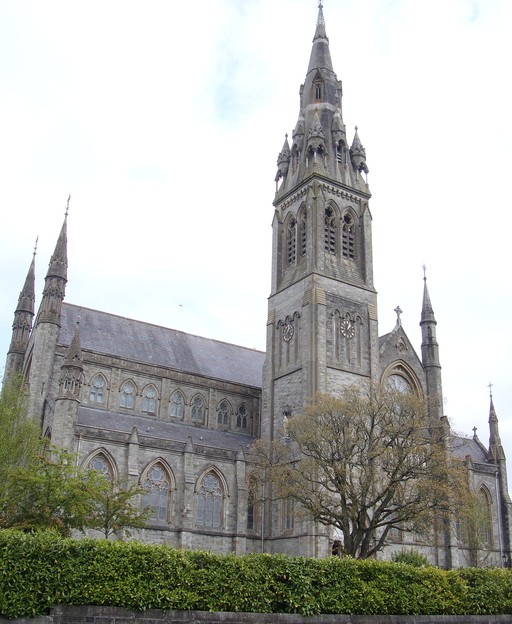
Monaghan town is the county town and its busiest hub. Its streets hold shops, cafes, pubs and a lively weekend feel. The tall spire of St Macartan’s Cathedral, shown in the photograph above, rises over the skyline. The cathedral was designed by the architect J. J. McCarthy and built in the Gothic Revival style in the second half of the 1800s.
The town is compact, so many people walk to shops and school. Most families still keep a car for trips out to the villages and lakes.
☘️ Enjoying this? 64,000+ Ireland lovers get stories like this every week. Subscribe free →
Clones, Carrickmacross, Castleblayney and Glaslough
Monaghan has a handful of towns, and each has its own feel. Here are the ones that come up most often.
- Clones: A border town with an early monastic history, a round tower and a high cross.
- Carrickmacross: A market town known for its delicate lace.
- Castleblayney: A lakeside town beside Lough Muckno.
- Ballybay: A small town set around a lake.
- Glaslough: A pretty estate village beside Castle Leslie.
Carrickmacross lace is a real local craft, and you can read more about it on the Carrickmacross Lace Gallery website. For a short history of Clones and what to see there, see the Discover Ireland page for Clones. Glaslough is home to the Castle Leslie estate, a family-owned country house and parkland.
Lakes, drumlins and the literary landscape
Monaghan’s poet Patrick Kavanagh grew up on a small farm near Inniskeen and wrote about the fields, lanes and people of the county. His poems made ordinary rural life famous around the world. Walking the lanes around Inniskeen gives you a sense of the landscape that shaped him.
Beyond the towns, the county is a patchwork of small lakes and woodland. Lough Muckno near Castleblayney is the best known, and quiet roads weave between the drumlin hills. Winters can be damp and grey, and some rural roads are narrow and dark in the evenings.
- Lakes: Quiet spots for walking, fishing and picnics.
- Drumlins: Small hills that give the county its rolling shape.
- Forest walks: Woodland trails close to the main towns.
Daily life, getting around and the seasons
Monaghan has no passenger railway of its own today, so most people drive. Bus links run to Dublin, Dundalk and Cavan, and you can compare rail options in nearby towns on the Irish Rail website. Check local timetables before you plan a daily commute.
Spring brings lambs and long light evenings. Summer is the best time for lake days and local festivals. Autumn colours the hedgerows and woods. Winter is quiet, wet and cosy, with turf fires and warm pubs.
- Pace: Slow, friendly and local.
- Weather: Mild and often cloudy, with rain in every season.
- Walking: Lake paths, forest trails and country lanes.
- Day trips: Cavan, Louth and Armagh are each within about an hour.
If Monaghan sparks your interest in nearby counties, read our guides to living in County Cavan, living in County Louth and living in County Meath.
Is County Monaghan the right place for you?
Monaghan suits people who want a calm base with real community and lots of green space. It may feel quiet if you are used to a big city, and it has no coast. A good way to test it is to stay for a week. Spend a day in Monaghan town, a day by the lakes and an evening in Carrickmacross or Clones.
To compare Monaghan with other parts of the country, start with our guide to where to live in Ireland, our guide to what the 32 county names mean and our Ireland road trip itinerary. For the big picture, read our full Move to Ireland guide.
Frequently asked questions
Where is County Monaghan?
County Monaghan lies in the north of the Republic of Ireland, in the province of Ulster. It borders Northern Ireland, and the nearby counties include Cavan, Louth and Armagh.
Is County Monaghan a good place to live?
Many people say yes. It offers quiet countryside, friendly towns and a strong community, but it has no coastline and most people need a car.
What is County Monaghan known for?
Monaghan is known for its drumlin landscape, its lakes, Carrickmacross lace and the poet Patrick Kavanagh. Its cathedral in Monaghan town is a local landmark.
What is the best time of year to visit County Monaghan?
May to September gives the longest days and the best lake weather. Autumn is quieter and good for country walks.
☘️ Join 64,000+ Ireland Lovers
Every weekday morning, get Ireland’s lesser-known corners, local stories and secrets, straight to your inbox.
Subscribe free — enter your email:
Free forever · Unsubscribe anytime
Secure Your Dream Irish Experience Before It’s Gone!
Planning a trip to Ireland? Don’t let sold-out tours or packed attractions spoil your journey. Iconic experiences like visiting the Cliffs of Moher, exploring the Rock of Cashel, or enjoying a guided walk through Ireland’s ancient past often sell out quickly—especially during peak travel seasons.

Booking in advance guarantees your place and ensures you can fully immerse yourself in the rich culture and breathtaking scenery without stress or disappointment. You’ll also free up time to explore Ireland’s hidden gems and savour those authentic moments that make your trip truly special.
Make the most of your journey—start planning today and secure those must-do experiences before they’re gone!