

There is a moment, if you time it right, when the jaunting cars have rolled back towards town and the tour coaches have emptied, and Lough Leane is almost entirely yours. The water goes flat. The MacGillycuddy’s Reeks sit heavy and blue on the horizon. A heron lifts off the bank without drama. This is what Killarney’s biggest lake looks like when nobody is performing for it.
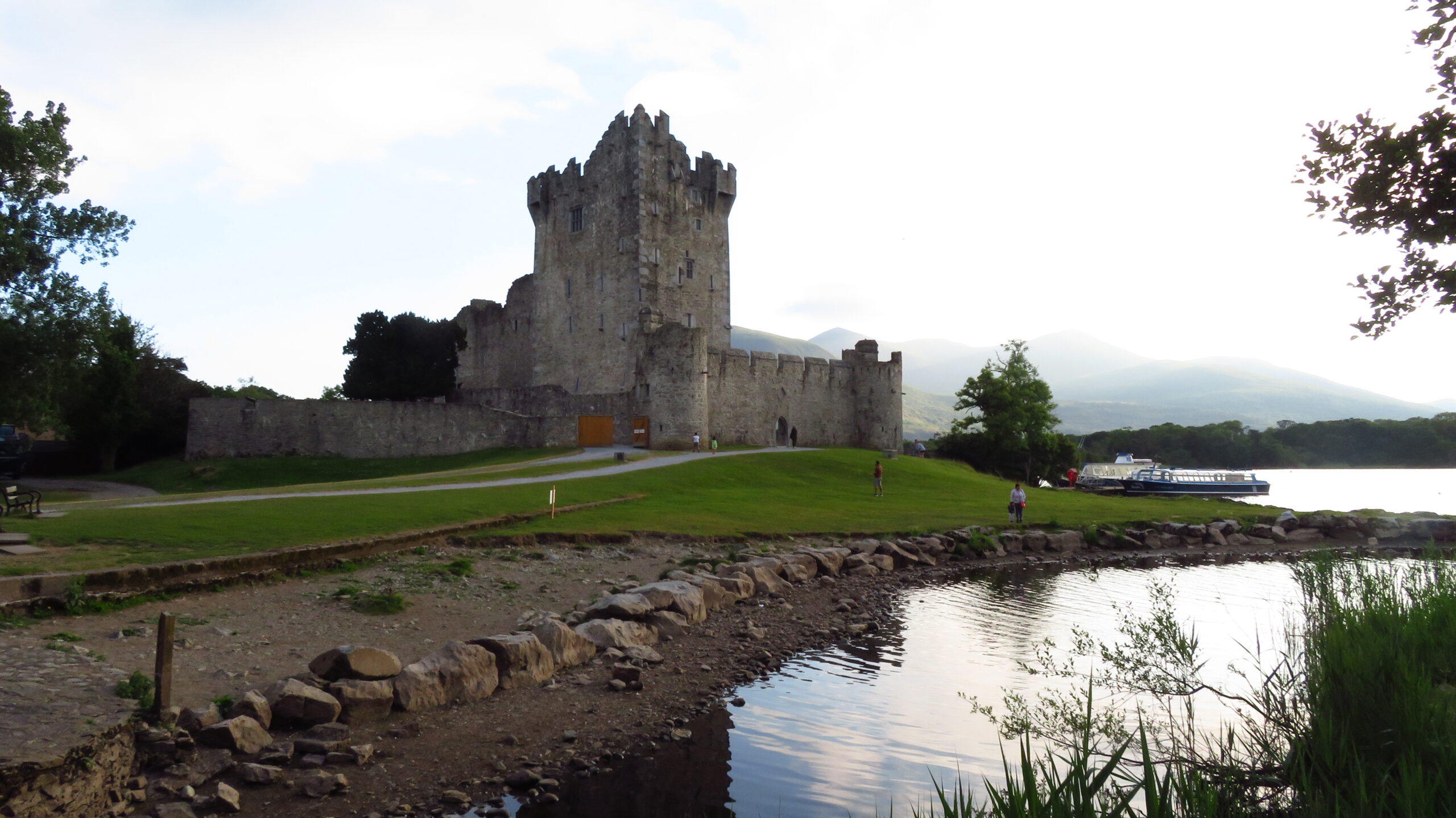
Lough Leane is the largest of Killarney’s three lakes, stretching roughly 7 kilometres from north to south and covering around 1,900 hectares. It sits at the centre of Killarney National Park in County Kerry — Ireland’s first national park, established in 1932 — and it draws more visitors than almost anywhere else in the country. That popularity is both its greatest asset and the thing that makes patience a useful travel tool here.
But get the timing right, and Lough Leane is one of the finest stretches of water in Ireland.
Enjoyed reading? Get more Ireland travel ideas every week.
What Is Lough Leane?
The name comes from the Irish Loch Léin, often translated as the Lake of Learning, a reference to the early Christian monastery that once stood nearby. The lake is one of three that make up the Killarney Lakes: Lough Leane is the largest, followed by Muckross Lake (also called the Middle Lake) and the Upper Lake to the south-west. Together they cover around 2,400 hectares and form the watery backbone of the national park.
Lough Leane is fed by the River Flesk from the east and drains northwards via the River Laune into Castlemaine Harbour and Dingle Bay. The lake sits at just 20 metres above sea level, which means the surrounding mountain scenery — including Mangerton Mountain, Torc Mountain, and the Reeks to the south-west — rises steeply above the water and gives it a dramatic setting that photographs do not fully capture.
The water is exceptionally clear. Lough Leane supports populations of salmon, brown trout, and pike, and it is designated a Special Area of Conservation under EU law. Eurasian otters and kingfishers are both regularly spotted along the shores. In late spring, the rhododendron bloom along the lakeshore is one of the most photogenic — and ecologically complex — sights in Kerry. The species is invasive and the national park has been managing its spread for decades, but in flower it is undeniably striking.
Ross Castle: The Best Starting Point
The most practical place to approach Lough Leane is from Ross Castle, roughly 3 kilometres south-west of Killarney town. The castle is a 15th-century tower house built by the O’Donoghue Mór clan, and it sits directly on the south-eastern shore of the lake. Entry to the castle itself is via guided tour only; tours run from 9.30am, with the last guided tour departing at 4.55pm, between early March and early November. The grounds are free to walk through and give direct access to the lake’s edge.
Ross Castle is one of the last Gaelic strongholds in Munster to have fallen to Cromwellian forces. According to local tradition, a prophecy held that the castle would never be taken by land — which it wasn’t. In 1652, General Ludlow brought artillery by boat across the lake, and the sight of it was enough for the garrison to surrender without a fight. The prophecy, in a narrow technical sense, held true.
The car park at Ross Castle fills quickly during summer months. If you are driving, aim to arrive before 9.30am or after 4pm. There is a cycle path connecting the town to the castle, and the route from Killarney town centre is flat and takes about 20 minutes by bike.
Getting Out on the Water
The best way to understand Lough Leane’s scale is to get on it. Boat trips run from the jetty at Ross Castle and typically visit Innisfallen Island, which sits about 500 metres from the southern shore. The island holds the ruins of Innisfallen Abbey, founded around 640 AD and active for over 900 years. The Annals of Innisfallen — one of the most important records of early Irish history — were compiled here, covering events from the creation of the world (as understood in early medieval scholarship) through to the 13th century. The original manuscript is held at the Bodleian Library in Oxford.
The island is quiet even on busy days. Deer swim out to it regularly from the mainland. There are more than 30 islands in Lough Leane, most uninhabited, and a handful of them can be explored on longer private boat hire trips from the Ross Castle jetty.
Rowing boats and kayaks can also be hired independently. The lake is generally calm on its southern stretches but can become choppy quickly in unsettled weather — Kerry is one of the windiest counties in Ireland. Check conditions before paddling out of sight of the shore.
Love Ireland? We send a free weekly newsletter with hidden gems, heritage stories, and local tips.
About Those Horse-Drawn Carriages
The jaunting cars — traditional two-wheeled horse-drawn carriages driven by jarveys — are a fixed part of the Killarney experience and have been since the 19th century. They follow set routes through the national park, passing along the lakeshore and through the wooded areas between the lakes.
They are genuinely pleasant if you are not in a hurry. The jarveys are typically talkative, knowledgeable about the area, and will point out landmarks you might otherwise miss. Prices are set and displayed at the stands near Killarney town centre and at Ross Castle. A trip to Muckross Lake and back takes roughly 90 minutes.
However, during peak hours in summer, the volume of carriages on the narrow paths near the lakeshore does change the atmosphere considerably. If a quieter experience is what you are after, walking or cycling the paths early in the morning — particularly before 9am — gives you the park in a very different mood.
Walking and Cycling the Lakeshore
The national park has an extensive network of paths and trails, many of which run along or near the shore of Lough Leane. The main route from Killarney town to Ross Castle is paved and suitable for all abilities. From Ross Castle, a woodland track continues south along the western shore towards the Old Weir Bridge, where Lough Leane drains into Muckross Lake — a round trip of about 8 kilometres.
More ambitious walkers can continue on to Muckross House, a 19th-century Victorian mansion run by the state and open to visitors, or loop further south to the Upper Lake via the Long Range river. This extended route covers around 15 kilometres from Killarney town and back; allow a full day.
Bikes can be hired in town from several operators, and the national park is one of the best cycling destinations in Ireland. The terrain is flat to gently rolling on the lake routes, and most paths are shared with foot traffic rather than cars. Helmets are advisable; the paths get genuinely busy in July and August.
Practical Information
Getting there: Killarney town is served by train from Dublin Heuston (about 3 hours 20 minutes), Cork (about 1 hour 20 minutes), and Tralee (30 minutes). There are also regular Bus Éireann services from Cork and Limerick. From the town centre, Ross Castle is a 25-minute walk, a 15-minute cycle, or a 10-minute drive. Parking at Ross Castle is limited and charges apply.
Admission: The national park grounds are free and open year-round. Ross Castle tours cost €5 for adults (reduced rates for children and families); check the OPW website for current pricing. Boat trips from the jetty start at around €15 per adult for a short trip to Innisfallen.
Best time to visit: Lough Leane is accessible year-round, but the park is at its quietest in October and November, when the summer crowds have gone and the autumn colour along the lakeshore is at its best. Early March can be strikingly clear. The busiest months are July and August — not necessarily a reason to avoid it, but worth factoring into your plans.
Dogs: Dogs are welcome in the national park but must be kept on leads at all times. This is not optional — red deer, white-tailed eagles, and other protected species are present throughout the park.
Facilities: There are toilets at the Ross Castle car park and at the Muckross House visitor centre. There is a café at Muckross House. Ross Castle itself has no café. Killarney town has a wide range of restaurants, cafés, and shops within a short walk of the park entrance.
White-Tailed Eagles on Lough Leane
One of the less widely publicised facts about Lough Leane is that it is one of the best places in Ireland to see white-tailed eagles. The species was extinct in Ireland for over a century before a reintroduction programme began in 2007. Kerry was one of the first counties to benefit, and the Killarney lakes area now has an established breeding population.
White-tailed eagles are enormous — wingspan up to 2.4 metres, roughly the same as a small car bonnet is wide. They are most often seen hunting over open water, and Lough Leane’s size makes it ideal territory. Early mornings from the Ross Castle shore give the best chance of a sighting. Bring binoculars.
Red kites have also been reintroduced in Ireland in recent years and can occasionally be spotted over the park’s woodland areas. Peregrine falcons nest in the cliffs on the surrounding hills. For birdwatchers, Killarney National Park is seriously worth the trip regardless of the scenery.
Lough Leane is not a secret, and it never will be. But it rewards those who treat it with a bit of patience — who arrive before the coaches, who walk past the end of the paved path, who wait for the light to change. The lake has been here for 10,000 years. It is not going anywhere. And on the right morning, when the mist is lifting off the water and the mountains are coming clear, it makes all of County Kerry feel like it belongs only to you.
Get weekly Ireland travel inspiration straight to your inbox — free.
Thinking about it seriously?
If you’ve started actually planning a move, our complete the full Move to Ireland guide walks through every step, every cost, and the paperwork that catches most people out.
Tours & experiences you might love


Powered by Viator. Some links are affiliate links — we may earn a small commission at no extra cost to you.
Secure Your Dream Irish Experience Before It’s Gone!
Planning a trip to Ireland? Don’t let sold-out tours or packed attractions spoil your journey. Iconic experiences like visiting the Cliffs of Moher, exploring the Rock of Cashel, or enjoying a guided walk through Ireland’s ancient past often sell out quickly—especially during peak travel seasons.

Booking in advance guarantees your place and ensures you can fully immerse yourself in the rich culture and breathtaking scenery without stress or disappointment. You’ll also free up time to explore Ireland’s hidden gems and savour those authentic moments that make your trip truly special.
Make the most of your journey—start planning today and secure those must-do experiences before they’re gone!