

Oisín and Tír na nÓg is the Irish legend of a warrior-poet who rode a white horse over the sea to the Land of Youth, lived there for what felt like three years, and came home to find that about 300 years had passed. The tale comes from the Fenian Cycle, the group of Irish stories about Fionn mac Cumhaill and his warrior band, the Fianna. Oisín is Fionn’s son, and the story is the best known Irish lesson about time, love and homesickness.
Who was Oisín in Irish legend?
Oisín (say it “UH-sheen”) means “little deer”. The name tells you where he came from. His mother was Sadhbh, a woman turned into a deer by a druid. Fionn met her on the hunt and she became human again. Read the full story in Sadhbh and the Deer.
Fionn’s son grew up to be the greatest poet of the Fianna. He also fought beside his father and his own son, Oscar. In the tales, Oisín can match any warrior with a spear and any bard with a verse.
- Father: Fionn mac Cumhaill, leader of the Fianna.
- Mother: Sadhbh, the woman of the deer.
- Son: Oscar, a famous fighter in the Fenian tales.
- Trade: Poet and warrior, remembered most for his verse.
Niamh of the Golden Hair arrives
One day the Fianna were hunting by the western shore. A rider came over the waves on a white horse. She was Niamh Chinn Óir, “Niamh of the Golden Hair”. In most versions she is a daughter of the sea god Manannán mac Lir.
Niamh had heard of Oisín’s songs and his courage. She asked him to come away with her to Tír na nÓg, the Land of Youth. Nobody there grows old, falls sick or dies. Oisín looked at the sea, thought of his father and his friends, and said yes.
Fionn begged him to stay. Oisín promised he would come back. He climbed onto the white horse behind Niamh, and the horse carried them across the water and out of sight.
Life in Tír na nÓg
Tír na nÓg is an Otherworld island in the western sea. The old texts say it holds feasting, music and hunting without end. Hunger never bites, the days are bright and grief never settles.
Oisín married Niamh and, in the best-known telling, they had children. He was happy. For what he thought was about three years, he did not look back.
Then he began to miss Ireland. He missed his father, the Fianna, the hunts and the hard ground under his feet. Niamh did not want him to go. She told him he could ride the white horse home for one visit. She gave him one rule.
The rule that Oisín broke
Oisín must never let his foot touch Irish soil. If it did, he could not return to Tír na nÓg. He promised, and the horse took him back across the sea.
The return to Ireland
Oisín found a changed country. The great halls of the Fianna were gone. The men he met looked small and weak beside him. He asked for Fionn and the Fianna. They told him those were heroes from old stories, and that the Fianna had vanished about 300 years before.
In many versions, Oisín then saw a group of men struggling to lift a heavy stone. He leaned from the saddle to help. The saddle girth snapped. He fell, and his feet struck the ground.
In that instant the 300 years caught up with him. The white horse bolted back to the sea. Oisín was left an old, blind and frail man in a land that no longer knew his name.
- He felt that he had stayed about 3 years.
- Ireland had moved on by about 300 years.
- His single mistake was one foot on the ground.
Oisín and Saint Patrick
The old tales do not end there. In the medieval collection Acallam na Senórach, written around the year 1200, the aged Oisín meets Saint Patrick. Patrick listens to his stories of the Fianna and has them written down.
The meeting sets two worlds against each other. One is a warrior age of hunting and poetry. The other is the new Christian age. Oisín grumbles about the change, and many readers find that the most human part of the legend.
The poet Michael Comyn of County Clare retold the Tír na nÓg tale in verse in the mid-1700s. His poem helped keep the story alive for Irish speakers, and it still turns up in Irish schools and in modern retellings.
Why the white horse matters
The white horse is the bridge between the two worlds. In Irish tradition, horses from the Otherworld carry riders over water and cannot be tied to the ground. That is why the broken girth matters so much: once the rider touches the earth, the link to the Otherworld is cut.
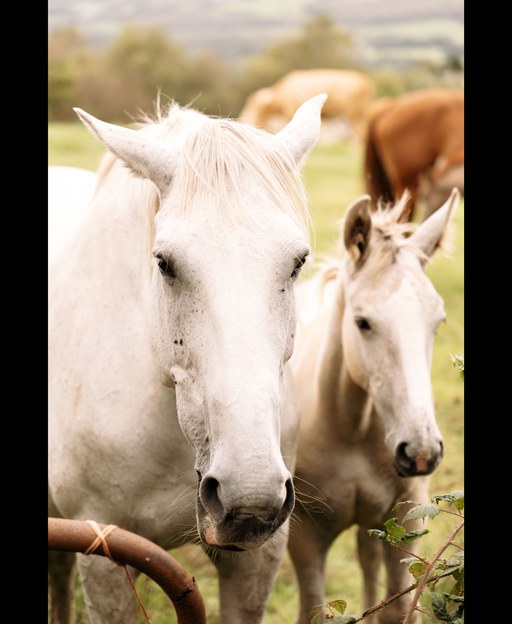
Connemara ponies and other grey horses still graze across the west of Ireland. Seeing them on a misty morning, it is easy to see why storytellers chose a white horse for the sea crossing.
What the legend means
Time is the heart of the story. Tír na nÓg gives Oisín everything people want: youth, love and ease. The price is the life he left behind. When he returns, he learns that no one can have both.
Many Irish families recognise the feeling. Generations of emigrants sailed west and could never fully go home again. The Land of Youth is a tale about leaving, and about how the old place keeps going without you.
Where to feel the legend in Ireland
The tales do not fix Tír na nÓg to one map point. Storytellers place it far out in the western sea, beyond the Atlantic cliffs. A trip along the west coast gives you the same wide horizon Oisín rode towards.
- Plan a west-coast loop with our 10-day Ireland itinerary.
- Follow the heritage trail in our Connacht heritage itinerary.
- Meet the sea god in Manannán mac Lir.
- Read another Fianna story in Diarmuid and Gráinne.
If you are still shaping your trip, start with our Ireland trip planning hub, or take the free 7-day road trip itinerary.
☘️ Enjoying this? 64,000+ Ireland lovers get stories like this every week. Subscribe free →
Oisín and Tír na nÓg: common questions
Who is Oisín in Irish mythology?
Oisín is the son of Fionn mac Cumhaill and the poet of the Fianna. He is the hero of the Tír na nÓg legend and the storyteller of many Fenian tales.
What is Tír na nÓg?
Tír na nÓg means “Land of the Young”. It is an Otherworld island in the western sea where no one ages or dies. Time runs far faster back in Ireland.
How long was Oisín away from Ireland?
Oisín felt that about three years passed. When he came home, about 300 years had gone by in Ireland.
Why did Oisín grow old?
Oisín touched Irish soil after he fell from the white horse. That broke Niamh’s rule, so the 300 years he had missed fell on him at once.
☘️ Join 64,000+ Ireland Lovers
Every weekday morning, get Ireland’s lesser-known corners, local stories and secrets, straight to your inbox.
Subscribe free — enter your email:
Free forever · Unsubscribe anytime
Tours & experiences you might love


Powered by Viator. Some links are affiliate links — we may earn a small commission at no extra cost to you.
Secure Your Dream Irish Experience Before It’s Gone!
Planning a trip to Ireland? Don’t let sold-out tours or packed attractions spoil your journey. Iconic experiences like visiting the Cliffs of Moher, exploring the Rock of Cashel, or enjoying a guided walk through Ireland’s ancient past often sell out quickly—especially during peak travel seasons.

Booking in advance guarantees your place and ensures you can fully immerse yourself in the rich culture and breathtaking scenery without stress or disappointment. You’ll also free up time to explore Ireland’s hidden gems and savour those authentic moments that make your trip truly special.
Make the most of your journey—start planning today and secure those must-do experiences before they’re gone!