

If your family name is Walsh, Burke, O’Malley, Joyce, Flaherty, Moran, or McDermott, there is a good chance your ancestors looked out over the Atlantic from the fields of Connacht. This wild western province — covering counties Galway, Mayo, Sligo, Roscommon, and Leitrim — sent large numbers of people to America, Australia, and Britain. The five days laid out in this guide will take you through the places they left behind.
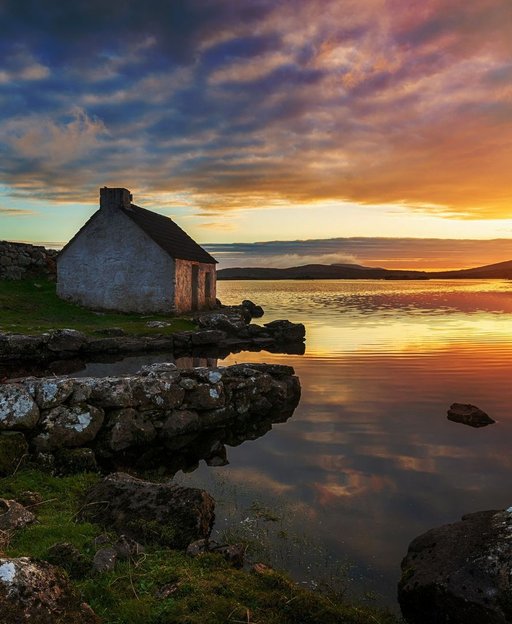
This Connacht heritage itinerary is built around one idea: that travel to Ireland means more when you understand why your family left. These are not just scenic drives. They are places where people made impossible choices. Walking the same ground connects you to that story in a way that no document can.
Why Connacht Is the Heart of the Irish Diaspora Story
Connacht has two identities in Irish history. The first is ancient. Long before the Normans arrived, the province had its own kings — men like Cathal Mór of the Wine Red Hand, a Connacht king who founded Ballintubber Abbey in 1216, a church that has held Mass without interruption ever since. Cathal’s descendants and those of the O’Flahertys, the Burkes, and the O’Malleys shaped this land for centuries.
The second identity is grief. In the 1650s, Oliver Cromwell issued one of the most notorious orders in Irish history. Catholics were given a choice: move west of the River Shannon or face execution. The phrase “To Hell or to Connacht” entered the language. Hundreds of families were stripped of their eastern lands and forced into this rocky, boggy province. Two centuries later, the Great Famine struck hardest here. Mayo lost nearly 30 per cent of its population between 1845 and 1852. Galway lost a quarter. They left on coffin ships or they did not leave at all.
If your family came from Connacht, they survived something extraordinary. This itinerary is a way to honour that.
☘️ Your Irish family has a story waiting to be found.
Discover where your Irish ancestors came from — their county, their name, their story. Our free step-by-step guide walks you through every record, DNA tool, and ancestry archive. No experience needed.
Before You Travel: Planning Your Connacht Heritage Journey
Connacht covers a large area. You will need a car to do it justice. The province stretches from Lough Corrib in Galway up to the cliffs of Sligo, and from the Shannon river in the east to the Atlantic in the west. Five days is enough to cover the main heritage sites, though you could easily spend two weeks here and still feel you had only scratched the surface.
Galway City makes the best base for Days 1 and 2. Westport in Mayo is ideal for Days 3 and 4. Sligo Town suits Day 5. All three have good accommodation options across different budgets.
Before you leave home, do some basic research. Look up your family name in the Griffith’s Valuation records, which list every land occupier in Ireland in the early 1850s. If you can identify the county or townland your ancestors came from, your trip becomes far more personal. Read about Irish townlands — the ancient address system that can pinpoint exactly where your family lived.
- Best time to travel: May to September for weather; February and March for quieter heritage sites
- Getting there: Fly into Ireland West Airport (Knock) or Galway has good train connections from Dublin
- Research first: Check the Mayo North Family Heritage Centre, Galway County Archives, or Roscommon Heritage and Genealogy Centre for records before you go
☘️ Enjoying this? 64,000 Ireland lovers get stories like this every week. Subscribe free →
Day 1 — Galway City: Gateway to the West
Galway City is where most emigrants from the west began their journey. The Spanish Arch, down by the River Corrib, is older than the emigration crisis — it dates to 1584 — but by the 1840s it marked the edge of the docks where ships loaded with desperate passengers. Standing there now, you can look across the water to where the emigrants’ boats once sat.
The Galway City Museum beside the Spanish Arch is free to enter. Its permanent collection covers the city from medieval times through the Famine years and into the 20th century. The emigration galleries are among the best you will find anywhere in Ireland. Allow two hours here.
The Claddagh is a short walk away. This ancient fishing village at the mouth of the Corrib was home to one of Galway’s oldest Irish-speaking communities. The Claddagh ring — two hands holding a crowned heart — was made here for centuries before it became an Irish-American symbol. If your family gave you one, it may have started here.
In the afternoon, visit Eyre Square and walk the medieval Latin Quarter. The lanes around Shop Street still follow the layout of the medieval walled town. Galway was a walled merchant city, and 14 merchant families — known as the Tribes of Galway — ran it for centuries. Names like Lynch, Blake, Martin, and Browne still appear on buildings across the city.
Day 2 — Connemara: Into the Ancestral Heartland
Drive west from Galway City and within an hour you are in a different Ireland. Connemara is bogland, mountain, and lake, with the Atlantic pressing in from the west. The landscape here has barely changed. The stone walls that divide the fields are the same ones your ancestors built by hand, cleared from land that was barely worth farming.
An area called Joyce Country lies north of Lough Corrib. It is named for the Joyce clan, Norman settlers who arrived in the 13th century and became so thoroughly Irish that their name became inseparable from this landscape. The Joyces were one of the Tribes of Galway. If you carry that surname, this is your place.
Stop at Kylemore Abbey, built in 1867 by Manchester merchant Mitchell Henry as a gift for his wife Margaret. Henry fell in love with Connemara on his honeymoon and bought 13,000 acres. When Margaret died in 1874, Henry built a Gothic church and family mausoleum beside the lough in her memory. A Benedictine community of nuns has run it since 1920, and the walled Victorian garden beside the lough is one of the most beautiful in Ireland.
From Kylemore, drive to Clifden — the capital of Connemara. The ruins of Clifden Castle sit on a clifftop overlooking the sea. It was built by John d’Arcy, the Anglo-Irish landowner who founded the town in the early 1800s. The d’Arcy family went bankrupt in the Famine years, and the town and castle were sold to the Eyre family of Bath. The castle is a shell now, open to the sky, with the Atlantic below.
Day 3 — County Mayo: Famine Sites and Pilgrimage Paths
Drive north from Clifden into County Mayo. The road passes through some of the emptiest landscape in western Europe — land that was once densely populated. Before the Famine, Mayo had close to 390,000 people in 1841. Tracing your roots in County Mayo is easier than many expect, thanks to detailed survival records.
Westport is your base for Days 3 and 4. It is an elegant Georgian planned town, built in the 1780s around an octagon square and a tree-lined river walk called the Mall. Lord Sligo, the local landlord, hired architect James Wyatt to design it. The town has good restaurants and hotels and a lively music scene. It also has one of the finest views in Ireland — Croagh Patrick rising over Clew Bay.
On Day 3, drive first to Murrisk on the southern shore of Clew Bay. The National Famine Memorial stands here — a bronze sculpture of a coffin ship with skeletal figures clinging to the rigging. It is one of the most powerful pieces of public art in Ireland. Behind it, the path climbs 764 metres to the summit of Croagh Patrick, Ireland’s holy mountain. St Patrick is said to have fasted there for 40 days in 441 AD. On the last Sunday in July, 25,000 pilgrims still climb it, some barefoot.
In the afternoon, visit Ballintubber Abbey near Castlebar. Founded by Cathal O’Conor, King of Connacht, in 1216, this is one of the few Irish abbeys that has held Mass continuously for over 800 years — through the Penal Laws when priests were outlawed, and through every hardship since. The walls are medieval. The faith that filled them never stopped.
Day 4 — Achill Island and the Deserted Villages
Achill Island is connected to the mainland by a road bridge. It is Ireland’s largest island, and one of its most haunting. Drive north from Westport along the Atlantic coast, cross the Michael Davitt Bridge, and you are on an island that carries the weight of the Famine like nowhere else.
The deserted village of Slievemore sits beneath a mountain on the island’s north coast. It is not a ruin. It is a ghost. Around 74 stone buildings still stand, out of the 137 houses recorded here on the 1838 Ordnance Survey map. Their walls are open to the sky. The families left during the Famine years of the 1850s and never came back, so the village has been empty for well over 150 years. In summer, wildflowers grow where the hearths once were.
Walking through Slievemore is one of the most affecting experiences in Irish heritage travel. There are no guides and no entrance fee. You walk among the houses and try to imagine the families who slept inside them. Some found their way to Boston or New York or Melbourne. Most left no record of their survival.
After Slievemore, drive to Keem Bay on the western tip of Achill. It is one of the most beautiful beaches in Europe — a horseshoe of white sand beneath basalt cliffs. The contrast between its beauty and the grief of Slievemore, just a few miles away, stays with you.
Day 5 — Sligo and the Ancient North of Connacht
Drive from Mayo into Sligo on Day 5. The landscape changes — the mountains soften, the bays open out, and the light shifts. Sligo has a different character from Galway or Mayo. It was the home county of W.B. Yeats, and the poet’s attachment to it shaped how the world imagined Ireland for much of the 20th century. Tracing your roots in County Sligo offers strong resources for Brennan, O’Dowd, and Gilmartin families in particular.
Begin at Carrowmore Megalithic Cemetery, just outside Sligo Town. This is one of Europe’s largest Stone Age cemeteries — around 30 surviving passage tombs and stone circles spread across farmland that is now grazed by cattle. The tombs predate the Egyptian pyramids by more than a thousand years. They were built between roughly 3800 and 3000 BC by a people who farmed this land and buried their dead in stone chambers aligned with the rising sun. Visiting Carrowmore before Knocknarea makes the scale of Connacht’s ancient past land differently.
Knocknarea is the flat-topped mountain visible from much of Sligo. On its summit sits Queen Maeve’s Cairn — an unexcavated stone mound 10 metres high and 55 metres wide. Local tradition says Maeve, the legendary warrior queen of Connacht from the Ulster Cycle myths, is buried there, standing upright in full armour. No archaeologist has dug into it. The climb takes about 45 minutes and the view from the top takes in the whole of Connacht.
End the day at Drumcliff Church on the Sligo coast road. In the churchyard, under a mountain called Ben Bulben, lies the grave of W.B. Yeats. He wrote his own epitaph: “Cast a cold eye on life, on death. Horseman, pass by.” It is a short and ordinary-looking grave for a man who changed Irish literature entirely. But standing there, with the mountain behind you and the Atlantic ahead, it feels exactly right.
Where to Research Your Connacht Ancestors
Each Connacht county has its own genealogy resources. If you know your family’s county, you can contact these centres before or during your trip.
- Galway: Galway County Archives (Island House, Cathedral Square, Galway City); Galway City Museum emigration collection
- Mayo: Mayo North Family Heritage Centre, Enniscoe House, Ballina — one of the best county genealogy services in Ireland
- Sligo: Sligo County Library has a dedicated local studies and genealogy room
- Roscommon: Roscommon Heritage and Genealogy Centre, Strokestown
- Leitrim: Leitrim Genealogy Centre, Ballinamore
Before visiting in person, it is worth checking online. Civil registration records from 1864 are available through the Irish Genealogy website. Catholic parish records often reach back to the 1820s and sometimes earlier. If your ancestor was listed in Griffith’s Valuation in the 1850s, you can place their family on a specific townland in Connacht — a specific field in a specific village — which makes the experience of visiting it far more powerful.
The 7-day Irish ancestry itinerary is a useful companion piece if you want to extend your trip and cover more of Ireland’s heritage regions beyond Connacht.
Frequently Asked Questions
What counties are in Connacht?
Connacht contains five counties: Galway, Mayo, Sligo, Roscommon, and Leitrim. It is the westernmost of Ireland’s four provinces. The province covers 17,711 square kilometres and is home to around 590,000 people today, though its population was far higher before the Famine of the 1840s.
What Irish surnames are from Connacht?
Connacht has many of Ireland’s most distinctive surnames. From Galway: Flaherty, Joyce, Burke, Madden, and Hynes. From Mayo: Walsh, Moran, O’Malley, Kelly, and Henry. From Sligo: Brennan, O’Dowd, and Gilmartin. From Roscommon: McDermott, Kelly, and Beirne. From Leitrim: McGovern, Meehan, and Clancy. Many of these names appear in large numbers among the Irish diaspora in America, Australia, and Britain.
How can I find out if my family came from Connacht?
Start with Griffith’s Valuation (1847–1864), which lists every tenant in Ireland by county and townland. The database is free to search online at askaboutireland.ie. Census records from 1901 and 1911 are also free through the National Archives of Ireland at nationalarchives.ie. For earlier records, Irish Catholic parish registers often reach back to the 1820s and are searchable at irishgenealogy.ie. If your family emigrated through Galway or Westport, passenger lists and port records can also help confirm their origin.
What is the best base for a Connacht heritage itinerary?
Galway City is the best overall base because it sits at the southern edge of Connacht and has excellent transport links to Dublin by train. Westport in County Mayo is a better base if your family roots are in Mayo or north Connacht. Both towns have a wide range of hotels, guesthouses, and self-catering options. Sligo Town is also a good base if your research points to the northern counties of Sligo or Leitrim.
Is the Connacht heritage region suitable for first-time visitors to Ireland?
Yes. Galway is one of Ireland’s most welcoming cities for first-time visitors. The West of Ireland is well set up for heritage tourism, with clear signposting, good visitor centres, and people who are genuinely glad to help. The driving distances are manageable — Galway to Westport is under two hours, Westport to Sligo is about 90 minutes — and the roads, while sometimes narrow, are generally well maintained. A car is essential, but the distances are not daunting.
☘️ Join 64,000+ Ireland Lovers
Every Friday, get Ireland’s hidden gems, local secrets, and travel inspiration — the kind you won’t find in any guidebook.
Subscribe free — enter your email:
Already subscribed? Download your free Ireland guide (PDF)
📲 Know someone who’d love this? Share on WhatsApp →
Love more? Join 43,000 Scotland lovers → · Join 29,000 Italy lovers → · Join 7,000 France lovers →
Free forever · One email per week · Unsubscribe anytime
Tours & experiences you might love


Powered by Viator. Some links are affiliate links — we may earn a small commission at no extra cost to you.
Secure Your Dream Irish Experience Before It’s Gone!
Planning a trip to Ireland? Don’t let sold-out tours or packed attractions spoil your journey. Iconic experiences like visiting the Cliffs of Moher, exploring the Rock of Cashel, or enjoying a guided walk through Ireland’s ancient past often sell out quickly—especially during peak travel seasons.

Booking in advance guarantees your place and ensures you can fully immerse yourself in the rich culture and breathtaking scenery without stress or disappointment. You’ll also free up time to explore Ireland’s hidden gems and savour those authentic moments that make your trip truly special.
Make the most of your journey—start planning today and secure those must-do experiences before they’re gone!