

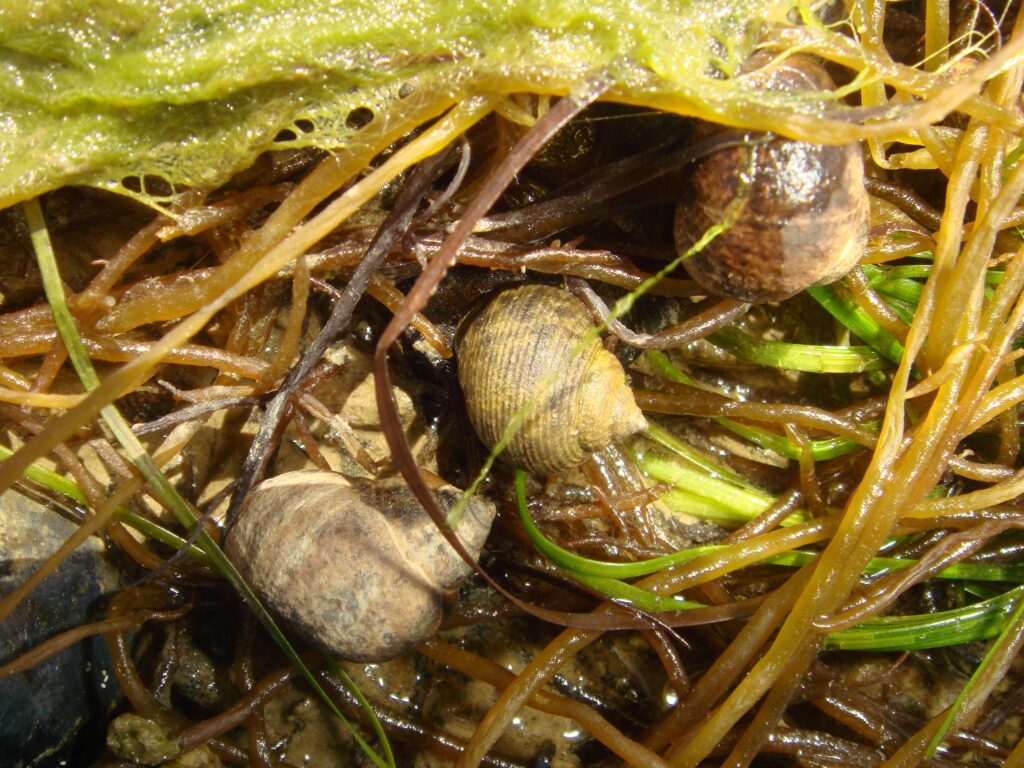
There are few foods more honestly Irish than a paper bag of periwinkles, still damp from the sea, eaten on a windswept pier with nothing more than a pin and a generous splash of malt vinegar. The little blue-black winkle — Littorina littorea, to give it its Sunday name — has been gathered from the rocky shorelines of Ireland for thousands of years. Archaeological shell middens found along the Irish coast, including one excavated at Fanore, Co. Clare, tell us that our Mesolithic ancestors were prising these tiny molluscs from the rocks long before recorded history, and the tradition has barely changed since. In fishing villages from Connemara to County Down, the Sunday winkle bag was once as much a part of the week as Mass itself.
Through the nineteenth and twentieth centuries, periwinkles became a beloved street food of coastal towns and city quaysides alike. In Dublin, vendors sold them along the quays of the Liffey — much like the capital’s other famous shellfish in our Cockles and Mussels Recipe — in Galway they were piled high at the Saturday market; in Dingle and Baltimore, children spent their pocket money on a bag to share. The beauty of the winkle is its utter simplicity. You do not need a kitchen, a recipe, or even a plate. You need the sea air, a little patience with a pin, and the sour-sharp kiss of vinegar to cut through the briny sweetness. That is the whole magnificent point of them.
Cooking periwinkles at home is straightforward and enormously satisfying, particularly if you have gathered them yourself from clean, unpolluted rocks at low tide — always check local harvesting advisories before you forage. The method below is entirely traditional: a simple salted boil, a cooling rest, then the vinegar and the pin. Nothing more is needed, and nothing more should be attempted. This is one of those rare dishes where restraint is the highest form of cooking.
Ingredients
- 500g (about 1 lb 2 oz) fresh live periwinkles
- 2 litres (3½ pints) cold water
- 2 tablespoons fine sea salt (for the cooking water)
- Malt vinegar, to serve — be generous
- Good white or brown crusty bread and butter, to serve (optional but traditional)
Method
- Sort and rinse the winkles. Place your periwinkles in a large colander and rinse thoroughly under cold running water, picking out any that have cracked or broken shells and discarding any that smell strongly off. Live winkles will often retract into their shells when disturbed — this is a good sign.
- Soak briefly. Place the rinsed winkles in a large bowl of cold salted water (use 1 tablespoon of the salt) for 20 minutes. This encourages them to expel any grit or sand from inside their shells. Rinse again under cold water and drain well.
- Bring the water to a rolling boil. Pour the 2 litres of cold water into a large saucepan and add the remaining tablespoon of sea salt. Bring to a full, rolling boil over a high heat.
- Cook the winkles. Add the periwinkles to the boiling salted water. The water will come off the boil momentarily — bring it back to a boil, then reduce to a steady simmer. Cook for 3 to 4 minutes only. Do not overcook or the winkle flesh will become tough and rubbery and lose its sweetness.
- Drain and cool. Drain the winkles immediately into a colander and spread them out on a tray or a clean tea towel to cool. They are traditionally eaten at room temperature rather than piping hot, which allows the flavour to settle and makes handling them with a pin far easier.
- Serve. Pile the cooled winkles into paper cones or small bowls. Set out a small dish of malt vinegar for dipping, or sprinkle it directly over the pile. Provide each person with a pin or a small winkle pick, and eat by inserting the pin into the opening of the shell and drawing out the whole morsel in a gentle, twisting motion. Dunk liberally in vinegar and enjoy.
Tips
- Freshness is everything. Only cook live periwinkles. If a shell is open and does not close when tapped, discard it before cooking.
- Don’t overcook. Three to four minutes is all they need. A timer is your friend here — even an extra two minutes will make them chewy.
- Malt vinegar is traditional and correct. White wine vinegar or cider vinegar can substitute, but malt vinegar has the robust sharpness that suits winkles best.
- A toothpick works perfectly if you don’t have a dedicated winkle pin — just make sure it’s sturdy enough to get a good grip on the flesh.
- If foraging yourself, always harvest from waters that are classified as safe for shellfish collection by your local authority, and pick from rocks well below the high-tide mark for the freshest, cleanest winkles.
There is something quietly joyful about a bowl of periwinkles that no amount of fine dining can quite replicate — the fiddliness of it, the salt on your fingers, the cold sea smell rising from the shells, and that tiny burst of briny, tender flavour that rewards your patience with the pin. It is food that slows you down in the best possible way, food that belongs entirely to the coast and to the people who have always lived beside it. Make them on a grey afternoon with the sound of the water nearby, and you will understand exactly why the Irish kept this tradition alive across the centuries.
Periwinkles are just one strand of Ireland’s long seaside eating tradition. For another classic from the same larder, try our Mussels in Guinness and Cream, or go further back on the shore with our Dulse Champ Recipe, another ancient Irish coastal food that has barely changed in thousands of years.
Recipe at a Glance
Ready in about 30 minutes, including the 20-minute salt soak. Serves 2–3 as a snack.
Stay Connected with Love Ireland
☘️ Join 64,000+ Ireland Lovers
Every Friday, get Ireland’s hidden gems, local secrets, and travel inspiration — the kind you won’t find in any guidebook.
Already subscribed? Download your free Ireland guide (PDF)
Free forever · One email per week · Unsubscribe anytime
Tours & experiences you might love


Powered by Viator. Some links are affiliate links — we may earn a small commission at no extra cost to you.
Secure Your Dream Irish Experience Before It’s Gone!
Planning a trip to Ireland? Don’t let sold-out tours or packed attractions spoil your journey. Iconic experiences like visiting the Cliffs of Moher, exploring the Rock of Cashel, or enjoying a guided walk through Ireland’s ancient past often sell out quickly—especially during peak travel seasons.

Booking in advance guarantees your place and ensures you can fully immerse yourself in the rich culture and breathtaking scenery without stress or disappointment. You’ll also free up time to explore Ireland’s hidden gems and savour those authentic moments that make your trip truly special.
Make the most of your journey—start planning today and secure those must-do experiences before they’re gone!