

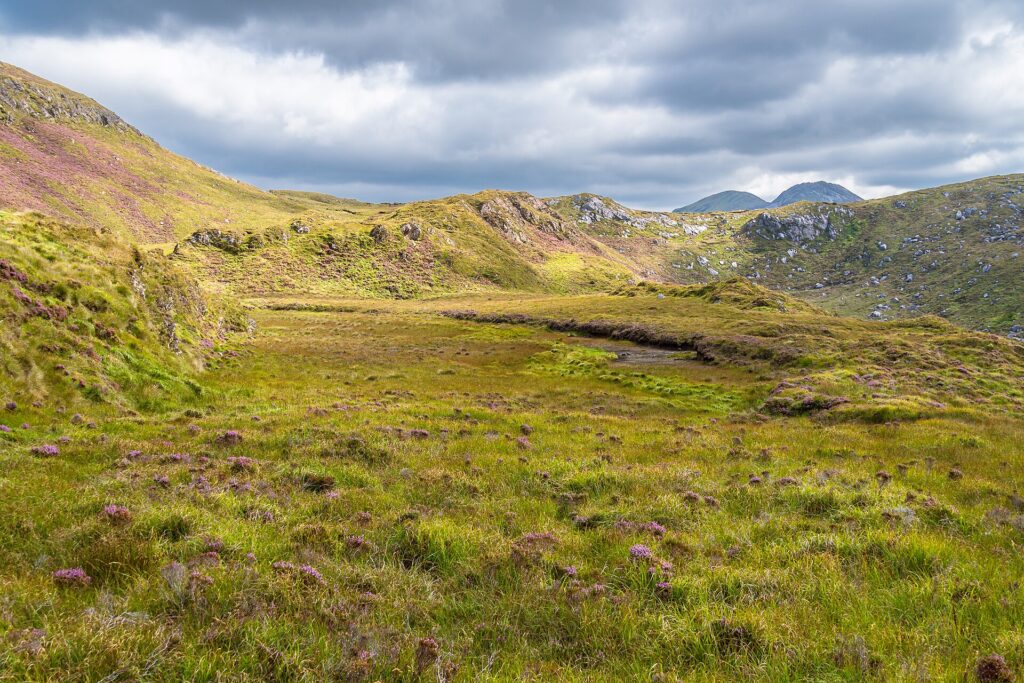
There’s a moment — and if you’ve felt it, you know exactly what I’m talking about — when the alarm goes off on a Monday morning and you lie there staring at the ceiling, thinking: is this really it? The commute, the inbox, the performance reviews, the weekends that slip by before you’ve even exhaled. Something inside you starts whispering about green fields, about wild Atlantic winds, about the country your grandparents spoke of with a particular light in their eyes. If that country is Ireland, this piece is for you. Because moving to Ireland — or even just imagining it — isn’t as mad as it sounds. For thousands of people in the Irish diaspora every year, it’s the most sensible decision they ever made.
Why Ireland Feels Like Coming Home (Even If You’ve Never Been)
There are roughly 70 million people worldwide who claim Irish heritage. That’s an extraordinary number — nearly 14 times the population of the Republic of Ireland itself. For many of them, Ireland isn’t a foreign country. It’s a place they’ve grown up hearing about: the village their great-grandmother left during the Famine years, the county name on a birth certificate tucked in a drawer, the accent their grandfather never quite lost. When people from the diaspora finally set foot on Irish soil — sometimes for the first time — they often describe the same disorienting feeling: a sense of recognition.
Watch: Do You Qualify for an Irish Passport?
If one of your grandparents was born in Ireland, you may be able to become an Irish citizen. This 14-minute guide explains who qualifies, what it costs and how long it takes. Thinking of making the move? Get the free Moving to Ireland checklist.
That feeling has a name in Irish: filleadh abhaile — a return home. And it’s not just sentimental. Ireland in 2026 is a modern, outward-looking country with world-class infrastructure, a thriving tech sector, and a cost of living that, while higher than a decade ago, remains significantly more manageable than cities like London, Sydney, or New York for those who do their research properly. The Republic of Ireland is an independent nation — a member of the European Union — and it operates entirely on its own terms, distinct from the United Kingdom in every meaningful way.
The Practical Case: What Ireland Actually Offers
Let’s talk brass tacks, because dreaming is lovely but planning is better. Ireland’s economy is one of the fastest-growing in the EU, with the multinational tech and pharmaceutical sectors creating consistent demand for skilled workers. Companies like Apple, Google, Meta, and Pfizer all have significant European headquarters in Ireland — and they hire internationally. The unemployment rate in Ireland sat at approximately 4.6% in early 2026 (CSO), which is near full employment by any economist’s measure.
If you have Irish citizenship (or are eligible to claim it through a grandparent — Ireland’s generous citizenship-by-descent rules extend to grandchildren of Irish-born citizens), you have the right to live and work in Ireland without any visa complications. For American, Australian, and Canadian citizens of Irish descent, this is often a straightforward process through the Irish Naturalization and Immigration Service. Even without citizenship, a Working Holiday Authorisation lets many nationalities live and work in Ireland for up to 12 months — Canadian citizens are a notable exception, eligible for up to 24 months under a separate bilateral agreement.
Housing is the honest challenge. Dublin city rents average around €2,100 per month for a one-bedroom flat in 2026, which is steep. But step outside the capital — to Cork, Galway, Kilkenny, Westport, or any of dozens of charming market towns — and the picture changes dramatically. A three-bedroom house in a rural Irish town can be rented for €900–€1,400 per month, and with remote work now a permanent feature of many professional lives, the tyranny of office location has loosened considerably.
☘️ Enjoying this? 64,000+ Ireland lovers get stories like this every week. Subscribe free →
The Quality of Life No Spreadsheet Can Capture
Here’s what the relocation guides don’t always say: Ireland is extraordinarily liveable in ways that don’t show up on a cost-of-living index. The Wild Atlantic Way stretches 2,500 kilometres along Ireland’s western coastline — one of the longest defined coastal routes in the world — and on a clear evening, standing at the edge of it with the Atlantic churning below you, the idea that you used to spend your evenings watching television in a flat you couldn’t afford seems almost comical. I’ve stood at Malin Head, the most northerly point of Ireland, on a Tuesday afternoon in October with not another soul in sight, the sky going purple and gold over Donegal Bay, and I understood then why people talk about Ireland the way they do.
The pace of life in rural Ireland is genuinely different. Not slower in a backward way — in a human way. People talk to each other in shops. Publicans remember your name after two visits. The GAA club is the social spine of every community, and even if you’ve never watched a game of hurling in your life, showing up to support the local team is an instant passport to belonging. Ireland has some of the lowest population densities in Western Europe outside of rural Scandinavia — County Leitrim, for instance, has just 22 people per square kilometre — which means space, quiet, and a relationship with the natural world that urban life simply doesn’t offer.
The Emotional Side: Permission to Want This
Something I hear from people in the Love Ireland community again and again is a version of the same sentence: “I’ve always wanted to do it, but…” And then comes the list. The mortgage. The ageing parents. The career ladder. The kids’ schools. These are real considerations — I’m not dismissing them. But I want to gently push back on the idea that they are necessarily insurmountable barriers rather than logistics problems to be solved.
People move to Ireland in their thirties, forties, fifties, and beyond. They do it as single people, as couples, as families. Some come for a year on a working holiday and never leave. Some plan meticulously for five years and execute a flawless transition. Some book a one-way flight on a Thursday afternoon and figure it out from there. There is no single right way to do it, and there is no age at which it becomes too late. The Irish diaspora has been returning to Ireland for generations — it’s baked into the national story.
What tends to hold people back more than practicalities is permission — the internal permission to take seriously a life that looks radically different from the one you’ve been living. Ireland, with its particular combination of familiarity and strangeness, has a way of making that permission feel earnable.
Taking the First Step: Resources Worth Having
If you’re at the beginning of this thinking — not yet ready to book anything, but wanting to understand what it would actually involve — there are a few things worth doing. First, establish your citizenship eligibility. The Irish government’s Foreign Births Registration process (for grandchildren of Irish-born citizens) is free and, once complete, gives you an EU passport. Second, spend time in Ireland before committing. Not a week in a Dublin hotel, but a month — ideally in different parts of the country, experiencing ordinary life rather than tourist Ireland. Third, connect with others who’ve made the move. The communities of returned diaspora are generous with their knowledge.
For a thorough walk-through of the full decision-making process — from visa pathways to housing markets to schooling, healthcare, and the emotional realities of relocation — I’d point you towards the full Move to Ireland guide, which covers all of this in depth and has helped thousands of people in the Love Ireland community get clarity on whether and how to make the move.
FAQ: Moving to Ireland — The Questions People Actually Ask
Do I need to be an Irish citizen to move to Ireland?
Not necessarily. If you have an Irish-born grandparent, you may be eligible for Irish citizenship through Foreign Births Registration — this is one of the most generous citizenship-by-descent programmes in the world. American, Australian, and New Zealand citizens can also apply for a Working Holiday Authorisation allowing up to 12 months’ residency; Canadian citizens can get up to 24 months under a separate bilateral agreement. EU citizens have freedom of movement rights. There are also employment permit routes for skilled workers in certain sectors.
How expensive is it to live in Ireland?
It depends enormously on where you live. Dublin is expensive by any measure — comparable to major cities like Berlin or Amsterdam. But outside the capital, costs drop significantly. Groceries, healthcare (Ireland has a public health system, though waiting times can be long), and day-to-day living are manageable in rural and smaller urban areas. Many diaspora returnees deliberately choose towns like Ennis, Athlone, Tralee, or Sligo precisely because they offer a genuine quality of life at a sustainable cost.
Will I feel like an outsider if I move from abroad?
The honest answer is: sometimes, at first, and less so over time. Ireland is an extraordinarily welcoming country, and the returned diaspora is a well-understood category of person — you won’t be the first American or Australian to show up in a country town with an Irish surname and a vague sense of homecoming. The accent might mark you out, and there will be cultural reference points you’ve missed, but Irish communities are warm and integrating faster than you’d expect. Within a year, most people who’ve made the move describe feeling at home in a way they rarely did elsewhere.
What’s the best part of Ireland to move to?
It depends what you’re looking for. If you need urban amenities and a strong job market, Dublin or Cork are the obvious choices. If you want the full Wild Atlantic experience — dramatic scenery, small-community life, proximity to traditional Irish culture — then Connemara, Clare, Donegal, or Kerry offer something genuinely extraordinary. For a middle ground of town life with good infrastructure, Galway, Kilkenny, and Limerick are worth serious consideration. There’s no wrong answer — just different versions of the Irish life you’re imagining.
☘️ Join 64,000+ Ireland Lovers
Every weekday morning, get Ireland’s hidden gems, local secrets, and travel inspiration — the kind you won’t find in any guidebook.
Subscribe free — enter your email:
📲 Know someone who’d love this? Share on WhatsApp →
Free forever · Unsubscribe anytime
Continue Planning
- Living in Connemara, Ireland: What the West’s Wildest Corner Really Looks Like
- Your First 90 Days in Ireland: The Complete Checklist for Americans Moving There
- Cobh’s Deck of Cards: Ireland’s Most Colourful Street
Tours & experiences you might love


Powered by Viator. Some links are affiliate links — we may earn a small commission at no extra cost to you.
Secure Your Dream Irish Experience Before It’s Gone!
Planning a trip to Ireland? Don’t let sold-out tours or packed attractions spoil your journey. Iconic experiences like visiting the Cliffs of Moher, exploring the Rock of Cashel, or enjoying a guided walk through Ireland’s ancient past often sell out quickly—especially during peak travel seasons.

Booking in advance guarantees your place and ensures you can fully immerse yourself in the rich culture and breathtaking scenery without stress or disappointment. You’ll also free up time to explore Ireland’s hidden gems and savour those authentic moments that make your trip truly special.
Make the most of your journey—start planning today and secure those must-do experiences before they’re gone!