

Renting a car in Ireland from the USA is one of the single best decisions you can make for your trip. Ireland’s most breathtaking scenery — the jagged coastline of the Wild Atlantic Way, the ancient valley of Glendalough, the rolling drumlin country of Cavan and Monaghan — is simply not accessible any other way. Public transport in Ireland is reliable between major cities, but it stops well short of the places that will take your breath away. If you want to pull over at a stone wall and stare at the Atlantic in silence, you need a car. This guide covers everything American visitors need to know before they book, from choosing the right vehicle to staying calm on those very narrow roads.
Why Renting a Car in Ireland from the USA Transforms Your Holiday
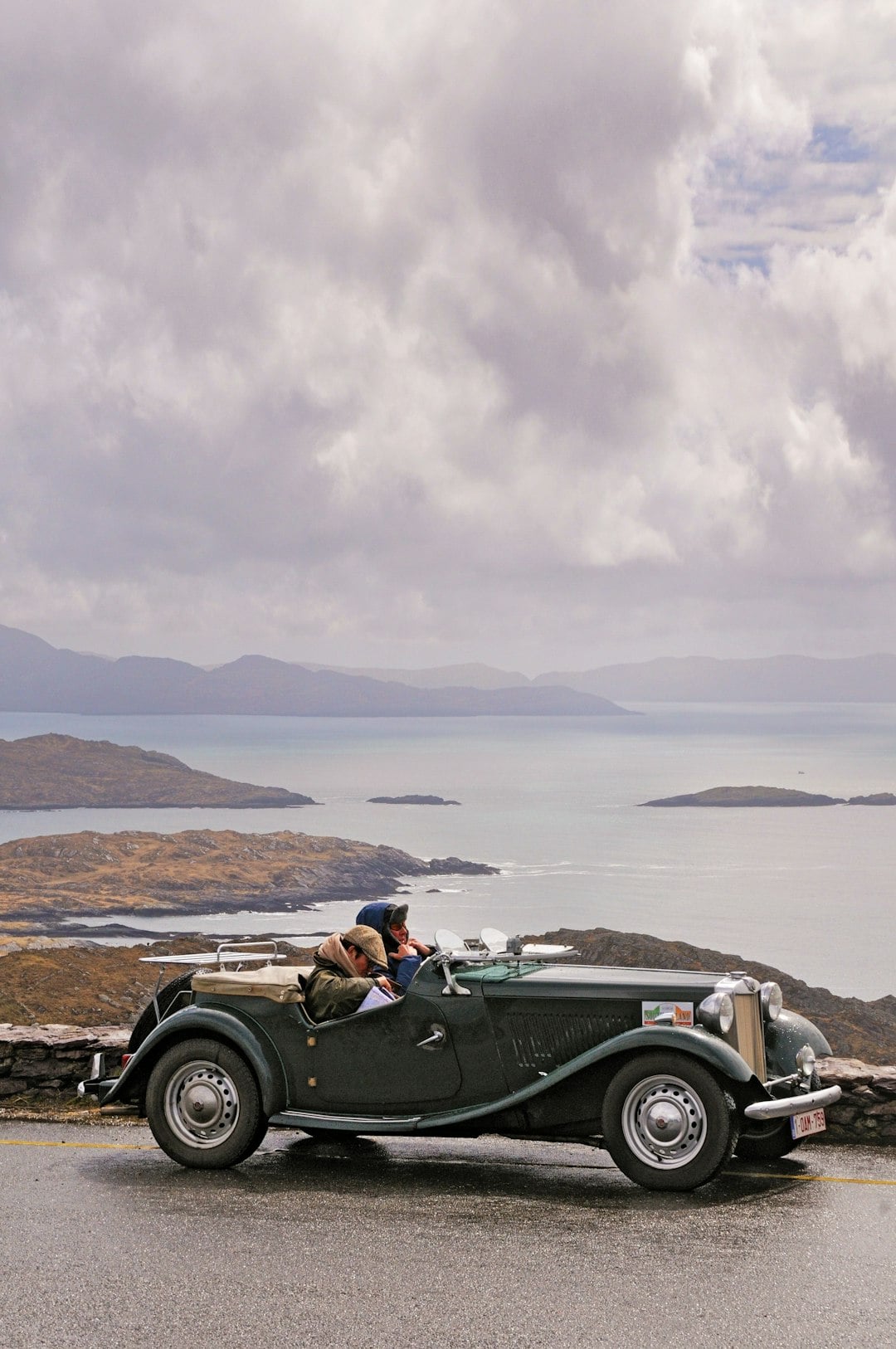
Organised tours and coach trips have their place, but they move at someone else’s pace. When you have the keys to your own rental car, Ireland opens up differently. You can leave your base at dawn to catch the light on Croagh Patrick. You can detour down a lane that looks interesting simply because you can. You can stop for chips in a village you’ll never find on a map and end up having the best conversation of the trip.
The country rewards slow, exploratory driving. Roads meander through farmland, dip into river valleys and climb over mountain passes. With your own car, you follow the road, not the schedule. Before you go, spend some time with our Ireland trip planning hub to map out the regions and routes that suit your travel style.
What to Know Before You Book Your Rental Car
The booking process for renting a car in Ireland from the USA is straightforward, but there are a few things that catch American visitors off guard. Getting these right before you travel saves money, stress, and a queue at the rental desk.
Automatic vs Manual Transmission
The vast majority of hire cars in Ireland are manual (stick shift). If you have only ever driven an automatic in the US, adding a manual gearbox to the stress of driving on the left side of the road is genuinely challenging. Book an automatic transmission in advance — don’t assume one will be available on the day. Automatics are available from all major rental companies in Ireland but they cost a little more and availability is limited, so book early, especially for summer travel.
Age Requirements and Young Driver Surcharges
Most rental companies in Ireland require drivers to be at least 23 years old, and young-driver surcharges commonly apply until age 25 or 26 (a handful of companies will rent from 21, but at a higher daily surcharge). Drivers over 70 may also face restrictions or additional fees depending on the company. Always check the specific terms of your booking rather than assuming the standard US age rules apply — they don’t.
Credit Card vs Debit Card
Most Irish car hire companies require a credit card (not a debit card) at the pickup desk. The card is used to hold a security deposit, typically between €1,000 and €3,000 depending on the vehicle and excess waiver chosen, and sometimes more on larger vehicles. If you plan to use a debit card, check the company’s policy explicitly in advance — some specialist providers do accept them, but it’s the exception rather than the rule. Notify your US bank before you travel so your card doesn’t get flagged for unusual foreign transactions.
Insurance: Understanding What’s Covered
Collision Damage Waiver (CDW) is usually included in the headline rental rate, but it comes with an excess — the amount you’d pay in the event of a claim, which is typically €1,000 to €3,000 and can run higher on SUVs or premium cars. You can reduce or eliminate this excess by purchasing a Super Collision Damage Waiver (SCDW) directly from the rental company, or by buying a separate excess waiver policy before you leave the US (often much cheaper).
Note that many standard US travel insurance policies and some credit cards offer rental car protection — but check the small print carefully to confirm this extends to Ireland and to cars rented with a non-US licence.
Driving on the Left: Practical Tips for American Drivers
Driving on the left is the biggest mental adjustment for American visitors. It sounds daunting, but most people adapt within a day. The key is to go slowly and give yourself time to settle in before you attempt any complex driving.
The First 30 Minutes
The first half hour after you leave the rental car park is when mistakes are most likely. If you land at Dublin Airport, consider spending your first night in Dublin city and picking up the car the following morning after a rest. When you do start driving, the most reliable mental anchor is to keep the kerb on your left. Your passenger is on your left; the centre line is on your right. Roundabouts feel backwards at first — give way to traffic coming from your right, and travel clockwise around the roundabout.
Narrow Roads and Passing Places
Rural Irish roads are often far narrower than anything you’d encounter in the US. Single-track roads with grass growing up the middle are common in the west. The etiquette is simple: whoever reaches a passing place first pulls in and waits. A brief wave of acknowledgement is customary and expected. Don’t rush, don’t tailgate, and don’t assume that because your GPS says a road exists it will be wide enough for comfortable driving. Allow more time between stops than Google Maps suggests — scenic and rural roads are always slower than the app anticipates.
Roundabouts and Road Signs
Ireland uses kilometres, not miles. Speed limit signs are in km/h and distances on signs are in kilometres. Motorways carry a 120 km/h limit, national roads (the primary N-roads) are 100 km/h, regional and local roads are usually 80 km/h, and town and village limits are typically 50 km/h. Road signs often appear in both Irish (Gaeilge) and English — in the Gaeltacht regions along the west coast, some signs are in Irish only, so it’s worth downloading an offline map before you travel.
What to Bring and Expect at the Rental Desk
Documents You’ll Need
You’ll need your full, valid US driving licence — you do not need an International Driving Permit (IDP) to drive in Ireland, though some rental companies may ask to see one alongside your US licence if it is in a language other than English. Since US licences are in English, an IDP is generally not required. Bring your licence, passport, the credit card in the name of the lead driver, and your booking confirmation. All additional drivers must also present their licence at pickup.
Excess Waiver: Buy in Advance or at the Desk?
Buying an excess waiver through a third-party provider before you travel (companies like iCarhireInsurance or Questor are popular with travellers to Ireland) can significantly reduce the cost compared to purchasing it at the rental desk. This is one of those small pieces of planning that saves real money. Budget around $5–10 per day for a third-party waiver (or an annual policy if you rent often) versus $20–35 per day at the desk.
The Best Time to Book Your Car Hire
Ireland’s summer (June through August) is peak season for tourism and for car hire. Availability of automatics drops sharply from May onwards, and prices rise accordingly. Book as far in advance as possible if you are travelling between June and September. For shoulder season travel in April, May, September, or October — which are often the loveliest months to visit — you’ll find better availability and lower rates, and the roads will be notably quieter.
Read our full guide on the best time to visit Ireland from the USA to match your driving trip to the right season.
Road Trip Routes to Plan Around Your Hire Car
Having a car unlocks Ireland’s greatest driving routes. Here are the three most rewarding for first-time visitors driving from the US.
The Wild Atlantic Way
Stretching from Donegal in the north to Cork in the south, the Wild Atlantic Way is one of the longest coastal driving routes in the world. You won’t drive all of it in one trip, but you can tackle a section — the Dingle Peninsula, the Cliffs of Moher and the Burren, or the remote headlands of Connemara. Each section rewards slow, exploratory driving.
A Loop Around the South and West
A classic route for first-timers is Dublin → Kilkenny → Cork → Killarney → Dingle → Galway → Dublin. This circular loop takes in city highlights, ancient ruins, dramatic coastline, and the gentler landscapes of the Irish midlands on the return. Our 7-day Ireland itinerary from the USA is built around exactly this kind of car-based loop, and our 10-day Ireland itinerary for American travellers extends it further into the west and north.
Top Tips Before You Pick Up the Keys
- Choose a smaller car than you think you need. Compact and subcompact cars handle Irish roads far better than large SUVs. Wider vehicles make narrow roads significantly more stressful.
- Download offline maps before you travel. Mobile coverage in rural Ireland can be patchy. Google Maps and Maps.me both support offline navigation.
- Photograph the car before you drive away. Document any pre-existing damage with timestamps. Email it to yourself so there’s no dispute on return.
- Know where you’re staying each night. Irish GPS addresses can be imprecise, especially in rural areas. Get Eircode (Ireland’s postcode system) for each accommodation and use that for navigation.
- Allow for parking. Some city centres, particularly in Dublin, Galway, and Cork, are congested. If your itinerary starts in a city, consider collecting the car on the day you leave for the countryside rather than driving into the city centre on arrival.
- Fuel up when you see a petrol station. In the west of Ireland especially, stations can be many kilometres apart. Don’t let the tank drop below a quarter.
Before you finalise your route, check our complete Ireland packing list for American visitors — there are a handful of items that make car travel in Ireland noticeably more comfortable.
Start Planning Your Ireland Road Trip
Renting a car in Ireland from the USA is simpler than most Americans expect, and the freedom it gives you is worth every bit of the adjustment to left-side driving. The country’s best moments are found down quiet lanes, at unmarked viewpoints, and in villages that don’t make it onto any highlight reel. A hire car is how you find them.
Head to our Ireland trip planning hub to begin pulling your itinerary together — and make sure your driving route includes at least one stretch of road that surprises you.
☘️ Want More Hidden Ireland?
Join 64,000+ subscribers who discover Ireland’s best-kept secrets every week.
Subscribe Free — Join the Community →
Free forever · Unsubscribe anytime · No spam
📥 Free Download: Ireland Travel Planning Guide
Our most popular resource — itineraries, insider tips, and the 50 places you must not miss.
Tours & experiences you might love


Powered by Viator. Some links are affiliate links — we may earn a small commission at no extra cost to you.
Secure Your Dream Irish Experience Before It’s Gone!
Planning a trip to Ireland? Don’t let sold-out tours or packed attractions spoil your journey. Iconic experiences like visiting the Cliffs of Moher, exploring the Rock of Cashel, or enjoying a guided walk through Ireland’s ancient past often sell out quickly—especially during peak travel seasons.

Booking in advance guarantees your place and ensures you can fully immerse yourself in the rich culture and breathtaking scenery without stress or disappointment. You’ll also free up time to explore Ireland’s hidden gems and savour those authentic moments that make your trip truly special.
Make the most of your journey—start planning today and secure those must-do experiences before they’re gone!